 Sticky logo
 Search


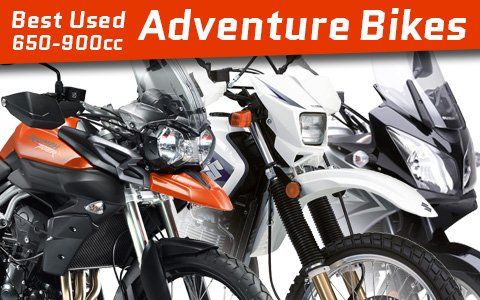
12/3/2024: We've updated the list to include a few of the recent models which have hit the market in the past few years. With all sorts of adventure bike options ranging from simple, air cooled dual sports to race proven, liquid cooled powerhouses, the adventure bikes in this class can do almost everything. Best of all, many of these can be resold at nearly their purchase price, making them a worthy investment. This list encompasses adventure bikes from 650cc thumpers up to 900cc of multiple cylinders, so famous giants in the 1,200cc range are not included but you can find the 900cc+ bikes here.
Got a favorite bike you think should be listed here? Let's us know the sepcifics and why you think it's a great used buje and we'll add it to a Reader's Comments section!
• Yamaha Tenere 700
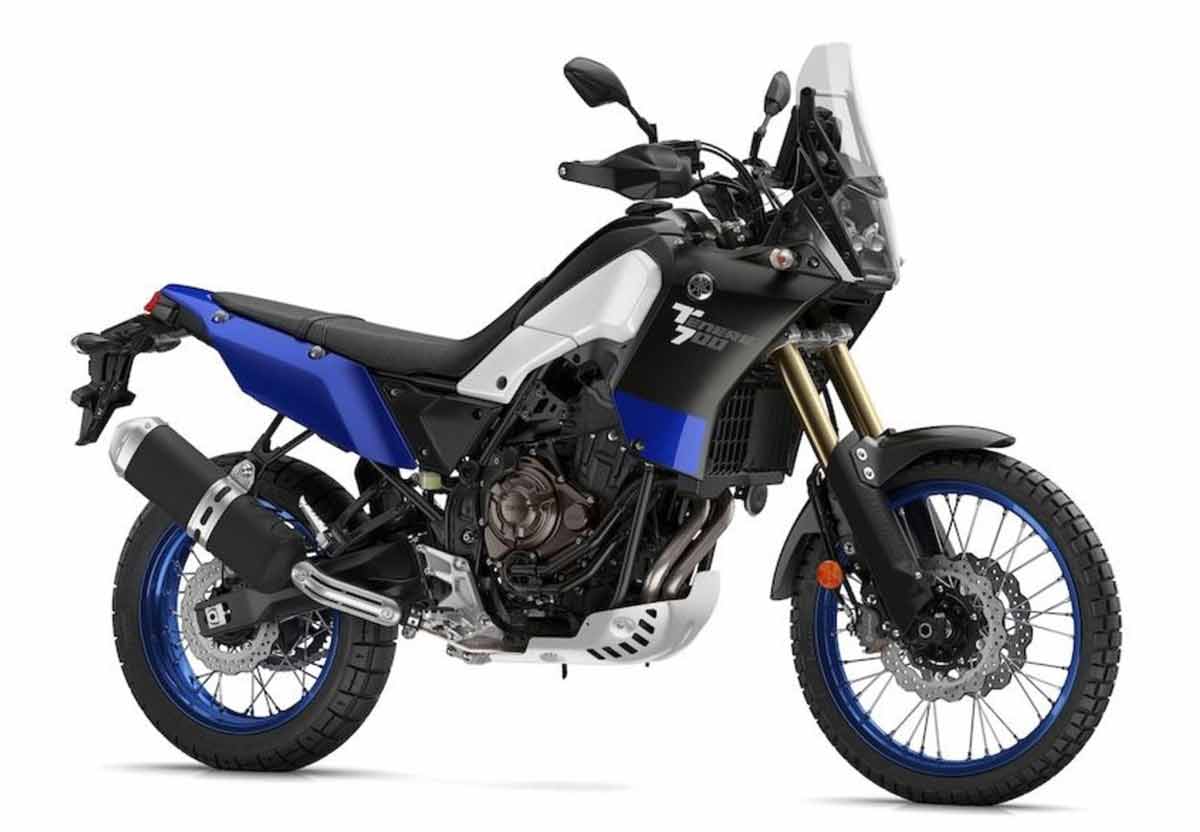
Despite the Tenere 700's relatively low profile when compared to other adventure motorcycles, this middleweight ADV is an important component of Yamaha's off-road credentials. The 689cc CP2 engine is among the best engines to come out of Japan, and together with its long-travel suspension and off-road-focused chassis, the Tenere 700 is incredibly capable and deserves all the attention it receives. Having been one of the few multicylinder bikes to tackle extreme enduro challenges like Reb Bull's Romaniacs, it's off-road prowess speaks for itself.
Check out our Tenere 700 review here.
The Tenere 700’s standout feature is its simplicity. While many adventure bikes are packed with complex electronics, the Tenere focuses on delivering raw, rider-focused performance. In previous models, the bike same with switchable ABS, but there were no fancy add-ons like ride modes or advanced traction control. This lack of unnecessary tech also makes it easier to maintain, a critical factor for adventurers throwing their bikes around without a second thought.
Talking about throwing the bike around, the Tenere 700’s chassis is designed to excel off-road, featuring long-travel suspension, a lightweight steel frame, and 9.4 inches of ground clearance. These attributes allow the Tenere to handle rough terrains with ease, giving riders of all experience levels a fair amount of confidence.
With a seat height of 34.6 inches and a fuel tank capacity of 4.2 gallons, the Tenere is pretty accessible bike too. People often associate the it as Kawasaki's KLR 650 spiritual successor, and there are enough hints that it might just be one - except it’s far smoother and in many ways better than the KLR. Let's hope Kawasaki releases a new KLE line to replace the KLR in 2025.
PROS |
CONS |
| ▲ The tractable CP2 engine | ▼ No tubeless tires |
| ▲ Very capable off-road | ▼ Stock suspension may soft for heavier riders |
| ▲ Reliable and easy to maintain | ▼ Tiny pillion seat and needs graphics kit! |
• Triumph Tiger 900 Rally Pro
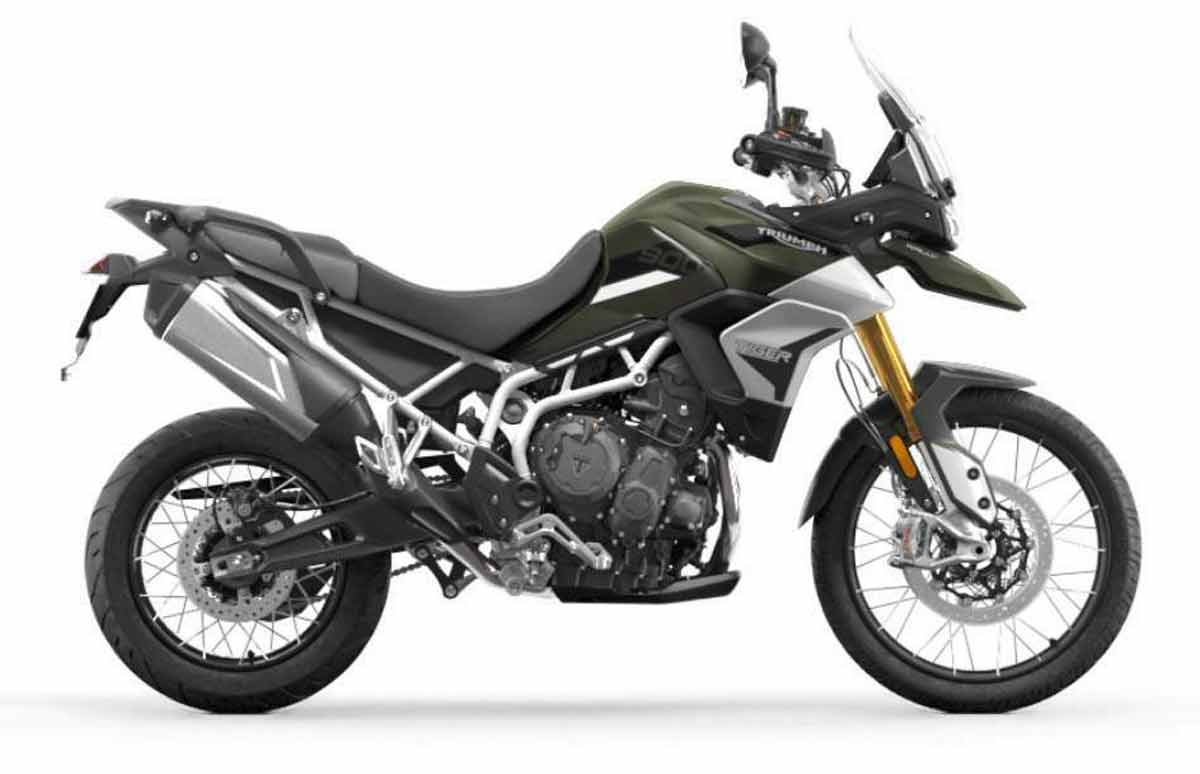
Triumph's Tiger 900 built on everything that the 800 lacked and bettered it in every sense of the word. It underwent a significant design overhaul and along with that came a whole lost of changes - a bigger 5.3-gallon fuel tank, a new modular steel trellis frame with a bolt-on rear subframe, a new radiator, airbox, and air filter, an adjustable windscreen, better ergonomics for an upright riding position, Brembo brakes, and an overall weight reduction.
Check out our Tiger 900 Rally Pro review here.
Most significant of all the updates was a higher-capacity 900cc triple engine that produced 93.9 hp at 8,750 rpm and 64.2 lb-ft of torque at 7,250 rpm. This bump in torque gave it that ever-so-important edge to generate more revs at lower gears while off-roading.
The Tiger 900 Rally Pro's two-position seat height mechanism, allows you to adjust the seat height between 33.4 and 34.2 inches. As for the suspension, you get 45 mm Showa upside-down cartridge forks at the front with 9.4 inches of travel and manual preload, rebound, and compression damping control. A gas-pressurized RSU is at the rear with 9 inches of travel that can be adjusted for preload and rebound damping.
It's pretty well-stacked for a mid-wight ADV too, with a full-color 7" TFT, traction control, cornering ABS for a smoother ride, and as many as six riding modes. Additionally, you also get handguards, cruise control, heated grips, all-LED lighting, and a decent space to charge your mobile phone and store it.
PROS |
CONS |
| ▲ A whole suite of advanced electronics | ▼ Pricier than some of the other options in the 650-900cc category |
| ▲ Adjustable windscreen, seat, and suspension | ▼ Fuel efficiency is not one of its strong suites |
| ▲ Reliable | ▼ Poor heat management during extended low-speed rides |
• Suzuki V-Strom 800DE
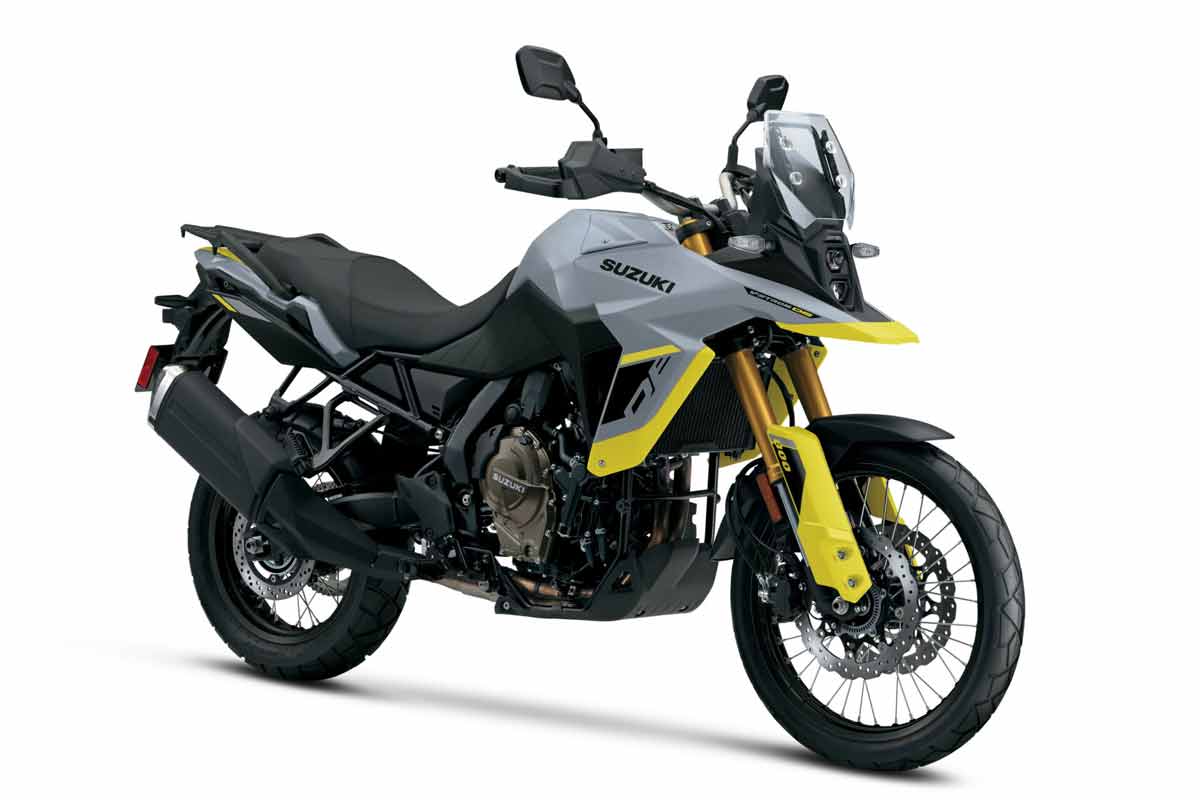
When Suzuki debuted the VStrom 800 lineup in EICMA 2022, it garnered a lot of attention. It continues where the original V-Stroms left off, and even though it isn’t mechanically related to the V-Strom 1050 or 650, it’s a hugely capable adventure bike that can stand on its own in a crowd of ADVs and is generalyl a big improvement over the previous models.
Check out our Suzuki V-Strom 800DE test ride and review with video here.
The motor is a 776cc parallel twin with a 270-degree crank. The Showa suspension has plenty of travel - precisely 8.7 inches. There’s more than enough ground clearance of 8.7 inches and the 33.7-inch seat height makes it fairly accessible to riders of all sizes.
What caught everyone off-guard is the list of advanced electronic features. Suzuki has a nack of producing barebones V-Stroms since its inception but the amount of tech on the 800DE proved that Suzuki was now paying attention to user feedback.
It has three levels of traction control, plus “Gravel” mode that is configured to actually help you ride dirt roads more effectively. Then there’s options on the ABS, with two levels and an off-mode. Low RPM Assist, Suzuki's Easy Start, an up/down quickshifter, and three riding modes are all further included in the Suzuki Intelligent Ride System (S.I.R.S.).
It's an excellent adventure bike for those who ride more on the street than the dirt. That's because it is a little cushier than your standard KTM 890 or Yamaha T7. So, if you're thinking of munching long miles with a middleweight ADV, the VStrom 800 DE might just fit the bill for you.
PROS |
CONS |
| ▲ The ride quality is one of the best in the category | ▼ The engine has some vibration at high speeds. |
| ▲ Much improved off-road chops | ▼ Bit on the pricey side |
| ▲ Reliable | ▼ Not the lightest middleweight ADV out there |
• BMW F850GS
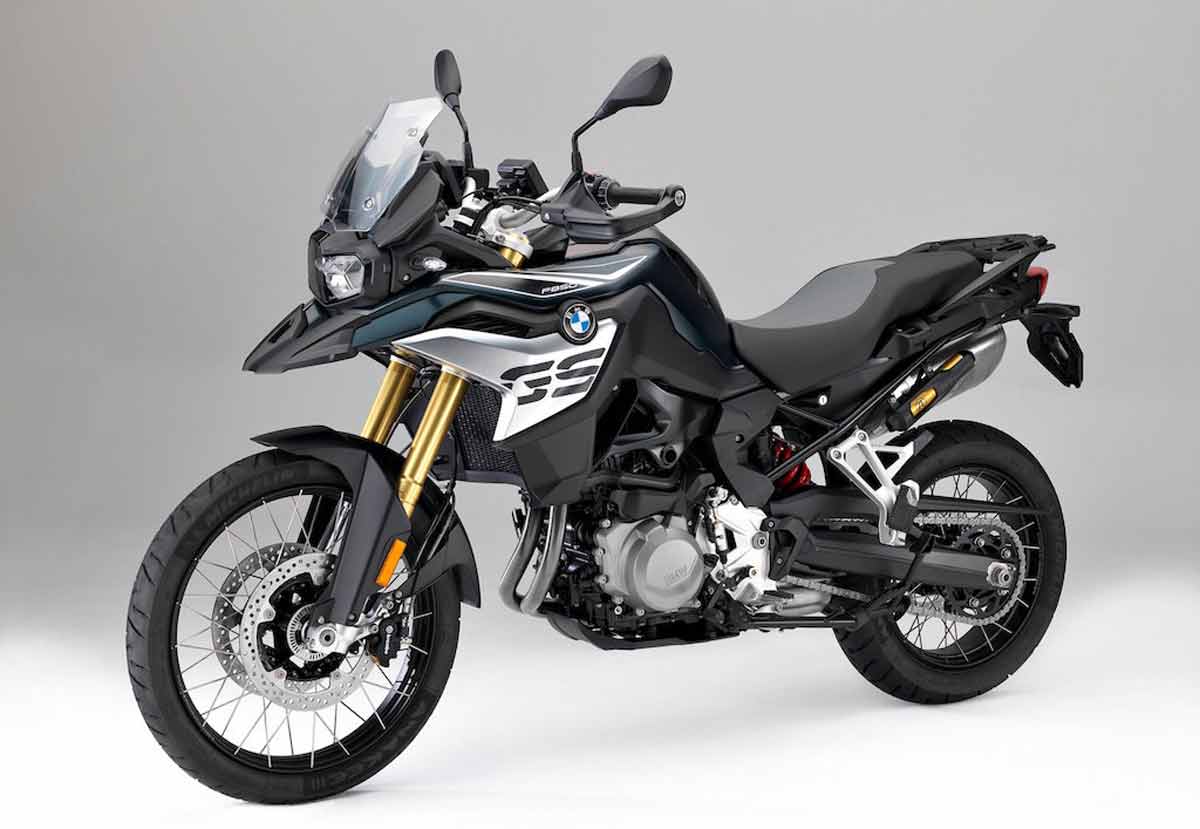
BMW's F850GS is a fairly popular choice in this category, and that ought to its uncanny resemblance to the R1200GS because of its ‘fly line’. BMW did a fantastic job of making the F850GS feel more compact and smaller without making the rider feel constrained. And even though it is around 25 pounds heavier than the previous F800GS, it actually appears smaller than any of the other 650–900cc adventure bikes that are on the market.
The 853cc parallel-twin motor generates enough power without ever feeling overpowered. The non-adjustable 43mm front forks with 9 inches of travel and the electronically adjustable rear suspension with 8.4 inches of travel provide a smooth ride with superb comfort on the road, while there is equally good feel, feedback, and grip off-road.
Although the 33.9-inch seat is not adjustable, you do get to choose among different options: the flatter, taller profiled rally seat at 35 inches, the comfort seat at 34.4 inches, and the low seat 32.9 inches.
There’s plenty you’ll like about the F850GS. Being a BMW, the build quality is superb and the fact that the Bavarian maker sells it even today tells a lot about its credentials.
PROS |
CONS |
| ▲ The smooth engine | ▼ Limited suspension adjustability |
| ▲ BMW add-ons like heated grips and seats of different heights | ▼ At over 500 lbs, it’s a heavy middleweight ADV |
| ▲ Hugely capable suspension setup | ▼ Brakes can lack some bite |
A few of these are dinosaurs hailing from the bygone era of big-bore single cylinder glory when they were the most fire breathing four strokes available. In addition to these, there are newer bikes that have taken adventure riding platforms into the 21st century with fuel injection, ABS, spacious fuel tanks and big power. The choices here range from those ready for long highway miles in nearly stock form to those with an uncompromising dirt bias, so there can be something here for almost everyone.
• BMW F800GS/GS Adventure:
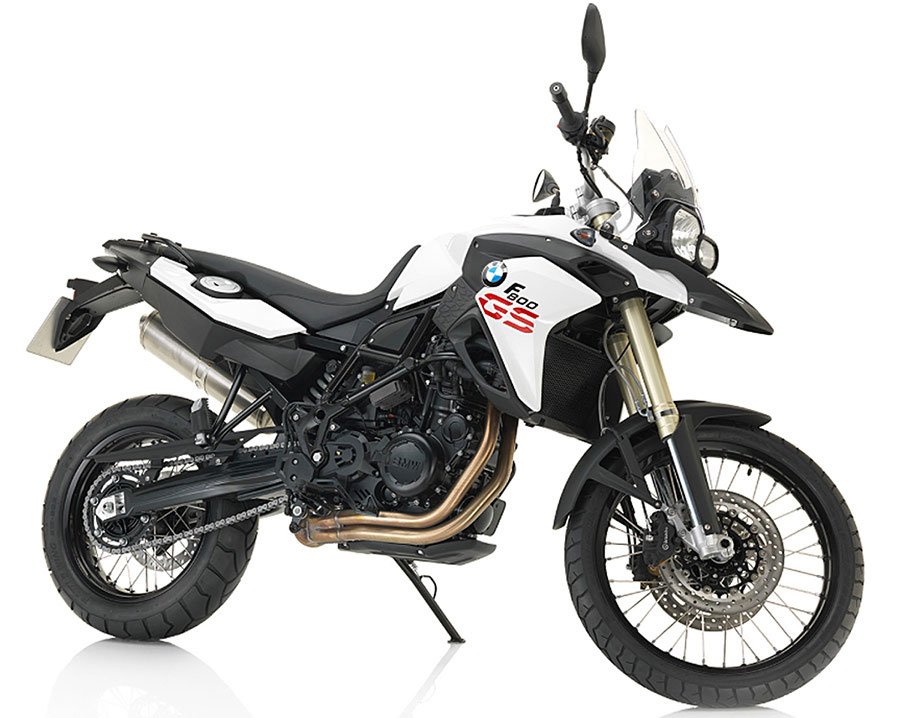
Featuring, at the time of its release, a new 798cc fuel injected parallel twin motor putting out power numbers comparable to the older R1150GS, this is a welcome alternative to the massive 1000cc+ adventure bikes associated with this market. These are modern contenders in the world of adventure bikes that offer the power and smoothness of multiple cylinders, but don’t weigh quite as much as the bigger giants.
Instead of the iconic shaft drive found on the R-GS series, the F800GS uses a chain drive, which is easier to service in the field, but will also need consistent maintenance. For an extra cost, there are the fully loaded F800GS Adventure models that were released a few years after the standard F800GS. Those can be had with a convenient Electronic Suspension Adjustment (ESA) system and Automatic Stability Control (ASC) for traction management. Fortunately, the ASC and optional ABS can be turned off for dirt riding. Keep in mind that these modern electronic systems won’t be as easy to troubleshoot in the backcountry as the simpler bikes. The suspension has limited adjustability that might inhibit really aggressive high speed riding. The Adventure model features different cosmetics, a bigger 6.3 gallon fuel tank up from the standard 4.2 gallons, a bigger windscreen, a luggage rack, engine guards and around 30 additional pounds over the standard 800. If all you need are engine guards and a skid plate, it may be more cost effective to just upgrade a standard model.
The F800GS puts out 400 Watts of farkle-ready power and have a respectable 9.5 inches of ground clearance, which results in a 35 inch seat height that can be lowered to just under 33 inches. These bikes are on the heavy end of the spectrum for sub-900cc adventure bikes, with the Adventure option barely passing the 500 pound mark, but they still have obstacle-friendly 21 inch front wheels like the Tiger 800 XC. These can be excellent adventure touring bikes that will eat up highway miles and still be very capable off road, assuming they’re in the hands of an experienced rider.
PROS |
CONS |
| ▲ Big 400 watt stator output for accessories | ▼ Limited suspension adjustability |
| ▲ Good 9.5 inch ground clearance for bigger bikes | ▼ Small early recalls, check to confirm warranty work |
| ▲ Options for accessories between F800GS models | |
• Triumph Tiger 800XC:
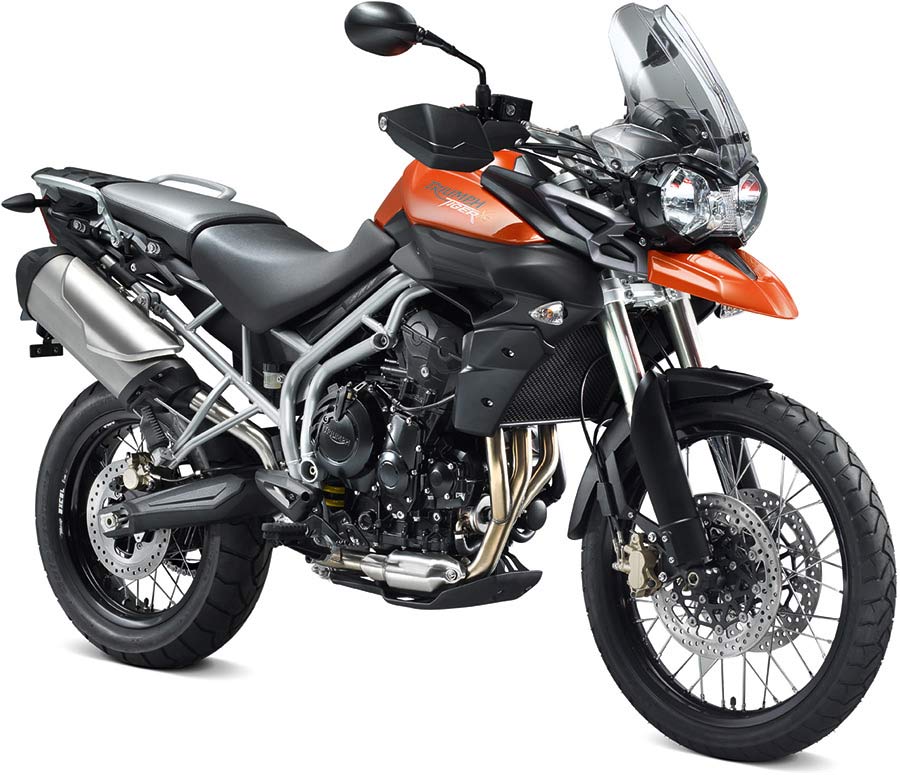
Released as a direct competitor to the F800GS, the Tiger 800XC is another option in the field of adventure bikes that have more than a single cylinder but don’t break the quarter-ton mark on the scale. The smooth 799cc inline triple makes more power than the BMW, but it doesn’t offer the same low-end torque as the parallel twin on the F800GS. It has more adjustable suspension than the F800GS, with roughly 8.5 inches of similar travel, but less ground clearance at 8.5 inches. Still, the differences in off road performance will only become noticeable at the margins of speed, both high and low, where the tighter steering geometry and more forward weight bias can make the Tiger slightly more challenging to control. The suspension is also slightly softer than what’s on the BMW.
All Tiger 800 motors put out a monstrous 645 watts of electricity to power any accessories short of a microwave oven. As far as electronics go, the Tiger 800 gets the standard modern fuel injection, switchable ABS and then traction control in later models starting with 2015. As with any modern bike, the electronic systems can be more difficult to troubleshoot if, for example, water floods the instrument panel during a river crossing tip-over.
The comparably low and adjustable seat height of 33.3 to 34.1 inches makes it more manageable when loaded with luggage, and the midsize 5 gallon fuel tank makes for good range between fill ups on the highway. The highway is also where the powerful motor does very well, as the smooth triple doesn’t vibrate as much as engines with fewer cylinders. Loads of options for luggage and protective hardware solidify this as another good option in the modern adventure bike category that can still do impressive things off road when in the right hands.
PROS |
CONS |
| ▲ Smooth, powerful engine | ▼ Ergonomics not as well suited for technical riding |
| ▲ Low, adjustable seat at 33.3 - 34.1 inches | ▼ Occasional electrical issues |
| ▲ Huge 645 watt stator output | |
Sponsored Link: Looking for Multi Bike Insurance?
• Suzuki DL650 V-Strom
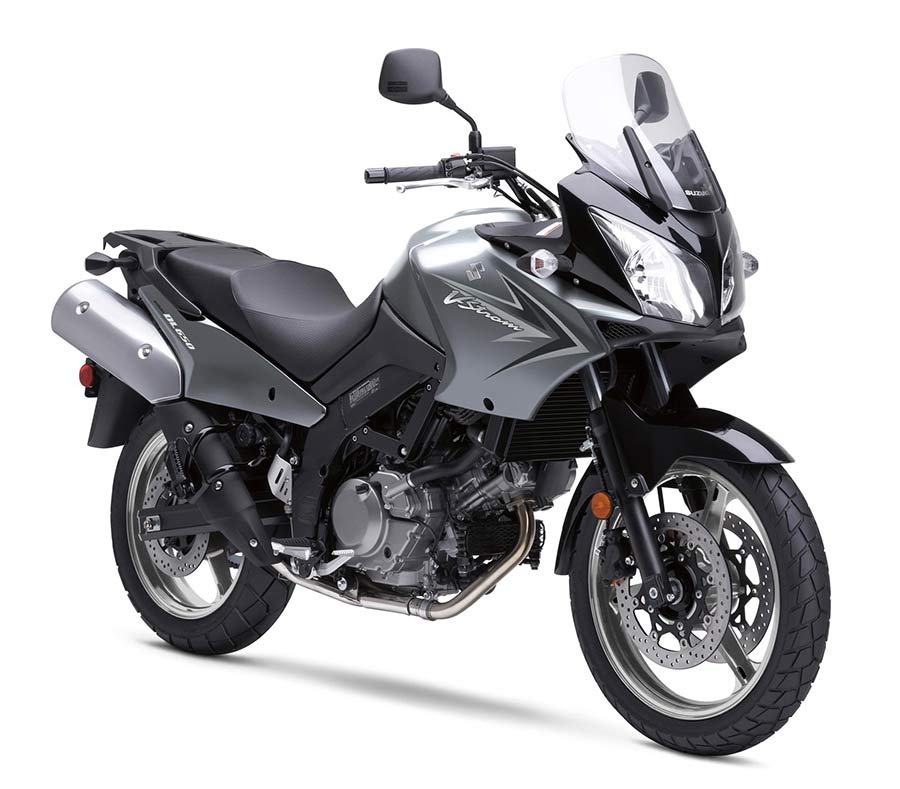
Technically not considered a dual sport because of the chassis geometry and cast wheels, the DL650 V-Strom can actually be a surprisingly capable machine off the pavement. It will be most comfortable on paved and gravel roads, but skilled riders can do amazing things with this bike. This is the most highway-friendly 650 on this list, thanks to the v-twin engine that doesn’t vibrate quite like the thumpers, wind protection and the more street friendly 19 inch front wheel. The ABS and a low seat height can also appeal to newer riders, as can the less maintenance-intensive fuel injection, but the ABS is more challenging to turn off for dirt riding.
These bikes really do have adventure riding potential, as shown by the plentiful aftermarket skid plates, engine guards and luggage racks. With just under 7 inches of clearance between the ground and nearly 490 pounds of weight, a skid plate can be a good investment depending on where you’ll be riding. The relatively large 5.8 gallon fuel tank will keep the 645cc liquid cooled engine fed for quite a while, and the upright riding position is comfortable for longer rides. Some changes have happened since its release in 2004, with dual spark plugs and optional ABS in 2007, and the next year a bump in stator output from 375 watts to 400. In 2012 it got heavily revised and is our recommended pick if you have the money. New cosmetics, larger and stiffer forks, longer rear suspension travel, power increases and a half-gallon drop in fuel capacity make for a very worthy set up updates.
The 650 V-Strom platform has been around for more than a decade, and that shows in the aftermarket and in online resources. The stator can handle electronic accessories and the comfortable riding position can have you enjoying them for long periods of time, especially if you choose to replace the stock seat. While more street biased, the Kawasaki Versys is an additional option you may want to explore in this direction.
PROS |
CONS |
| ▲ Low seat height just over 32 inches | ▼ Low ground clearance and limited suspension |
| ▲ Smooth, fuel injected motor with higher power than 650 thumpers | ▼ Relatively high weight for 650s |
| ▲ Big 375-400 watt stator output for accessories | |
• BMW F650GS/GS Dakar:
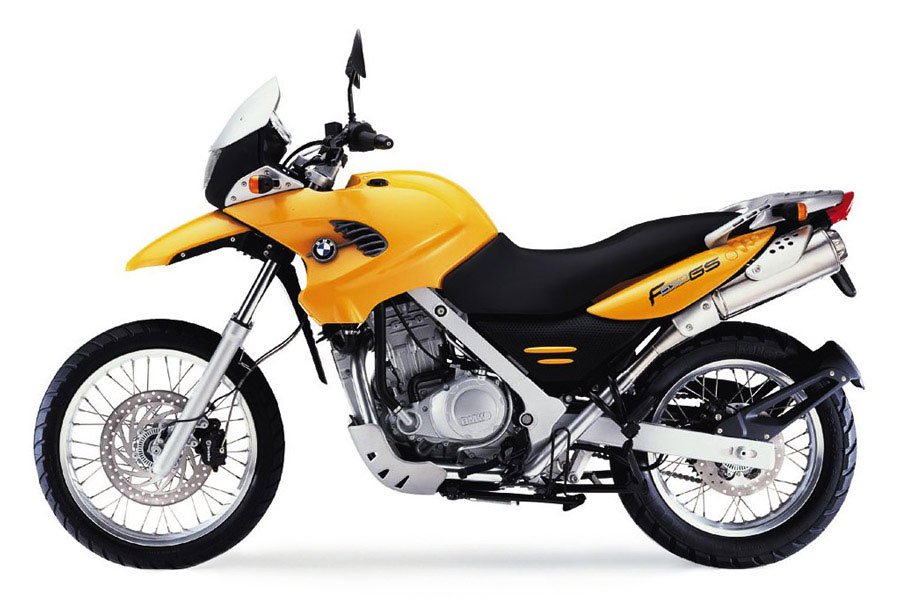
Of the 650 thumpers on this list, the F650GS is the most capable on the street. However, it can still be a solid contender when the pavement ends, especially in the hands of a skilled rider. Some may also find it the most beginner-friendly bike on this list given its plethora of helpful features. Good, reasonable power, one of the lowest seats in class, a low center of gravity, a fairing and ABS all make for a comfortable riding experience. The low height works with the medium weight of roughly 420 pounds. From 2000 until 2007 BMW produced the F650GS and F650GS Dakar models with a durable, fuel injected, liquid cooled Rotax engine. A slightly tricky fuel injection system was solved in 2004 by a new FI system and the addition of a second spark plug. All models can get an incredible 55-60 mpg.
The Dakar version has a proper 21” front wheel, appropriately higher seat and longer suspension travel. Both GS models have simple, damping rod forks with relatively short stock suspension travel at 6.7 inches for the standard and 8.3 for the Dakar, comparable to the Gen 2 KLR 650. However, the F650GS models have a massive stator output of 400 watts, so running fog lights, heated gear, a GPS and more is a breeze. Besides the V-Strom, few 650cc competitors can beat that with roughly 200 or fewer watts each. The fairing is also a nice feature for highway miles, and the air-cooled 650s don’t have much in that department.
Switchable ABS helps keep it capable in the dirt, and the spoked 19 inch front wheel on the standard is still better off road than the 19 inch cast wheels on some competitors. With readily available luggage systems, the F650GS is a proven and well-liked platform for adventure riding where long highway stretches are going to be a factor, but you still want to be able to comfortably handle the bike in off road terrain.
PROS |
CONS |
| ▲ Low seat height under 33 inches | ▼ Limited ground clearance and suspension travel |
| ▲ Big 400 watt stator for accessories | ▼ Some pre-2004 models: unpleasant fuel injection characteristics |
| ▲ Proven reliability and good power | |
• Kawasaki KLR650:
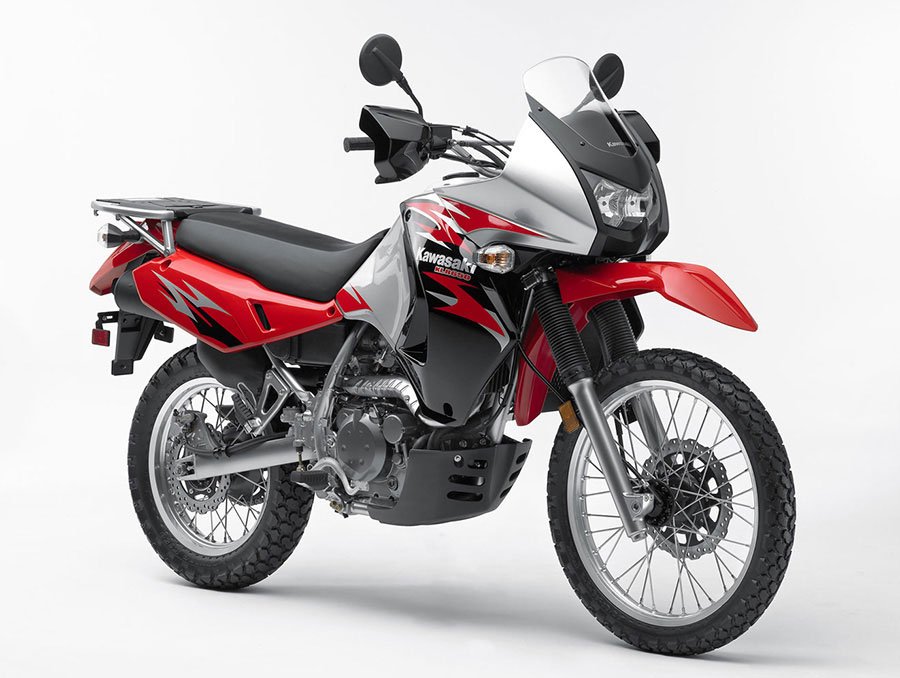
The KLR650 is slightly more street biased than a perfectly 50/50 dual sport, but not by much. The KLR fits between the F650GS and the DR650SE as far as street- and dirt-friendliness go. The long-living, liquid cooled, dual cam motor is more complicated than its single cam competitors, but that difference is negated by incredibly helpful online resources. Soft, basic suspension and less than 9 inches of ground clearance limit high speed off road performance and the high center of gravity can make the nearly 435 pound bike more challenging to maneuver in technical terrain. However, the compromise gets you one of the biggest fuel tanks in class, a wide seat and a fairing for more comfortable highway riding.
From its reincarnation out of the KLR600 in 1987, the KLR650 underwent changes in the engine for 1996 until a bigger redesign for 2008. Here it got new cosmetics, better brakes, stiffer suspension with less travel, and a handful of other changes. The infamous “doohickey” - the balancer chain tension adjuster lever - can disintegrate on any Gen 1 with any mileage, and the spring and “doo” replacement is still a recommended fix on all KLRs. In mid 2014 the KLR got updated again with stiffer suspension and a reshaped seat, but the 35 inch seat height has remained the same.
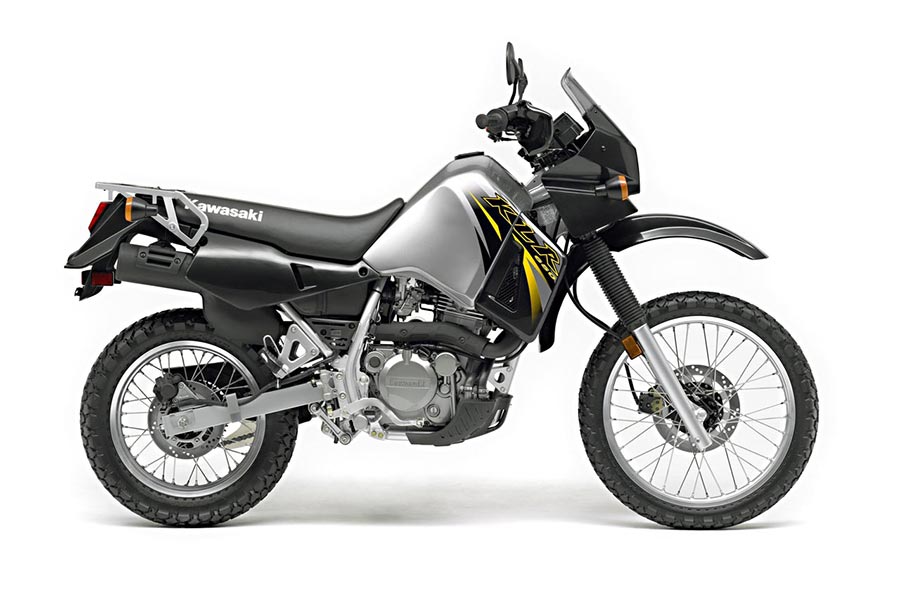
After 30 years the real beauty is in how little has changed. The engine and frame are largely the same, so aftermarket parts practically grow on trees, there’s an endless wealth of knowledge online for parts and maintenance, and with a few upgrades this machine can cross the entire planet - as many have proven. An aftermarket skid plate and replacing the factory “doohickey” assembly will ensure the legendary reliability of this dual sport while countless luggage options ensure everyone finds something they like. Owning a KLR will help you understand why it’s become a cult classic.
PROS |
CONS |
| ▲ Massive aftermarket support and online resources | ▼ Limited suspension and ground clearance under 9 inches |
| ▲ Excellent overall reliability | ▼ “Doohickey” fix |
| ▲ Big 6 gallon fuel tank and lots of luggage options | |