 Sticky logo
 Search


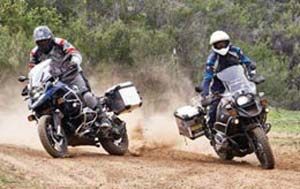
Now that BMW has released the 2014 R1200GS Adventure with the new liquid-cooled engine along with that bike’s upgraded architecture, the question arises if the new Adventure is that much better than the old one, a motorcycle that set the standard for big adventure bikes.
Having put 28,000 miles on a 2012 Adventure, my wrists were aching for a real electronic cruise control, so I put cash down on the 2014. When the older R1200GSAs were first released, their styling screamed aggressiveness and asserted dominance.
The new bike takes that stance into Terminator territory. It’s designed for the rider who wants to go anywhere, and this mammoth machine will. I’ve ridden both the new and old Adventures in venues ranging from interstate highways for hours on end at 80mph plus, to rocky dirt bike trails where sane folks would never think to travel.
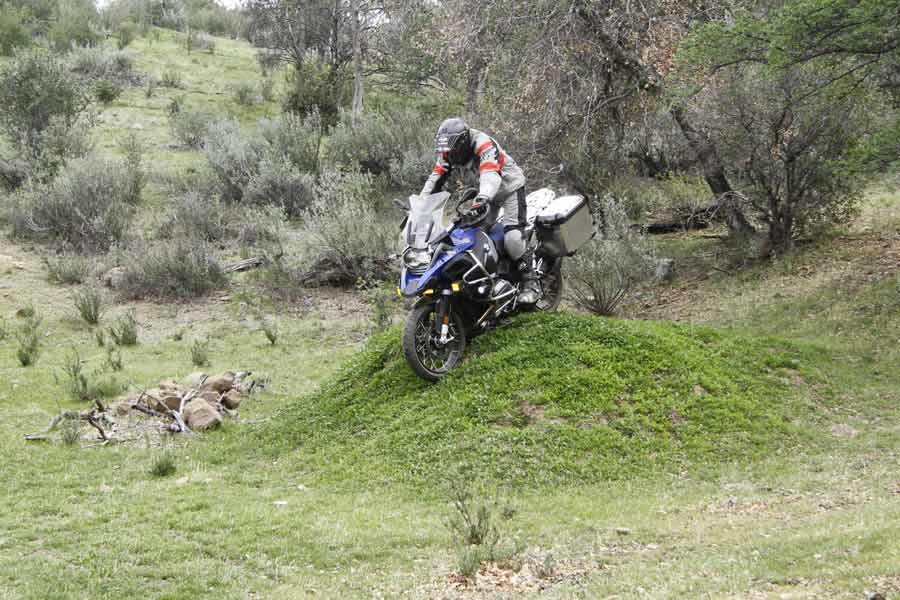
What the old bike does well, the new bike does better. With fuel capacities that easily cover a 300+ mile range, it will be a very remote corner of the earth where you would have to carry additional fuel.
Although never classified as “low-cost,” BMW even managed to keep the lid on prices. Expect that nearly all the bikes come with the Premium Package that bumps cost up to over $22-grand delivered, but that includes nearly all the stuff you’d want.
The centerpiece of the new bike is the engine. About the only thing it has in common with its predecessor is its boxer layout. The engine is shorter, allowing for a two-inch longer swing arm, and resulting in better handling and stability.
The boxer is also not as tall, permitting more ground clearance. To aid emissions and efficiency, cooling is by air and coolant—versus its predecessor by air and oil. The clutch is now in the front of the engine permitting servicing without having to split the bike in two.
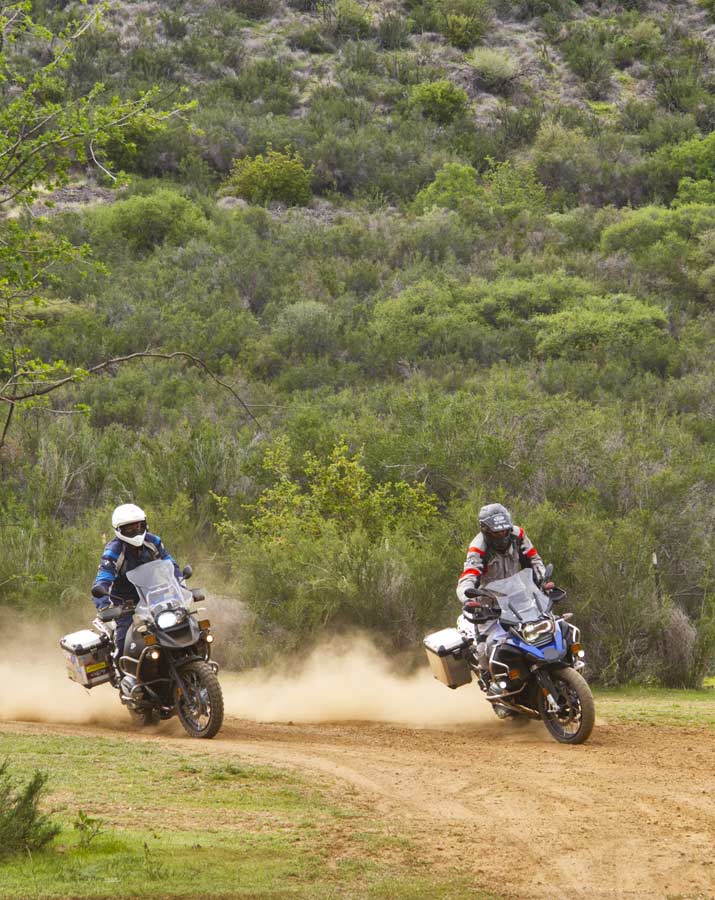
The clutch consists of eight wet disks sharing the same oil as the engine and transmission—permitting “feathering” while offroading. With less effort on the hand lever, the new clutch is a slipper-type design, which facilitates smoother shifts, especially in conjunction with the Adventure-specific load damper on the output shaft.
The old Adventure was available with an optional enduro transmission that had a lower first gear, a plus in off-road use since the dry clutch was not designed for lots of slipping. Although the new Adventure has no such option, it’s not missed, as it does have two more pounds of flywheel mass, giving the engine gobs more low-speed tractor effect.
The difference was especially noticeable after taking a new standard R1200GS on a rugged off-road ride and finding it easy to stall if you had to start on a loose surface going uphill; the new Adventure, like its lower-geared predecessor, just chugs on through.
Other differences with the engines include the locations of the valves in the heads. The new design relocates the intake runners, allowing the bike to be narrower. Along with the new electronics, the throttle takes less twist to open, and is smoother.
I’m not sure if that is part of the reason why the bike feels so much faster, but power wheelies are easily within range. The torque charts provided by BMW show that although the difference in peak torque is not enormous, the difference is notable and fatter over the entire range.
The old bike used the engine as a stressed member of its design. There were a front frame and a rear frame, with bolts connecting both to the engine at the center. The new bike has a more conventional continuous frame that has been designed for greater rigidity.
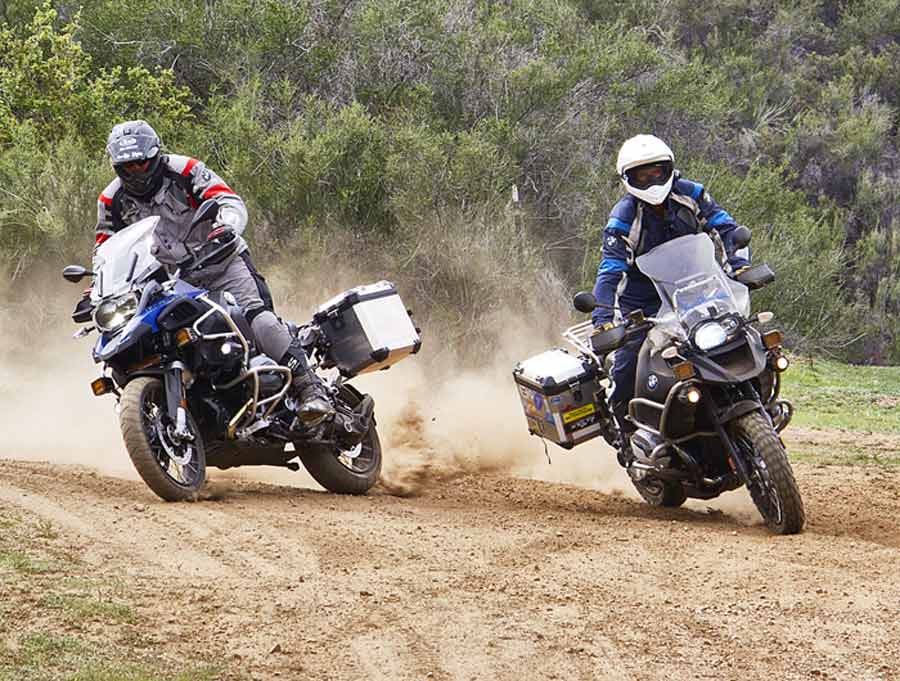
The stiffer frame allows the revised electronically controlled suspension to do its job and absorb road irregularities. Combined with the longer swing arm and wider rims and tires, the handling is noticeably improved and, on pavement, dips well into sport bike territory.
The optional electronic suspension, part of the Premium Package, includes five driving modes: Rain, Road, Dynamic, Enduro and Enduro Pro. The old suspension offered the ability to raise preload and set shock valving.
The new version integrates operation of ABS, traction control, throttle response, shock valving and preload height. It also offers, in the Enduro mode, traction control and ABS settings that allow a small amount of slip.
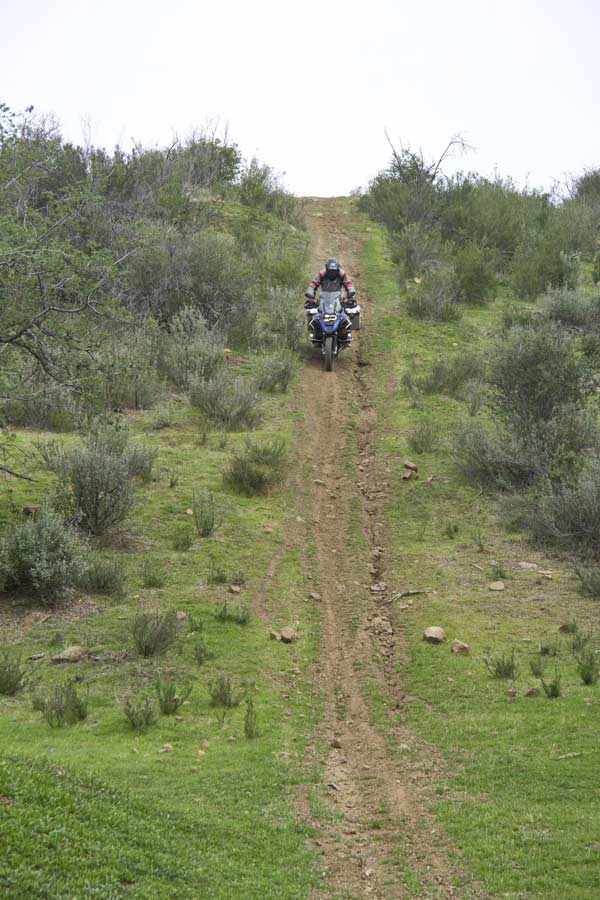 Having always ridden off-road with traction control and ABS turned off, my first encounter with steep off-road terrain in Enduro mode, with the as-delivered Anakee III dual-sport “road tires,” was astounding. As a fellow rider put it, “They got it spot-on.” The shock valving had automatically been set to “soft” and the bike rode over the undulating and loose fire road surface like it was a paved parking lot.
The Rain mode was not tested in parched California, but it promises to reduce throttle response and introduce traction control earlier. Dynamic mode allows a bit of drifting on the pavement for those riders who wish to astonish the sport bike riders in their local canyons.
For those of us who, with knobbies installed, venture into locations where mere mortals fear to tread, the Enduro Pro mode can be activated by plugging a chip into the wire loom under the seat. This pretty much eliminates traction control and cuts out ABS on the rear brake; the front brake ABS is optimized for the knobbies and with the suspension raised for max travel, the shocks are set into “hard” mode.
The computer also allows you to set shock valving in Road mode into either Soft, Normal, or Hard. Crushing some miles during a quick run from LA to San Jose on the interstate, I set the shocks to soft and the bike turned into a cruiser. Amazing.
Throwing a leg over the new bike for the first time, you notice a difference in the controls and the instrument cluster. The cruise control switch on the left handlebar looks rather flimsy, but in use it’s robust and easy to operate; as on a family car, a tap of the switch will raise or lower your cruising speed a bit.
Other control changes include a finger switch for the high beams and a more conventional Japanese-style left thumb directional signal switch. When equipped with the Premium Package, the rotating knob on the left grip also serves to control the optional Nav IV GPS and incorporates display of engine and bike functions (e.g. tire pressure readout) on the large GPS display.
The new BMW GPS, built by Garmin, has a bunch of improvements as well. The Premium Package includes a locking cradle and wiring for the GPS unit, overcoming a disliked feature of the old bike—having to put away the easily removed device when security was questionable.
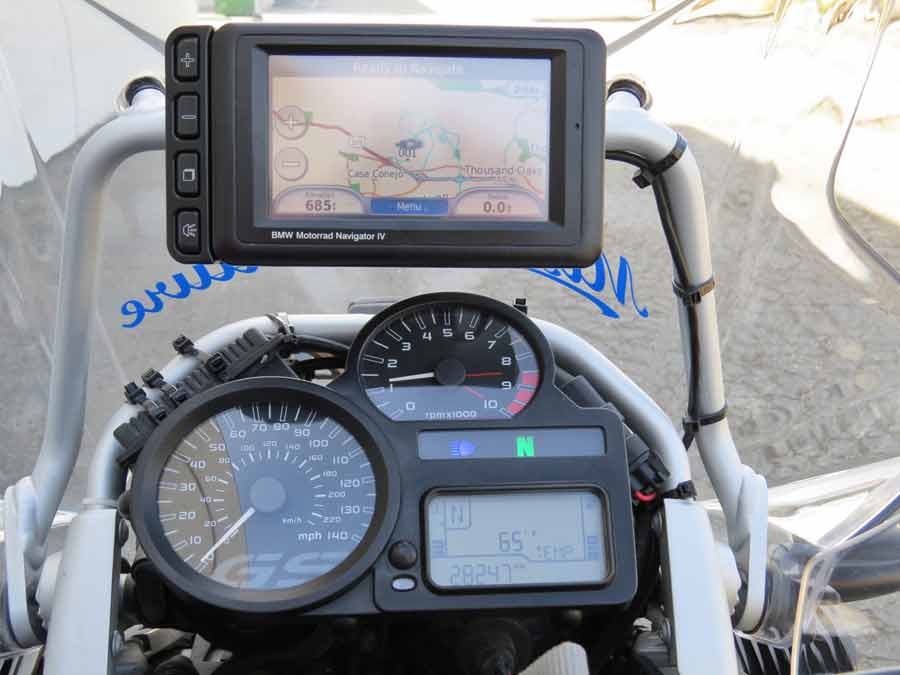
The only gripe I have with the bike is a minor one. The new instrument cluster just doesn’t read well for an analog speedometer and tach. The tach is now redlined at 9,000, versus 8,500 on the old bike, but it gets there so fast, a “prepare to shift” yellow light in the cluster would be a welcome bonus.
As for the speedo, I’d dump it and just make the digital display a bit larger with readable numbers. The range where you’re likely to get a ticket for speeding—say up to 75, is just too di˛cult to see. The good side of the new cluster is that there is more info and the gear indicator is easily twice the size—very readable.
I equipped both bikes with auxiliary lights. Not wishing to be the victim of an animal that decides to graze on the road, I opt for lots of lumens, especially offroad. On the 2012, I replaced the stock halogen headlight with an HID unit.
On the other hand, the 2014 has an LED headlight that seems as good as an HID. The new bike changes the fog lights from halogen to LED and the results are dramatically better. I leave both the headlight and fog lights on all the time for safety.
The auxiliary lights, Rigid Dually 2s with mounts from Black Dog Cycle Works, are controlled by an accessory adapter that conforms to the dictates of the CANbus system from AltRider in the form of a PDM60 power distribution module. Gone are the days of splicing a wire into the system.
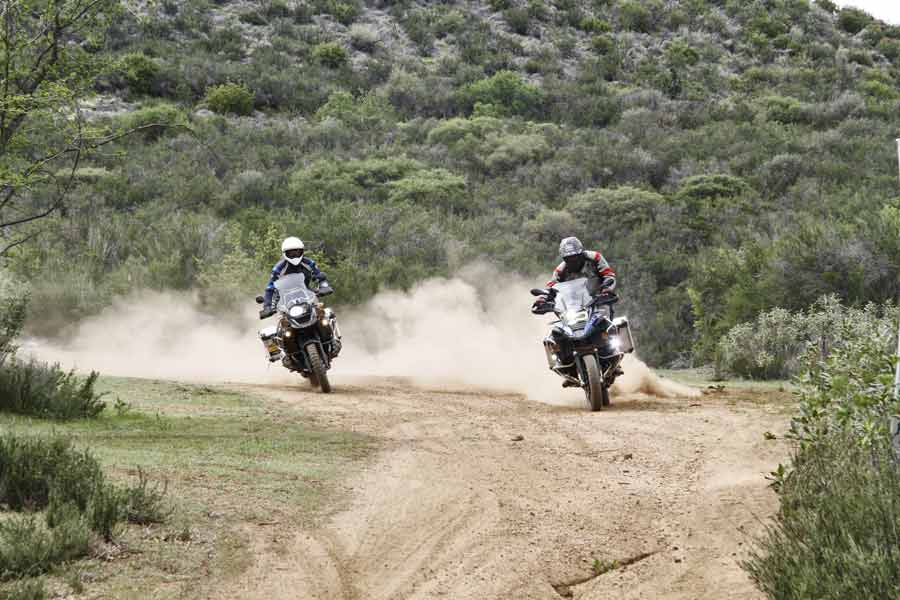
Wanting to be sure I’d be getting as much information as possible about the extraordinary abilities of the machines for this report, I enlisted the help of two of the riding coaches at the famed RawHyde, BMW’s Off-Road Riding Academy on the west coast, to take part in a comparison test of the two bikes.
A day spent with coaches Jason Houle and Travis Kuehn conÿrmed my observations on the new bike’s merits and sums up the comparison. These guys ride both versions for a living and agree that the handling and stability is improved, it shifts better, enjoys better clutch operation, and has more power.
Being skinnier in the center contributes to more control and maneuverability; and, it’s still the standard for the adventure world. Perhaps, most importantly, it’s just more fun to ride.
{gallery}ARTICLES/Bikes/2012vs2014_BMW_Comparo/gallery::{/gallery}