 Sticky logo
 Search


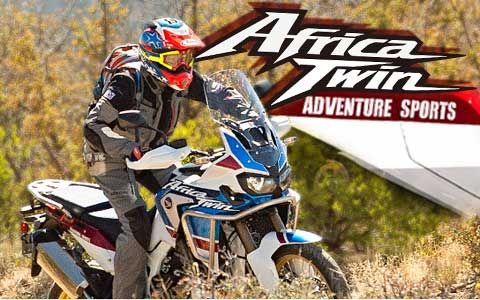
Honda rocked the adventure motorcycle industry when they introduced the CRF1000L Africa Twin adventure bike back in 2016. Since then, the competition has been heating up between manufacturers to create the most capable, do-it-all motorcycles the world has ever seen. While it seems the big CRF has taken a backseat in mainstream media, overshadowed by the high-tech Triumphs, comfortable BMWs, and performance focused KTMs, Honda now offers something new—the CRF1000L2 Africa Twin Adventure Sports.
• Suspension
On paper the new Honda CRF looks similar to the standard model. Besides the extra weight from the larger gas tank, they weigh about the same. There is no increase in power despite the “Sports” moniker. The suspension has been revised with increased travel—9.9 inches up front and 9.4 inches for the rear. The results give the CRF1000L2 the most suspension travel in its class, with 10.6 inches of ground clearance.
There’s been a few reports of “sticktion” issues with previous 2016 and 2017 Africa Twins. Honda reps have informed us that the forks for the standard CRF1000L and the new CRF1000L2 go through a new coating process. The forks on the Adventure Sports model utilize a complete different assembly as well and are designed to withstand more aggressive off-road use. Although fork dive is still prominent under hard breaking on the Adventure Sports, the bike remains at a higher part of the stroke to give it better balance. For me, at 155 lbs. the suspension felt responsive enough that I didn’t need mess with the adjusters during our test ride. Some competitors offer active electronic suspension in this category, but I think Honda really hit a sweet spot that feels great whether you’re on- or off-road.
• Electronics
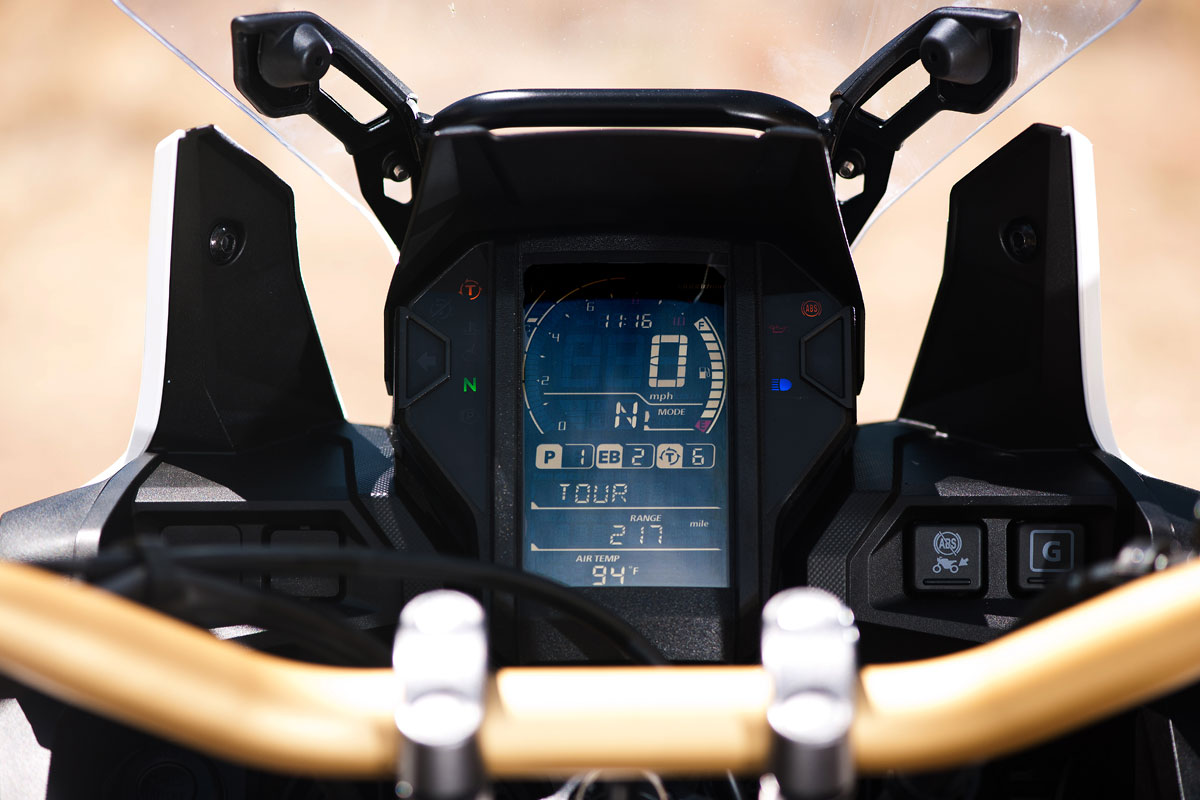
The updates to the new model also include ride-by-wire which gives both the CRF1000L and CRF1000L2 more tune-ability with torque control. There are seven Honda Selectable Torque Control (HSTC) settings to choose from, each giving noticeably different traction. Cruise gravel roads in confidence at levels six and seven, or slide around corners in the lower options. During our testing I found myself loving level two, which allowed me to kick out the back end on command without things getting too out of hand.
Engine braking can also be tuned to three different levels. The first gives significant EB, making the bike feel almost thumper-like which is ideal for technical off-road use. The middle setting is a great choice for twisty tarmac, while the third almost feels like you're free-wheeling—the setting you’ll want for highway coasting. Three power modes are also available, but during my warm and dry test ride, I decided to leave it in full power. The other options are useable for bad weather, boosting fuel economy or new riders could even wean themselves into the power delivery of the CRF. The updated readout display looks cool and is easy to navigate, but I found it was hard to read in direct sunlight.
• Dual Clutch Transmission:
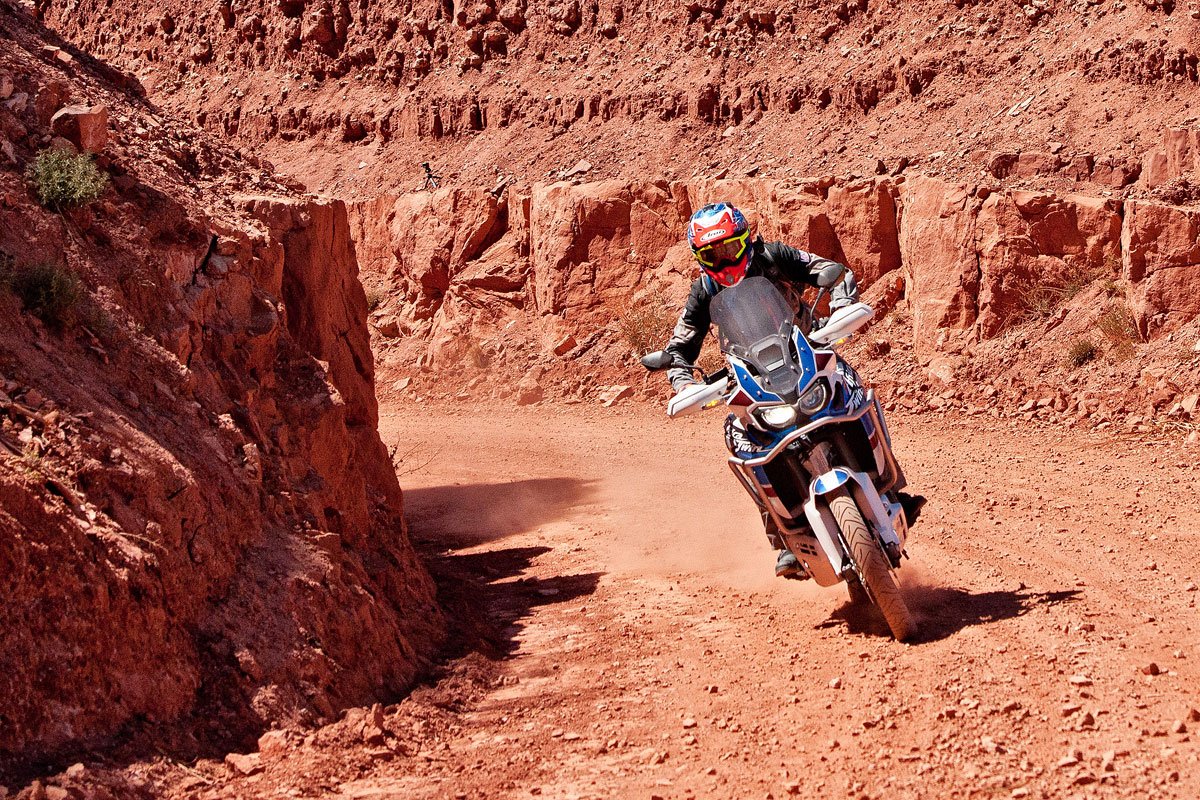
I was assigned a DCT version of the Africa Twin Adventure Sports. This is one of the most significant technologies in motorcycling today. I imagine a decade from now, several motorcycles with automatic transmissions will be available throughout the market, but if you want an automatic shifting adventure bike now, your only option is with Honda.
Learning how to use the DCT works was one of my favorite aspects of the test ride. The bike offers a standard Drive mode and multiple Sport modes. When a Sport mode is chosen, the CRF will choose shift points higher in the rev range. These automatic modes can all be overridden using a thumb and trigger shifter on the left handlebar. Or choose Manual mode for full shifting control.
Using the manual shift controls reminds me of using paddle shifters in a sports car, like BMW’s SMG or Audi’s DSG. The system works quickly, and the feeling of tapping down a couple of gears before a tight corner, powering through the turn, then rowing your way up the gearbox while the CRFs 998cc parallel twin howls, is truly a blissful and unique experience. Shifting is smooth, and the dual clutches work so well that you barely feel the bike shift gears. As much as I love a good ol’ clutch lever and foot shifter, I would highly recommend the DCT model, especially if you’ve already got a dirt bike or dual-sport in the garage. The $700 bump in premium is modest compared to the amount of technology packed into the DCT, and it really is a feature that truly sets the Africa Twin apart from its rivals.
• Bodywork/Ergos:
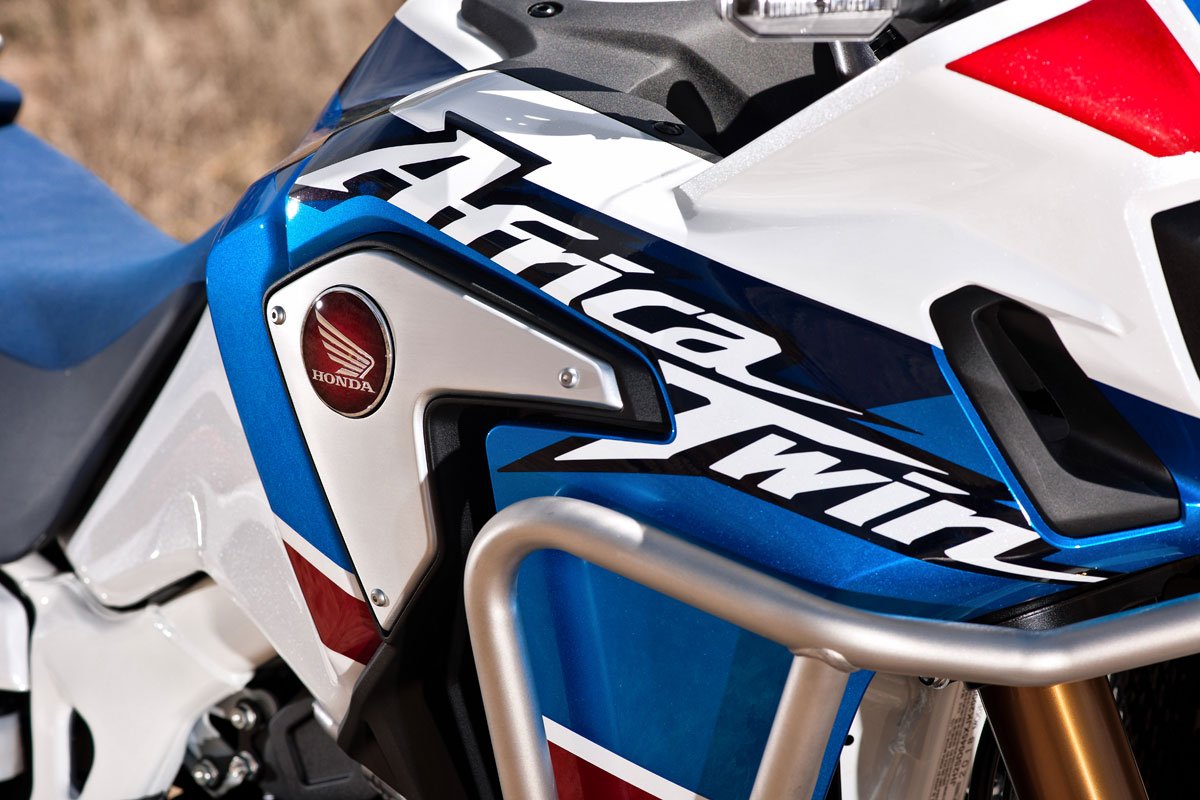
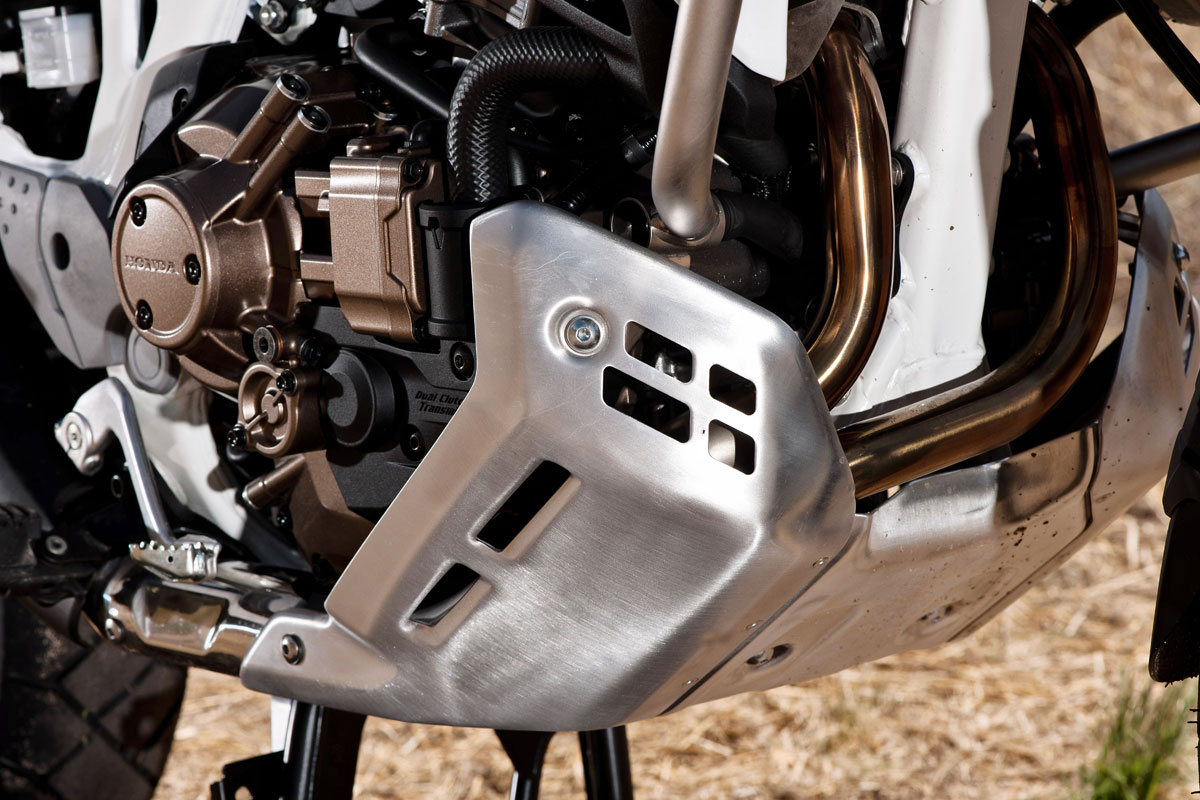
A close look at both versions of the Africa Twin will reveal a difference in bodywork between the two. The Adventure Sports model has a 6.37-gallon gas tank, a tall flat seat, high rally windscreen, a luggage rack, crash protection, and a wide skid plate. It's also got taller bars and wider footpegs, all of which are sensible mods a rider could do on any adventure bike.
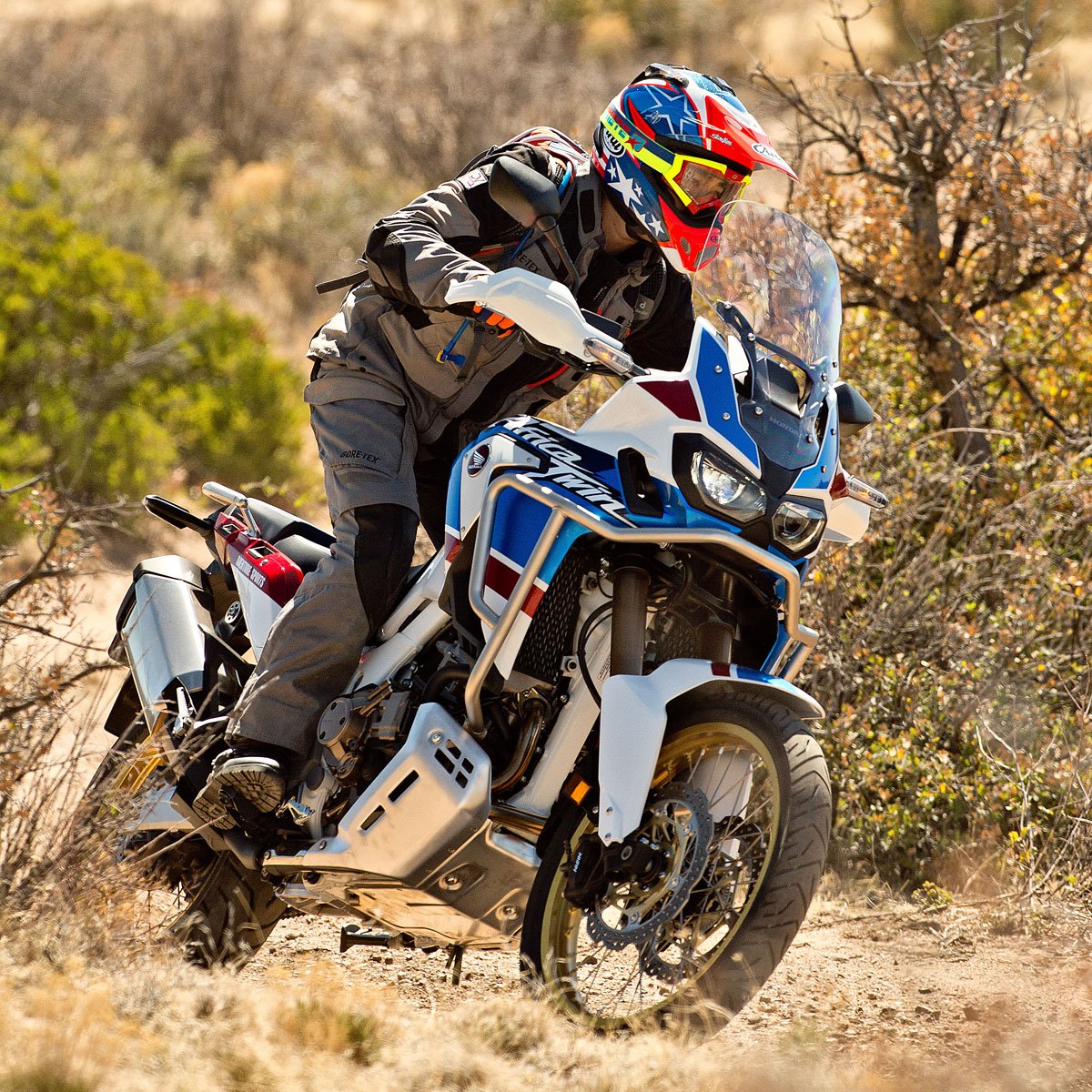 One of the things I really enjoyed about the standard AT was its low seat height. It opened the doors to many riders who simply couldn't fit other bikes in the category. The Adventure Sports sits much taller, with a standard seat height of 36.2 inches and a low seat setting of 35.4 inches. In the low configuration, I could just barely flat-foot the bike at 5'10", 155 lbs. I didn’t test the bike in the standard setting, but if you’re a little taller or heavier than I am, you’ll feel right at home. The new flat seat makes it easier to move around and you can really sit up on the tank while cornering or slide back on faster sections off-road. The taller seat also gives a little more real estate to grip with your legs.
The Adventure Sport’s tapered handlebars sit 1.3 inches higher and ¼-inch closer to the rider, which feel spot-on perfect whether I was sitting or standing on the bike. You'd think ride-by-wire plus a larger gas tank and windscreen would hint at cruise control, but unfortunately, it’s not a feature on this bike. It does however come with heated grips. The pegs have rubber inserts that dampen vibration well and can be removed for better traction in wet or muddy conditions. The passenger footpegs are now mounted from the bottom of the frame instead of the side to reduce interference. I didn’t experience rubbing against them on the standard version, but I think it’s great that Honda pays just as much attention to the small details as they do the big ones.
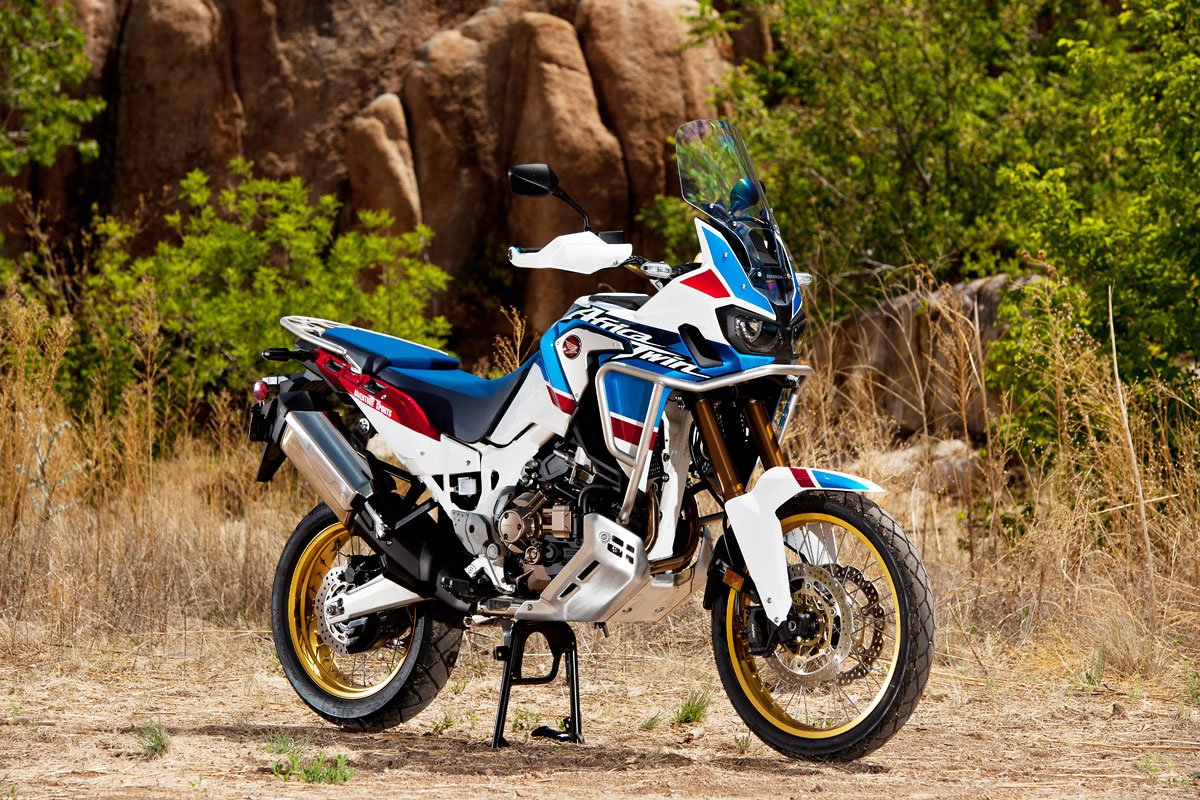
The special edition white/red/blue color scheme is a throwback to commemorate the 30th Anniversary of the Africa Twin. A white frame, gold wheels, magnesium engine cases—the styling of this bike pulls on the heartstrings of Honda enthusiasts like myself. Remember trying to keep your old XRs or VFRs frames and wheels clean? It was tedious, but so worth it! There’s lots of little details to appreciate and the bike looks just as stunning as it rides.
• Performance
Honda techs wanted to tune the Africa Twin’s power delivery by lightening the balancer-shaft weights, modifying the airbox and removing a catalytic converter from the muffler. The result is a smoother, useable power and a mid-range engine note sounds like a purring lion. The 270-degree crank gives a V-Twin feel, more than a parallel twin. Besides the suspension changes, the performance updates also carry over into the standard Africa Twin, including the ride-by-wire and electronic modes. For those who feel like they won’t fit the Adventure Sports—don’t worry, you can still enjoy the refined power delivery in the standard Africa Twin, and save a couple of bucks in the process. With 94 hp on tap, the CRFs offer all the power you need.
• Handling On-Road
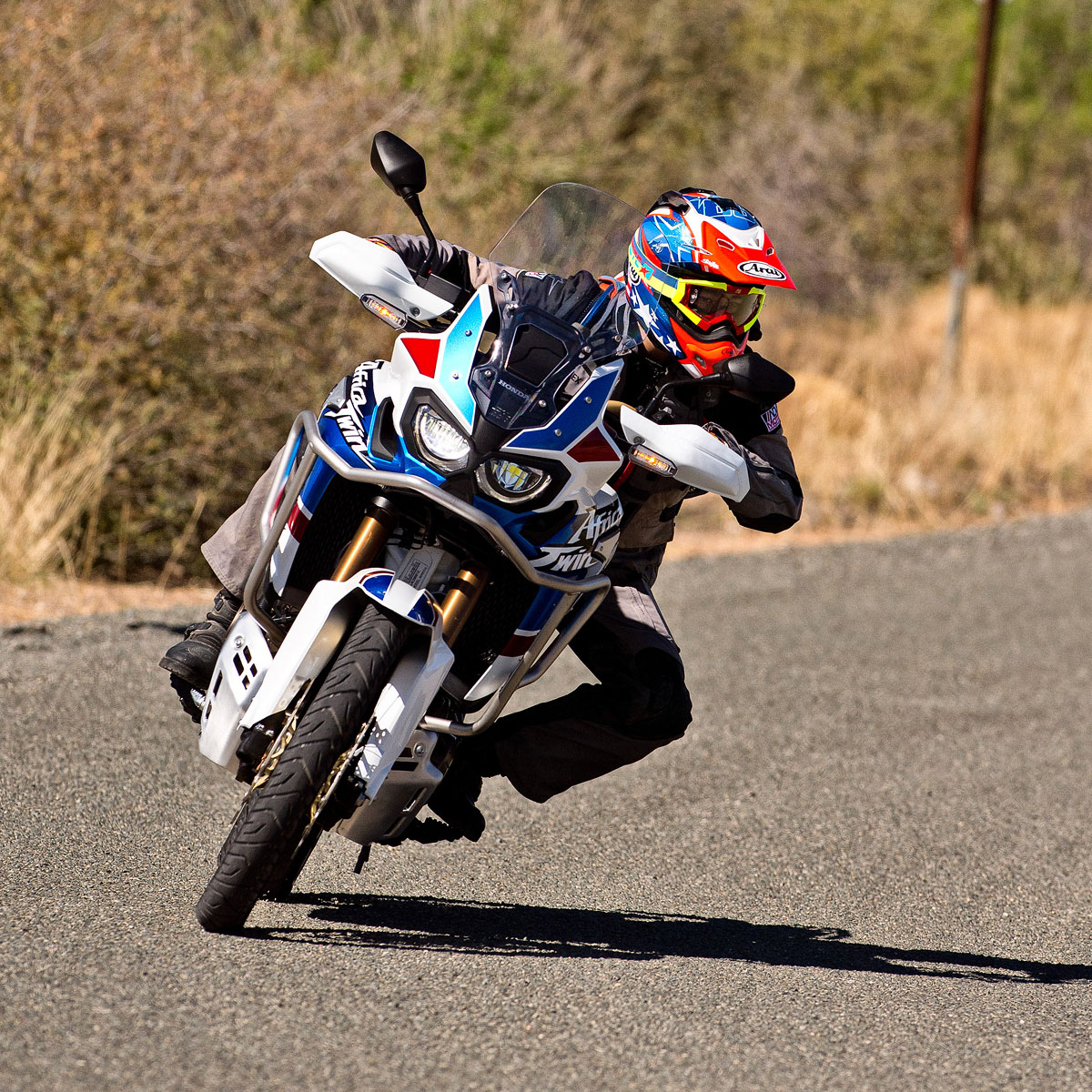 Honda isn’t out to chase performance numbers on their bikes. Instead, they focus on the user experience. All of the motorcycles in their line-up are designed to be user friendly and the Africa Twin Adventure Sports is no exception. The comfortable ergonomics and low center of gravity on the CRF made handling the bike on twisty, mountain roads easy. The DCT CRF1000L2 weighs 556 lbs. but handles like it’s almost half its weight. On tarmac, the 21-inch front wheel isn’t as confidence-inspiring as say, a 19-inch front wheel would be, but braking felt punchy and predictable. Turn-in feels neutral and in mid corner the bike doesn’t want to dive or stand-up while on the brakes. The higher seat high on the Adventure Sports means the rider really pendulums around the top of the bike instead of rotating with it like on the standard AT, but this took little time to get used to.
On the highway, the taller windscreen and larger tank on the CRF1000L2 does offer more wind protection from the standard version. For twisty tarmac, I enjoyed the settings at Power 1, Engine Braking 2, Torque Control 1. On the interstate, you’ll want to lower the EB to setting 3. The standard Drive setting is fine for highway use, but I preferred Sport 2 for everything else, including dirt roads.
• Handling Off-Road:
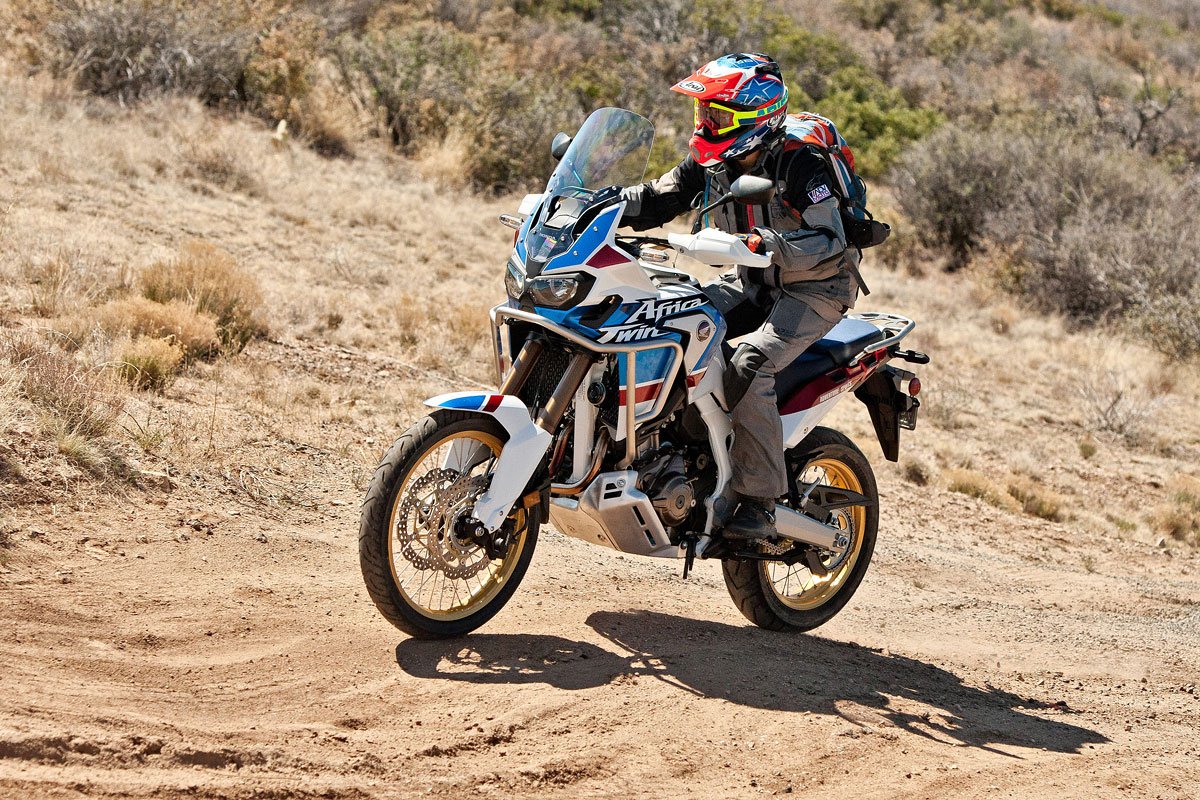
My test bike came fresh from Japan, with stock Bridgestone A41 tires. These are 90% street, 10% dirt rubbers that really excelled on canyon roads. To my surprise, they hooked up quite nicely on hard-packed dirt roads, as well. This has probably more to do with the electronics than the tires themselves, but it’s a true testament to the Africa Twin’s advanced traction control.
I thought the suspension on the standard AT was excellent off-road and I really didn’t notice too much of a difference on the Adventure Sports model. My 155 lb. wet-weight and novice riding ability aren’t enough to push either bike to their limits. For the handful of times I got both wheels off the ground, the CRF1000L2 landed with composure. I have to admit that all of my off-road experience comes from trail bikes and dual-sports, but the finely tuned electronics, off-road ABS, and supple suspension really inspired confidence in this ADV newbie.
For dirt roads, I'd recommend the settings at Power 1, Engine Braking 2, Torque Control 2. For technical off-road, increase the engine braking and decrease the HSTC by setting them both to level 1.
• Conclusion
From a technical and experiencial point of view, besides the extended range and extra suspension, the CRF1000L2 doesn’t really out-perform the standard model. In fact, the standard AT is a better choice for most deciding between the two. So why buy the Adventure Sports? Who’s it for? Surprisingly enough, it’s for people like me. A dual-sport enthusiast looking for an easy transition into adventure bikes. A Honda fan who still keeps and shows-off pictures of their trusty old XRs they sold years ago. Someone who appreciates balance, reliability, and refinement over horsepower.
Special edition motorcycles like this offer value that you simply can’t quantify. The Repsol Honda MotoGP bikes display an Indonesian saying—“Satu Hati” which means One Heart. It describes a relationship between Honda and their commitment to tens of millions of Honda riders around the world, and you really do feel that when you’re riding the Africa Twin Adventure Sports. Powersports.Honda.com
Stay tuned for our Video Review, coming soon!
MSRP:
- CRF1000L Africa Twin - $13,499
- CRF1000L Africa Twin DCT - $14,199
- CRF1000L Africa Twin Adventure Sports - $14,999
- CRF1000L2 Africa Twin Adventure Sports DCT - $15,699
PROS |
CONS |
|
▲ Premium version of a great bike |
▼ Premium price |
| ▲ Smoother power and sounds better than previous models |
▼ Tall seat limits buyer choice |
| ▲ Sharp styling with a timeless color scheme | ▼ No cruise control |
| ▲ DCT is fun to learn and sensible to use | |
| ▲ Electronics and ABS inspire confidence on and off-road |
{gallery}ARTICLES/Bikes/2018-AfricaTwin-AdventureSports/Gallery{/gallery}
• CRF1000L2 Technical Specs
ENGINE
Engine Type
998cc liquid-cooled Unicam® four-stroke 22.5º parallel-twin
Bore And Stroke
92mm x 75mm
Clutch
2 multiplate wet
Valve Train
SOHC; four valves per cylinder
Compression Ratio
10.0:1
Induction
PGM-FI electronic fuel injection (Throttle By Wire)
Ignition
Full transistorized ignition
Starter
Electric
DRIVE TRAIN
Transmission
6-speed Automatic DCT
Final Drive
Chain
CHASSIS / SUSPENSION / BRAKES
Front Suspension
45mm inverted telescopic fork; 9.9 in. travel
Rear Suspension
Pro-Link® system w/ single shock; 9.4 in. travel
Front Brakes
Two dual-piston hydraulic calipers w/ 310mm disks; ABS
Rear Brake
Single one-piston hydraulic caliper w/ 256mm disk; ABS
Front Tire
90/90-21
Rear Tire
150/70R-18
DIMENSIONS
Wheelbase
62.2 inches
Seat Height
Standard position 36.2 inches/Low position 35.4 inches
Curb Weight
555.8 lbs—Includes all standard equipment, required fluids and full tank of fuel—ready to ride
Fuel Capacity
6.4 gallons including 1.0-gallon reserve
Emissions
Meets current EPA standards. Models sold in California meet current CARB standards and may differ slightly due to emissions equipment.
Available Colors
White/Blue/Red
FACTORY WARRANTY INFORMATION
One Year
Transferable, Unlimited-mileage limited warranty; extended coverage available with a Honda Protection Plan. (Extendable to 5 years)