 Sticky logo
 Search


• Overview
There’s a growing trend in the ADV community towards rethinking the meaning of “adventure bikes.” Although our genre of riding is relatively new in the grand scheme of motorcycling, it remains an ongoing experiment in the gear and the bikes we choose for the task.
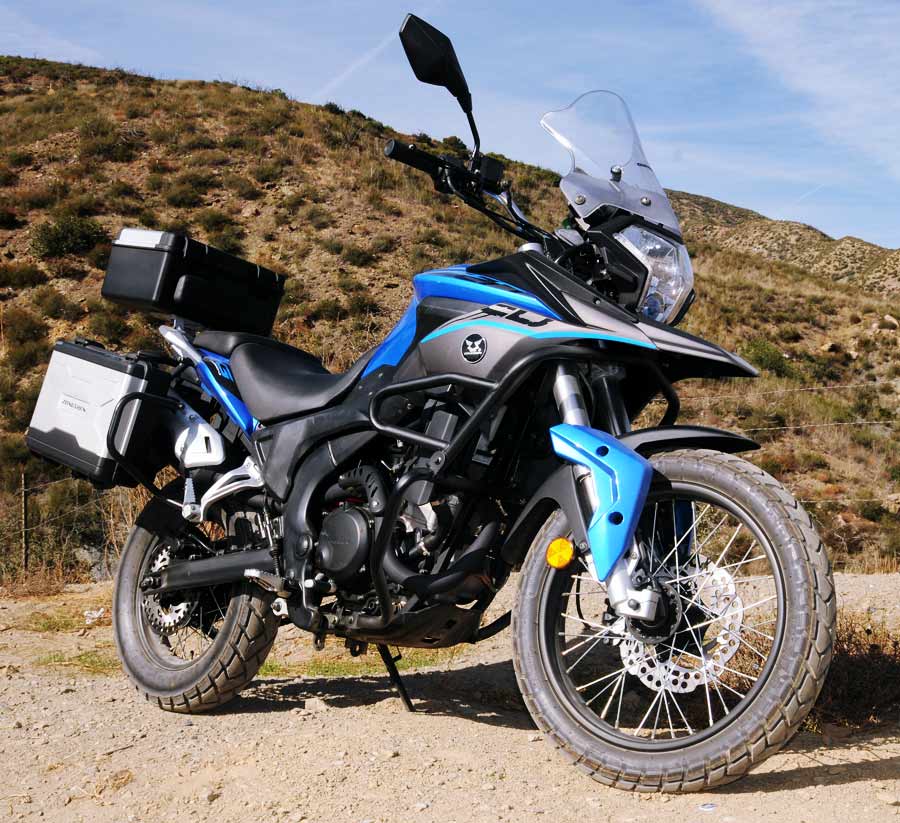
Engine size includes the entire spectrum from tiny 90cc Hondas to the full-blown big enduros of BMW and KTM. While the reasons behind why one might choose a small vs. a large bike are many, it remains clear that the low-end options have just opened up a wee bit more by CSC’s soon-to-be available Cyclone RX-3 adventure bike.
Writers such as Austin Vince, Andrew Pain, Lois Pryce and Ed March have been touting the advantages of going small for years. Although under 400cc motorcycles are far different than their larger cousins, some argue that adventuring on small bikes offers more immersive and intimate experiences.
• Small is Big
When it comes to RTWing, or adventuring around our own continent, for some a 250cc is perceived as “too small.” Well, that may be the case if requirements include dragging along 200 lbs of cargo, high-speeds, or non-stop off-roading. But when you think about how going light and slow while poking around backroads and lesser highways, and how the economics of a small bike will affect your journey, it’s no wonder that so many riders are scaling down. On top of that, small bikes sell for almost “throw-away” prices.
International riders acquainted with the cost of cash bonds or insurance for a Carnet de Passage, know that it can be beaucoup expensive to get their bikes into some countries as their “import” is based on the value (or multiples of it) of the machine. Likewise, there’s also the associated issues that go with the possibility of a wrecked or stolen motorcycle.
Add in other factors, like the cumulative costs for fuel, maintenance, repairs and whenever the bike may need to be shipped, trucked or flown, and the savings make it possible for some who otherwise could never afford to travel. At $3,500 for a new Cyclone, the playing field is certainly a lot more palatable.
More advantages of going small include:
• Low octane fuel requirements
• Lightweight for easy maneuvering (easier to pick up, too)
• Forces rider to travel lighter (less gear)
• Easier and less expensive maintenance/repairs
• More miles per gallon (the Cyclone does about 70mpg)
• Cheaper purchase price
We’ve been tracking CSC’s 250cc adventure motorcycle since word first got out and went viral. CSC just happens to be “up the street” from our ADVMoto west coast office in California, making it more than convenient to check things out.
Joe Berk, the company’s marketing manager and consulting engineer, met with us a few weeks ago for a preliminary look at the prototype. Now that they’re almost through the EPA approval process, and the release date nearing, Joe asked us to join him for a press-only demo ride to see what it’s all about.
CSC only had one official demo bike that’s not quite the finalized version, but Joe said that they’re on the way to China next week to make a few tweaks and ready the first shipment. ETA is late winter/early spring. Additionally, CSC is preparing to equip the bike with a few optional aftermarket goodies.
Upgrades may include: bigger footpegs, aux LED wing lights, aluminum panniers, hand guards, an optional 17″ rear wheel, different tires (knobbies, etc.), handle bar risers, and other seats. A full shop manual will free with the purchase.
And a $350 diagnostic computer will be available for sale or on a weekly rental basis. They’re also busy readying YouTubes that show how to do common maintenance tasks.
In order to keep the price of the bike and its parts as low as possible, they plan to run everything from their plant in Irwindale, CA, with all parts in stock and ready for immediate shipment. They’ve had their own line of Mustang motorcycles for years, and they’re also an OEM for Yamaha and Kawasaki parts, so they’re well-equipped to handle this new endeavor.
Keeping everything under one roof is a strategy that an increasing number of businesses are adopting to combat high distribution costs. Given CSC’s customer service team’s excellent reputation, web support and the speed of shipping these days, this business model should work well for Cyclone owners. Maintenance and repairs will be relatively painless, no matter where you are in the world—especially North America.
• Test Ride: Suspension and Geometry
For the day’s demo, I was expecting an hour or two light ride around the city streets and perhaps a little freeway. But Joe surprised us with a realistic and rigorous test route that included a cross section of many of the environments one is likely to encounter when out there.
It was everything from freeways, dirt and gravel roads, and steep inclined dirt track, to debris-infested mountain road twisties at high altitudes. In other words, he had no intention of babying us or the bikes.
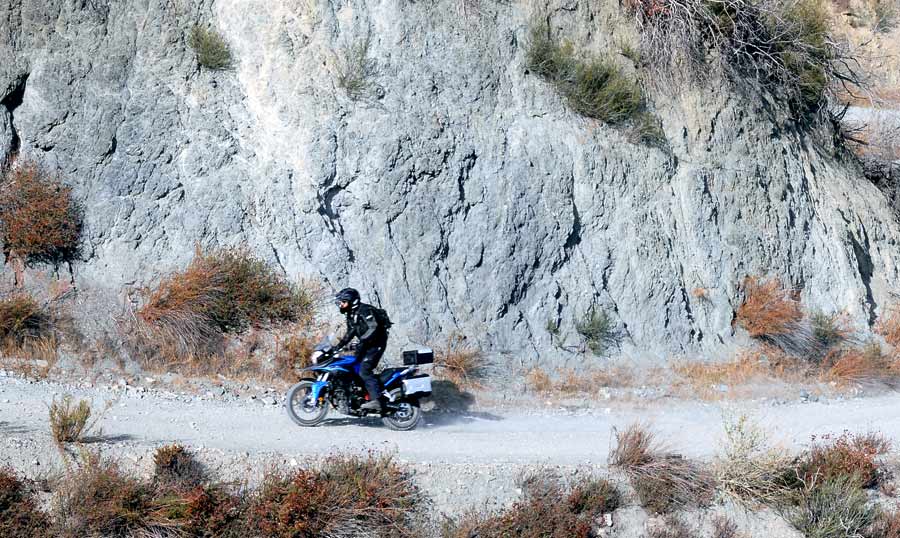
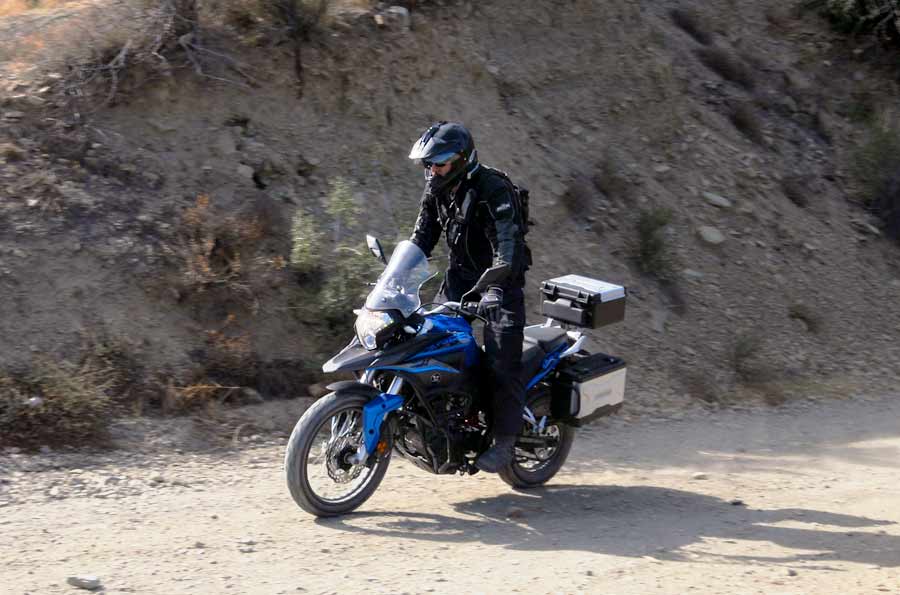
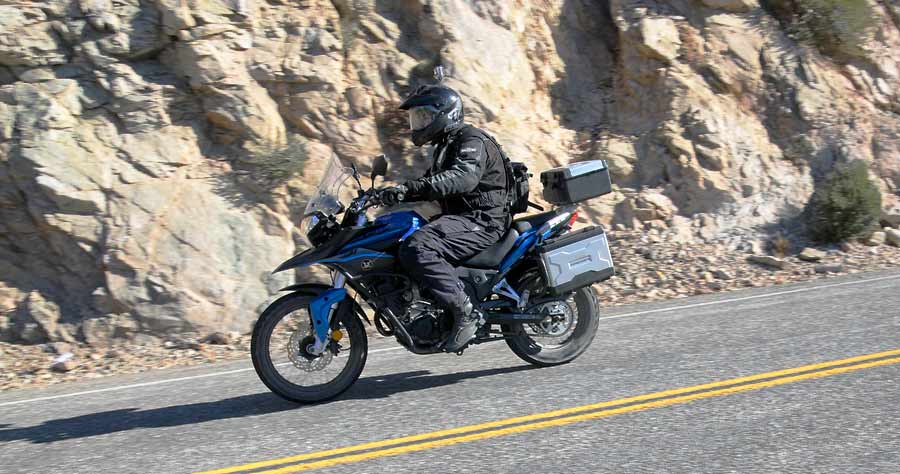
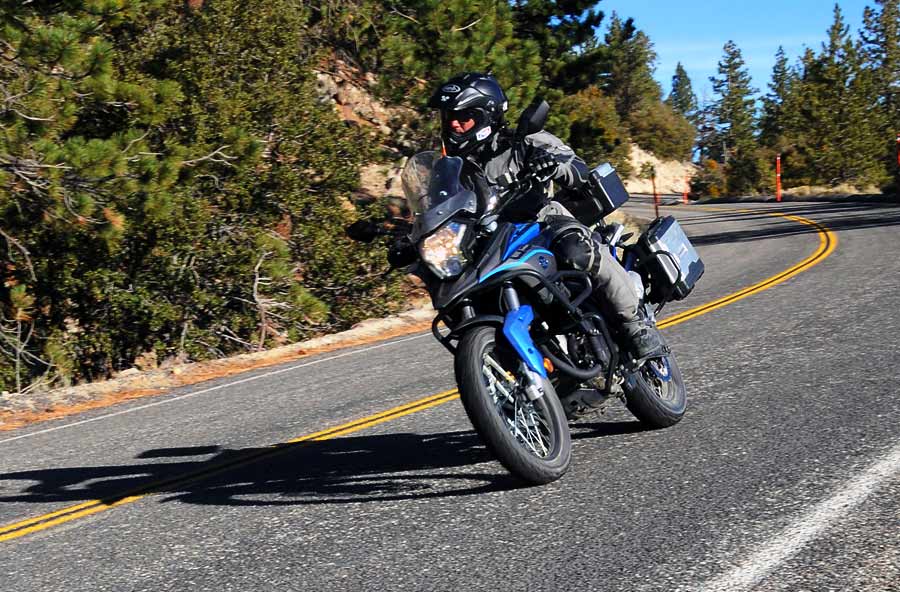
I’ve been riding these roads for decades but had completely forgotten what fun it is to haul a lightweight bike around. We rode from the desert to over 7,000 feet through the iconic Los Angeles Crest Highway, and the Cyclone ate it up.
One has to keep in mind that this isn’t a $20K bit of German engineering, and considering the Cyclone’s $3,500 cost, that difference means compromises—by no means is that bad, just different.
With the Cyclone, you’re dealing with a relatively simple single cylinder, lightweight bike that comes loaded with features uncommon for this size and price point. With an 18″ front and a 15″ rear, some may wonder about the rear—especially the availability of 15″ tires.
CSC plans to stock several varieties, but will also offer a more practical 17″ rear wheel option (~$200). Tire availability aside, I didn’t find the 15″ rear a hindrance. And off-road, the Cyclone remained surefooted, getting me through some of the rough stuff with relative ease. The suspension is better than expected, too. With 5.1″ of inverted telescopic travel on the forks, and 5.6″ of adjustable monoshock in the rear, it doesn’t have a spongy feel, and you’d have to push it to bottom out.
• Engine, Range and Ergonomics
The tank holds about 4.25 gallons and at 70 mpg, that’s in the neighborhood of 300 miles per visit to the pumps. Not bad. And, at highway speeds, this bike will chug along all day at 65–70 mph without stressing.
The ergos are okay too, and even with my 6′3″ frame I didn’t feel cramped after riding all day, although I’d add a couple of inches of bar risers and larger pegs to make stand-up riding more practical. The panniers are basic and useful for city use, but for distances I’d swap them for a good set of soft saddle bags.
The most noticeable downside to the Cyclone is its slightly idiosyncratic six-speed transmission. At times I experienced difficulty shifting from first to second gear. And for some reason, neutral was best approached from second gear. These issues are not a deal killer, but it does take a little practice to get around the clumsy feel.
High altitudes showed zero ill effects on the EFI’d thumper. Although there were times when I pegged the throttle in order to maintain speed or rapid increase in altitude, the Cyclone never let me down.
Our day’s ride left me with the burning desire to scale way down and take the Cyclone for a long trip around Central America. With a set of knobbies, it may be the ideal ride. Thinking along the lines of a backpacker, going with minimal gear and just the basics, this is going to be a game-changer for the ADV community.
The 300 mile range on low octane gas makes it sweeter. Although we’ve yet to put the Cyclone through its paces on a long-haul ride, stay tuned, because CSC is planning a Baja trip this spring. Hopefully we’ll be along to report back as to how things went.
Based on the day’s experiences, we’re not expecting any surprises. The Cyclone appears to be a well-made solid machine that’ll require minimal maintenance and upkeep. And at this price point, it’s a no-brainer. CaliforniaScooterCo.com
{gallery}ARTICLES/Bikes/CSC_Cyclone/FirstRide/gallery{/gallery}