 Sticky logo
 Search


 Photo from ADVMoto's "Lucky 'Break' on the Trans-Labrador Highway" article in our Jan/Feb 2014 Issue.Insurance companies provide an invaluable service to all drivers, that can’t be denied. What’s unfortunate is that people often end up paying much more than they need to. If you’re a safe driver with a little know-how, your policy doesn’t have to break the bank.
The best way to avoid shelling out more than you need to is to educate yourself on your options and steer clear of companies that push you to add policy on top of policy. Read on to get a definition of terms and a few money-saving tips.
LIABILITY INSURANCE
This is a general form of insurance that protects the insured from risks or liabilities that would come from a lawsuit. Usually liability insurance is not used for payment to the insured, but rather to the person who might be filing a lawsuit or has had damages done to their vehicle.
Liability coverage is required in most states, and usually comes with guest passenger coverage. Most insurance companies, as well as many experienced riders, suggest getting as much liability coverage as you can afford.
UNINSURED/UNDERINSURED COVERAGE
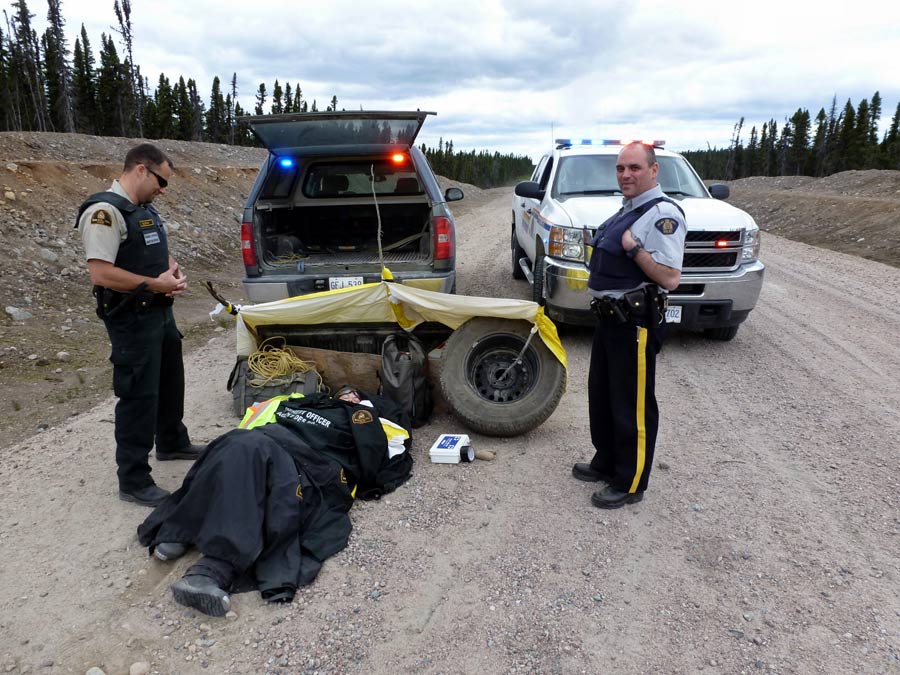 Photo from ADVMoto's "Lucky 'Break' on the Trans-Labrador Highway" article in our Jan/Feb 2014 Issue.If you end up getting in an accident and it’s the other driver’s fault, they should be paying you for any motorcycle damage or medical costs. However, sometimes the other driver doesn’t have insurance. Underinsured and uninsured coverage helps you if you’re ever unlucky enough to get tangled up with the uninsured. Prices for this range from 20k to 1 million dollars, so it’s pricey, but it offers the ultimate protection on the road.
COLLISION AND COMPREHENSIVE COVERAGE
COLLISION
Collision coverage basically pays for anything that happens to your motorcycle on the road. Traditional accidents, as well as damage from loose debris, or from the road itself, are covered by collision coverage.
COMPREHENSIVE
Comprehensive covers mainly anything that collision coverage doesn’t. This means if you’re motorcycle gets vandalized, stolen, randomly catches on fire, or befalls any other unexpected tragedy, you will be covered. This also covers weather damage, and sometimes even the contents in the vehicle that have been damaged from the weather.
Now that you understand all of the technical basics behind coverage options, it’s time to learn how to save money and not get taken advantage of the shrewd insurance companies.
CONTROL YOUR COSTS
If you’re not buying an expensive bike, don’t get tricked into spending money on expensive insurance. Two ways to save money when you have a cheaper bike is by not forgoing comprehensive and collision coverage. This will save you about 60% of the insurance costs, and considering the price of your bike, these costs are probably not worth it.
Also, you don’t necessarily have to pay “Med Pay,” which is medical insurance for motorcycle riders. Many people are already covered through their normal health insurance. If this is the case, it really isn’t worth it to buy an extra policy specifically for motorcycle accidents.
ASSOCIATIONS
 Most major insurance providers provide certain benefits to people who are part of well-known motorcycle associations. For example, Allstate offers discounts for members of: American Motorcycle Association, BMW Motorcycle Owners of America, Gold Wing Road Riders Association, Gold Wing Touring Association, Harley Owners Group, Motorcycle Safety Foundation and Venture Touring Society.
The most interesting one of these associations is the Motorcycle Safety Foundation. Graduating from the Motorcycle Safety Foundation will automatically make insurance companies consider you a safe driver. And since all insurance providers offer discounts for save drivers, this move could save you some serious dough.
If you’re even a moderately-experienced motorcycle driver, the course is quite easy. If you repeat it every three years, your rates will stay low year after year.
CREDIT SCORE
Put yourself in the position of an insurance provider. How would you feel about giving insurance to someone who’s proven himself to be risky and unreliable with money? You’d probably demand a higher rate, since it’s a bigger risk for you.
This explains why your credit score will often directly affect your insurance rates. The more you can prove yourself to be a reliable and responsible individual, the more insurance companies will be likely to offer you low rates.
OFF THE BEATEN TRACK
For most serious riders, a trip abroad wouldn’t be complete without seeing a bit of the country from a motorcycle. So, make sure that you do your research on what you’ll need to be protected when you ride. First, you should acquire an international driver’s permit from AAA – it’s not another test, just basically a translation of your current license.
If you’re staying in North America, your existing policy may very well cover you, but it’s always best to call to check. You may be able to purchase international coverage for an added fee. As for overseas travel, the first consideration is whether or not to bring your own bike along. You should keep in mind, however, that to bring your own, you must own the bike outright and be insured or it won’t be released to you. You’ll also need to insurance for different regions. In Europe, it’s the Green Card insurance, which usually covers you for Collision, Comprehensive, Guest Passenger, and Uninsured Motorist.
Unless you’re planning on taking a long journey, I’d recommend going the easy route and just renting a bike wherever you go. You’ll still need insurance, but usually that will be between you and the company that rents you the bike. Regardless, you should consider investing in international medical insurance. You’ll want to be protected in case of an accident.
BOTTOM LINE
There’s no reason why you should buy more coverage than you need, especially if you’re low on cash. However, it’s critical to have the coverage you need. There’s nothing worse than needing money for repairs and medical work when you don’t have it.
Understand what you’re going to use your motorcycle for, and then talk to your insurance provider about what coverage is really necessary for your particular situation.
The whole point of insurance is to make sure that an accident doesn’t put you in the poor house. But your insurance policy shouldn’t put you there either. It’s worth investing a bit of time to find your “just right” plan – one that will give you equal parts protection and freedom.
 | Author Bio: Jay Deratany is the founding member of The Deratany Firm and is a top Chicago injury attorney. His passion for helping people extends beyond the firm and into his extensive pro bono work and personal philanthropy. For more information, visit The Deratany Firm and connect with Jay on Google+. |