 Sticky logo
 Search


While some make the rise to rock star status, other players compete through innovation—attempting to expand an existing market or create niches of their own. In the big adventure class, one of the more recent up-and-comers is Yamaha’s XT1200Z Super Ténéré—the big brother to their already tried-and-true XT660Z Ténéré (suspiciously missing from the North American market). We recently conducted a road test of the 2012 model through 1,500 miles of southern California deserts, mountains and coastal roads, to provide you with what we hope will be useful information about this great new machine.
If you’ve read other reviews of the Super, then you couldn’t have missed the frequent comparisons to BMW’s big GS. If there was a hurdle to clear, that was it… and it took a couple hundred miles to shed the comparison imprint. Why? Although the Super is an adventure-class machine, it handles more like a hybrid adventure/sport bike with smooth shifting, superb braking, traction control and intuitive suspension. This is an important distinction because the BMW R1200GS (especially the GSA) is more of an adventure/enduro hybrid with its higher ground clearance and longer suspension travel.
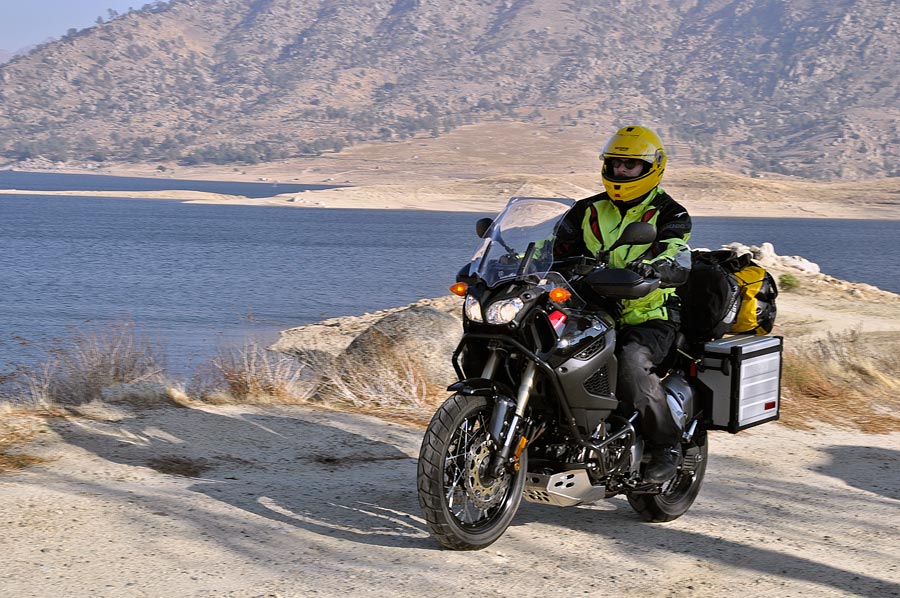 Enjoying some California Gravel on the Super Tenere
The Super is also an overall smaller bike and is sized for riders under six foot. And, last but not least, the handling and control of the Super is heavily influenced by its innovative computer control system—by itself giving the Super completely different riding characteristics from any other machine. Although it is clear that Yamaha took some of its cues from other great bikes, their design philosophy is pure and new enough to, in my opinion, allow the Super to stand on its own.
ERGONOMICS
One of the Super’s features is that it’s made to order for those who are less than six feet tall. In fact we asked several medium-height adventure biker friends (both guys and gals) to plunk down in the saddle and there was uniform surprise that an adventure bike actually fit them comfortably.
Likewise, it’s a well-balanced machine, not top-heavy at all. The height-adjustable stock saddle is wide and flat, taking eight-hour days without a problem—with a removable passenger seat for extending the luggage rack. The windshield was efficient, although a little small; some riders may prefer more coverage. The controls, complete with handguards and dual-temperature heated grips, added extra safety and comfort to the cold mountain regions we rode. The digital instrument panel, especially the MPH gauge and the turning indicators, is huge and unusually easy-to-see in bright daylight. A six-gallon gas tank not only lengthens distances between pumps, but is carved to fit the knees and shield them from wind and flying debris. I was also surprised by the quietness of the driveshaft and the engine—especially noticeable on a smooth highway where literally all you hear is the sound of the tires against the road.
BRAKING AND STABILITY
The Super comes with dual brake systems—ABS and a Unified Braking System (front brake operates both front and back brakes)—plus Traction Control. Along with the user-selectable driving modes, these systems work together to help hold the bike on the road. However, this system takes a little getting accustomed to, and depending upon the driving mode can be quite noticeable. But once you’re familiar, the bike takes on a sure-footed “cat on a carpet” quality.
Some of the off-road guys have complained that the ABS cannot be turned off. But it seems that this wasn’t accidental, and that the engineers did a lot of rethinking about how a bike could respond in dirt, mud and gravel with a fully integrated computer system. Read on….
COMPUTER ASSIST
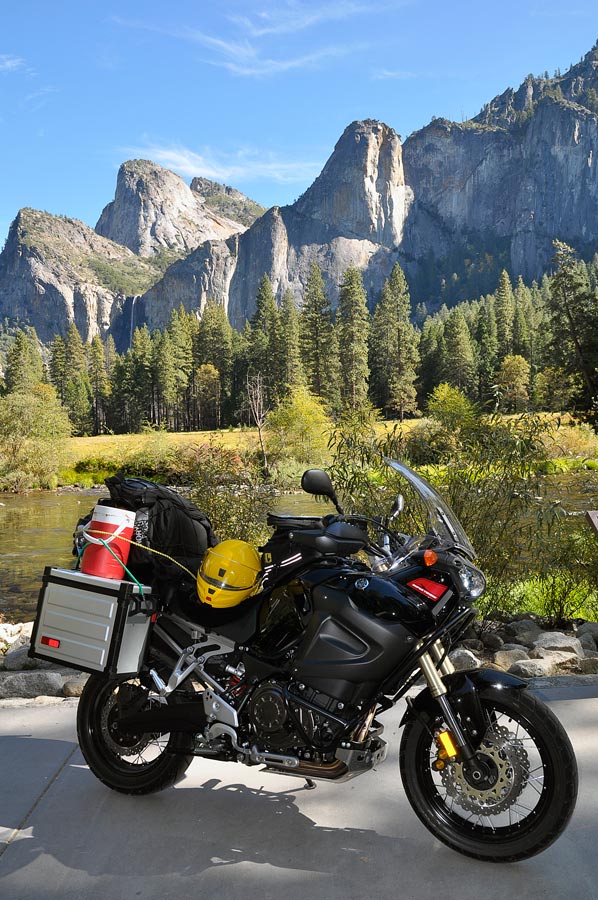 In addition to the braking and Traction Control systems, the Super also has an integrated computer-assisted selection of user-selectable modes. BMW has been experimenting with their systems for several years, but the Yamaha has its own take on how this comes together. Unlike BMW, where computer assist is optional, with the Super its standard equipment, and integral to the bike’s design.
Here’s the way it works. The Drive mode selections are: T (Touring) or S (Sports). These modes change the general driving characteristics with a given feel of their namesakes. In addition to T or S, you may also select from one of three Traction Control modes: 1, 2 or OFF… where “1” is “ON” (default), “2” gives the TCS a more sporty feel, and “OFF” shuts the Traction Control system down. All of these modes work in conjunction with the Drive modes, but must be manually set when you fire up the bike and do not return to their last setting when switched off and then on again.
During the week I road tested the bike, I frequently experimented with these modes and found that they do indeed effect major changes to the way the bike accelerates, brakes and handles on various road surfaces. I believe these modes are why Yamaha’s engineers elected to not have an “OFF” switch for their ABS. Off-road, the Super does not respond in the same way as bikes without ABS, or with the option to turn ABS off. Therefore, if you are an experienced off-roader then the Super’s system may require some trial and error to gain the proper feel… but who knows? You may prefer the Super’s computer assist.
AFTER-MARKET
One of the very cool things about the Super is that companies like Touratech and AltRider have been busy with after-market accessories and upgrades. And for the Super, that basically means improved armor and luggage systems. We recently spent some time with the guys from AltRider and they were kind enough to walk us through their extensive list of innovative bolt-ons. If I was planning an extensive trip with the Super, I’d order the lot. Superb quality, extremely rugged, and good-looking custom components provide added insurance that your beefed-up machine will endure the expected punishment.
ALTRIDER ADD-ONS
The folks at AltRider discovered a couple of potential snags with the stock rear brake master cylinder guard and the universal joint guard. AltRider’s improved designs prevent the rider’s pants from accidentally becoming lodged between the guards and the frame.
AltRider’s improved crash bars. They’re super-strong, like all of the AltRider bolt-ons. Made of stainless steel (less corrosion), and are quite a bit higher and more protective than stock.
Another “must” modification is the AltRider side stand foot extension. Its wider surface makes using the side stand in sand or other soft surfaces a lot more stable.