 Sticky logo
 Search


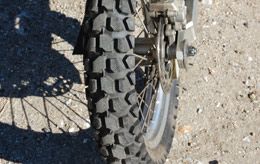
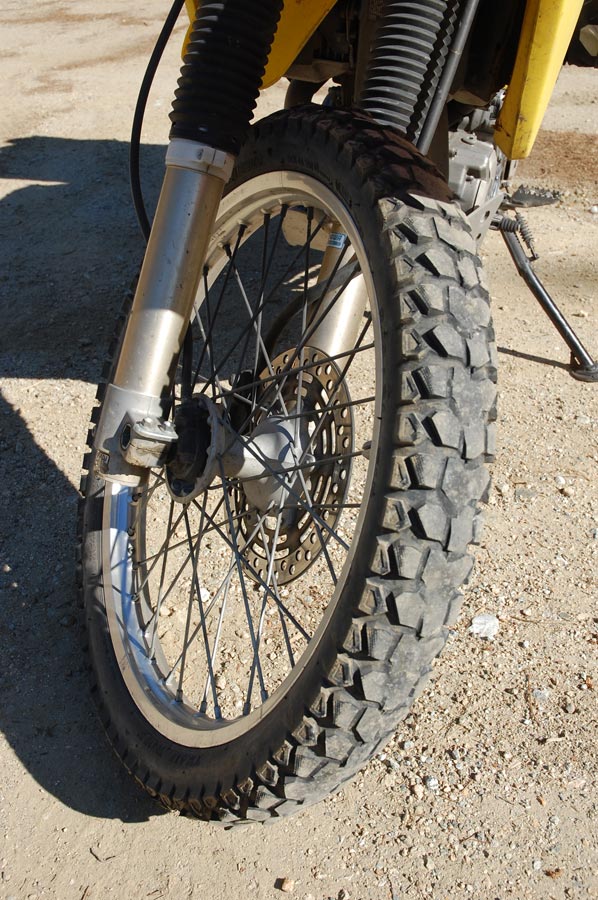 Secondary to nailing down the best bike, tire choice seems to be the hottest topic in the adventure community. With a vast range of requirements, it’s impossible for any one type of tire to address the full range of needs for both dirt and street. That said, the ideal tire would perform great in the dirt and be made from a compound that’s not too soft to wear off in nothing flat on either pavement or rocks.
Coming from the D606 camp, I waited until after returning from my “Southwestern Solo” last October to put on the Vee Rubber VRM-206 tires for a test. I wasn’t sure if they would measure up on off-road terrain with a full load. Even with the heavy-duty sidewall construction, I was able to spoon them on myself with the aid of my Motion Pro BeadPro.
The destination of choice to scrub them in was our beloved Angeles Crest Highway in the LA area. Being a good ~80/20 tire, I immediately noticed the responsiveness of this more rounded tire than the D606s, especially the lack of knobby dance on pavement. The VRM-206 lugs and their irregular shape at a 10mm height are smaller than the rectangular D606’s at 14mm, they’re also closer together providing much more traction on the tarmac, with better tracking and less highway noise. I continued to test their road-worthiness through a fun, twisty, heavenly ride on Mulholland Highway.
These tires are stable both straight up standing on the pegs and while cornering on the rails. Although I knew 80/20s would have great highway manners, the real test was in the dirt at the ADVRider Noob Rally in Death Valley. There I opted for the 120-mile dirt ride to the Saline Valley hot springs and back, covering some great terrain of dirt, gravel, rocks, sand, and whoops.
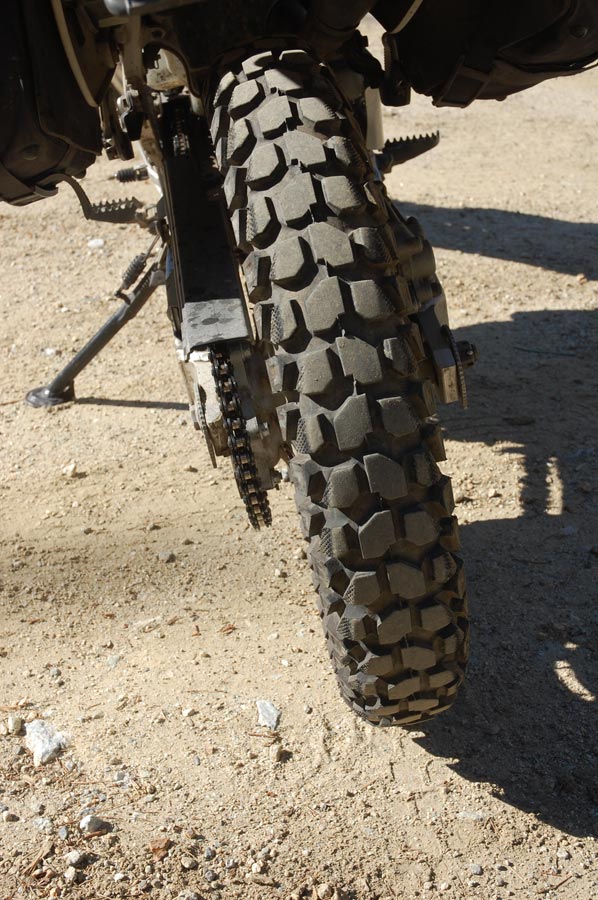 To test their total effectiveness in the dirt, I chose not to air down. Even though they’re not knobs, the VRM-206s perform better in the dirt than typical 80/20 tires, such as the stock Bridgestone Trail Wings. They hook up nicely on the packed dirt, and break loose evenly without catching.
With some nice sand pits of approximately 100 yards of 6-inch soft sand, I was able to lift the front tire out at about 15 mph and steer gently and easily while letting the bike dance at 20–25 mph. There was only one pucker moment after the howling wind blew me into a deep sand rut at speed and tossed me out sideways. The bike and tires responded beautifully, keeping me upright after I corrected to avoid a header.
At 2,500 miles now, the rear tire has some good tread left, but the front has cupping down to its body. Over all, I’ve been pleasantly surprised with the performance of these tires on both street and dry dirt, and with price point equal to that of its competitors, it remains high on the list for good 80/20 tires. MSRP: Front $90.95 (3.00-21); Rear $99.95 (4.10-18) Veerubber.co.th
PROS |
| ▲ Rear tire has good tread life |
| ▲ Heavy-duty sidewall construction |
| ▲ Competitive price point |
CONS |
| ▼ Front tire cupping at 2,000 miles |
| ▼ Less wear for more traction |