 Sticky logo
 Search


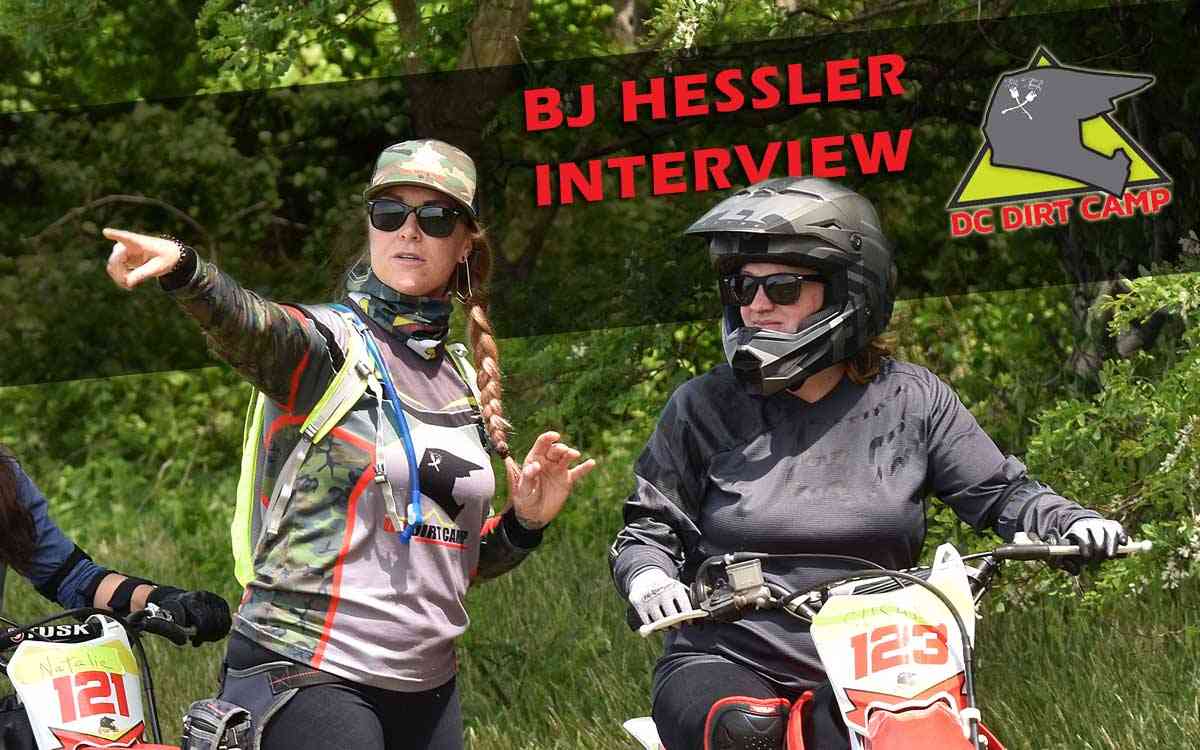
The Washington DC area is full of training services, but none like DC Dirt Camp. DC Dirt Camp offers off-road motorcycle training to everyone from kids to adults and how it started wasn’t an easy road to success. We caught up with BJ Hessler, DC Dirt Camp’s founder, to find out some of her background in riding, what challenges she’s facing and also what people can expect from off-road motorcycle training.
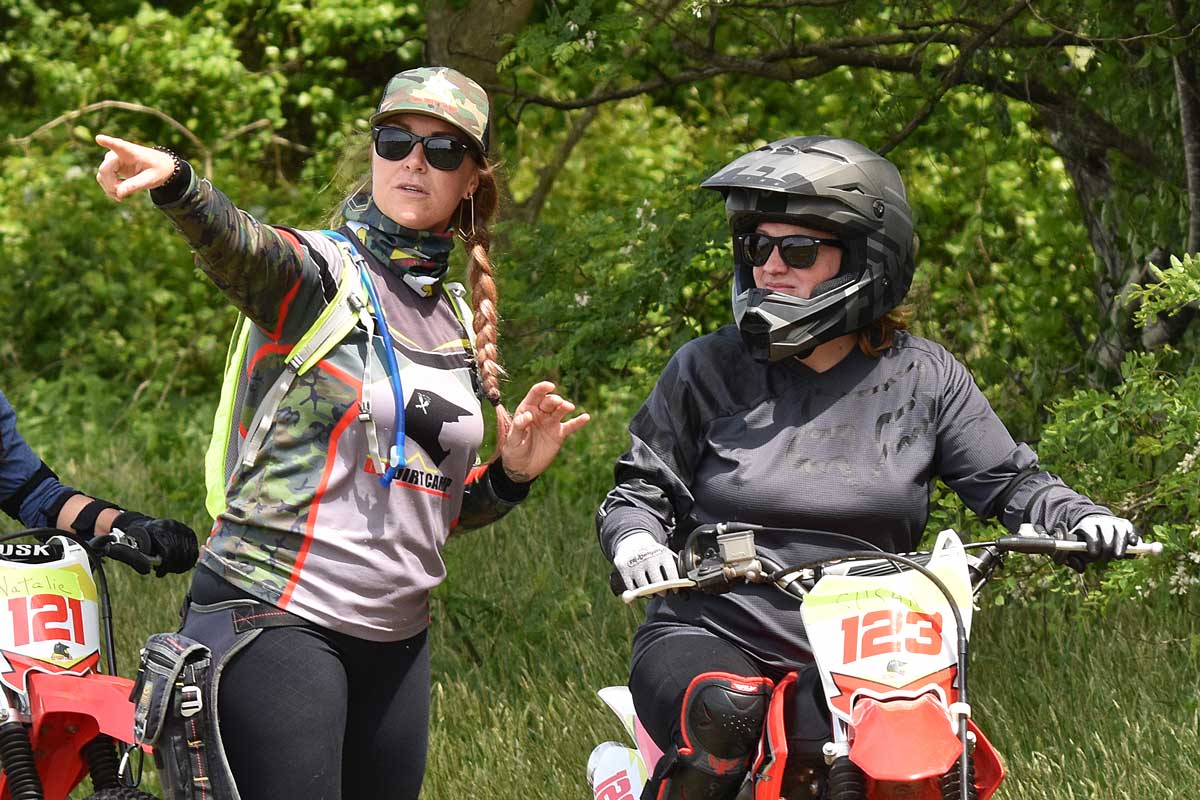
1. How did you get started on motorcycles?
Like lots of teens, I was drawn to the thrill, danger, and “cool kid” mystique of motorcycles. I took the MSF Basic Rider Course at 16 and got my license. I can’t remember how I got around a parental signature, but my folks didn’t know I rode until about 19 and came home from college on a bike.
When we still lived at home, my brother got his license shortly after me and we shared a bike that we stashed at a neighbor’s house. I was purely a street rider from age 16 to about 36 but then got bitten by the dirt bug! Between riding my brother’s dirt bike on a trail in Colorado, and a motorcycle tour in Patagonia with my dad, I realized that off-roading was what was missing in my life.
2. When, where and why did you start DC Dirt Camp?
I was in my mid-30s, working a stable, high profile healthcare administration job and had 3 different styles of bikes: a Versys 650, an SV 650, and a pink Buddy scooter. Having gotten clean and sober five years earlier, I was single without kids supposedly “living the dream” but still felt like I was going nowhere. My life had no purpose and so fell into a pretty deep depression.
Right around that time, I bought myself a pair of dirt bikes and started bringing road riding friends into the woods with me. Seeing the unbridled childlike joy on their faces, being able to share those intense moments of adrenaline and find camaraderie through riding dirt bikes showed me a purpose I could steer my life toward.
Having hit a psychological bottom in my not-too-distant past, it wasn’t that hard comparatively to risk a secure financial future, forfeit the stability of a professional job, and just ask myself “What’s the worst that can happen?”
3. What were some of the initial challenges to starting the training school? Are there things you would do differently looking back?
One of the biggest and on-going challenges in the first of years in business was/is finding people to help work with me in the field. It’s one thing to spend from 6am to 6pm on your feet out in the sun and heat for three days straight when it’s your own company, but another to ask that of anyone else…no matter how much the compensation.
The other staffing challenge is finding a motorcycle mechanic. We have a fleet of bikes to keep in excellent working order. Motorcycle maintenance is a never-ending chore. Our standards require that bikes will be clean and in good shape for the students. Having a mechanical issue during class is totally disruptive. My solution has been to buy more bikes so when one or two are out of commission, I have a spare bike of the right size to continue to run a full class.
It’s crucial to put people on the best fitting bike for their height and weight in each class. However, that means more up-front costs with storage space, parts and labor. Looking back, I wish I had come to that conclusion sooner and procured a few more bikes when I had a steady corporate paycheck and before the pre-COVID bike buying frenzy.
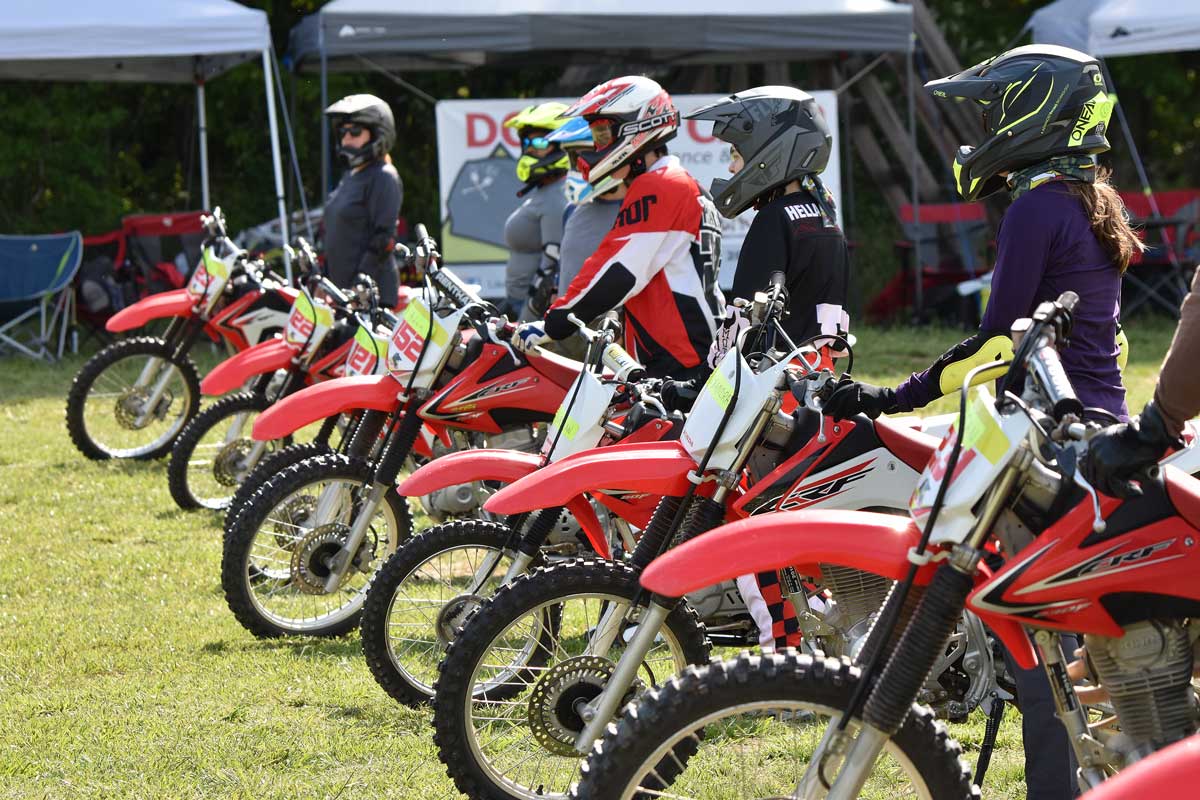
4. What challenges are you currently facing? How would you like DC Dirt Camp to grow in the next few years?
Hands down the biggest challenge facing DC Dirt Camp at present is infrastructure. For the past four years we have borrowed power and water from a neighbor and we no longer have access to those utilities at our storage area & teaching range. It sounds like a simple issue, but running classes every other week, living almost 2 hours away from the range, and not having a rig that could pull 20+ motorcycles, means that not having water and power where we teach is an almost insurmountable hurdle to opening for our 5th season in business.
The best thing that could possibly happen for DC Dirt Camp and where I see it growing in the future, is to move to our own farm/acreage somewhere around the Beltway, closer to Washington, D.C. We are looking for at least 40 acres with some hills, trees, access to power and water and with five of those acres being flat and cleared. Oh, and not in the middle of a housing development! However, the secret to DC Dirt Camp’s popularity, I am sure, is the proximity to a huge urban market.
Geographic location is everything for us. Currently we are about 70 miles south of Washington D.C. Busy professionals don’t have a half day to drive out to the country and another half a day to drive back AND a whole day to learn to ride with us!
5. What are the most common mistakes you see beginner or intermediate riders make?
Lack of finesse. I don’t even have to think about that one! Smoothly operating a clutch is far more subtle and requires MUCH more finesse than a never-ever rider imagines. Even with long time road riders, I sometimes put my hand over their clutch hand to demonstrate what the level of super subtle dexterous movement we are looking for in our clutch fingers when riding off-road.
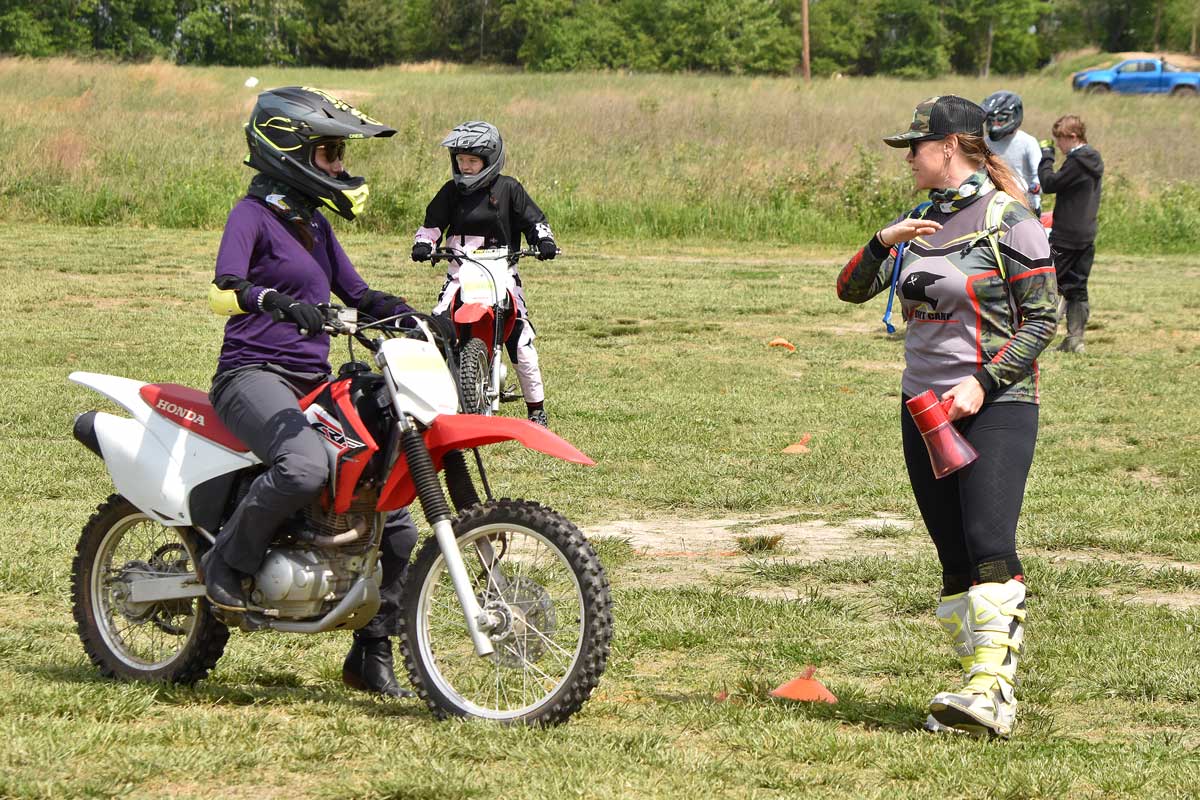
6.What's the most important tool a student can bring to class?
A can-do, positive attitude with some humility. I find that remaining teachable has been super important to me as a student and a coach. Students that are not at DC Dirt Camp of their own volition tend to get frustrated quickly. I know some moto-riding parents really want their kids to learn and love riding too, but if the kid isn’t excited about it on their own, they generally don’t come with the requisite good attitude.
Likewise, some long-time riders come just to support a friend or partner and have a closed mind to learning. They tend not to have as much fun or get as much out of the class as they otherwise might if they came with a more teachable mindset.
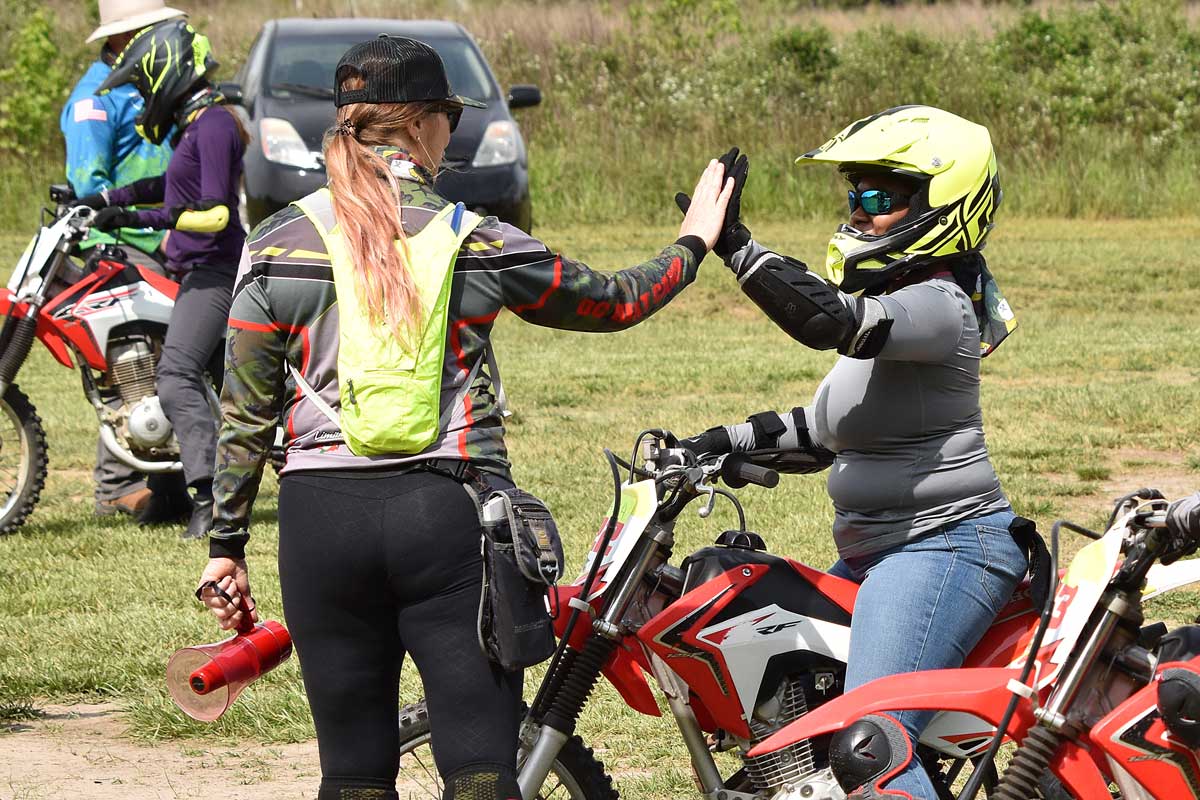
7. Are there any common misconceptions which you feel new riders have when they are new to adventure riding?
The most common one I hear, unfortunately comes most often from women. “I’m too short for those crazy tall Adv bikes.” I can honestly say a rider does not have to be tall to ride an ADV bike! I am only 5’6” and I ride an Africa Twin in the woods.
The underlying misconception among shorter riders is that you are going to have two feet on the ground at the same time. That’s just not the case with off-road riding. Especially as a short-ish adventure rider, I NEVER have two feet down. Even when I am on tarmac with the ‘Twin, or my tall DRZ400, I’m only on one foot at stop lights. The other foot is on the foot peg.
Click HERE to read “Five Riding Techniques for Short Riders”
There are definitely a few different skills and techniques that can help anyone, regardless of stature, keep the bike and their bodies in balance. We emphasize those skills at the very beginning of our Intro to Adventure classes and have received positive feedback from tall and short riders alike that it has helped improve their confidence with big bikes.
8. What's a normal trip to DC Dirt Camp like for riders seeking to improve their skills? How long is each class and what range of courses do you offer?
We offer 6 different types of classes, which range from classes for kids to dirt riding fundamentals for adolescents and adults, to ADV bike specific classes. We also have one level of class for kids ages 6-12 using semi-auto bike like Honda’s CRF 50 or 110.
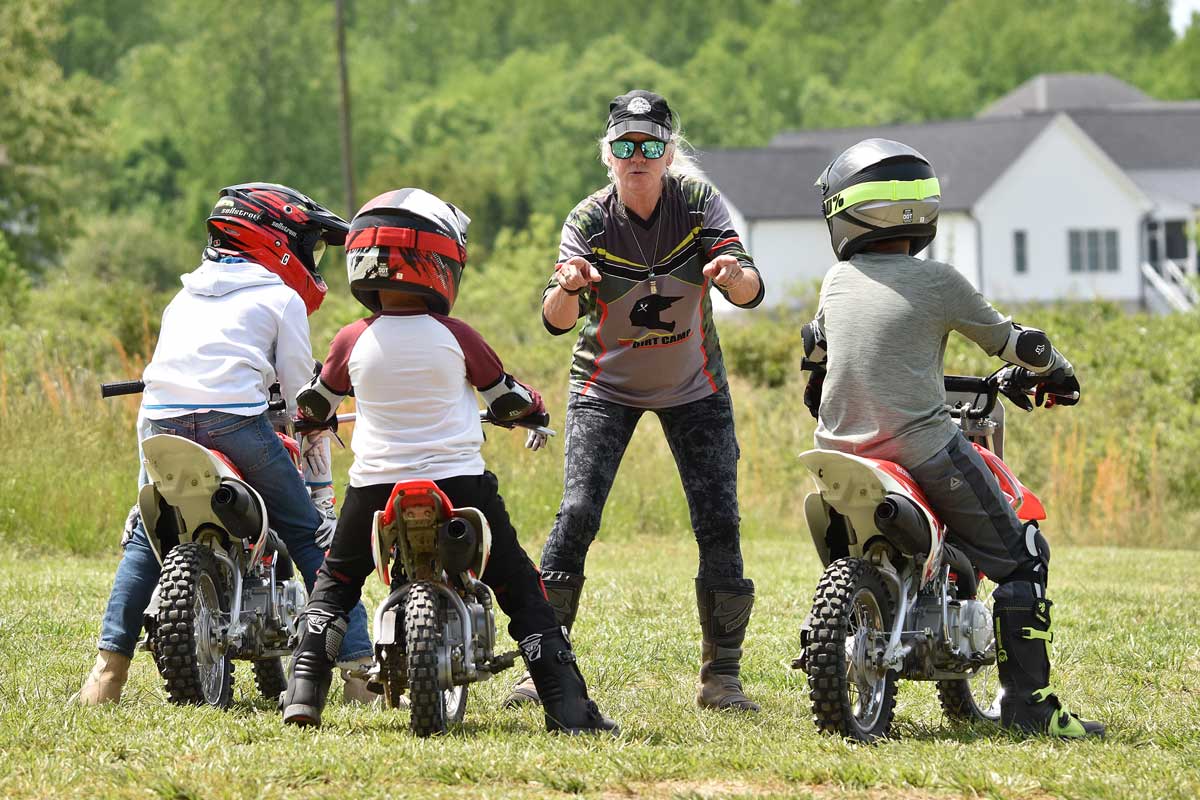
There are three levels of classes for what I call “big kids”; those of us ages 13 to 80. “New Riders” is our Level 1 class which is for students who have never used a motorcycle clutch before. Lots of people come take that class before going to an on-road MSF training in order to get their license.
Our Level 2 class is called “Beyond Basics”. This is still very much a beginner’s class as we review everything from our Level 1 class, but go through it quicker and then take students further with things like getting over a small log.
For street riders looking to try a dirt bike, or Adventure riders seeking to get more comfortable off-road, we have our Level 3 class which we call “Clutch Capable”. This is for ages 16 and up and really only for people who have significant ride time already under their belts as we’ll be fine tuning the use the clutch and working more on the low-traction fundamentals rather than teaching them the basic mechanics of the controls
Learning from my own experience as a rider and my observations of hundreds of students over the last four years, we strongly suggest students come take level 3 dirt bike class before attending our Adventure bike training. I keep saying I need to have some T-shirts or stickers made that say “Come drop our bikes, so you never drop yours.”
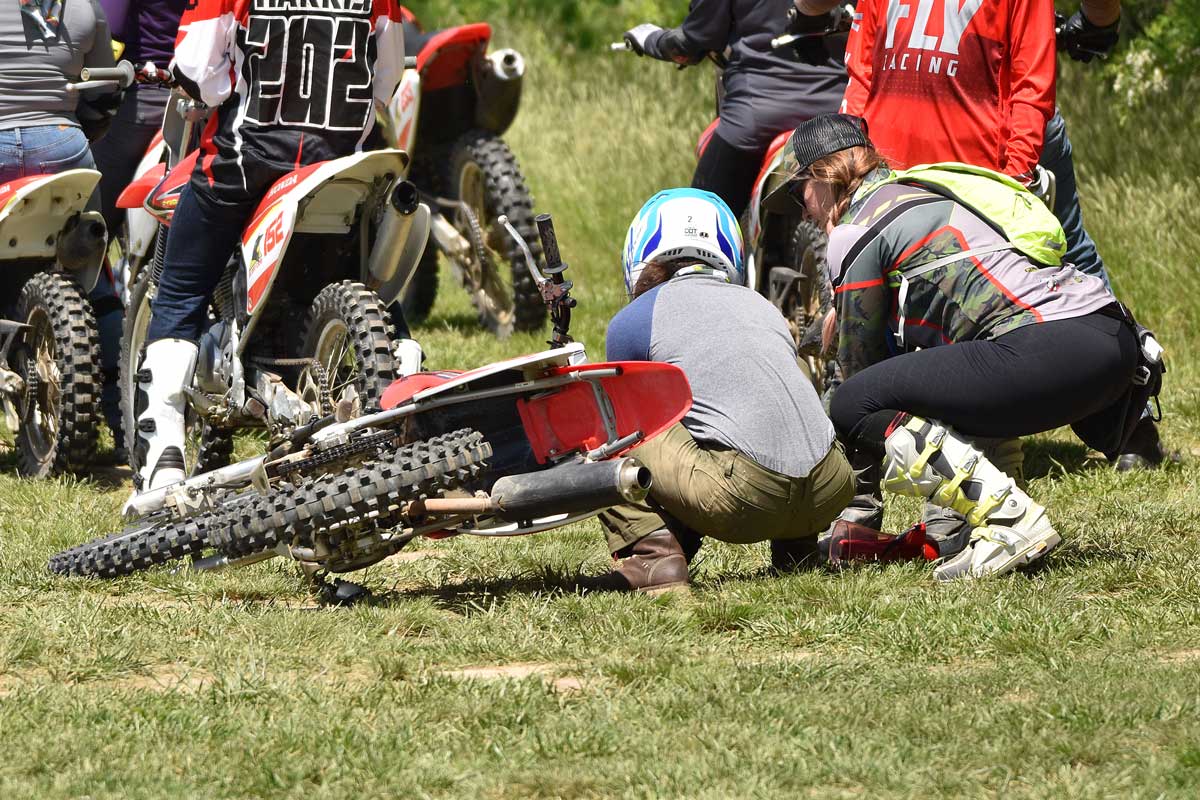
That really is a game changer for most road riders. Once you drop a smaller, lighter, mostly plastic dirt bike and realize both you and the bike are safe, something changes in our psychology. Learning the fundamental body language of dirt riding on a smaller bike first, lays a remarkable foundation to transition to their own bigger bike when students return for "Intro to Adventure" class.
A typical day at DC Dirt Camp depends on which level of class you’re attending, but all of them are based on the premise of safety first…and having fun is a close second! All classes include the pre-riding check in where we review and make sure each rider or parent has signed waivers.
We are an MSF Dirt Bike School location but we also are a Chartered member of the AMA - so for our Adventure Bike classes, students must be members of the American Motorcyclist Association. We take care of paperwork then get everyone geared up.
We provide open-face dirt bike helmets, elbow pads, shin & knee protection but ask people to bring their own snug fitting gloves, boots and eye protection as those are personal items and hard to sanitize between classes. We then go through a brief introduction finding out the goals each student has for themselves during the class. We take mental notes so as to tailor our coaching to ensure the objectives of each student are met. Depending on the age group, classes run 5-6 hours.
Dirt riding is much more of an active sport than road riding, so we encourage everyone to come prepared to sweat…even in the colder months!
9. What are the most common mechanical problems that bikes you maintain experience? Is any specific repair knowledge very useful to you often?
Carburetors! Some of the bikes sit for weeks if the student mix doesn’t call for a particular bike, so keeping the carbs all cleaned and ready to go is a challenge. The big investment that has been an unfortunate surprise over the years has been handle bars. We just landed a little bit of a sponsorship from Mika Metals so hopefully those won’t bend as easily. But we lose lots of bars and levers to new students. It’s just the cost of doing business.
10. Any words of advice for riders looking to learn off-road skills or getting into motorcycling in general?
Get training! I am biased as a coach, but I really do think that getting proper training at the onset of their motorcycling journey will pay huge dividends in the long run. After learning proper fundamentals, seat time is the next best thing a rider can do.
If a rider is skipping the training up front, they not only are just going to be out there winging it and practicing possibly ineffective techniques, but they also increase the risk of personal injury and damage to their bike. Nothing like some surgeries to really hamper progress as a rider and kill both their budget and enthusiasm.
Formal classes can also open a door to a community, friendships, and human connection across diverse backgrounds folks didn’t know they were seeking. At least that’s how it happened for this crazy girl turned self-employed optimistic adventurer.
For more info on the available classes at DC Dirt Camp, visit: www.DCDirtCamp.com