 Sticky logo
 Search


One stop on any global adventure rider’s bucket list is surely a trip through Africa.
The landscapes, people and wildlife are unlike any place on Earth and the terrain to experience all the greatness the continent has to offer has spawned some of the greatest adventure bike practitioners on two wheels.
But a major problem lurking beneath the otherworldly landscape is poaching.
For example, Africa has lost 97% of its black rhino population since 1960 and as many as 35,000 elephants are illegally killed each year, according to the African Wildlife Foundation. Thanks to illegal hunting, the most iconic wildlife of the African landscape is getting harder and harder to see.
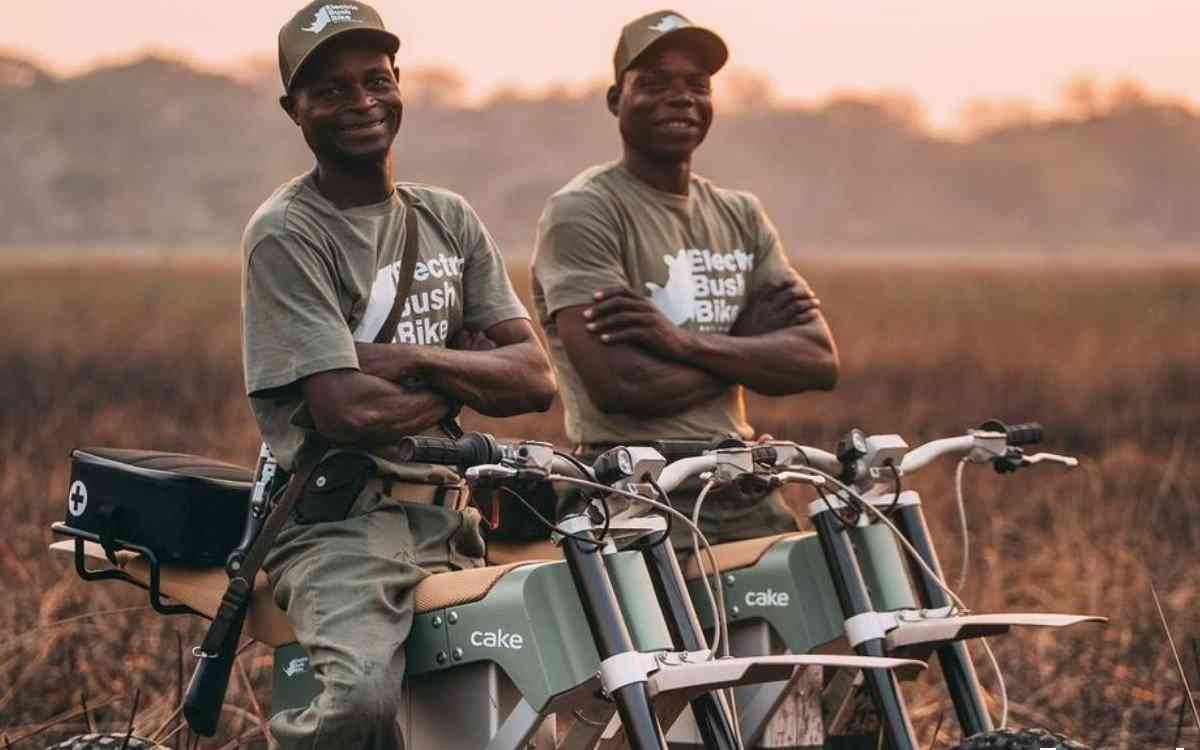
Nations across Africa have stepped in to deploy armed wildlife rangers who patrol large swaths of National Park land to arrest or run off poachers who’re hunting protected animals. But to cover that much ground in rough terrain, the rangers have been using hardy dual sport motorcycles for their patrols.
But an ongoing issue has been the difficult logistics of supplying the ranger teams with gas for their bikes.
That’s where Swedish electric bike maker Cake has stepped in. Teaming with the Southern African Wildlife College which trains Anti-Poaching Field Ranger teams, Cake has developed the Kalk Anti-Poaching bush bike. A battery-powered, all-terrain motorcycle, the Kalk AP is intended to extend the rangers’ domain and allow them to maneuver quietly through the African bush to nab the bad guys.
The Kalk AP delivers 15 horsepower to a chain-drive transmission with a whopping 207 foot-pounds of torque. The battery has a 2.6 Kw/h capacity and can be recharged using standard house plugs.
Meeting the needs of these backcountry enforcers, Cake also delivers The Kalk AP with a set of GoalZero solar panels for remote recharging.
“With combustion engine motorcycles, buying and transporting fuel to remote areas has proven both costly and inconvenient. The need for fuel often requires long-distance shipping via trucks or even helicopters, driving costs further and making the overall anti-poaching work unsustainable,” Cake says. “The bikes can be charged via the [solar] power kit independently from any power outlet, enabling more freedom to ride and less pollution in the area.”
The coolest thing about this whole initiative is that we ADV enthusiasts can help. Cake is offering a limited number of Kalk APs to the general public with specialized markings and graphics. With each purchase, riders will get their bike and donate a Kalk AP and solar charging station to anti-poaching teams in Africa to help their mission.
{youtube}hO-_trSXUf8{/youtube}