 Sticky logo
 Search


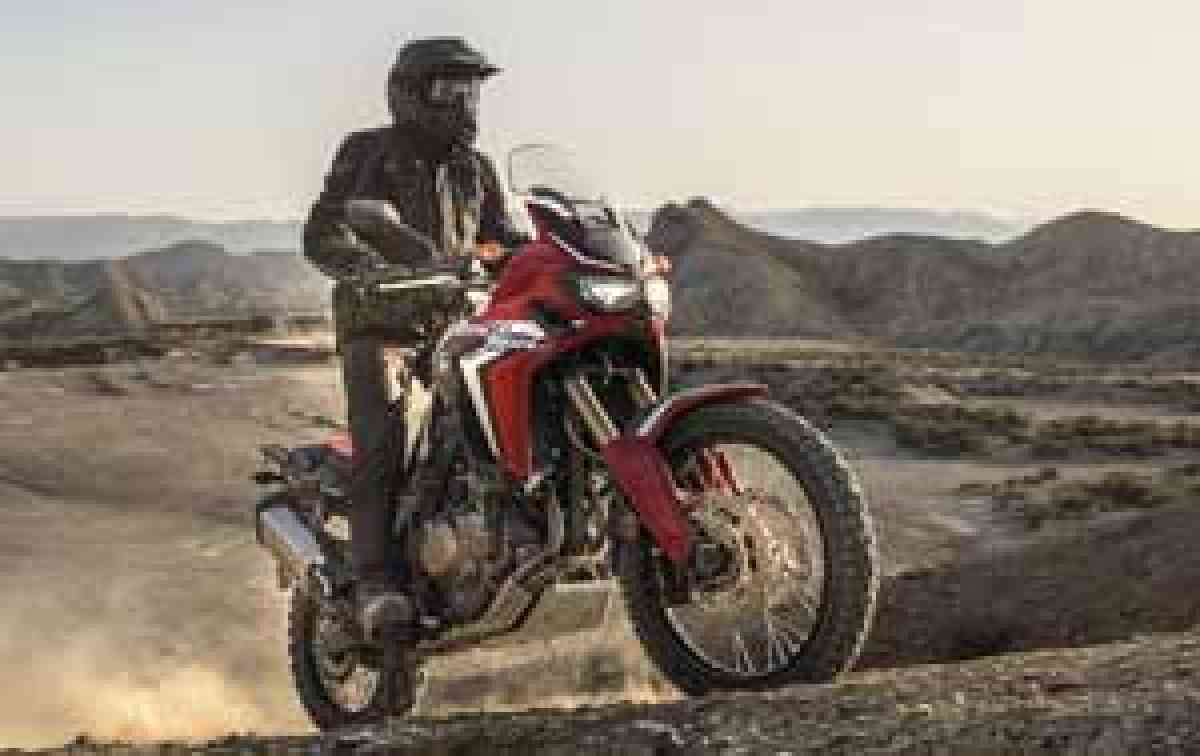
The shift cam design is the same as used by the CRF250/450R, giving secure gear shifting no matter the riding conditions. And to ensure direct drive - and consistent feel for traction - the cush drive rubbers in the rear wheel have been optimised in terms of physical size and shape.
Enhancing the rider’s experience the unique internals of the exhaust muffler are designed through CAE to boost the sound and feel of the engine’s beat, and patented by Honda. Acoustically tuned, chamber two creates a light, crisp feel at higher rpm while chamber three accentuates the deep, solid tone of a large-capacity twin.
There are four levels of control to choose from on the Honda Selectable Torque Control (HSTC): Level 1, 2 and 3 and off. The degree of electronically-generate control from the system decreases as the levels rise, allowing increasing amounts of rear wheel spin and, with rear ABS off, freedom to fully lock up the back wheel.
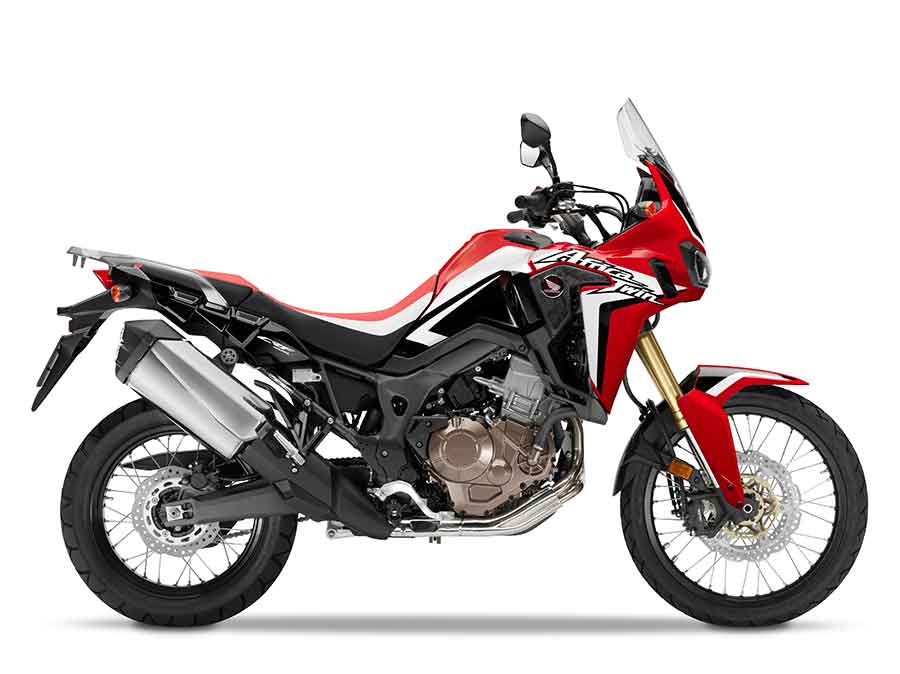
The Africa Twin’s DCT features a revised S mode offering three levels of sports performance (faster down changes and the ability to hold a higher/lower gear). The three modes make it possible to tailor gearbox response to preferred riding style. The selected level is stored, and acts as the default - thus making it possible to permanently ride in S mode. It is also displayed on the dash.
The DCT also features ‘adaptive clutch capability control’ that gives a natural ‘feathered’ clutch feel at low speed on/off throttle situations for smooth gear changes at low-speed. For essential additional off-road DCT performance, the CRF1000L Africa Twin offers new functionality through the use of the G switch positioned on the right side of the instrument panel. Pushing the G switch in any riding mode modifies the control of the clutch system to give a more direct drive.
Further new functionality for the DCT system comes in the form of incline detection, by means of which the gear shift pattern is adapted depending on the grade of any incline to provide optimum control.
Chassis
Fully adjustable Showa suspension is matched to a tough double cradle frame, with rigidity levels tuned for optimum handling. Wheels are 21/18-inch with 310mm ‘wave’ style floating front discs and radially mounted four-piston Nissin calipers. Dunlop 90/90-21 and 150/70-18 tyres provide all-round performance.
The key objectives laid out for the CRF1000L Africa Twin’s chassis were threefold: the ability to cover considerable amounts of off-road ground, with excellent on-road high-speed stability both when riding solo and when fully loaded with pillion and luggage.
Combining all three attributes presented a stimulating challenge for Honda’s development engineers. The resulting steel semi-double cradle frame (a similar design is used by the CRF450R Rally) has a finely tuned rigidity balance, not only within the frame spine and tubes but also through the use of 6 carefully placed engine hangers.
Thanks to the compact design of both engine and frame ground clearance is 250mm, with wheelbase of 1,575mm and rake and trail of 27.5°/113mm. The lightweight subframe features diagonal cross bracing and will carry a cargo weight of 30kg. Dry weight of the standard model is 208kg with wet weight of 228kg and a front/rear weight split of 49.1/50.9; seat height is 870mm (the same as the XRV750L Africa Twin) and can be lowered 20mm in a single operation.
Compared to the XRV750L the distance between the swingarm pivot and front tyre is 8mm shorter at 931mm, with the new machine using a 20mm longer swingarm. Add packaging of items like the battery nearer the centre of mass (behind the engine cylinders) and load on the front tyre is increased, improving both stability and traction. The steering angle of 43° either way equates to a turning radius of just 2.6m - useful for threading through busy streets or tricky trail.
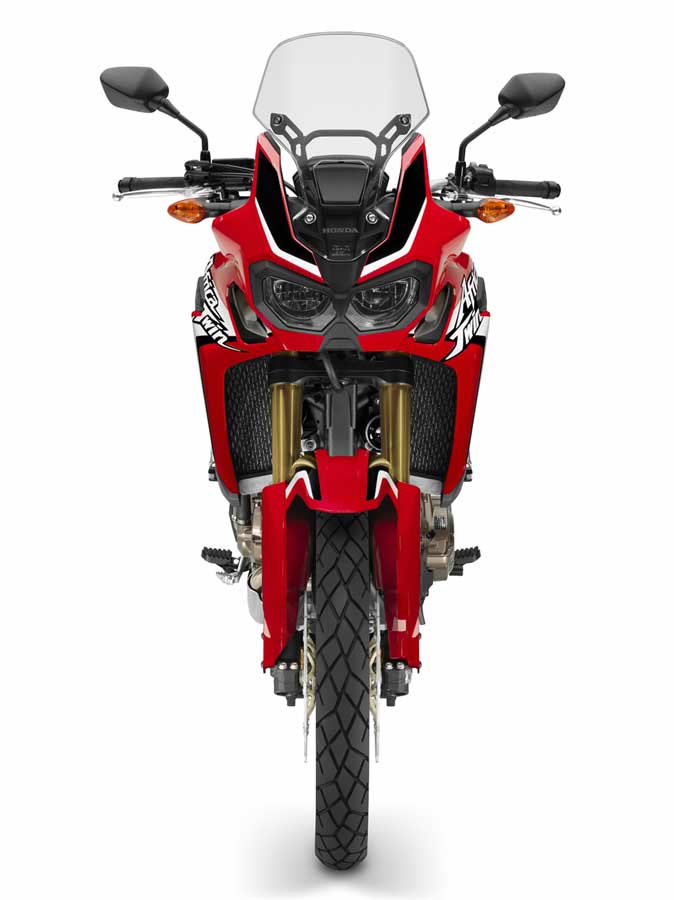
And even though the CRF1000L’s engine is 25% larger in capacity and produces approx. 50% more power than the original, the new Africa Twin is only marginally lighter, with slim dimensions around the tank and seat area, and a riding position that enhances control and movement.
With stroke length of 230mm, the 45mm Showa cartridge-type inverted front fork offers class-leading levels of performance. For all-round compliance and feel the long extension stroke combines with a low spring rate and spring preload; rebound and compression damping are fully adjustable.
The leading axle maintains the required fork offset and centre of gravity of the steering system (compared to a centre axle design) aids mass centralisation and saves weight. A cast aluminium top yoke and forged bottom yoke - joined by hollow aluminium stem shaft - clamp the fork legs with two bolts each top and bottom.
The new 45mm Showa fork and yokes combined - thanks to extensive weight reduction through hollowing and thinning - are actually 860g lighter than the 43mm ‘upright’ fork and yokes of the XRV750L Africa Twin.
Matching the supple front suspension and generous ground clearance the Showa rear shock delivers 220mm axle travel. Its upper mount is set low for mass-centralisation and it features a 46mm cylinder and remote reservoir (as used by the CRF motocrossers) for stable damping control under more extreme off-road riding conditions. Spring preload can be adjusted via a dial on the shock body; rebound and compression damping are also fully adjustable.