 Sticky logo
 Search


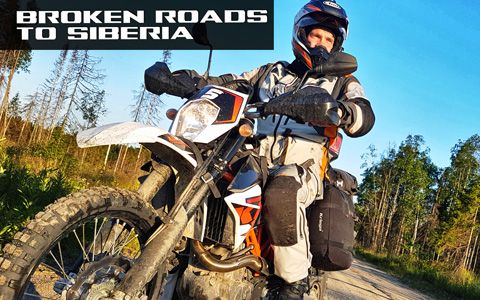
The idea of an off-road adventure, exploring western parts of Russia, Mongolia and Siberia had long been brewing in Jyri Koski’s head. On the daring ride from his home in Helsinki, Finland, to far-out Siberia, he also wanted to make a film that would inspire others into realizing their own travel dreams; he named the adventure Broken Roads to Siberia.
{youtube}pDVVMo0_U6A{/youtube}
•Two Months To Go
Jyri needed a riding partner on a short notice and knew Tuukka Josefsson through common friends. Tuukka was experienced in adrenaline-filled adventures including skiing through frozen Lapland, a trip covered by BBC television and aired worldwide. Would he be up for it? It took only a single WhatsApp message for an immediate “YES!”
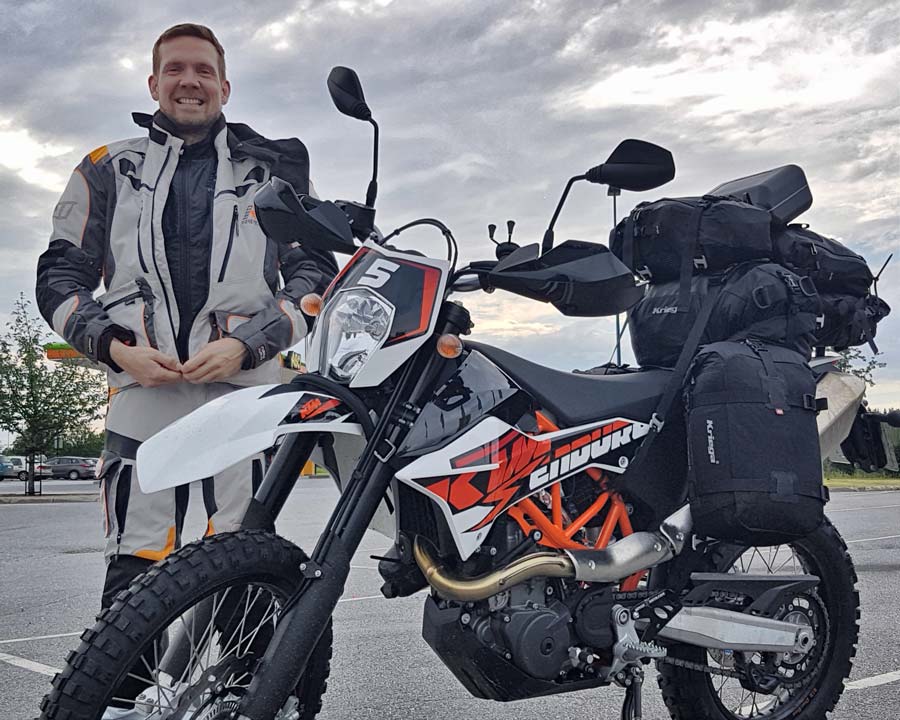 About to cross the Finland-Russia border.
KTM Nordic generously provided Tuukka with a KTM 690 Enduro R, a bike model Jyri already owned and loved; Rukka provided all the necessary riding gear from the underwear to the riding jackets and pants; U.K.-based Kriega provided the light soft luggage; other after-market parts arrived from Perun Moto, out of Serbia; and Sony helped with camera gear.
KTM’s 690 Enduro R is a near perfect long-distance adventure enduro as it comes from the factory, but Jyri and Tuukka made a few modifications extending the range to roughly 250 miles by replacing the original air filter box with an extra 1.5-gallon aftermarket tank along with extra one-gallon canisters.
•And So It Began
The boys left Helsinki on June 24, 2016. At the Russian border, the officials waved them around a long line of cars and trucks. It seems Russians have a special love for motorcyclists. The next few days riding were spent on abandoned gravel roads and single tracks decaying since the WWII. What had once been Finnish territory had been reclaimed by nature.
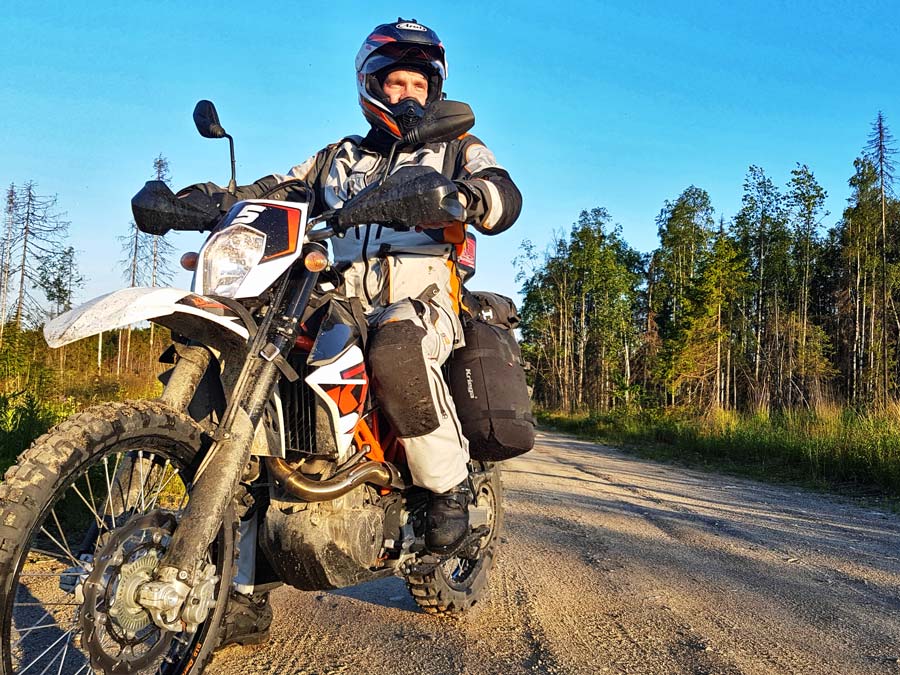 Traversing the decaying roads of Karelia
•The Trans-Siberian Train
In Moscow the bikes were loaded on a Trans-Siberian train and they were off to Novosibirsk, the capital of Siberia. The trip was three days of eating, sleeping, looking at the flat Russian landscape—along with plenty of vodka and socializing with other passengers.
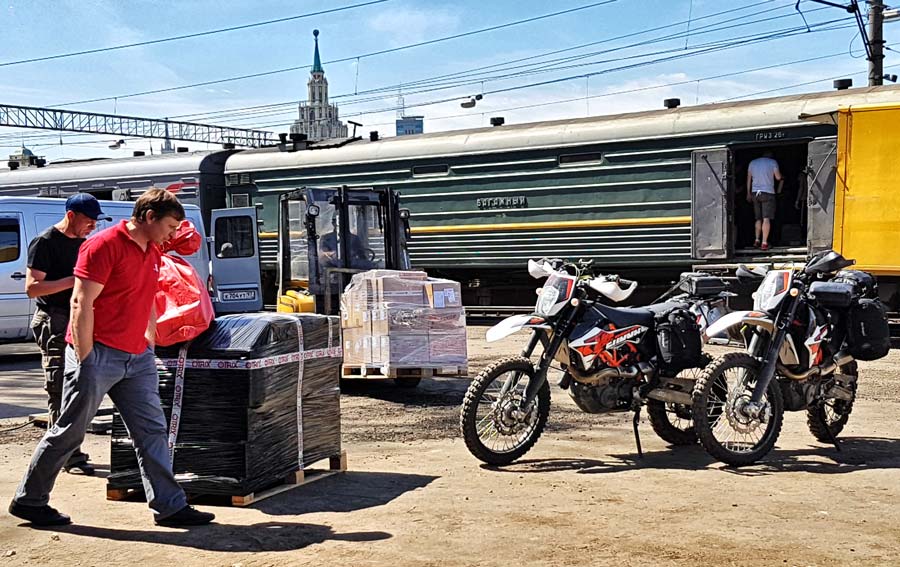 Bikes and men ready to board the Trans-Siberian train
Novosibirsk has some great restaurants and an awesome nightlife reminiscent of ’90s era Nirvana, Guns N’ Roses, and Prodigy blasting in every bar, making it one of Jyri’s top five favorite cities.
•Over the Altai Mountains
On their way to the great wilderness of Russia’s Altai Mountains and Mongolia, the boys made an overnight stop in the city of Barnaul where they visited the Bike Bar, a must-see motorcycle oasis. It’s open twenty-four hours and is the place to meet other motorcycle travelers, local motorcycle enthusiasts, eat, drink, and arm wrestle with no shortage of vodka. But be forewarned, Russians are well trained in those last two.
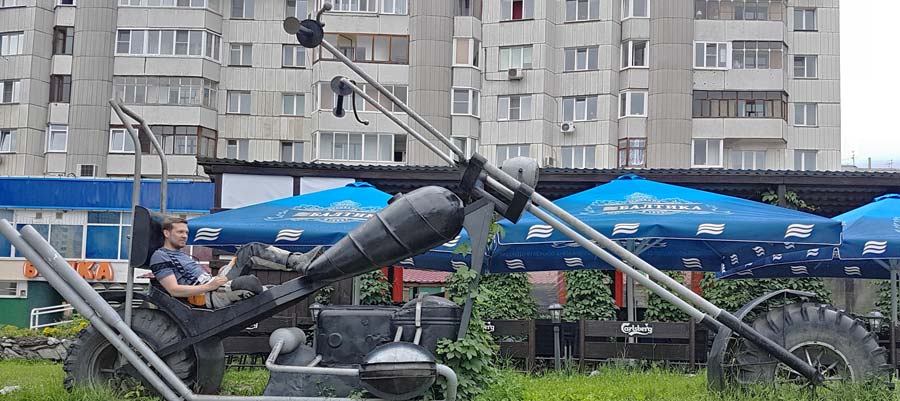 The monumental chopper in front of Bike Bar in Barnaul, Siberia
Next up was taking on the Altai Mountains. There’s an asphalt road from Novosibirsk to Mongolia, but they wanted to discover an off-road route over the range. Consequently, they ended up getting lost several times as GPS was of no use. Broken Roads IN Siberia came to mind while “enjoying” the rain, mud, hard terrain and encounters with the friendly locals—eventually finding their way out.
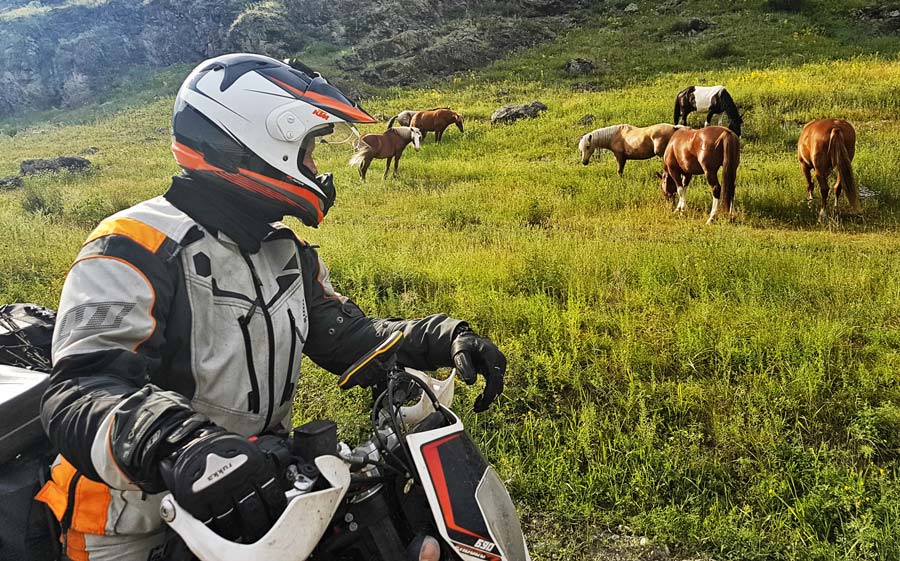 Finding a way over the Altai Mountains, Siberia
Upon entering Mongolia, they began their much-anticipated westward journey through its almost untouched wilderness. The planned route included several completely roadless sections and a stretch of Mongolian sand dunes.
After a couple days of riding Jyri and Tuukka ended up in a remote area with hundreds of ancient tombs and stone statuettes of ancient warriors, the nearest town was two days away. From there they explored more vast roadless remote areas while camping along the way, each day ending with the most breathtaking sunsets they’d ever witnessed.
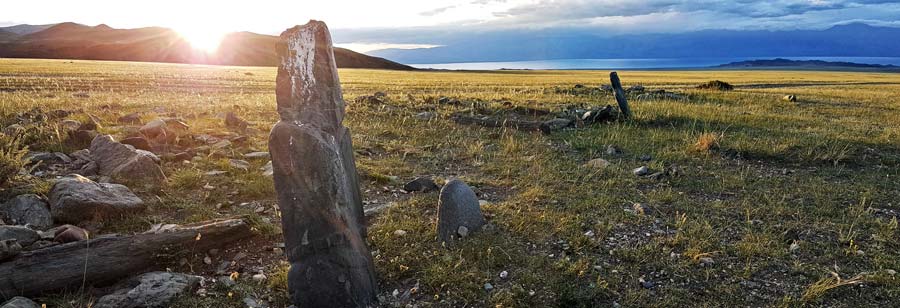 Statuettes on the Mongolian grasslands don't see many visitors
•Over The Sand Dunes
Are those sand dunes real on the horizon? Or is the heat playing tricks on us?
It was difficult to determine whether they were 30 or three miles away, endless flat terrain and the reflecting sun made it all but impossible to ascertain. But when they reached the dunes, they were surprised at just how well their KTMs handled the deeper sand, especially as they were so loaded with luggage and gear.
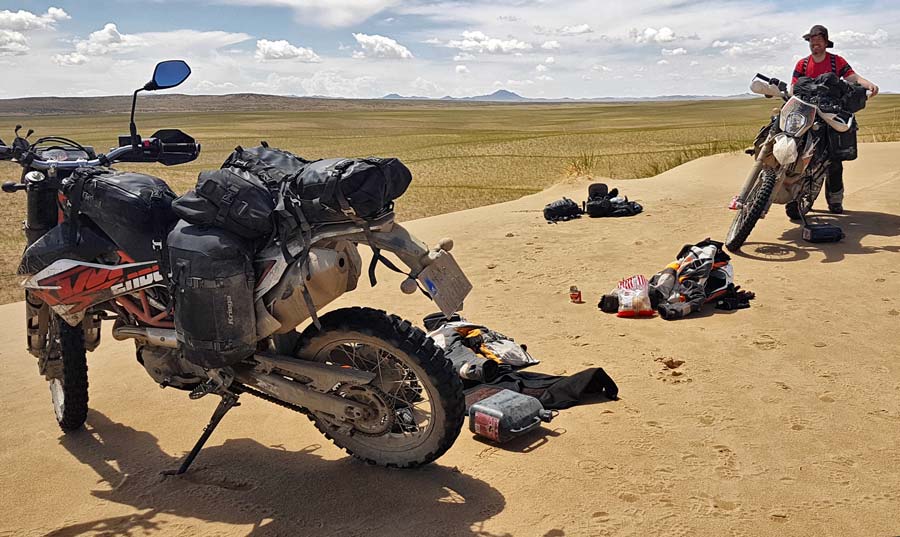 Sand dune crossing in Mongolia
The extreme heat of the desert’s soft sand required constant throttle to stay up on the surface. Thoughts of accidents and navigation errors came to mind, and without access to a sat phone they could easily have been stranded. After several hours of riding dunes, a village appeared on the horizon—at last time to attend to their stomachs, quench thirst, and refuel the bikes.
•The Lost Goat Opportunity
Leaving the desert behind, the landscape gradually changed to greener pastures. Noticing a goat walking in circles, Jyri stopped to offer the dehydrated animal water, but he knew that without help it wouldn’t be long before it would join the many skeletons on the Mongolian plateau. So he went on a scouting mission to see if he could find it a new home at a nearby ger (AKA yurt).
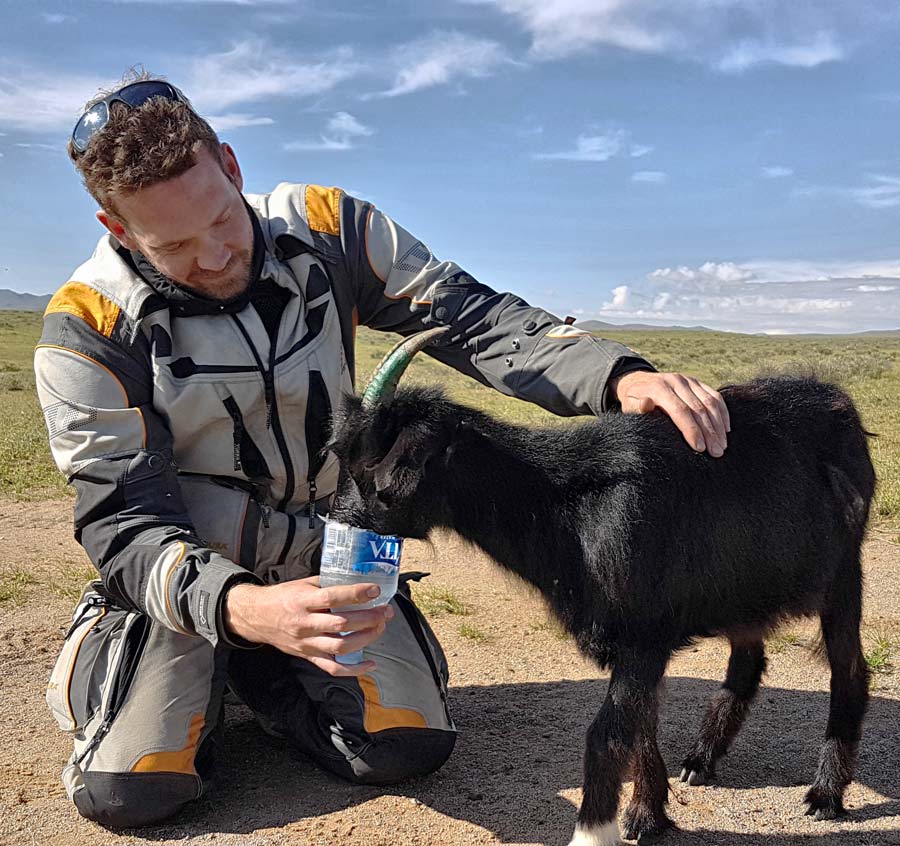 Tuukka saving the goat.
After about an hour, Tuukka began to wonder if something had happened. But Jyri returned with a grin—he’d found a new home for the little goat. And they ended up having a great afternoon with the nomad family where they were treated to delicious bread with goat milk curd, plenty of sugar and warm goat’s milk.
•Bumps on the Road
Spirits were high as Jyri and Tuukka set off once again over the vast open landscape. But their good mood was short lived. It had only been a few hours since their goodbyes to the lovely family before severe diarrhea hit them both. Clearly their gut bacteria wasn’t accustomed to what they’d eaten. The next few days were tough; the guys could barely eat or drink anything. The weather turned cold and rainy as they rode a rocky gravel road with seemingly endless water-filled potholes. Jyri caught a fever, requiring the pair to find refuge at a small village guesthouse—morale hit a low point.
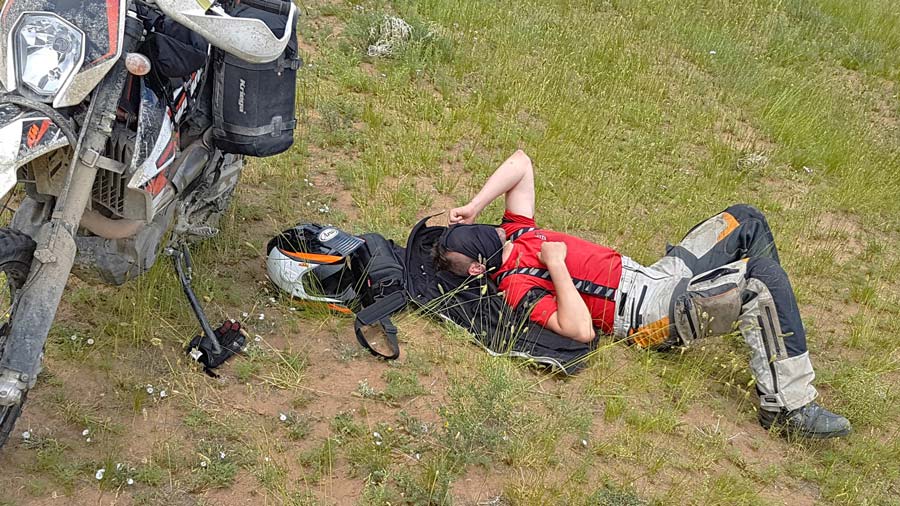 Bike up, but a man down after eating goat milk products.
After a couple of R&R days, they felt well enough to continue, riding in the wilderness for several more days until they finally reached Mongolia’s capital, Ulaanbaatar. Where, as they’d been subsisting on mostly goat meat dumplings with warm goat milk to wash it down, their first priority was a good restaurant meal.
•The Pit Stop
Their original sets of knobbies lasted over 4,300 miles. But to survive Siberia and the notorious Baikal-Amur Mainline (BAM) road, they needed fresh rubber. A city-wide search proved almost useless until a local KTM dealer came to the rescue. Tires were pulled from KTM EXC 250cc on the showroom floor and Jyri and Tuukka were back on the road toward far out Siberia.
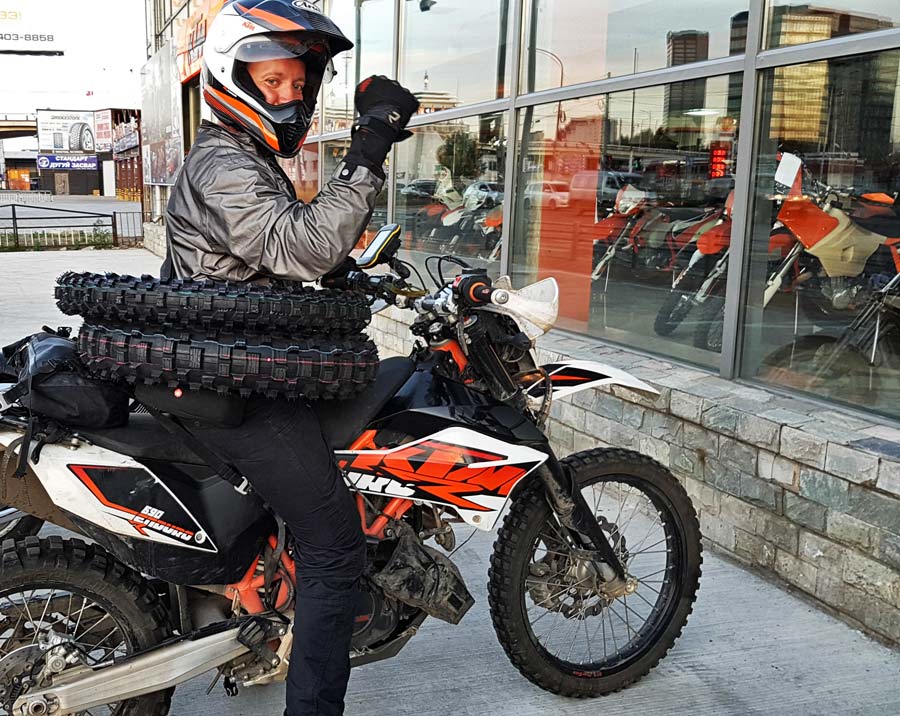 New tires straight off from the KTM showroom models.
Then from the Mongolia-Russia border they rode past the cities of Ulan-Ude and Irkuts, and continued along Lake Baikal heading northward toward the starting point of the BAM, considered one of the most difficult adventure roads in the world.
•Two Alexanders
On their way they had to make a stop at the tiny and very remote Siberian village of Zhigalovo. Thanks to a punctured tube, Tuukka found a garage run by Alexander who had a mechanic with the same name. Jyri and Tuukka spent the next day with their new friends, eating traditional foods, learning about Siberian ways, Shamanism, and authentic Russian Banja baths.
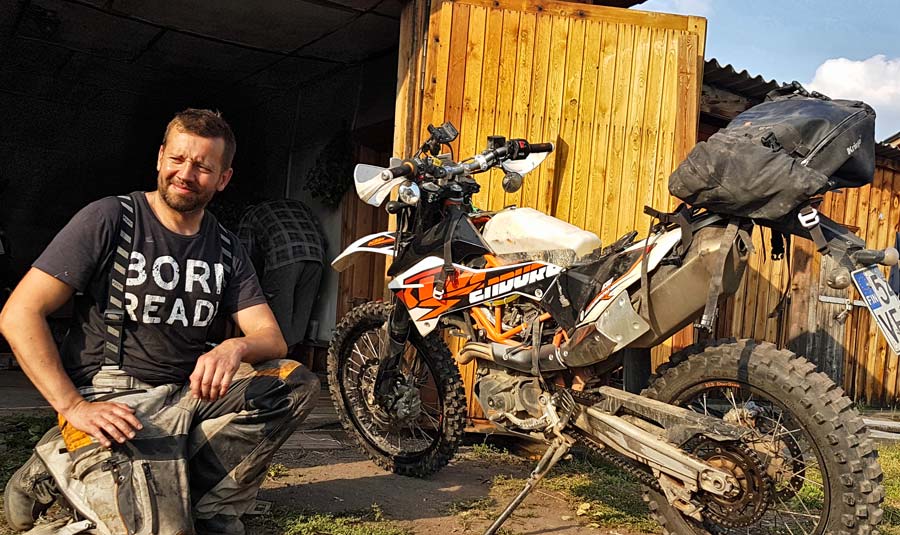 Changing tires in Zhigalovo.
Both Alexanders, as well as many others in outback Siberia, warned the them about the bears. But if they were destined to be bear food, so be it, as looking at what was ahead bears would the least of their risks.
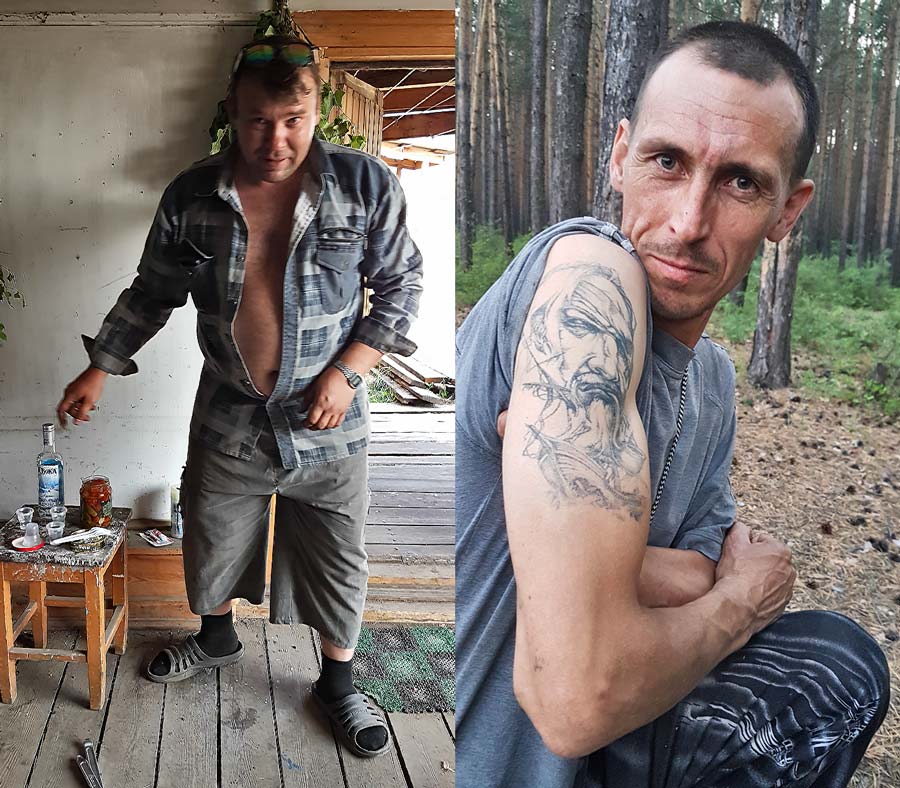 When it’s vodka time in Siberia; it’s Vodka Time. New friends, Alexander and Alexander.
•Siberian Forest Fire
The next morning began with a 200-mile stretch of dirt road in the direction of Severobaikalsk, a city located on the northern tip of Lake Baikal. After a few hours, they encountered something much more dangerous than bears—widespread forest fire. As they pushed on deeper into the forest, the smoke thickened and breathing became increasingly more difficult. Realizing they were in great danger they turned back, an adventure in itself as it took several hours of riding in the smoke- and fire-blocked way. Just as things seemed hopeless, a truck driver stopped to explain they’d be out the danger just a few more miles ahead. With a sense of great relief Jyri and Tuukka made it back to safety with stinging eyes, barely able to breathe.
•The BAM
They finally reached the BAM, the old and decaying service road of the Baikal-Amur Mainline railway, a broken road through remote parts of Siberia. Some 2,800 miles long and stretching through half of Siberia, a route discovered by the Sibirsky Extreme riders back in 2009. Despite the press, the BAM sees only a handful of riders each summer in the short window between snow melting late in the spring and early autumn. Numerous deep river crossings, dilapidated bridges and Siberian brown bears make the BAM a dangerous yet memorable extreme adventure for those who dare to tackle it.
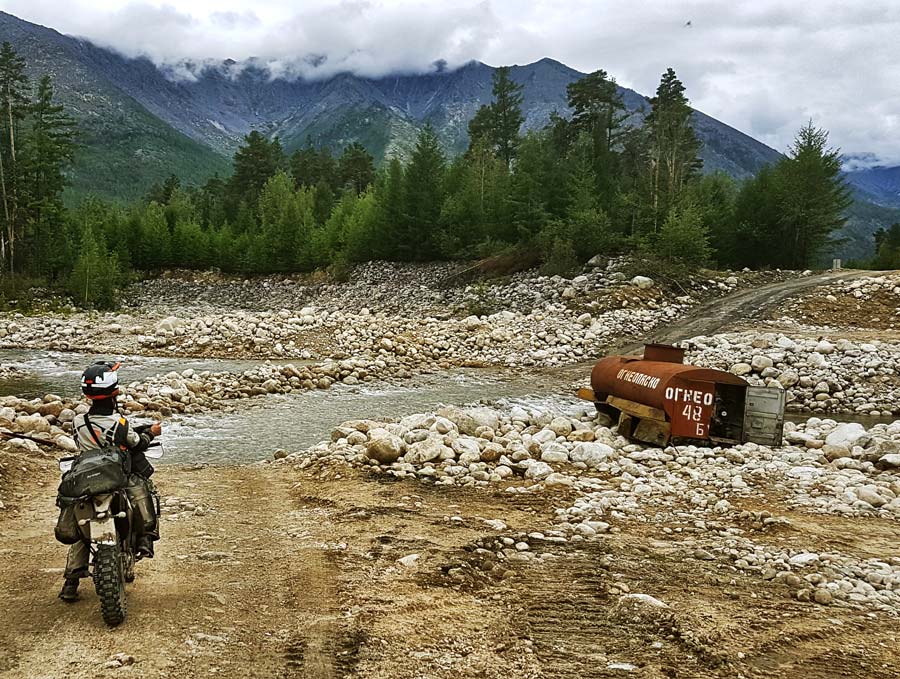 The unforgiving BAM.
After weeks of riding, they were already worn out, and questioned why on Earth they were going to attempt it. As it turned out, it was more physically and mentally demanding than they’d anticipated. The BAM beat them both up and as it turned out, they’d each lose almost 20 pounds making their way across.
•The Vitim Bridge
After more than a week on the BAM, struggling along several hundred miles of the worst road they’d ever imagined, flooded with numerous wrecked or toppled bridges, the grand finale was in sight. Ahead lay the Vitim Bridge—photos of which Jyri had used to entice Tuukka to join him on this trip.
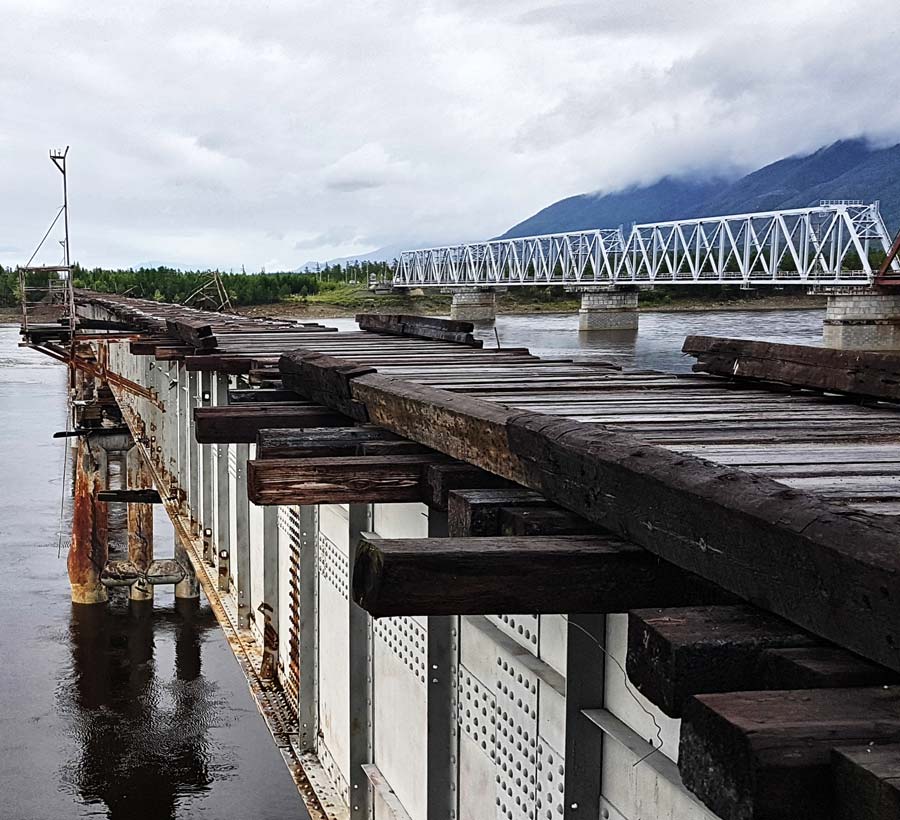 The Kuandinsky Bridge over the Vitim River.
As they reached the bridge on a cold and rainy morning, having barely slept, “holy crap!” was first and foremost on their minds. The bridge over the Vitim River was roughly 30-feet high, 1,870-feet long, and about six-feet wide—with no railing or other safety features. Its rusted and crumbling metal frame was covered with rain-slick wooden planks, the decaying structure had not been repaired in decades—a daredevil’s wet dream!
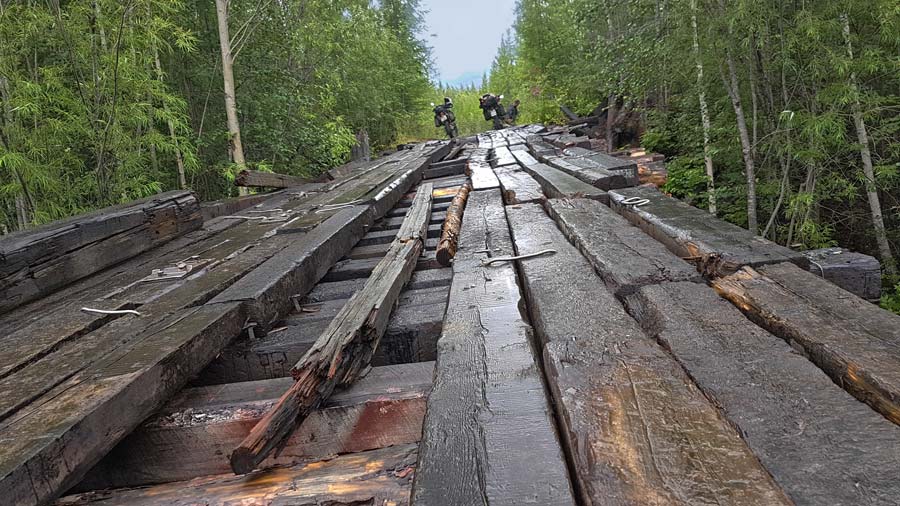 A daredevil's dream.
The pair hesitated before attacking the challenge of this was a once-in-a-lifetime experience. Wind gusts crossed the uneven, rain-soaked surface with missing planks… keeping a steady pace and up on the foot pegs was the only way for most of the crossing. To make matters worse, a large gap appeared in the middle of the bridge, hearts raced as they balanced for their lives and concentrated, becoming one with their 690s. The crossing felt like an eternity and everything seemed to happen in slow motion. But they made it, sitting silently in awe on the other side after their accomplishment.
•Living the dream
After five weeks on the road and more than 7,000 miles, had it been worth it? Thoughts went back to Mongolia; they’d been riding a long day in the dust and were tired, hungry, thirsty, and had not seen a shower in days. A group of young American missionaries were chatting next to their van as the pair pulled up to the guesthouse. A girl pointed at her camera and asked if she could be in a picture with them and the dusty KTMs. As the young woman walked away, she turned around, gave them a long look and said, “You guys are living the dream.” The guys looked at each other, smiled, and realized she was absolutely right!
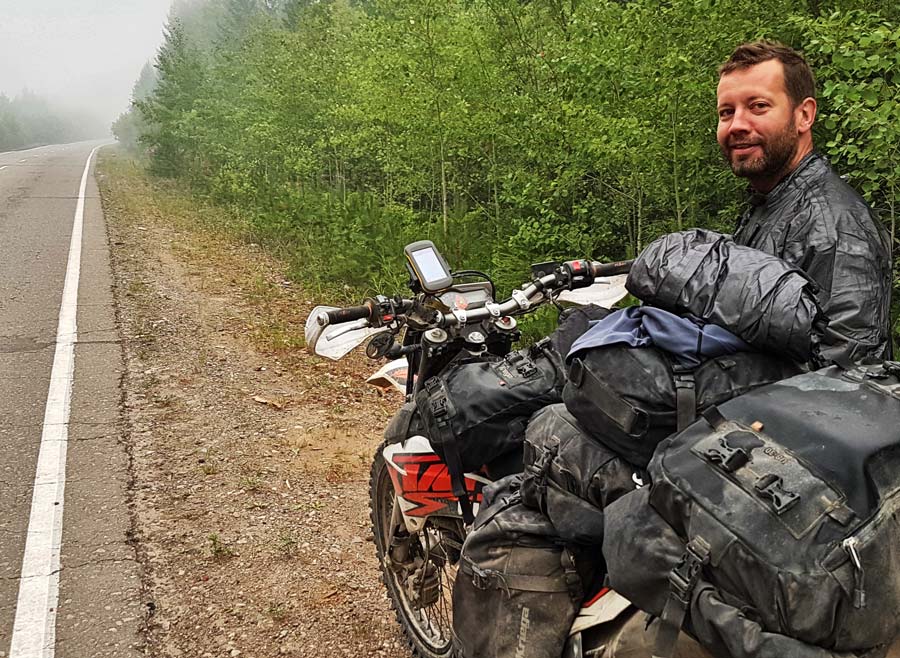
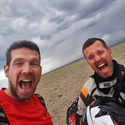 Jyri and Tuukka’s Broken Roads to Siberia documentary travel film has been shown on several film festivals around the world. It’s now available on YouTube to inspire fellow adventure riders to take on broken roads of their own, and for others to realize their personal travel dreams whether it’s on motorcycle, bicycle, foot, or horseback.