 Sticky logo
 Search


Loving dirt bikes as a kid and growing up just outside of NYC was kind of a drag. Sure, Jersey has the best pizza on the planet, but our off-road riding opportunities were limited to getting chased away from the local power lines by cops, or roosting over Jimmy Hoffa’s body in the infamous Meadowlands. Either way, the adventures were always short and sometimes yielded legal consequences.
Fast forward 30 years, and current-day adventure riding on the East Coast is still challenging. There is no shortage of enthusiasts, but identifying legal off-pavement tracks and then linking them together for a multi-day ride takes a ton of effort—something most riders just don’t have the time or expertise to do.
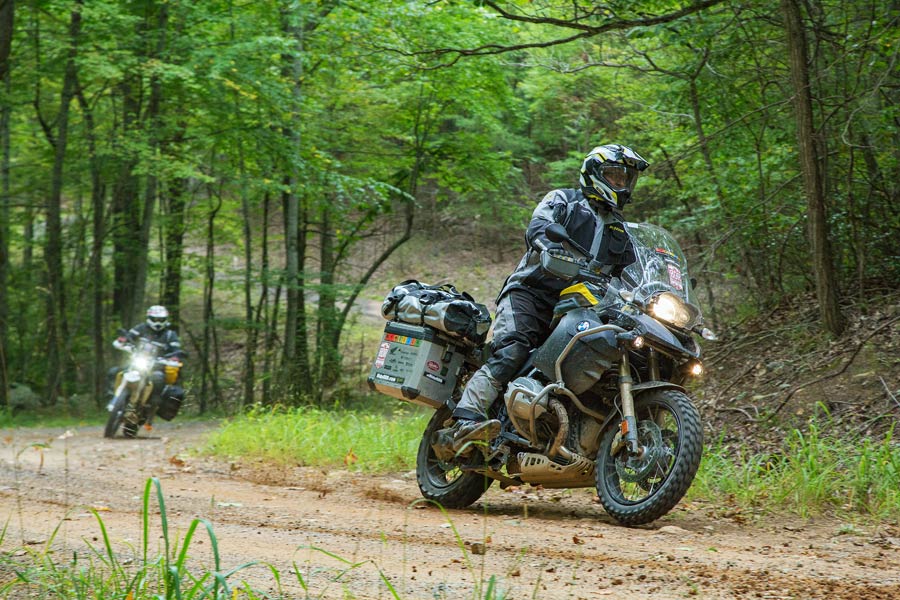
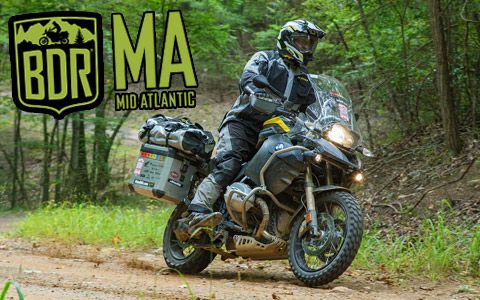
If you’ve ever had the pleasure of riding a Backcountry Discovery Route (BDR), then more than likely you live in a western state or had to ship/rent a bike out there to do so. Well, big news for us right coasters—what was once only available west of the Mississippi is now within a one-day ride of the Big Apple. Yep, you read that correctly, the Mid-Atlantic BDR (MABDR) has been officially launched as the first East Coast BDR.
I’ve not only had the opportunity to experience more than half of the BDRs but was also lucky enough to score an invitation to the MABDR scouting expedition and documentary film production. The expedition team included BDR board members and staff, BDR ambassadors Jack O’Connor and me, plus a talented film crew led by Sterling Noren. Our leader was Seattle-based board member Kevin Woody, who’s traveled across the country many times and spent countless hours developing this fantastic route, along with fearless BDR trail boss Rob Watt. A heartfelt thank you to Kevin, Rob and the entire BDR organization for delivering a taste of BDR to the East Coast. And, of course, to the glue that holds the BDR together, Director of Operations, Inna Thorn.
The Route: Nine Sections of Adventure Nirvana
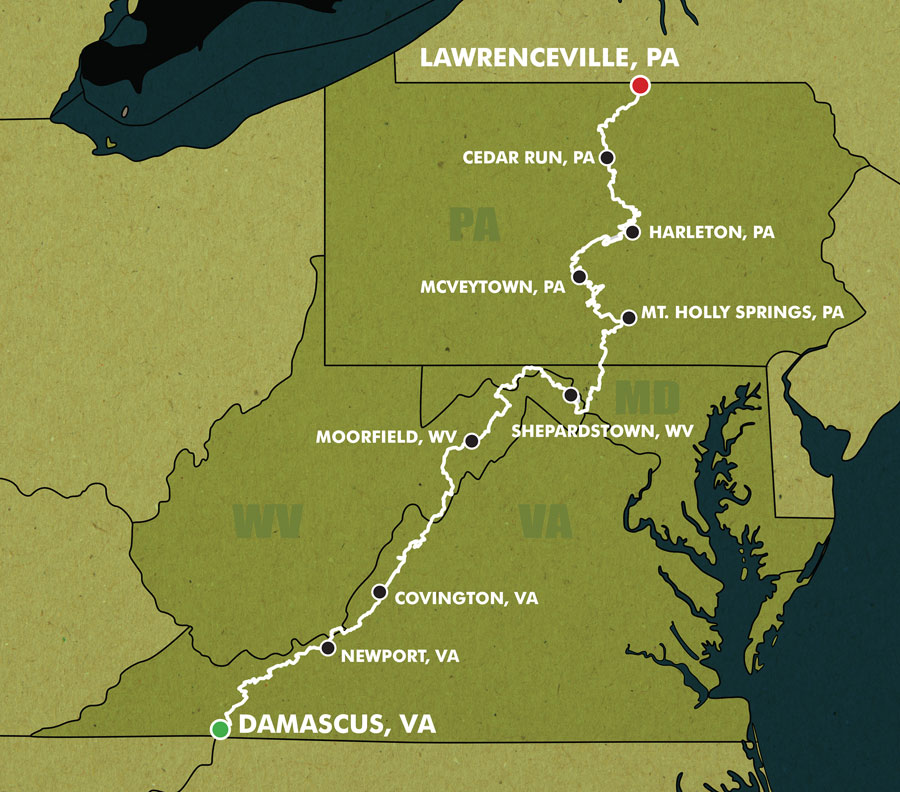
The MABDR blends dirt, gravel and paved roads to wind through remote parts of Virginia, West Virginia, Maryland, and Pennsylvania. It starts in Damascus, VA, and crosses 1,080 miles before ending in Lawrenceville, PA, at the New York state border. It took us on twisty forest roads and rural country lanes through the Appalachian Mountains, majestic state forests, rustic farming landscapes, Amish country, and locations that played pivotal roles in early American history. The route is divided into nine sections, allowing the rider to easily knock out one a day, more if you are so inclined—especially in the summer months when the days are longer.
BDR’s goal is to design routes that are doable by an average dual-sport rider on a fully loaded adventure bike. From experience, I can tell you that the western routes vary in difficulty quite a bit. I’m an average rider and found the MABDR to be on the easier side of the scale. That said, weather/surface conditions, the bike you choose, and your speed can take this route from mild to wild.
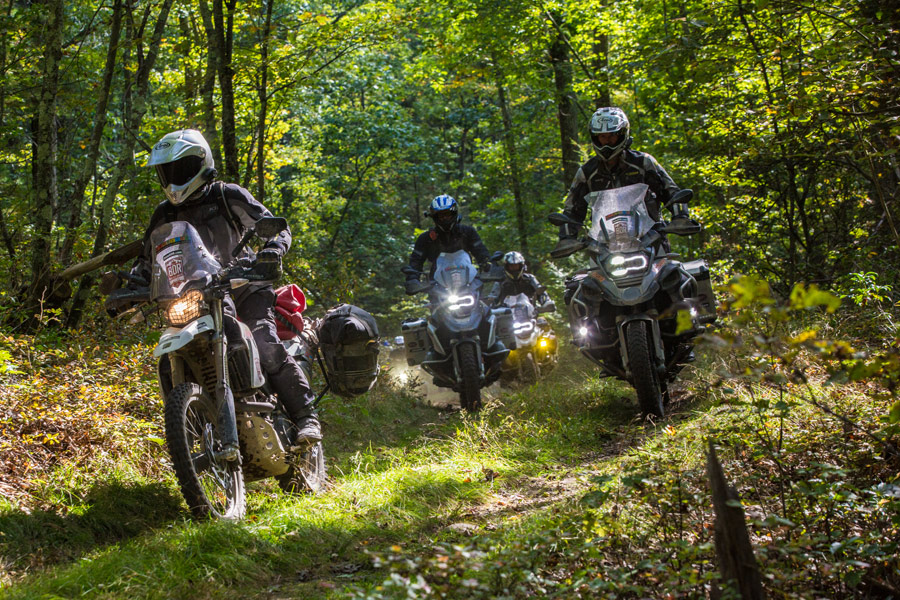
We had ideal conditions on the expedition and a mix of bikes from 650 thumpers and up. I rode a BMW R1200GS-LC equipped with aluminum panniers and fresh knobbies and felt it was the perfect weapon for the task. Paul Guillien, BDR President and CEO at Touratech USA (Touratech-USA.com), rode the Honda Africa Twin, another perfect bike for ripping in the dirt, yet right at home carving twisty tarmac. I had a few chances to chase Paul, hoping to gain some insight into his riding prowess. Unfortunately, all it seemed to get me was a windscreen full of roost and a deflated ego as he disappeared ahead.
The route delivers a quintessential dual-sport ride, flawlessly blending dirt and pavement tracks together in a way that keeps you constantly engaged. If you love letting that back wheel drift around an endless sea of loose surface corners, this is your route, and if you find that type of riding a bit intimidating chances are you’ll have that skill mastered by the end of your MABDR journey. The best way to describe a large part of the MABDR is a dirt version of the Tale of the Dragon sans the congestion.
Know Before You Go (Back East)
The MABDR is rideable from early spring until late fall, depending on the snowfall. The best time is probably May to October, although it can get hot and humid during the summer months. Though our expedition was in mid-September, it was still quite warm when the fall colors were about to pop. Riding this route during peak fall foliage would be absolutely epic.
Like other BDRs, the MABDR is a little short on lodging directly along the route. However, if you’re willing to travel off the route a bit, you can certainly find places to crash—trip-advising apps will come in handy. Camping, on the other hand, is plentiful. Official campgrounds are included on the BDR map and a few primitive backcountry campsites can be found along the way. Since the number of motel rooms and campsite spots on the MABDR is limited, it’s a good idea to make reservations ahead of time.
Even with cartographer-extraordinaire and Butler Motorcycle Maps (ButlerMaps.com) owner Court Butler in tow, without question the MABDR cannot be done without a GPS. With all of the twists and turns you’ll need to stay pretty zoomed-in on the track or risk blowing a turn. Be sure to bring the Butler MABDR map, as it gives you a great overview of the route and region plus a ton of useful information and resources.
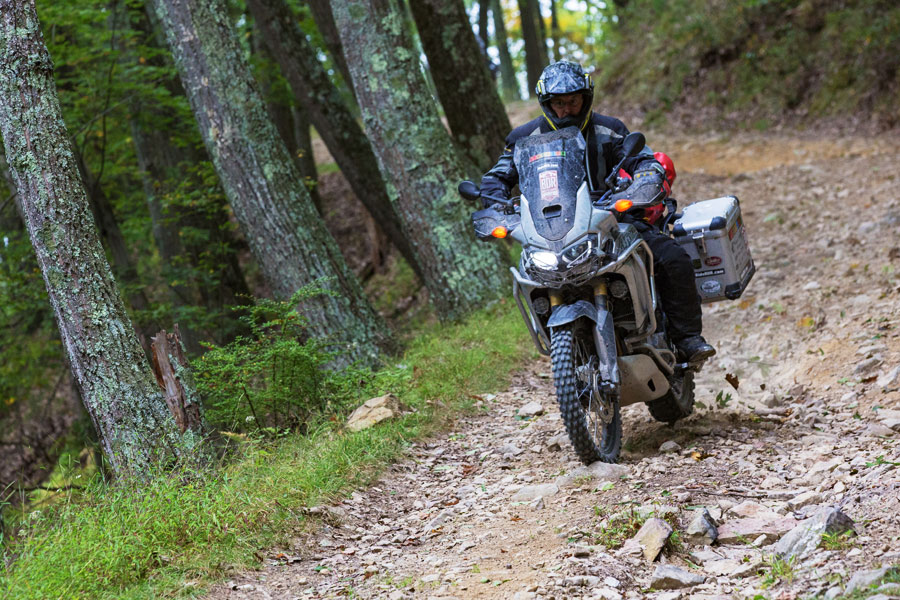
I was surprised how limited mobile phone service was on most of the route—far worse than on many of the western BDRs I’ve ridden. I always carry both a satellite location device and a satellite phone for unexpected emergencies. On this ride, the satellite phone really came to the rescue after a tragic crash—albeit a drone crash, but that’s another story….
Rule: Never pass a gas stop—I’ve learned that the hard way over the years on adventures around the world. It’s a cardinal rule of ADV travel and especially applies on the MABDR. The longest distance between fuel stops is only 115 miles but if you pass one, you could be looking at another 100 miles or so to the next. So, even if that behemoth nine-gallon tank of yours can take you well beyond that—carry extra fuel! There’s always someone in the group on a smaller dual-sport bike looking for handouts. (You know who you are.)
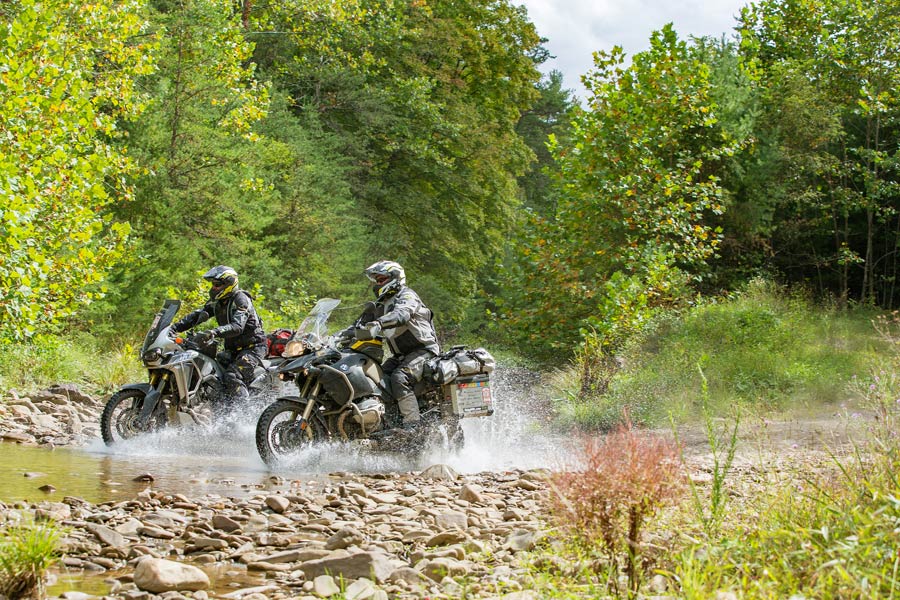
The Consensus: Well Worth the Wait!
To my East Coast adventure riding brothers and sisters, you now have zero excuses not to experience a BDR. All you need to do is schedule some time off, pack up your bike, grab some friends, and head to Virginia—the BDR team has done all the heavy lifting. I will warn you, you’re likely to catch the BDR bug. And to my left coast BDR aficionados, it’s time to come see what we have to offer; I promise it’s worth the trip.The BDR Mission
Backcountry Discovery Routes is a non-profit organization with a mission to develop and preserve public off-highway riding opportunities throughout the U.S., while contributing to the preservation of our land, promoting environmental stewardship, supporting the economy of rural communities, and advocating motorcycle safety.
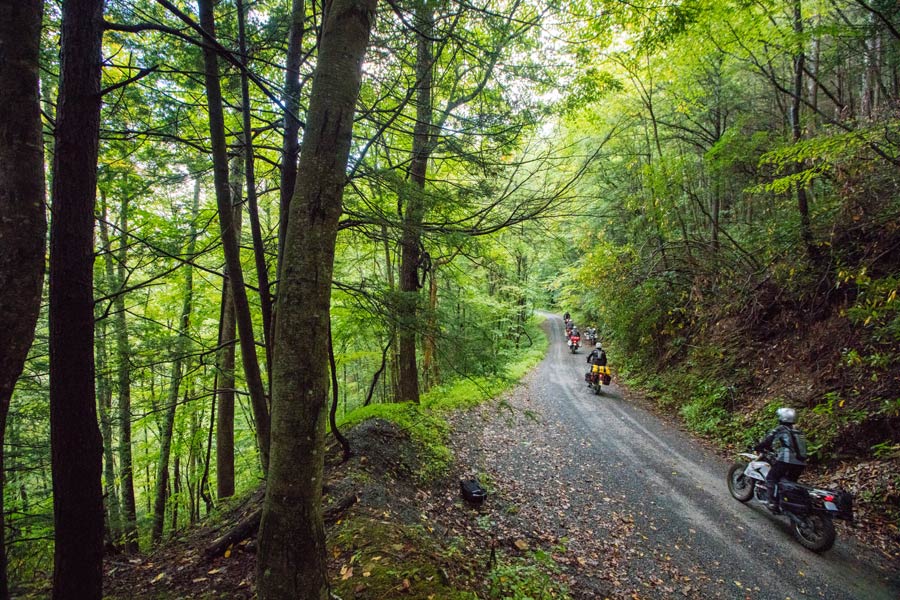
Taking Motorcycle Safety Head On
The MABDR is full of twisty tracks and tight corners—and a perfect example of why BDR developed the Ride Right initiative. The program raises awareness of the importance of keeping to the right side of the road to reduce the risk of head-on collisions around blind corners, and in riding situations with limited sight lines. Simply placing a Ride Right sticker on the inside of your windscreen or some other visible spot helps keep this life-saving practice top-of-mind while riding. Visit RideBDR.com/RideRight to learn more about the initiative and how to get free Ride Right stickers for you and your riding buddies.Want More?
Free GPS tracks and all the resources you need to plan your MABDR adventure are available at RideBDR.com. If you want a real feel for the route, you can purchase DVDs and Butler Maps of all routes at Touratech-USA.com and ButlerMaps.com or stream/download the BDR movies on Vimeo. The MABDR route will also be available soon as a smartphone app through Rever.co.RideBDR.com