 Sticky logo
 Search


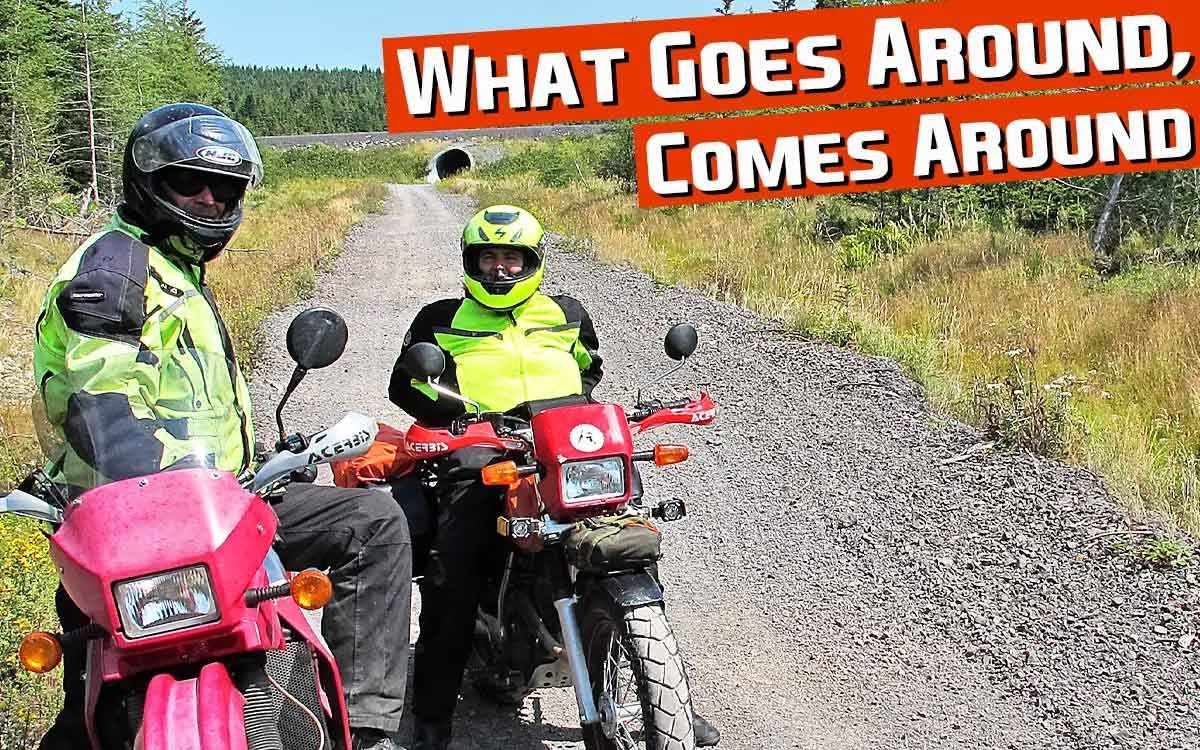
What Goes Around, Comes Around
A beautiful and haunting memory of Newfoundland had Molly Nelson dreaming of her return for decades. Hitchhiking there in 1982 left her with the burning desire to explore this breathtaking landscape again, and to match its discovery with an equally immersive mode of transportation.
But, what would give her a speed that’s slower than a car to take in the surrounding details, yet faster than on foot to finish the trip within her allotted time frame? Upon hearing that the Trans-Labrador loop was now open, Molly eagerly began planning her enthusiastic return on her transport of choice… a Yamaha TW200.
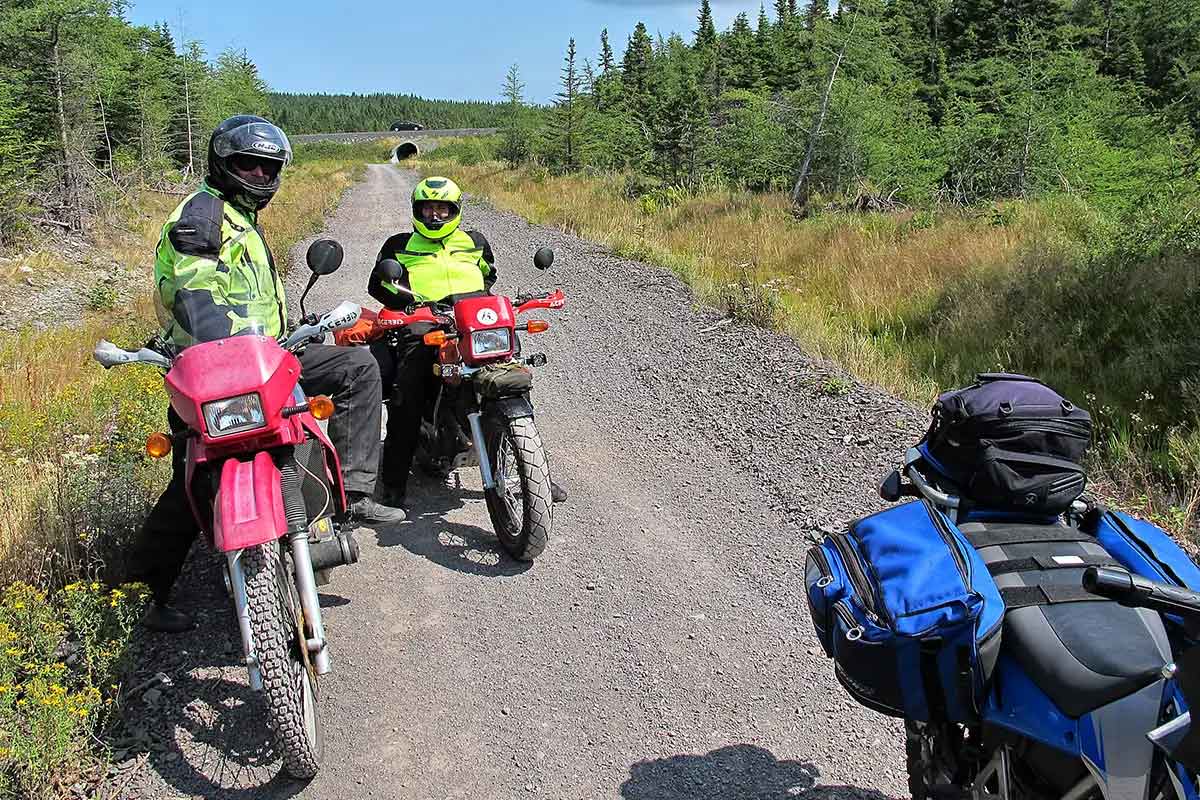 Molly, with some new KLR-riding friends in the middle of Newfoundland. Photo Credit: Tammy Perry
Molly, now 47, placed her highlighter on the north-eastern portion of a map of Canada to outline the route of a thirty-year-old dream. From her farm in Cornish, Maine, she began drawing a loop to the right through New Brunswick, down through Nova Scotia, across a bridge to Prince Edward Island (PEI), over the Gulf of St. Lawrence by ferry, across Newfoundland to the last ferry to Labrador where she could run the Trans-Labrador Highway, and then back home through Quebec.
“I could leave from my yard, do a big circle, and come home,” she stated simply. But, drawing a circle on a map is a heck of a lot easier than tackling all this terrain without incident… especially when taking it on solo. The trip started quite smoothly—as Nelson puts it, she was “in the Zen zone.”
After a couple days with friends in New Brunswick, she crossed the northern part of the province mostly by gravel roads, plowing through massive puddles across the trail along the way.
“What could be better than having no agenda, just tooling along on the bike at 25 miles an hour for six weeks?” Molly continued, “It was beautiful to just be out there. To take my time setting up camp. To wake up after the moose got off the road. I would start around 9:30 or 10:00 in the morning, and then stop at 4:00 in the afternoon every day to set up a new camp. I did it like that to avoid running into animals that would be more likely to frequent the roads from twilight to just after sun up.”
While in the cities, Molly ditched the tent and stayed with Couchsurfing.org connections. She followed her map across the Confederation Bridge to Prince Edward Island, and traveled by the Wood Islands ferry to reach Nova Scotia where she caught the Argentia ferry to Newfoundland.
After reaching the island, she ran the backroads and trails to St. Johns, the island province’s capital city. This proved to be the point on the map where she would meet her fate.
* * *
From the beginning, all bets should have been against Nelson’s itinerary. For starters, her August departure date came at the worst possible time of the year for a farmer. She and husband, John, run a 30-acre farm, and late summer is one of their busiest seasons.
To make sure Molly could leave at her scheduled time, she worked part-time jobs the two winters before, so that a friend could be hired to step in for her on the farm.
It’s not as if Molly’s bike would be most people’s first choice for a trip like this, either. Yamaha TW200s are small, underpowered, and not known for long-range fuel capacity. But, this bike suited her purpose just fine—and its pokey speed let her take in the sights along the way. “I like to look at everything. That’s why I took a bike instead of a car,” she says.
About the only part of the trip she’d really researched much was the distances between gas stations. She knew from the get-go that she’d need the extra fuel capacity. So, to extend the TW200’s range, a welder friend modified her gas tank, allowing it to carry another gallon. This gave her a range of about 280 miles between refueling stops.
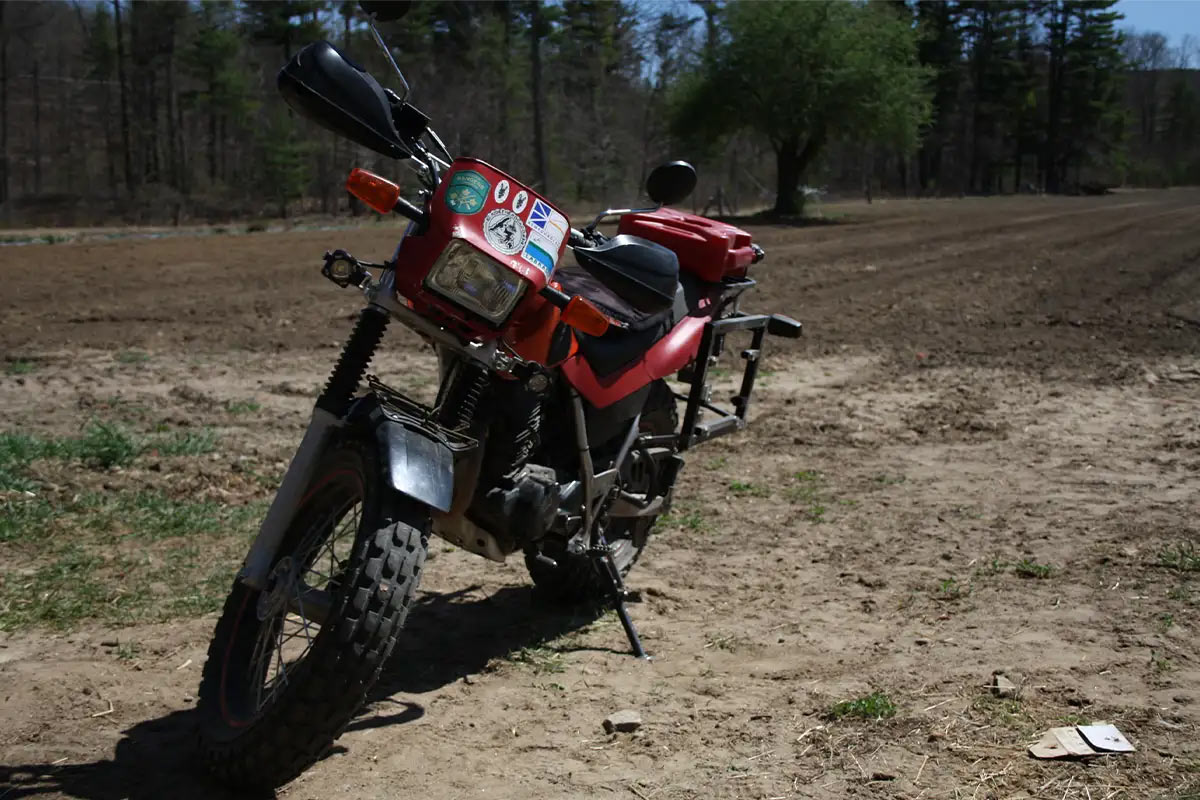
In addition to the tank, a few other farkles were added to her machine to build it out for the longer ride: fog lights, handguards and a custom-welded rack a friend put together for her, allowing for strap-on panniers.
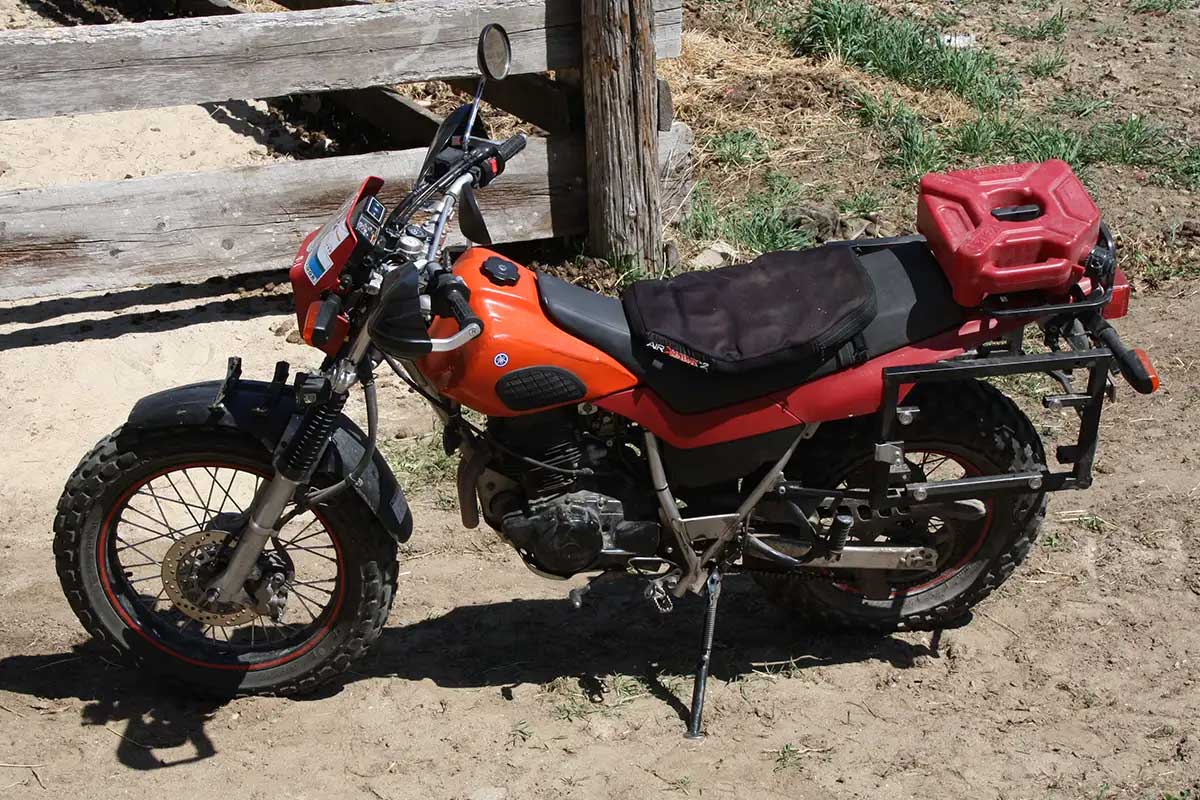
It was outside of a tattoo parlor in Newfoundland’s largest city where Molly’s faith in humanity was almost shattered… her bike was stolen.
It wasn’t difficult to figure out how the thief had made off with Molly’s bike—she’d left the keys in it! Always an idealist, her reasoning from years gone by was that if someone needed her stuff that badly, they could have it. Still, she never believed that anyone in St. Johns would take her bike—even in this rougher part of town.
One would think that tempting her fate like that would be the sign of a wide-eyed and naive traveler. On the contrary, she’d spent years traveling the globe with non-profit organizations in places like Madagascar, India, and Indonesia. While helping out in developing countries, she’d ridden many of the far-off corners of the planet—but never had her bike been stolen.
So here she was, on the trip she’d focused on for three decades, and no way to complete her dream. But, the next piece to the puzzle came in the form of unexpected advice from the police, “If you want your bike back, you should make an appeal over the radio.”
Apparently, a local station hosted a call-in buy, sell and trade show in the mornings, and she could get her message out to the public through them. So, that’s exactly what she did, and within minutes her cell phone was buzzing with people who wanted to help.
Molly explained, “They were all saying they wanted to help, so many people, it was crazy! I started receiving texts and telephone calls from the second I made the announcement on the radio, and the calls continued for three days straight.”
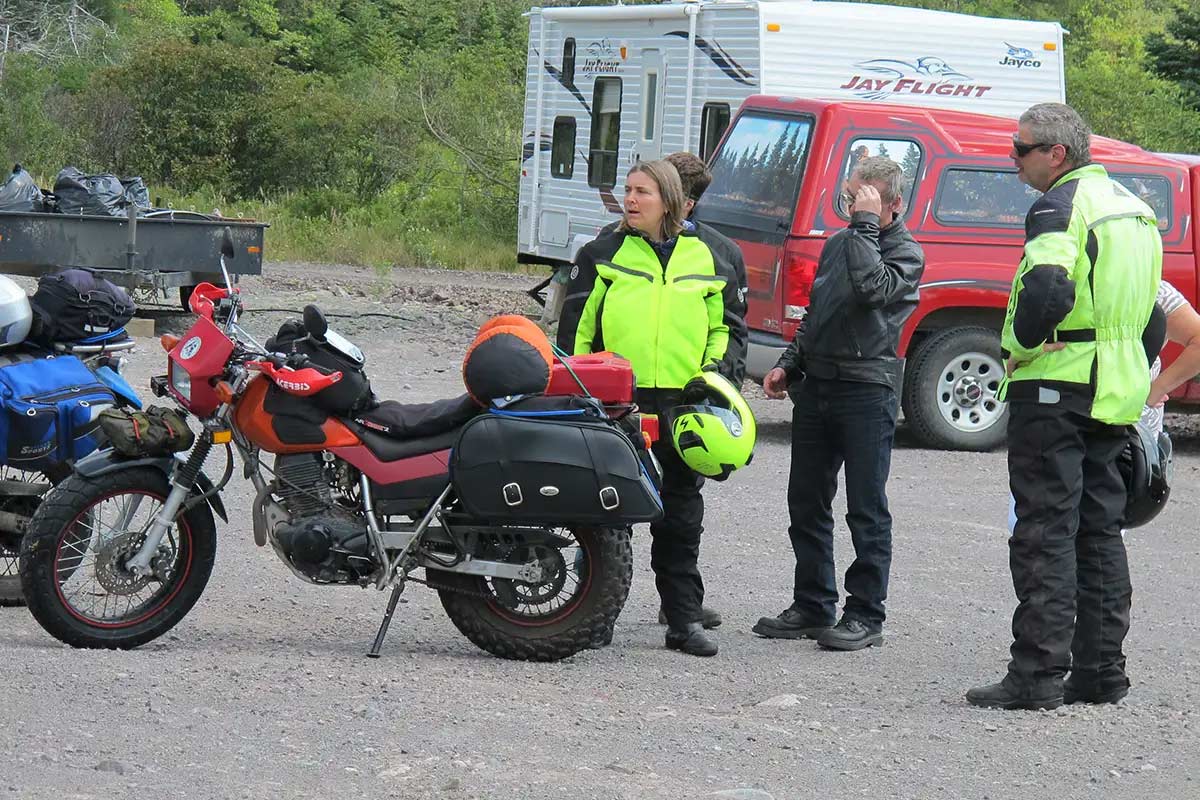
News spread quickly across Newfoundland, and soon Molly was also asking for help on local television.
The bike was stolen on a Monday morning. By Tuesday night she received a mysterious phone call tipping her off to her bike’s possible whereabouts. Two locals drove her down to where they found her motorcycle chained to a fence in front of a house. The occupant denied any knowledge of the machine, and police said they couldn’t make any charges stick.
Even with hopes lifted once again, Molly’s trip wasn’t back on track just yet. Whoever had stolen the bike had stripped it of the handguards, the rack, and some of the luggage. She’d been staying with a couch-surfing connection which had saved her camping gear—but the panniers and their contents hadn’t escaped the fate.
Still, she had no cooking utensils or clothes, and most importantly, no money. With what she still had she calculated that she might be able to finish the Newfoundland part of her adventure, but not Labrador.
While support from Newfoundlanders had already been overwhelming, the locals really stepped up their efforts. Aid poured in to get Molly back on the road, as local individuals and dealerships donated everything from new handguards, tubes, a chain, luggage and a rain suit.
They also contributed local delicacies like blueberry jam and bottled moose meat. And, as luck would now have it, her luggage rack mysteriously turned up, too, thanks to the community’s efforts.
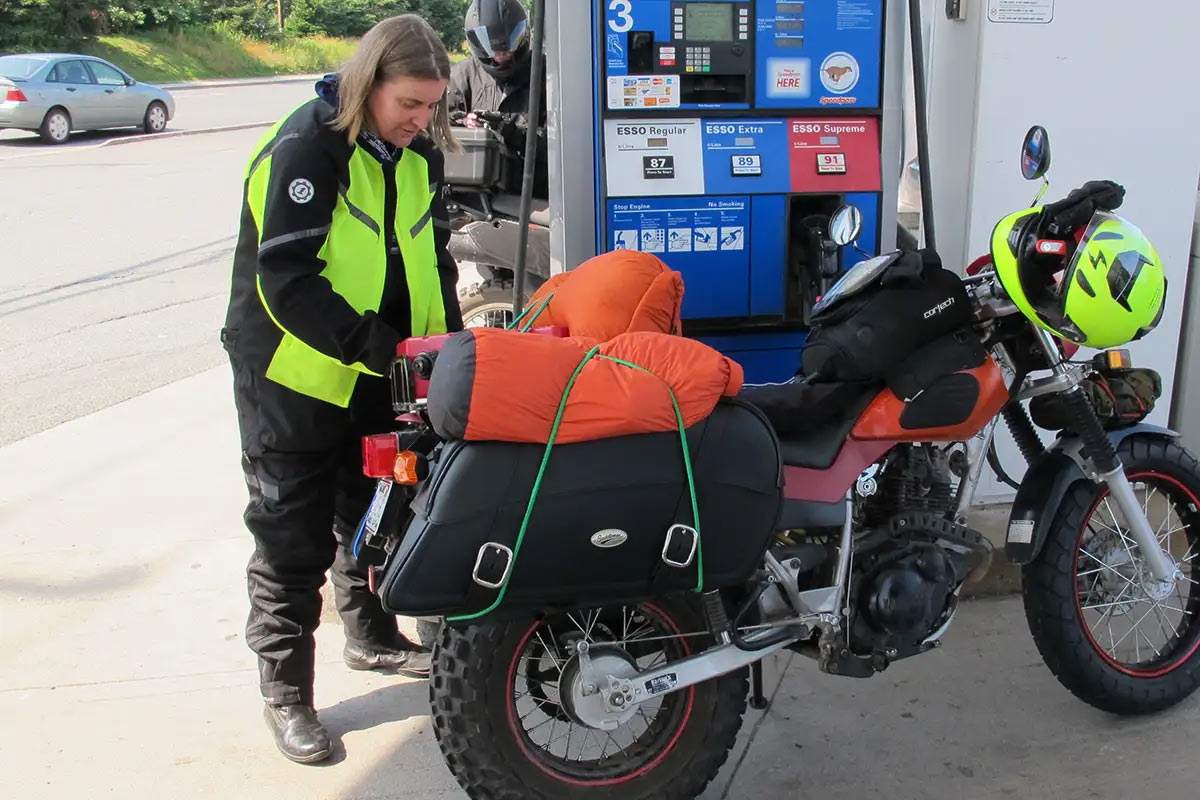
Although Molly had spent so much time helping others in developing countries, she wasn’t accustomed to being the recipient of such kindness. Now it was her turn. “I’m always telling others,” she said. “‘You’re doing me a favor by asking for help,’ because it’s such an honor to be able to give back. It was really humbling to have all these people just wanting to pitch in.”
The good people of St. Johns banded together to raise money and help Molly get back on the road. Yet, it was the folks at Newfoundland’s adventure riders forum, RidetheRock.com, that helped Molly realize her place in the motorcycling community. You see, she had never known there was a name for what she was trying to do.
Molly got choked up as they handed her an envelope full of cash that they had raised for her through their Ice-cream Run. “I’ve never been in a biking community,” she said. “And I never knew there was such a thing as ‘adventure riding.’ So, when I discovered I was an adventure rider it felt like I had to get a cape or something.”
By the end of the week she was back on the road to Labrador living the old proverb, “What goes around, comes around.”
The rest of the trip went smoothly. Sure, Molly had to battle loose gravel and the dust clouds kicked up by transport trucks as she rode across the Trans-Lab, but she says everything just came together after the St. Johns incident.
Not only did she get to experience the beautiful Labrador wilderness, she also had plenty of chances to meet the people living there—which was half the reason she chose to travel the area in the first place. And it became very important for her to nurture these new connections through letters and the internet upon returning.
“In general, the people of Newfoundland and Labrador were the highlight of the trip,” says Molly.
Thanks to media coverage, she was surprised that so many of the people along the route recognized her. At one point, a police cruiser pulled her over, not for a ticket, but to talk to her about her gutsy ride and to give her a sticker for her bike.
Her relaxed pace allowed her to take in each area’s wildlife where, at one point, she even discovered timber wolf tracks. Others on larger bikes didn’t always take her seriously, but she didn’t care. “I don’t know what their experiences were, maybe they got off on going fast, I don’t know,” she says.
“I’d go slowly, because I like to take things in. A lot of people were blowing by me, but they wouldn’t have a chance to see things like the timber wolf tracks… you know what I’m saying?”
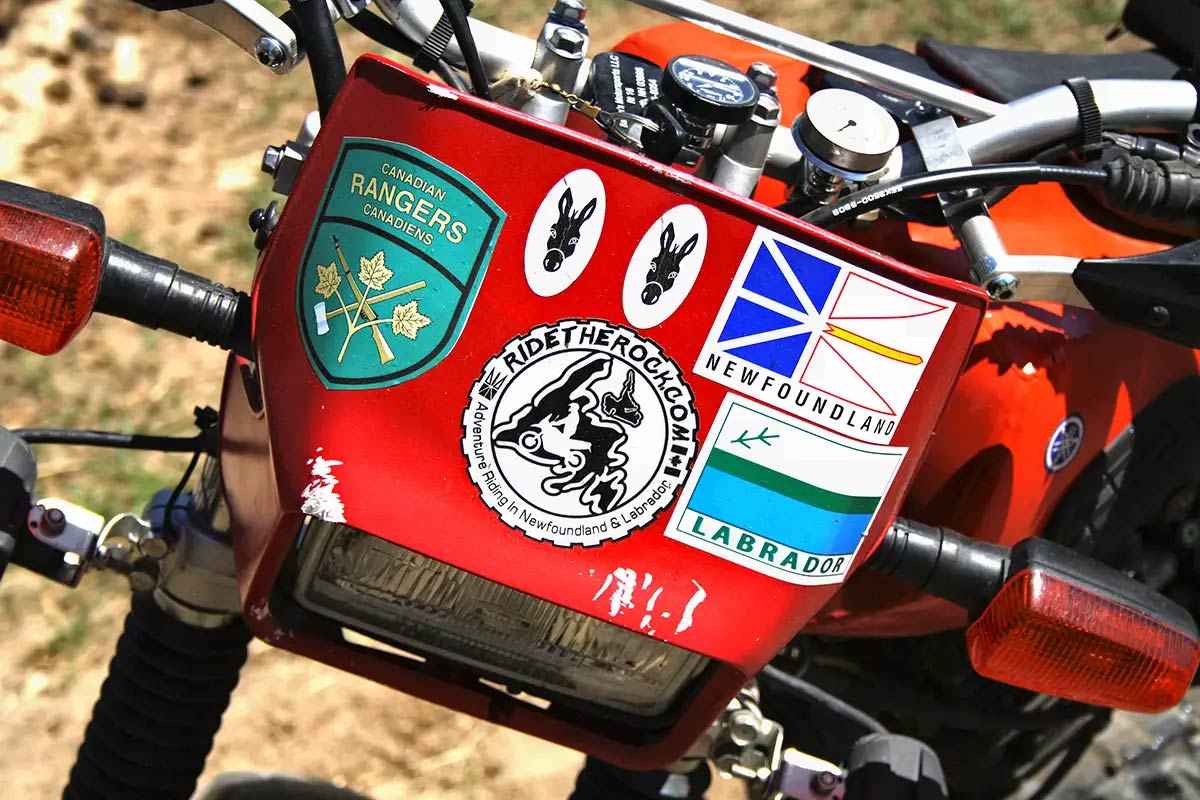 Thismachine is rated at two donkey-power!
After returning to her farm in Maine, she reflected back on the experiences as she dug her hands into the soil. What advice would she give other adventure riders wanting to tackle the Trans-Lab route? Molly’s advice isn’t about carefully guarding your bike against theft, “Are you kidding me?” She laughs, “That was the best part of my trip!”
Molly suggests that if you want to truly enjoy the journey, make sure you don’t tie yourself too tightly to an ambitious schedule. “Definitely don’t have a timeframe. Give yourself plenty of room, because then you know you’ll get into trouble. And, that might be the best part of your adventure,” she adds with a smile.
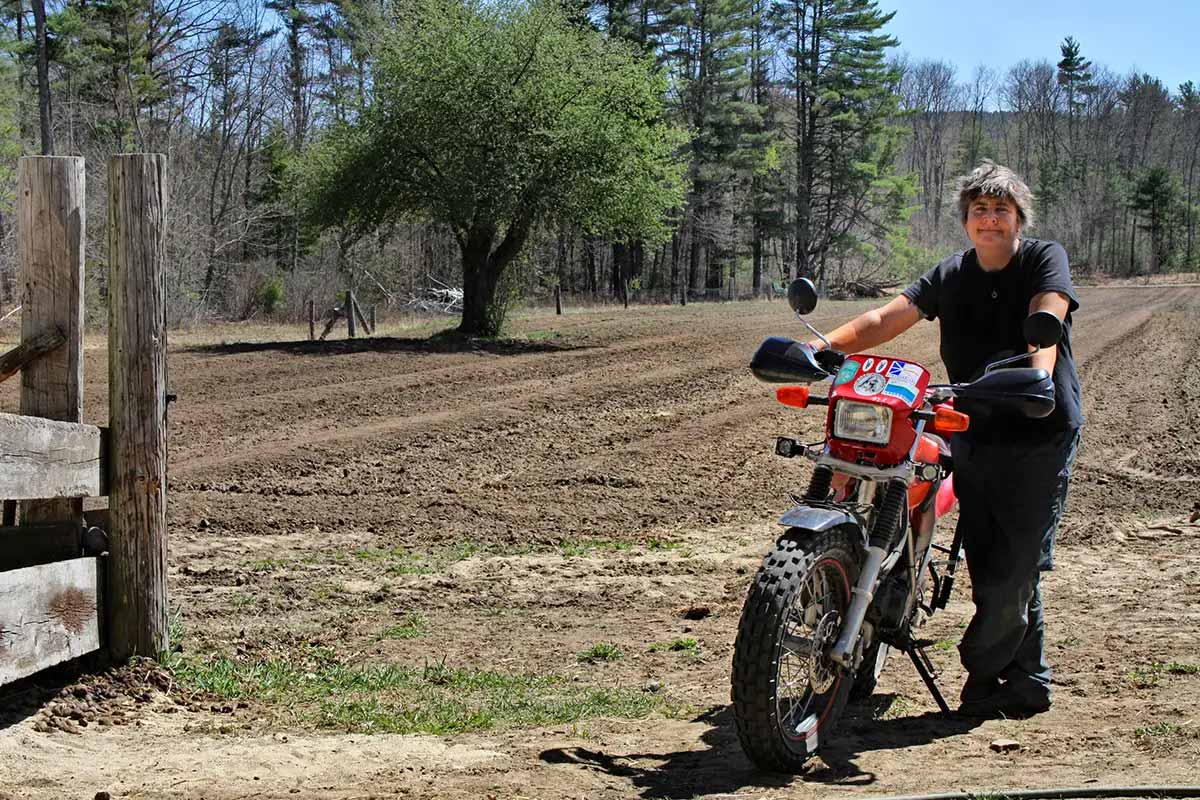 Since returning home to her farm in southern Maine, Molly has replaced most of the missing pieces which were stripped off her stolen bike.