 Sticky logo
 Search


It was a warm afternoon in Flagstaff, and we were sitting on the patio of one of the best BBQ joints in Northern Arizona enjoying some of the local brew. Both of us had a little adventure travel under our belts as well as the tendency to move around a lot. We had a deep love of motorcycles. Josh grew up dirt riding in the desert near Tucson and spent most of his high school days wrenching on worn-out bikes. I got hooked on motorcycles in art school when I needed a cheap daily driver.
We had both spent quite a few years wandering, and it was complete happenstance that we met when we did. Josh was in Flagstaff working on a graduate degree in business, and I was a fulltime tattoo artist at one of the parlors in town. Like many with a hankering for the open road, staying in one place proved to be a challenge. So, over pulled pork sandwiches we began a scheme that would combine our passions for adventure and old motorcycles. One of us suggested the Mongol Rally, the other countered with riding the Pan American Highway.
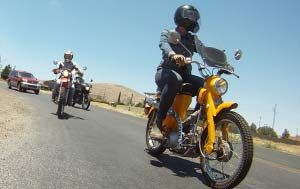
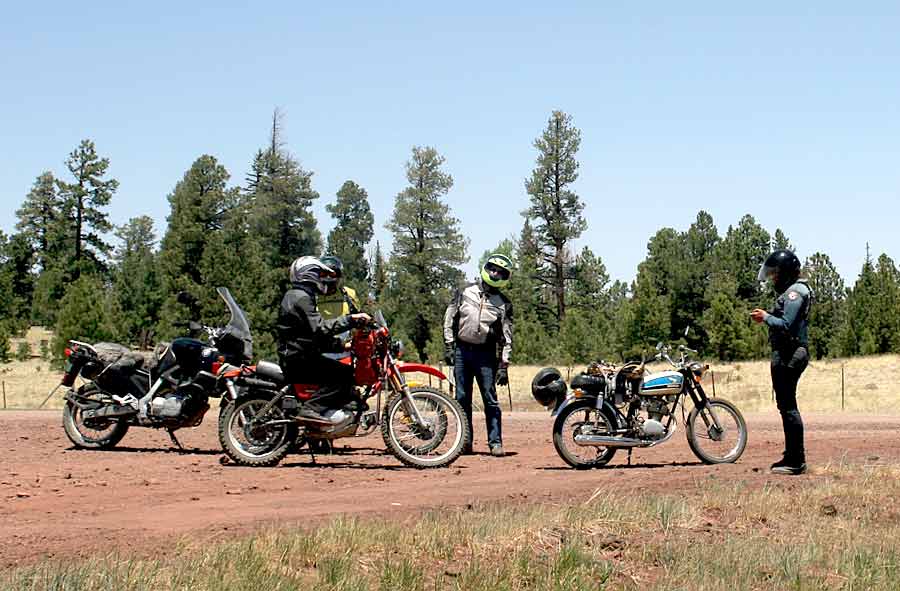 One of the many "cool down" stops to ease my bucking bronco the first day.Josh had a 1972 Honda CB100 in storage that was in near original condition, and I had been recently eyeing a Honda CT90. Maybe, if we weren’t in a position to cross the continent or travel the world, we could have an epic adventure on a smaller scale. We didn’t have the time to do a multi-week trek, but we could still dream up an exciting ride— and something no one had done before.
We wanted the ride to be more than just a crazy stunt. If we were going to be doing something ambitious and eccentric, we hoped others would take notice. And if they were going to be paying attention, we might as well do something that would make the world a better place. So we hooked up with Blood:Water, an organization that drills clean water wells and sets up HIV/AIDS clinics in several African countries—funded largely by unique grassroots efforts. In the places that Blood:Water operates, as well as most of the third world, the average motorcycle engine displacement is around 125cc. This would be perfect.
We reckoned anyone can ride 400 miles in a day on a big motorcycle, but 400 miles at 30 mph on a small bike—that’s quite a different experience. A few friends wanted to tag along, but we quickly found out that 100cc street-legal bikes in good shape were probably among the most difficult motorcycles to find in the United States. Wade, Josh’s dad, managed to locate a 1968 Honda Trail 90 and invited himself along. And because of the high probability of breakdowns and a severe lack of cargo space on these bikes, we rounded up a motorhome for the support team.
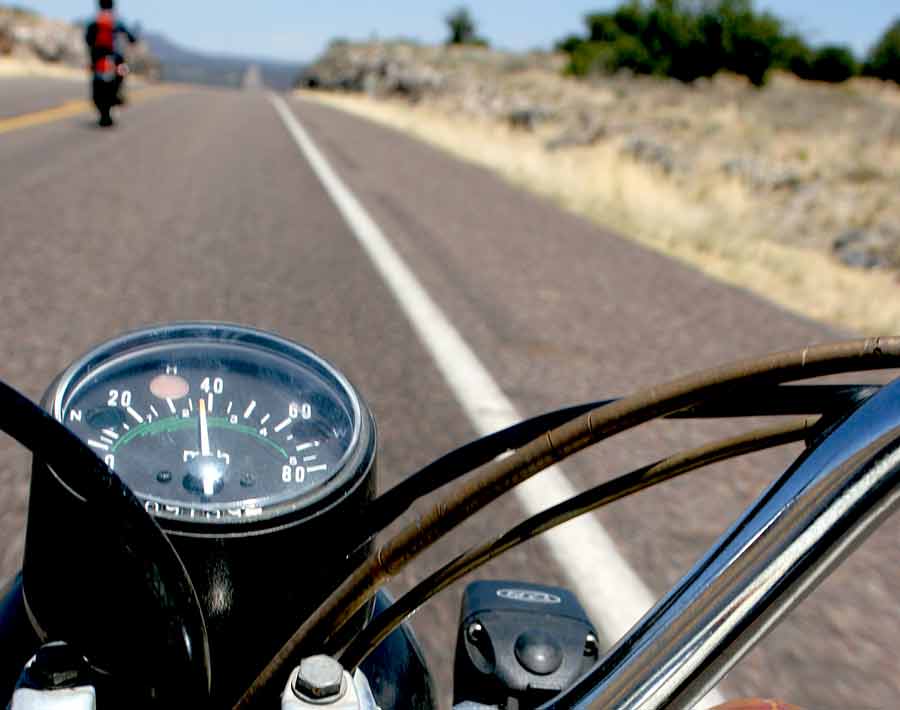 Here we see the top indicated speed of a CB100 going down hill.After a visit to Overland Expo to share plans with our adventure motorcycling community friends, we were ready to go. The starting lineup: 1976 Honda CT90, 1972 Honda CB100, 1968 Honda CT90.
When we arrived in Parker, AZ, at 8:00 p.m. the evening before the ride, it was 108°F. It started to sink in that riding at 30 mph under the scorching hot Arizona sun was going to be a miserable experience. But at 7:00 the following morning it was an almost-comfortable 96 degrees. We soaked our shirts in ice water, which provided a few minutes of makeshift air conditioning until they dried. After only twenty miles it became apparent there was something very wrong with my bike; it was sputtering and stalling and required a “rest” before starting again.