 Sticky logo
 Search


Working out your budget is one of the most important pre-trip things you, as an overlander, will be doing. It’s vital that you do this with real thought or you could end up out there, having a ball, but running out of loot. What a disaster if you had to come home earlier than you intended. And, thinking about it, I hardly ever met an overlander who felt he’d been on the road too long.
The thing is, you almost never get your budget right. There are too many imponderables out there. There’s too much you don’t know, won’t be able to find out about in advance and, of course, you simply don’t know what will happen to you. Happen to you? Well, the unexpected could be a money-sucking disaster or an amazing opportunity. Both are on-the-road inevitabilities and hey, they are classic examples of why we go overlanding aren’t they. The unpredictable things?
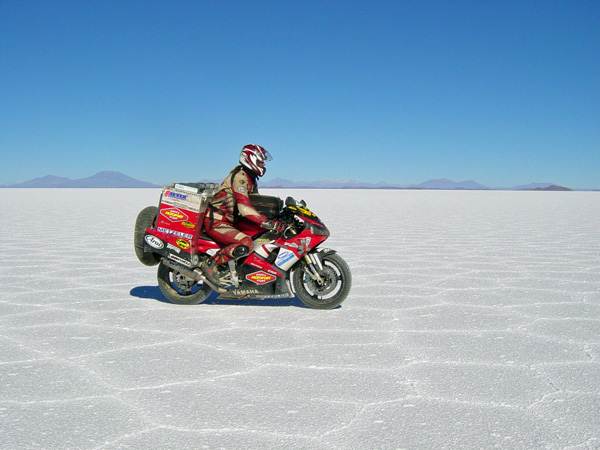
Mark, a good overlanding friend, made it down to Ushuaia in Patagonia for Christmas. While he was there, a cruise ship heading for the Antarctic announced that they had some berths and they were going cheap. Though cheap, this absolutely wasn’t in his budget, but he reasoned, would he ever get the chance to do something like this again? He dragged his plastic out, and dipped into his emergency reserve. Knowing Mark his card was screaming and kicking, but he’s never regretted doing so.
Pre-trip, you’d be daft if you didn’t ask yourself if there were any options for supplementing your travel funds? The simple answer is, there are and a bit of lateral thinking can take you to ideas that can put a significant chunk of loot in your wallet. Innovation goes, or can go, a long way.
But I’m often asked what I think about trying to get sponsorship. Well, I have a strong opinion on this and it might surprise you. I think it’s a bit of an overlanding pipe dream. The search for sponsorship is time consuming, frustrating, can be expensive and it’s a route that you ought to think hard about trying to ride. But having said that, wouldn’t it be fantastic to have a chunk of your trip paid for by the big companies of motorcycling and the world of overlanding?
This idea seemed to be a darned good one to me when I set off to ride the length of Africa. I spent weeks of my valuable planning time trying to attract sponsors—most never replied. Of the four hundred approaches I made and followed up, only six got back to me; just a couple of them with offers of help. I should have been spending this time living on the edge of anticipation for the trip itself, not on the chance of easy money. I’d have done far better to stack up overtime hours! In my ignorance and in spite of my best efforts, I had no idea of what I was trying to get myself into.
The time and effort though aren’t the main dangers. If you actually are successful, there’s likely to be a big price to pay. The simple reality is that a company is going to sponsor you with loot or kit, if they are going to get big returns publicity wise in return. Some companies you’ll approach will be managed by overlanding enthusiasts who have an open mind to new opportunities; but even they will be hard-nosed businessmen and women. They have to be to survive in an extremely competitive world. If you can’t prove that they will make money as a result of investing in you, then your approach will probably end up in the bin, as so many of mine must have done.
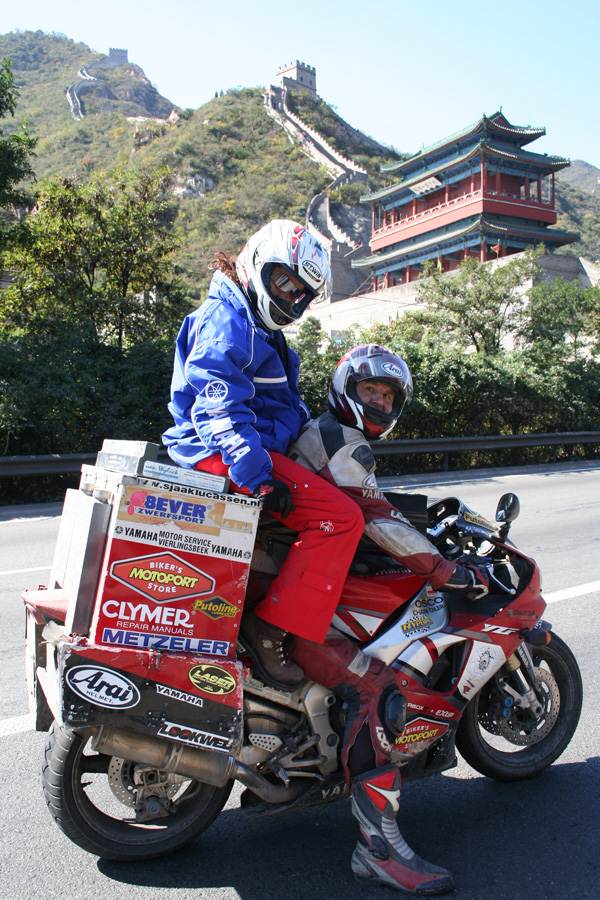
To be successful you have to be newsworthy; doing something different which will inspire and add a glow of fun or glamour to a sponsor’s product. Or you’ll have to show that their product is the tough rugged bit of kit that every traveller shouldn’t be without. You have to stand out from the hundreds of approaches that, for example, a tire manufacturer is going to get every year. Sjaak Lucassen is a perfect example of what I’m talking about. Sjaak rides road bikes, including Yamaha’s R1, through some very oddball parts of the world. But he doesn’t chase speed records; he rides the same hardcore dirt roads that those with purpose built trail bikes do. There’s no doubt that he is able to show a potential sponsor that they are going to get the airtime and/or press time.
Unless you have a proven track record like journalist Damon L’Anson, that’s going to be the really hard bit. You’ll have to have commissions from magazines and even the radio or TV. And anyway, even if you are successful, do you really want to pay the price that could be asked of you by the companies? They, as I said, will have their commercial hard hats on. You need to know exactly how far they want to go, and equally, how far you are prepared to go.
I met a Swedish overlander in Thailand. He had been sponsored for every single bit of kit he had. His bike, helmet, his panniers, tent, bike clothes and even his talcum powder, contact lenses and lens fluid. How amazing is that? I was stunned at his success, but then quickly became aware of the price he was paying. When we were heading down to party on the beach, he was sitting amongst the mosquitoes in his bamboo cabin, trying to meet his deadlines. The only way he’d been able to get so much sponsorship was by persuading a Swedish TV channel, a daily newspaper, two magazines and a radio station to take photos, articles, and on-the-road interviews. He was phenomenally successful because at that time, hardly any Swedes overlanded on bikes.
The next time I saw him was aroundtwo years later. Our trails crossed on the wonderful island of Zanzibar. He’d just ridden half way up Africa from Cape Town, in two weeks. He’d seen a lot of potholes, shoddy hotels and border crossings. Why? The Swedish TV company had a crew on the island and his sponsors told him he had to link up with them to be filmed. I need say no more.
I suppose that’s a pretty extreme example but hopefully it illustrates the point well. Many companies won’t demand that level of return from you. But they will still want their pound of your flesh, and how many pounds will depend on what they have stumped up in the first place.
I never did turn the idea of sponsorship away though, but as I learned more, I became more discerning and more targeted. I also started to have something of real value to offer potential sponsors. After four years on the road I had a proven track record of having magazine articles published. And I had a magical letter from one of the magazines saying, “send us more articles, as many as you can.” With that in hand, the doors opened wider.
 For me it was also a conscience thing. Little in this world is for nothing. Why should I ever expect it to be so? Now I could approach manufacturers with the firm knowledge that they could do well with me. I hope that Avon Tires, Hein Gericke, Baleno, Lindeman Engineering and DHL all think they did. Thanks guys, your help was brilliant to have. I couldn’t resist this plug for them, even after all this time! Its how you have to think….
You might like to ponder another point. Do you really want your bike to look as if it’s just come off the Paris Dakar trail? You could end up with it looking like some sort of Christmas tree on two wheels. Once you are kitted out as a stickered assault on the eyeballs, you’ve pretty much lost the chance to sneak into any environment with some level of anonymity. Sure you are going to stand out anyway, as you roll covered in dust and mud into the capital city of wherever you are. But your bike and riding gear festooned with stickers and patches will maximise the effect and I’ve seen it happen; unwanted attention is attracted. Try wearing a Hawaiian hoola shirt in a Congolese border town and see what happens…
So should you step onto the sponsorship trail? If you think you can succeed and are prepared to pay the price, then yes, of course. Go for it. You’d be daft not to and anyway, it’s a new adventure. First though, have a good hard think about what you really need. Are the items you need worth the chase for sponsorship? In fact, do you really need anything? Coming back to the budget point I started with, sponsorship is only worthwhile if for example it’s going to keep or put loot into your pocket, or if it will greatly increase your trip’s chance of success, or the recognition sponsorship gives allows you to take a project further when your trip ends.
You’ll have most of your riding kit anyway, though a new jacket, designed specifically for the conditions you’ll be riding through and in would be nice, eh? Tires are always good to have. Got the right luggage for your bike? Of course you could always cobble some home-mades together and why not. But really good boxes that have been made specifically with your kind of trip in mind…. An all singing-and-dancing camera, as well as electronic equipment to back it up would be kind of handy. It’d be expensive for you to set up on your own, so maybe this is something to aim for. You certainly can’t make the stuff yourself, though again, you might already have some decent kit so....
In fact, when you have worked your way through the risks involved with the chase for sponsorship, and what you actually do need, you may simply decide to knock the plan on the head. It is an interesting game though. It can be very profitable and it’s far easier to make the right sorts of contacts when you are at home in the planning stages than when you are out there on the road. It’s a quandary. Only you can decide how far to go. Enjoy the new challenge, or discard it right from the start and concentrate on the things you know you can make happen. Whichever, I hope you have fun out there!
Hunting for Sponsorship—Top Tips:
• Search the web. Find out who the marketing and promotions manager is. This way you can make sure your proposal doesn’t end up floating in office hyperspace. It’s also a good start as it shows you are genuine and thorough.
• Do a business plan. Everything you can do, in simple concise evidenced way will help you. Email and write to the companies with it. Remember, your approach will be one of many, made to very busy people.
• State what makes your adventure different—what makes it newsworthy?
• Show what your travelling track record is. Is the angle that you are a novice who has things well worked out? Or are you an experienced traveller who knows exactly what is going on?
• Know what you can do for each company you approach—why can you be good for them, specifically.
• Have your commissions from magazines and so on lined up to show them. Evidence this.
• What forums will you be posting on—not just a blog.
• How are your articles and appearances going to give them publicity—stickers on your bike to start with. Oh, and do think about where those stickers will be so they have the max chance of ending up in published photos.
• Include top quality photos with your approach, so if the company wants to do some publicising of their own, you are making life easy for them.
• What previous and current publicity have you got going on?
• Are there any local branches of the firm that you can link up with along the route so you can give the local firms publicity? Do your homework.
• Can you offer product exclusivity? Say so! The company will be far more inclined to sponsor you if they know that.
• Who has said yes to sponsorship already? Don’t be shy about this. Being able to show companies that other names think your plan is a good one, they are more likely to jump on board too.
• If you get a tentative yes, try to arrange to meet the person you are dealing with. Go to them to talk face to face if you can and they can make time for you.
• If you are successful, keep them up to speed with what’s happening. But be brief. Remember these guys are overloaded with work. These points are more than courtesy; they are vital as far as maintaining and building your reputation is concerned.
• If you are successful, always meet your deadlines. In fact beat them! You never know when an on the road mishap will delay a last minute submission. Don’t let it happen. Life, sadly, is such that many people remember the bad things far more easily than they do the good.
• But finally, don’t forget to find out what exactly what a company wants from you in return for their support. And then ask yourself if you can live with the responsibility and potential intrusion.
Travel-related quotes on sponsorship approaches
Traveldri-Plus Managing Director, Les Madge, says that the issue is quite simple for him. The questions in his mind when someone approaches him are:
• What is in it for everyone, but especially for Traveldri-Plus?
• What is the credibility of the rider, and the journey?
• What is the main purpose of the journey?
• What level of media exposure is going to be achieved?
• What other sponsorship if any has been confirmed?
Travedri-Plus effectively does not want to pay for someone else’s holiday.
Continental Motorcycle Tire Brand Manager in the UK, Graham Matcham, says:
With responsibility for a motorcycle tire brand you receive a constant stream of requests for tire sponsorship. Although you are always looking for ways to promote your brand it is just impossible to help everyone who asks!
With the increasing costs associated with sales and marketing activity it is really important to ensure that every pound spent is invested wisely.
Supporting anyone with tires does represent a large financial investment, the cost of manufacturing tires and delivering them is extremely high.
However as part of a marketing strategy, the careful positioning of product with influential people can be a good investment. Positive feedback through testimonial can be a successful way of promoting the brand and or specific product ranges.
Given that tire sponsorship represents an opportunity for potential investment every application needs to be reviewed on its own merit and the impact it may have on future business. Some of the check questions that are raised might include:
• Product. Does it involve a product or segment which the manufacturer wishes to promote?
• Segment. Does it involve a segment of the market where the manufacturer wishes to invest?
• Riders. Are they influential, trusted, respected?
• Exposure. How does the activity get promoted, website, Facebook, Twitter, books and films, etc.?
• In recent investments we have looked for a strong level of activity through social media. Opportunities are sought whereby we can make full use of the sponsorship activity in our own communications and actually take a responsibility for jointly promoting and reaching higher levels of exposure.
This is a fast-moving challenge and depends upon regular updates from participants involved in any sponsorship activity.
We welcome more requests for potential sponsorship as we continue to invest in furthering our brand awareness. With an increasing number of requests being received ultimately the competition for support will get tougher. Requests for sponsorship will need to be well presented and perhaps go further to suggest what the manufacturer may achieve as a result of the investment.