 Sticky logo
 Search


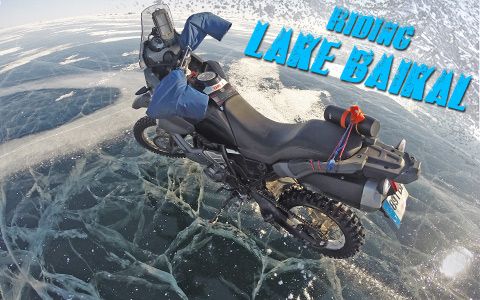
Until recently, I’d only limited experience riding on ice. After acquiring a set of studded Mitas tires I was able to ride in local wooded areas near my home in Lithuania during the winter. It’s lots of fun, but the quantity of snow varies greatly, and changing temperatures means the ice on many of the lakes is unsafe. In Lithuania, we have many lakes but the larger ones don’t have good ice, and I was looking for a large enough body of frozen water where I could spend several long days riding on the stuff. But where in the world is there that much ice?
It turns out there are few places, but Siberia’s Lake Baikal is “closest” to where I live (a mere 6,500 km!). The energy of Baikal is magical, something I noticed last summer when on my way to Vladivostok, I’d stopped at the lake’s shore for a 24-hour break. Baikal is BIG, and not only is it the deepest fresh water lake in the world (and with more volume than the all the Great Lakes combined!), there’s about 2,200 km of shore line.
It was to be a solo effort because no one I knew was quite willing to ride on ice atop of 1,640 meters of water. I arrived during the first week of March. Prior research indicated that Baikal freezes completely by the end of January; February is the most intense time of year (extreme snow, cold and wind); in March, the sun reappears to make for a much “milder” time; and by April the ice starts melting and is completely gone by the end of May.
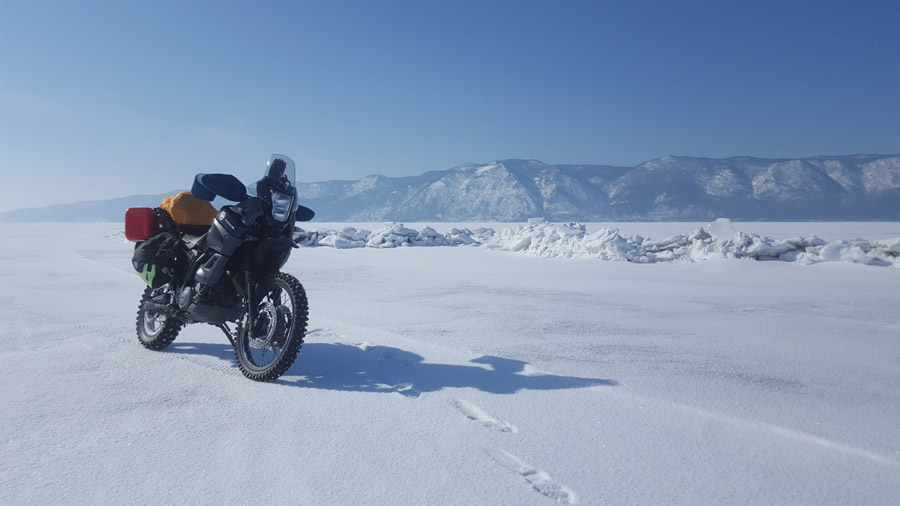
All told, I rode for seven days, a total of 765 km, or about 100 km a day on the average.
I’d packed more or less the same stuff as any ride, including some basic tools, duct tape, and zip-ties. I also had a five-liter canister for extra fuel, some warm wool clothes, a thermos for hot tea, chocolate, and packs of hand/leg warmers for emergencies. And last but not least, two cell phones with three different simcards, but no satellite phone.
I rode a Yamaha XT660Z Ténéré because it’s an extremely reliable and relatively lightweight bike and very comfortable on long trips. And, not many bikes have such a fantastic fuel range—up to 530 km per tank!
For accommodations, I chose to use guest houses which were bookable thru Booking.com over camping, and looked for houses along the shoreline. The only issue was being able to reach them before sunset. In the southern region of Baikal there are villages approximately every 40km. And in between of them, hunters’ huts are the next best choice, especially in that bears hibernate during the winter.
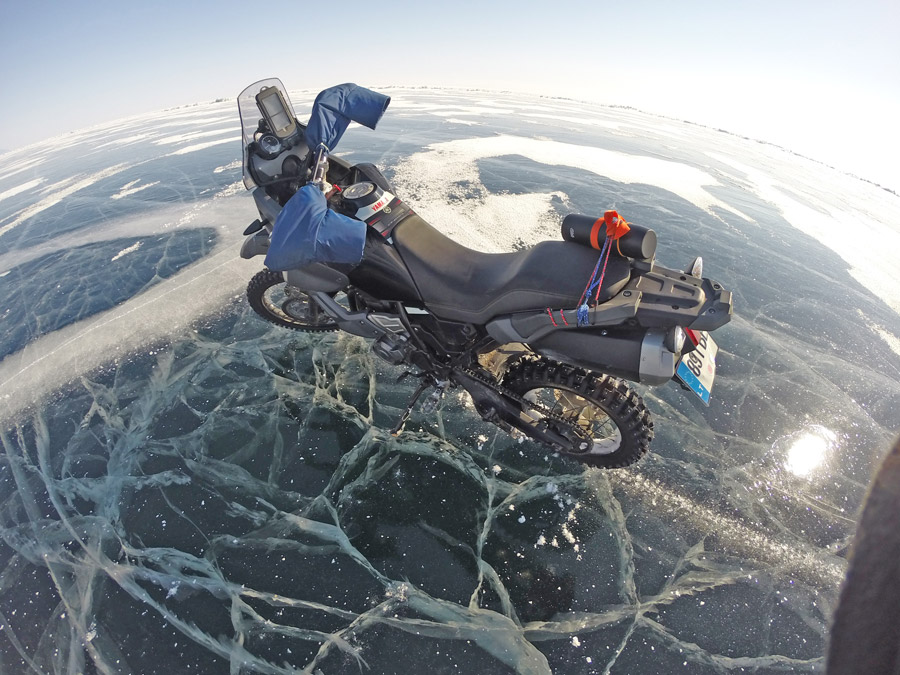
Basically, ice runs 1.5–2.0 meters thick during March. But there are a great many ice cracks with open water. Sometimes as close as every 500 meters. Ice cracks can span in size up to three meters wide. Sometimes just before/after a crack the ice is very thin. Usually, I stopped to check before a “jump.” The heel of my boot was the thickness-testing tool of choice, often resulting in wet legs. However, a metal pole would have been a much-preferred tool.
There were numerous risks involved. For example, I rode up to 20km from the shore, too far out for anyone to see me if I got into trouble. There was also a lot of snow for the first days which sometimes impaired visibility. Snow covers ice cracks, too, so being alone, that far from shore on the deepest lake in the world, in extreme cold, could easily have been disastrous. Not the kind of thing to be thinking about making the trip!
The most extreme reading I took was -29.5°C. That was in the morning, but during the day it ranged between -10 to -15°C. Most days were sunny with bright reflections off the snow. Similar to what you’d see in the mountains. So, sunglasses, hot tea and warm clothes were a must.
There were no special cold weather modifications made to the bike except the studded tires. I also had regular heated grips and homemade muffs (for wind protection) that did the job perfectly in the Siberian winter.
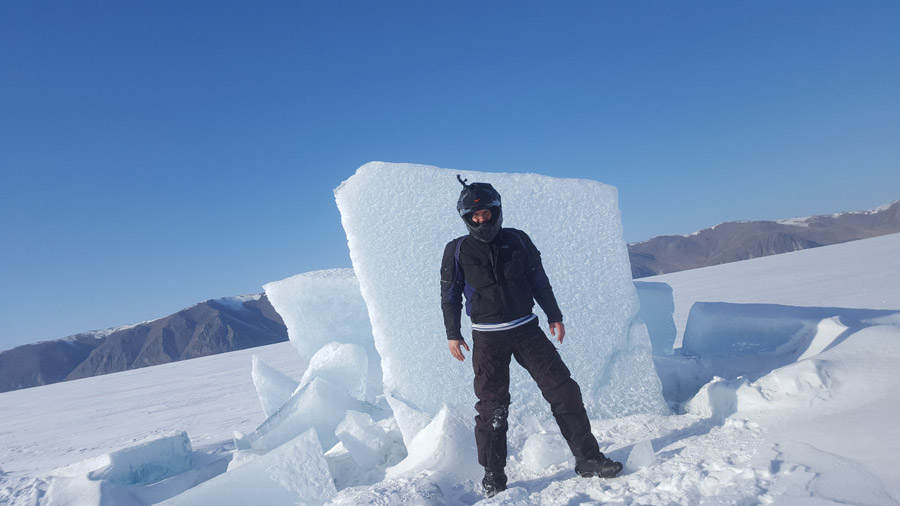
Going around, over or jumping ice cracks was the biggest challenge. It required a lot of physical energy, and was mentally stressful. I also experienced a couple of heavy crashes. On some days, the snow reached nearly to my knees, and I had to drive on a first/second gear—it was like drunk driving! Beside all that, the ice was constantly cracking, and that alone was quite unnerving.
Another thing was the constantly changing ice and snow conditions. By the end of a long day I’d think I had it down, but the following morning it would feel completely different again. With the changing temperatures and variable snow fall, every day was like that. In fact, every day was completely unique and felt like an incredible new experience.
In an odd way, ice looks similar to the desert. Mountains on left shore were seen daily but only once did I see the opposite shore. Baikal is up to 80km wide! Fortunately, all the places I slept in had hot showers, fresh fish and wi-fi! Every bit of it was so stunning… but I wasn’t there for the views, they were just thrown in as part of adventure.
The few people I met both along a shore and on the ice were absolutely fantastic, warm and helpful—usually fisherman or travelers on foot. However, almost surprisingly, no other motorcyclists during the ride. On a second part (around Olkhon Island) there was a touristy place that was easily reached by the road from Irkutsk. So, people came there just to have fun on the ice. There was also a legal ice road for 40 km where I was stopped by the police. No problem, but we made some great selfies!
During the worst storm of the ride, with extreme low visibility, in deep, deep snow, I became lost and disoriented. Because maneuvering was all but impossible, I tried not to stop for fear I’d get stuck. But suddenly I noticed the faint outline of two human silhouettes in the distance. And wouldn’t you know it, they were Lithuanians, too! What a small world.
{gallery}ARTICLES/Rides/RidingLakeBaikal/Gallery{/gallery}
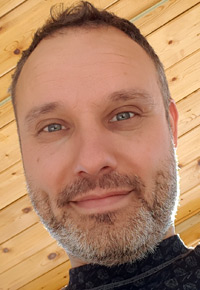
Karolis Mieliauskas says, “I’ve been riding bikes for some time, probably like you. Some ideas cannot be avoided and that’s how the big rids often happen. The toughest part of adventure travel is just making the decision to do it… to leave your big ‘IF’ at home and just get going. Remember, your motorcycle is only a tool.” Get in touch with Karolis on Facebook: karolis.mieliauskas.1 or Instagram: karolismieliauskas