 Sticky logo
 Search


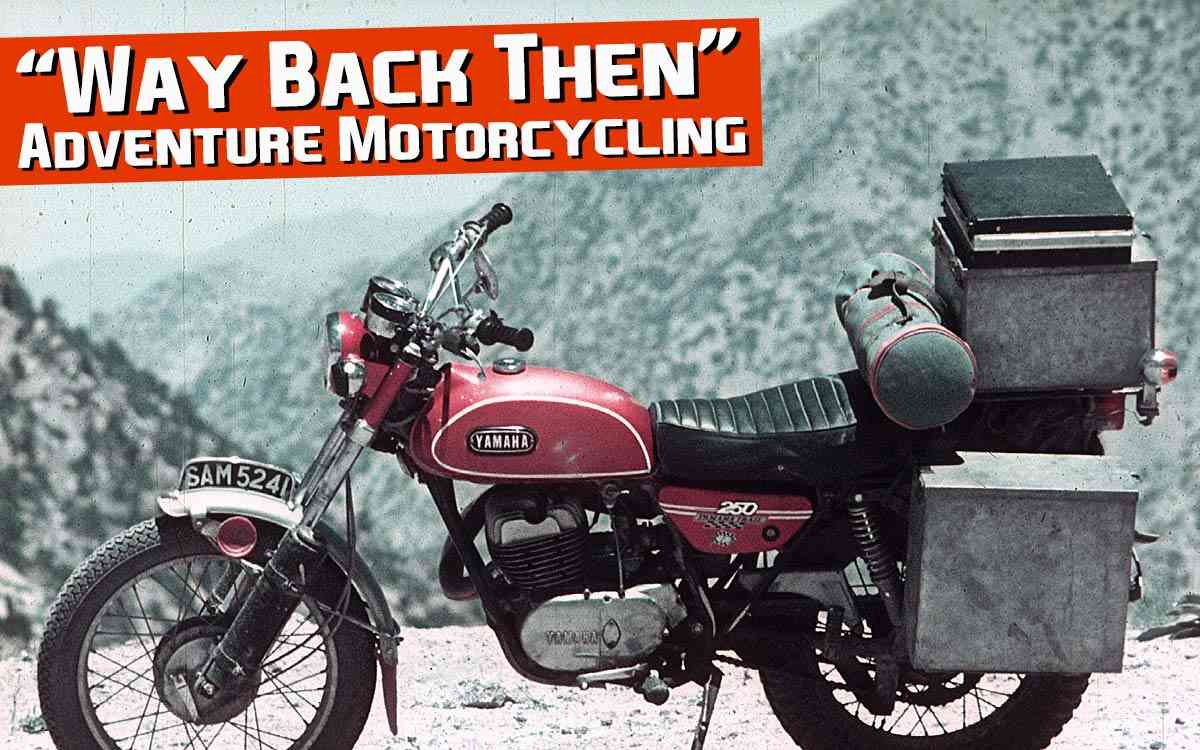
Each issue of ADVMoto starts me reminiscing about a 1971 motorcycle trip from Singapore-to-Holland. Seeing all the ads for modern bikes and gear got me thinking about the differences in gear, and trip planning from “way back then” to the present day.
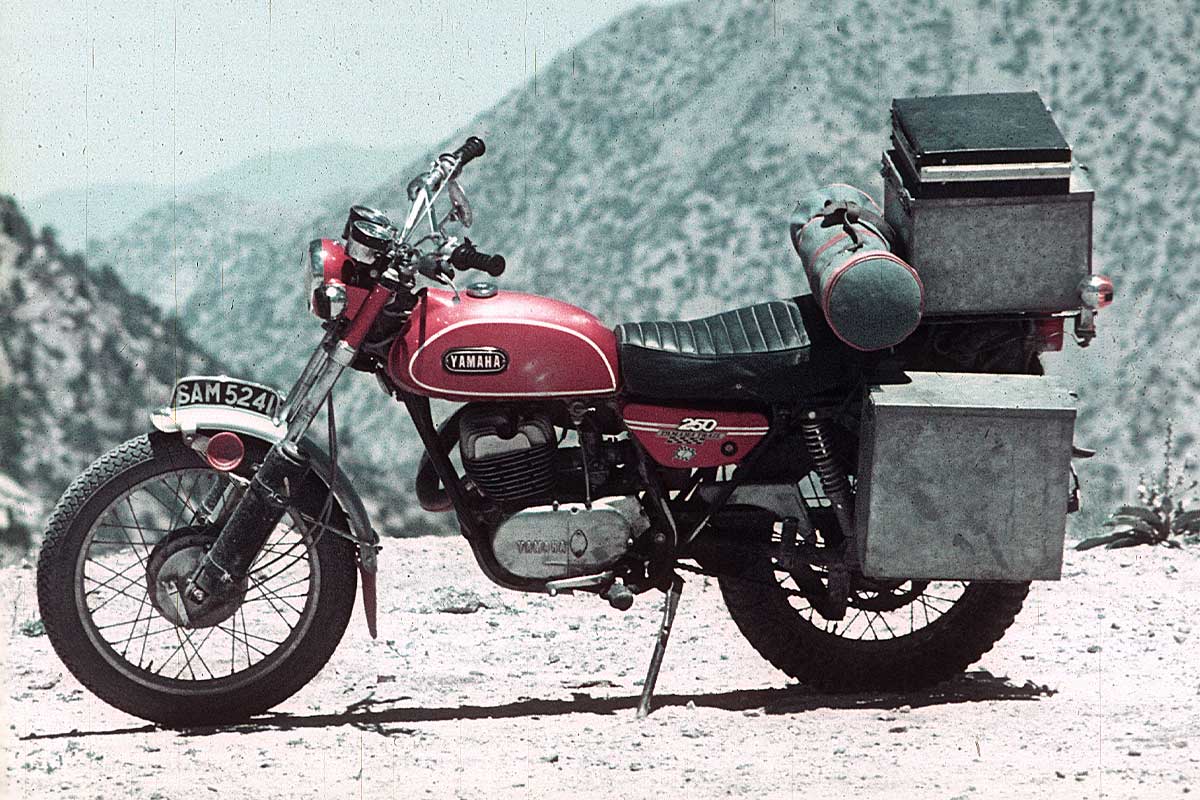 1971 adventure motorcycle—Yamaha DT1 250 in Afghanistan’s Hindu Kush mountains, enroute from Singapore to Holland.
1969 found me selling a Yamaha “Big Bear Scrambler” in the U.S., and heading off for a job in New Zealand. There I bought a surplus police bike, a Triumph Trophy (650 twin with single carburetor).
One day a friend came back from a ride on his Triumph Daytona and muttered something along the lines of “that was great, I could do that all day.” I’d been fantasizing about riding overland to Europe, so in a fit of bravado said, “Well, how about a trip through Asia to Europe?” His reply was, “You’re on!” So began one of the most fun parts of motorcycling—trip planning.
The first issue was money. New Zealand was a wonderful place but wages were low and it was difficult to take money out of the country. So, off to Australia we went to find jobs in the outback where the money was better and there was no place to spend it.
Working in the outback also provided plenty of time to think about travel plans and gear—nothing like a couple of Swan Lager’s after a hot day in the Great Sandy Desert to stimulate traveling fantasies.
A big difference between “now and then” is access to information. “Then” the sources of information were occasional articles in motorcycle magazines and travel guidebooks, and there weren’t any guidebooks specific to traveling by motorcycle at all. “Now” there’s the internet, a large selection of books and videos, that all provide enough information to boggle the mind.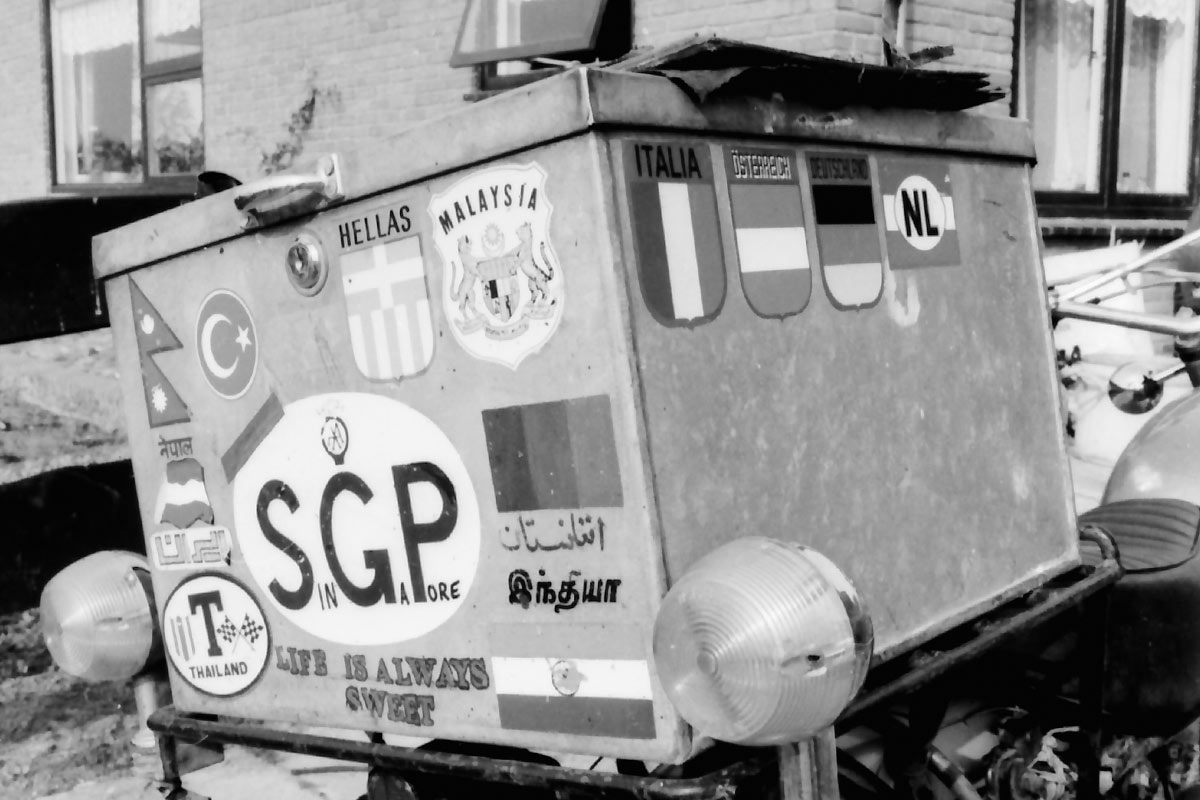 A well-traveled Yamaha—25,000 miles, 16 countries.
The other huge change is in all of the specialized gear and bikes available. Travel opportunities have changed, too. Some countries that were accessible then are not particularly good for traveling these days—others that weren’t open then are open now. Some don’t even have the same names or borders.
The “overland” route back then, from Australia to Europe, was through Indonesia, Singapore, Malaysia, India, W. Pakistan, Afghanistan, Iran, Turkey, Greece and the former Yugoslavia. And we added in Thailand and Nepal while we were at it. “Way back then” a westerner couldn’t ride through Burma (still can’t), China, the Soviet Union (as it was called then), or the communist countries of Eastern Europe (save Yugoslavia on a short transit visa).
But you could comfortably ride through Pakistan (“West Pakistan” at the time), Afghanistan, and Iran. It certainly would be a real adventure for a Yank to travel through those countries now!
From Australia visas were fairly easy to arrange for most of the countries on our route. This was before easily accessible and universally useable credit cards, so traveler’s checks and cash were the only way to carry money.
Most of our meager funds were left in an Australian bank to be sent via American Express offices along the route as needed. Also, “Carnet de passage” documents were obtained that allowed us to temporarily import the bikes to each country without having to leave a cash deposit at each border. The carnet is an international guarantee for payment of customs duties if for some reason the bike didn’t make it out of a country—if you sold it, wrecked it, etc.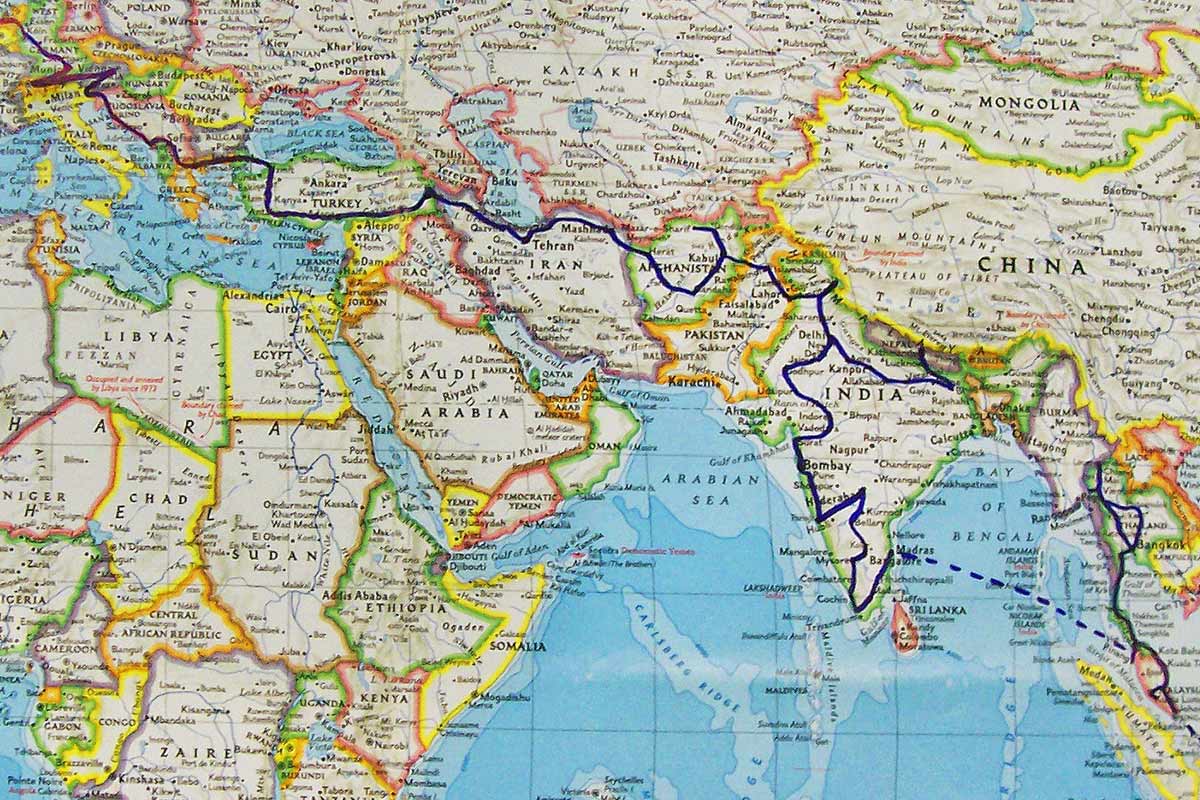
The Motorcycle
“Way back then” there weren’t bikes on the market especially designed for adventure motorcycling like there are now. If you were planning a trip in Europe, and heading east, the most common choice was typically a BMW R60. At least that’s what I saw most folks riding west-to-east on. But, there was the occasional Triumph, Bultaco, and even a Honda CB750. The Honda 4 turned out to not be the best choice—a guy riding one in India told us that his bike wouldn’t run on the local petrol and that forced him to find higher octane aviation gas.
Since we were heading east-to-west, the idea of purchasing a bike in Singapore favored the Japanese machines at the time. This was reinforced by talking to Aussies who had made the trip on 125cc and 250cc Yamahas. After much discussion the decision was made to go with the Yamaha DT1, a 250cc two-stroke single. The DT1 was the first of the “Enduro” dual-sport type motorcycles, an improvement on the late ’60s street scramblers which were basically similar, but with high pipes and a skid plate.
We reckoned the single-cylinder, two-stroke engine would be easily maintained, need a minimum of spare parts to carry along, and would run well on the low octane fuel we expected to run across from time-to-time. And, they were relatively cheap—about $535 U.S. at the time.
But why not choose a street bike? Not knowing what kind of roads we’d encounter it seemed a good choice, but the total reasoning behind the decision is lost in the cobwebs of my deteriorating gray cells. Somehow we got the address of a Yamaha dealer in Singapore (Motorcycle Industries), and arranged to have the DT1s waiting for us.
In retrospect the DT1 was a great choice. 25,000 miles with no breakdowns (other than self-inflicted ones). It ran on whatever octane fuel was available (reputed to be 75 in Afghanistan!). And, the rear Dunlop Trials Universal tire still had reasonable tread at the end of the journey.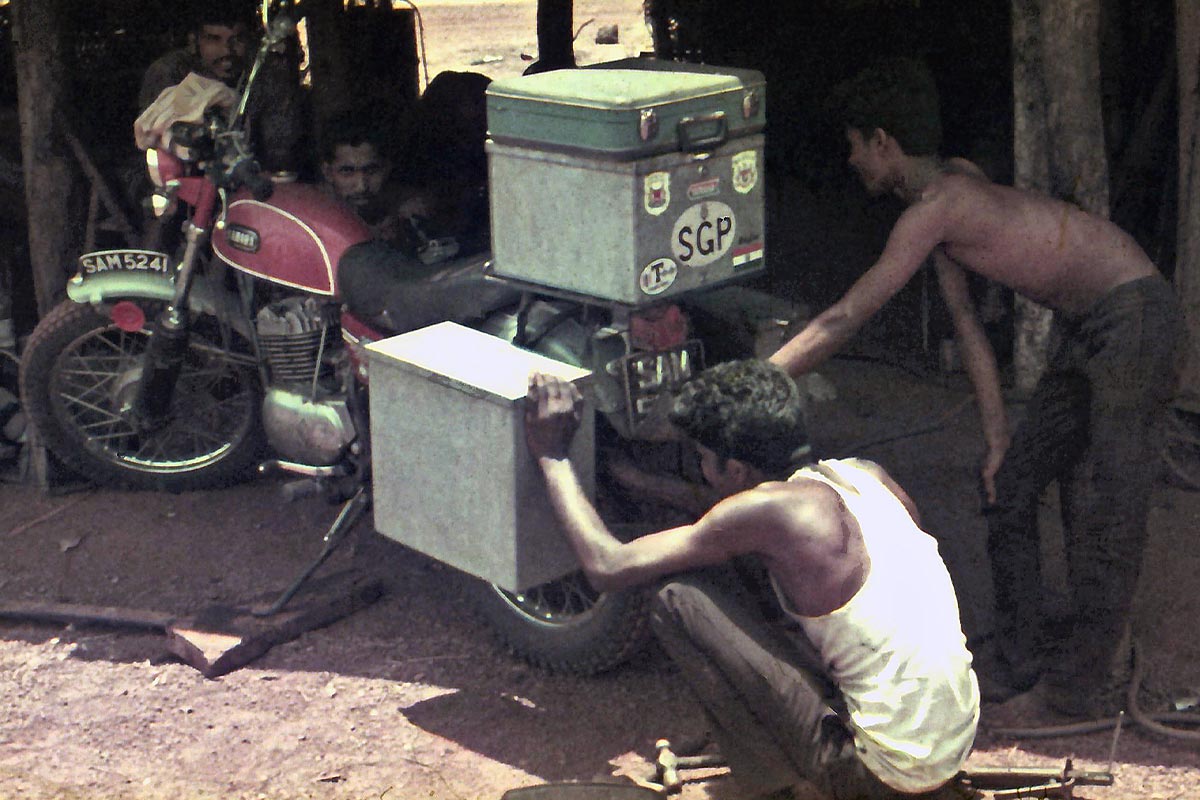
However, I went through two front tires, which I attribute to the fork-mounted fuel tank. Even with all the gear we carried it was stable in all driving conditions. There was only one place where it turned out not to be the appropriate machine—the German Autobahn.
Trundling along at 50 mph with cars roaring by at Mach 2 convinced me to take the first exit…. Further testament to the DT1’s durability—I had a friend who decided to go to Africa from Malaysia instead on continuing on to Europe. And he had similar good experiences with his DT1 traveling through Africa.
The Gear
The standard touring gear back then was the waxed cotton Belfast and Barbour outfits. I bought a Belfast jacket and gloves for inclement weather, but decided on standard rain pants to save space and weight. Still have the jacket, and it still fits! Using some waterproof material, we glued and stitched together rain covers for our boots.
Panniers and rack were left to the guys at Motorcycle Industries—we gave them an idea of what we wanted and a couple days later some beautiful custom-made, galvanized sheet metal panniers magically appeared. Anticipating not being able to find fuel in some places prompted us to have small ½ gallon fuel cylinders fabricated and mounted on the front forks.
Probably a dumb idea having that un-sprung weight on the front forks, but it didn’t seem to impact stability. Of course, in reality there was gasoline available everywhere so they weren’t needed.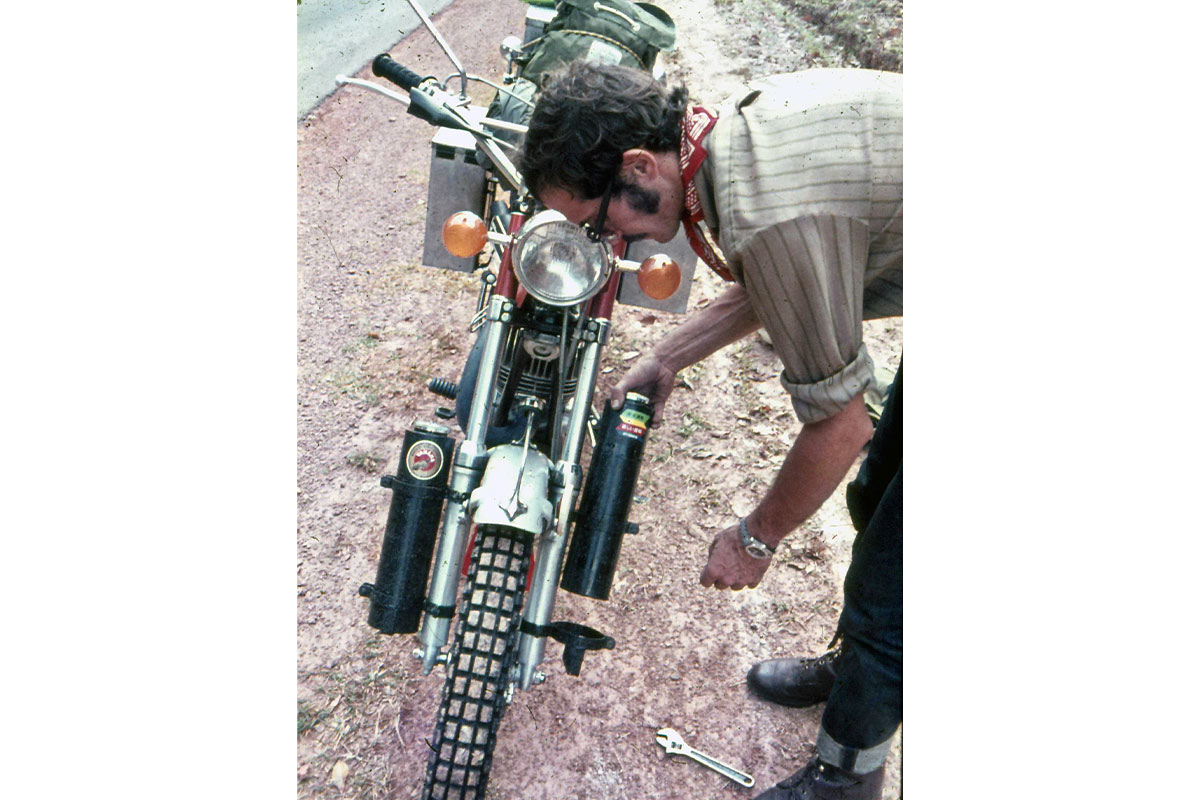 Al accesses extra fuel carried in fork mounted fuel tanks. Seemed like a good idea at the time…
Navigation
Those of you who are old enough will remember the paper devices used, until recently, called “maps.” No GPS to pinpoint your location, no Google Earth. Fortunately, there were great maps available, and we picked up road maps at the gas stations in every country.
However, the challenge in some countries was that many of the road signs and the maps in the local script. Not being able to read Thai or Hindi meant it took a little head-scratching to equate the script on road signs to those of the maps. No cell phones or email, either. Calling home wasn’t a readily available option so we used another arcane technology known as “air mail” to connect with friends and family.
Planning a trip now would be a gearhead’s delight—so many options for panniers, bikes, clothing, navigation equipment, and communications devices. So, what bike would I choose now with the vast selection available? That’s a tough question! The trend seems to be larger displacement machines, but people have made some amazing trips on smaller bikes.
For instance, Lois Pryce (“Lois on the Loose”) rode her Yamaha XT225 from Alaska to Argentina, and the “60 KPH Motorcycle Club” folks have ridden 350cc Royal Enfields into remote parts of India (watch Gaurav Jani's “One Crazy Ride” on YouTube). A lot depends on where you’re going. Do you really need a bike that will do 80 mph all day if you’re traveling to places where you’ll rarely need speeds over 50 mph (and every water buffalo is programmed to cross the road just as you get there)?
I’d be tempted to find out what the most commonly available motorcycles are in the countries I’d be traveling, and get one of those. That would also lead to other important connections and relationships with locals that typically wouldn’t happen otherwise (maybe good, maybe not!), all adding to your adventure. Spare parts and mechanics familiar with the machines would be locally available, too.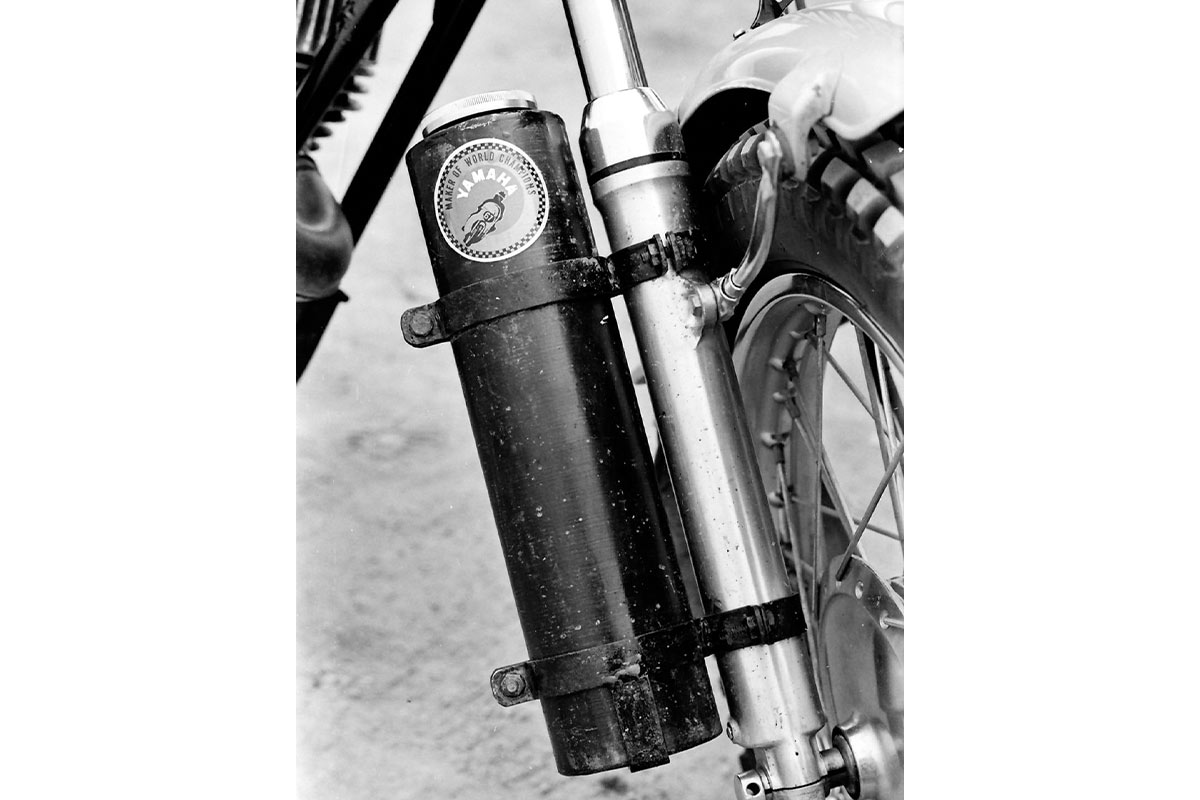 A close-up of Al's fork-mounted fuel canisters.
If traveling in India why not get a Royal Enfield that’s made there? But then again, the modern Teneres, KLRs, BMWs, Triumphs, etc., sure are appealing. If you end up needing parts nowadays they are just a click away on the internet, but there’s still the downtime of waiting for the parts to arrive.
It’s a real adventure importing parts to a country, like India, with a hyper-active bureaucracy—but that’s another (very, very, very long) story. Then again, enforced downtime in some out of the way place where you didn’t plan on being for long could turn out to be a highlight of your trip.
So, there you go! After all the anticipation and fantasizing it just boils down to purchasing a bike, some gear, hopping on and riding off into your adventure… wherever it may be.
Al Latham is happily retired and hangs out on Washington's Olympic Peninsula. Current ride for him and son Jesse is a Royal Enfield motorcycle/sidecar combination, an ADVenture in itself.