 Sticky logo
 Search


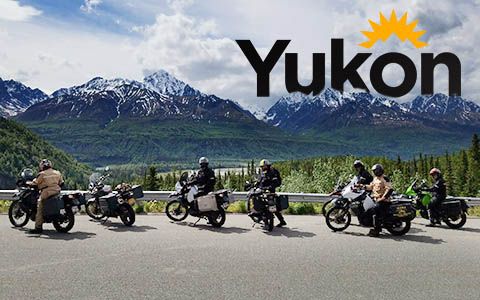
As a young man I was intrigued by reading Jack London’s accounts of the famed Yukon Gold Rush in his novel “Call of the Wild” and “White Fang.” This glimpse into the life of those gold seeking “stampeders” and their hardships searching for fortunes in an extremely harsh environment enticed me to visit the locations described in London’s novels.
For most of us, getting to the beginning of this Yukon trip requires either a long ride or a flight to Anchorage, Alaska, which would also mean a suitable rental bike. Choosing the latter made the trip a great deal more enjoyable allowing for more time to explore the route’s history. Fortunately for the group of seven of us, Alaska Motorcycle Adventures in Anchorage provided the bikes we needed for the 2,000-mile route. Owners, Keith and Nancy Hull assisted us with up-to-date route information and what to expect of the road conditions. Their daily rental rates of $125–$200 were quite reasonable. Additionally, no cost roadside assistance and towing was included within the state. However, in Canada we were on our own. I have the American Motorcyclist Association’s life membership that includes roadside assistance in Canada, so we were covered in case of any problems.
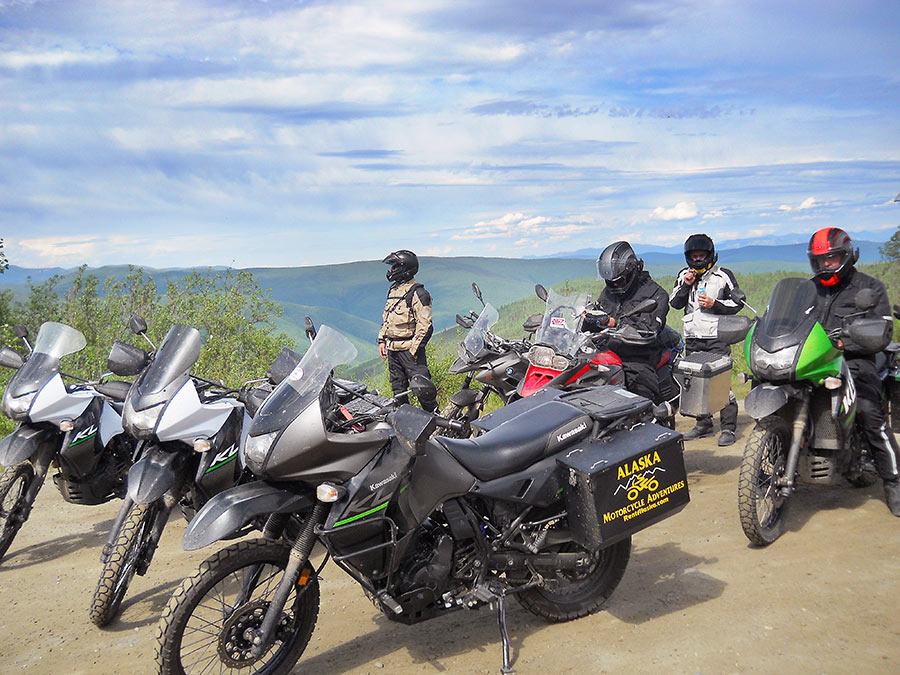
June in the Yukon ranges from 40–80°F. The “Unofficial Bird” of Alaska is the mosquito that seem like they are the size of small birds and come from nowhere when you stop. Fortunately, they’re NOT an endangered species, so an application of DEET will keep them away. Also, if they’re around do not open up your face shield for any reason, otherwise even a few inside the helmet can cause serious distractions while riding.
Leaving Anchorage for Tok is an all-day ride of 328 miles. Tok is on the ALCAN (Alaska-Canada Highway), with gas at Glenallen 180 miles from Anchorage. The Glenn Highway, along the Matanuska River after Palmer, offers a view of the Chugach Mountains and the Matanuska Glacier. The 1,000-year-old glacier is accessible from a short side trip off the highway.
Arriving in Tok around 9:00 p.m. we found the light of day to be the same as when we left Anchorage at noon. The “Land of the Midnight Sun” has an advantage while riding a motorcycle. Twenty-plus hours of daylight gave us plenty room to enjoy a leisurely sightseeing pace within the 65 mph Alaska and 90 kph Canada speed limits.
Tok is a small town with gas, motels and food, and not much else except it’s on the main route from Anchorage intersecting the ALCAN Highway which was built by the U.S. Army Corps of Engineers in 1942. The initial highway was created by bulldozing a road through the tundra, mountain passes and wilderness all because of a perceived land attack threat by the Japanese during WWll. Considered to be one of the world’s most challenging road construction feats, it’s now a paved gateway to Alaska. Starting in Dawson Creek, BC, and ending in Fairbanks, it travels 1,488 miles. In the summer months it’s a scenic route by bike.
Leaving Tok on the second day we headed southeast on the Alaska Highway towards the port of entry into Canada. Then onto Whitehorse on the Yukon River, 384 miles total. Two of our group forgot to bring passports, but thankfully the Canadian border agents verified that we were legal U.S. citizens and allowed us to enter, anyway.
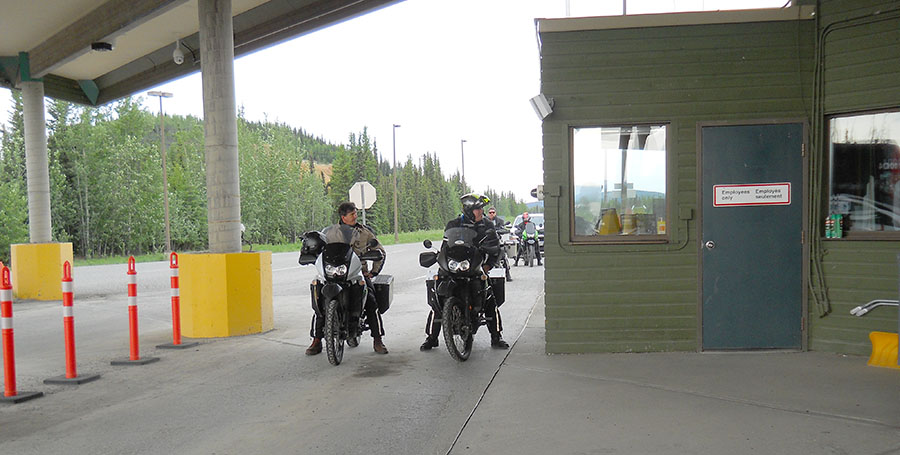
The ride from there on the ALCAN passed the scenic Kluane Lake and into Haines Junction for gas and lunch. From there it was a short 100-mile ride to Whitehorse for the night, where we stayed at an historic hotel downtown close to the Yukon River. We had finally arrived at the hub of the historic Yukon Territory. The SS Klondike stern wheeler, that carried passengers and freight up the Yukon River to Dawson City from 1929 until 1955, is located near downtown, an iconic reminder of the mode of transport that serviced the expansion of the Klondike Territory.
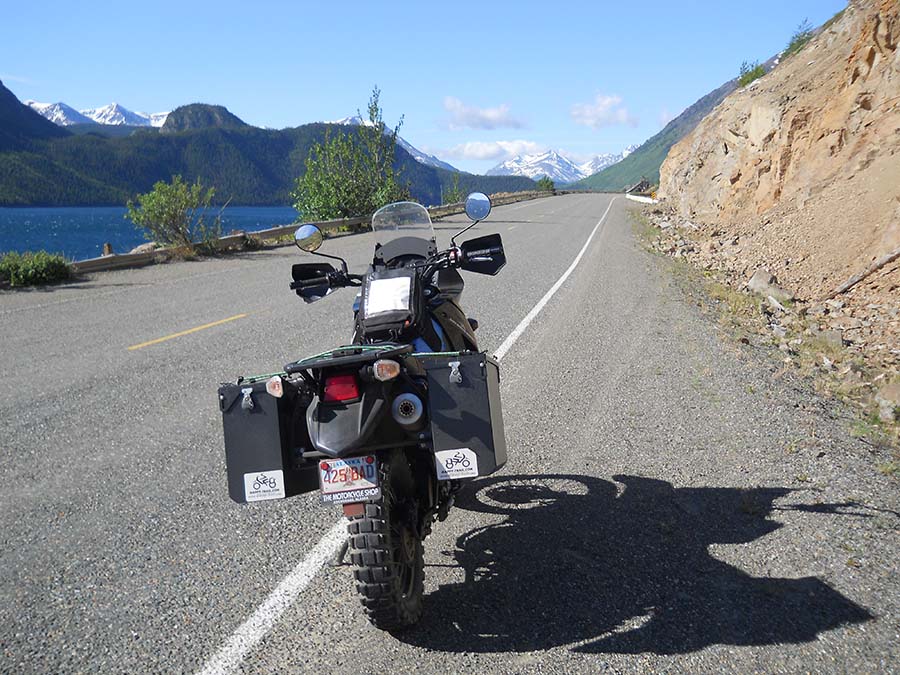
From Whitehorse we followed the White Pass and Yukon Route railway down to Skagway, crossing back into the U.S. at White Pass summit. This railroad was built in 1900 to supply the river steamers going north from Whitehorse to Dawson City. Freight service from Skagway, on the Taiya Inlet that connects to the Gulf of Alaska, could now easily access Whitehorse. The railway still operates today, but only from Skagway to Carcross, with mostly sightseeing tourists aboard. Skagway is now a major cruise ship port and hosts thousands of visitors daily during the tourist season from May until late September.
Seven miles of narrow dirt road from Skagway connects to the abandoned site of Dyea, a small empty village and wharf on the inlet that was the first landfall for the Gold Rush stampeders at the foot of the Chilkoot Trail to the Yukon. Gold seekers disembarked at Dyea and Skagway with very little other than their clothes and bedrolls, hiking over Chilkoot Pass to find their fortunes. In 1897, the population of both towns was estimated by the Northwest Mounted Police to be in excess of 20,000. Dyea was displaced by Skagway due to the railhead opening at the port in 1900, and gradually abandoned by 1902.
In the early 1890s, a fur trapper, who’d heard of gold being found near the Yukon River from an Intuit Indian from the area, accompanied the native guide over Chilkoot Pass to see just what gold was there. Upon returning he spread the word, “Nuggets of gold just lying in the streambeds to be scooped up with your hand.” And gold fever quickly spread to the outside world. The rush of stampeders only lasted from 1897 until 1899. By 1903, Dyea was a ghost town and Skagway had only 500 residents. One ounce of gold was worth $20.00 in 1900. Today giant five story dredges scoop gold bearing ore out of the area, and at $1,200.00 per ounce, it’s a billion dollar a year industry.
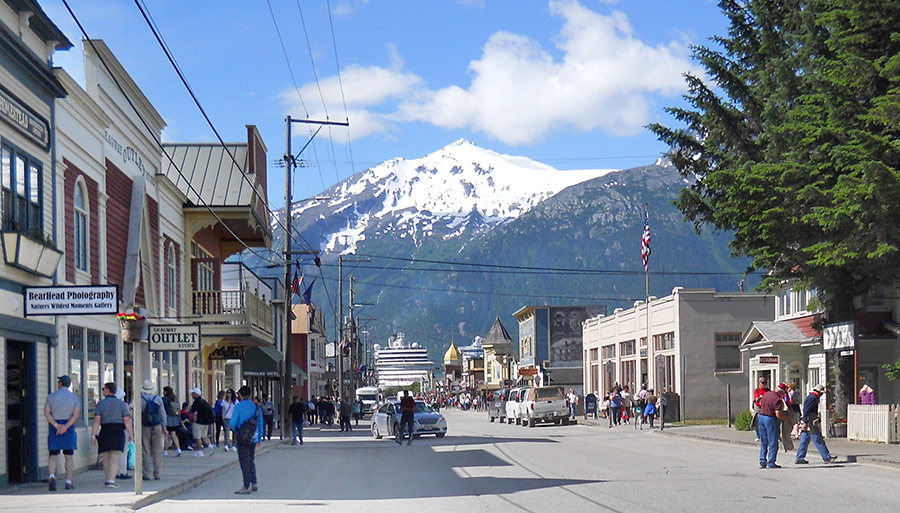
Of the thousands of gold seekers who landed in Dyea and Skagway in the 1890s, only a small number became wealthy. Although thousands returned to where they started, many found other opportunities to stay by providing the goods and services that stampeders required.
Leaving Skagway for Haines by ferry is the shortest route. It’s about 12 miles on the ferry down the Taiya Inlet to Haines. To follow the original route we had to backtrack a portion from Whitehorse down to a starting point in Skagway. Then take the ferry to Haines and the highway from Haines to the Yukon by way of Haines Junction and a portion of the ALCAN Highway to connect with the Klondike Loop.
Heading north on the Klondike Loop towards Dawson City, we stayed overnight in Carmacks. George Carmack was an early settler who panned gold and established a trading post on the Yukon in 1885. He went bankrupt after 10 years before moving north on the Yukon to Bonanza Creek. In 1896, Carmack struck it rich, extracting more than a ton of gold from his claim. The news of Carmack’s remarkable find quickly spread and set off the Yukon gold rush.
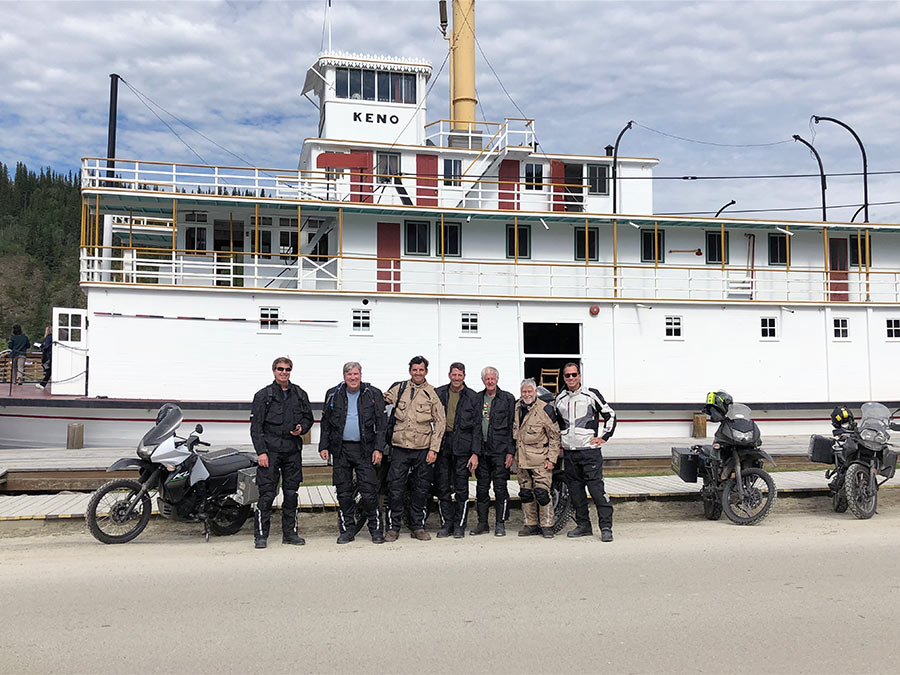
Leaving Carmacks we continued on to the small settlement on the Yukon of Dawson City. Dawson City was the hub for the stampeders seeking their fortune in the 1890s. After Carmack and others found gold along the Klondike and Yukon, Dawson City boomed becoming the capital of the Yukon Territory in 1898. Jack London lived there in 1897. The only other river stern wheeler besides the SS Klondike in Whitehorse to survive is the SS Keno. Berthed in dry dock next to the riverfront it is open daily for tours and was the last river steamer to run the river having been retired from service in 1960.
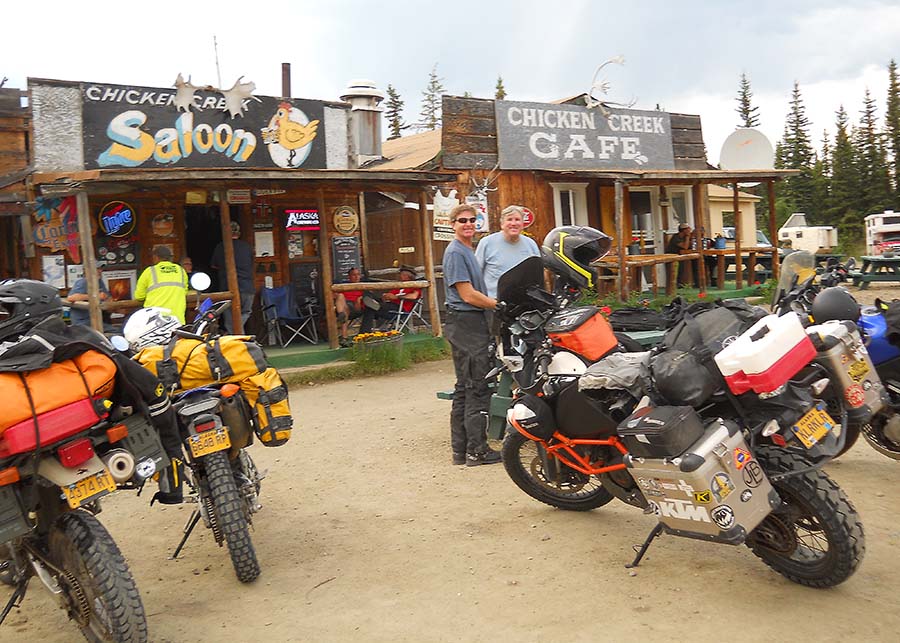
From Dawson City we crossed the Yukon on a small ferry that connects Highway 2 to the Top of the World Highway. Accommodating passenger cars and pickups, our bikes fit easily for the quarter-mile river crossing. From there it was a 70-mile ride on mostly smooth gravel road to the U.S. border and another 35 miles for a gas and lunch stop in Chicken, Alaska. In Chicken, we got a close look at the Pedro Dredge. This dredge worked along Pedro Creek near Fairbanks from 1938 until 1959. It was purchased in 1998 and moved to Chicken Creek as a tourist attraction. From Chicken the road is paved and connects with the ALCAN Highway again at Tetlin Junction 12 miles from Tok. Upon our return to Tok we completed the major portion of our Yukon Gold Rush adventure ride. Then finally back on the Glenn Highway the next day to Anchorage to turn in our rental bikes.
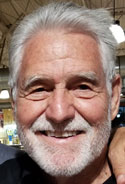 Californian Bryon Farnsworth has been riding most genres for about 65 years, both pro and amateur. Through the years he’s been employed by BSA, Kawasaki, Yamaha, KTM, Isuzu, and Volvo, as well as stints with Cycle World and Cycle magazines. Since retirement in 2003, Bryon focuses on putting together adventure rides with his friends. Current bikes include a 2018 Husqvarna 701 converted to an adventure bike and a 2010 KTM 530 EXC.