 Sticky logo
 Search


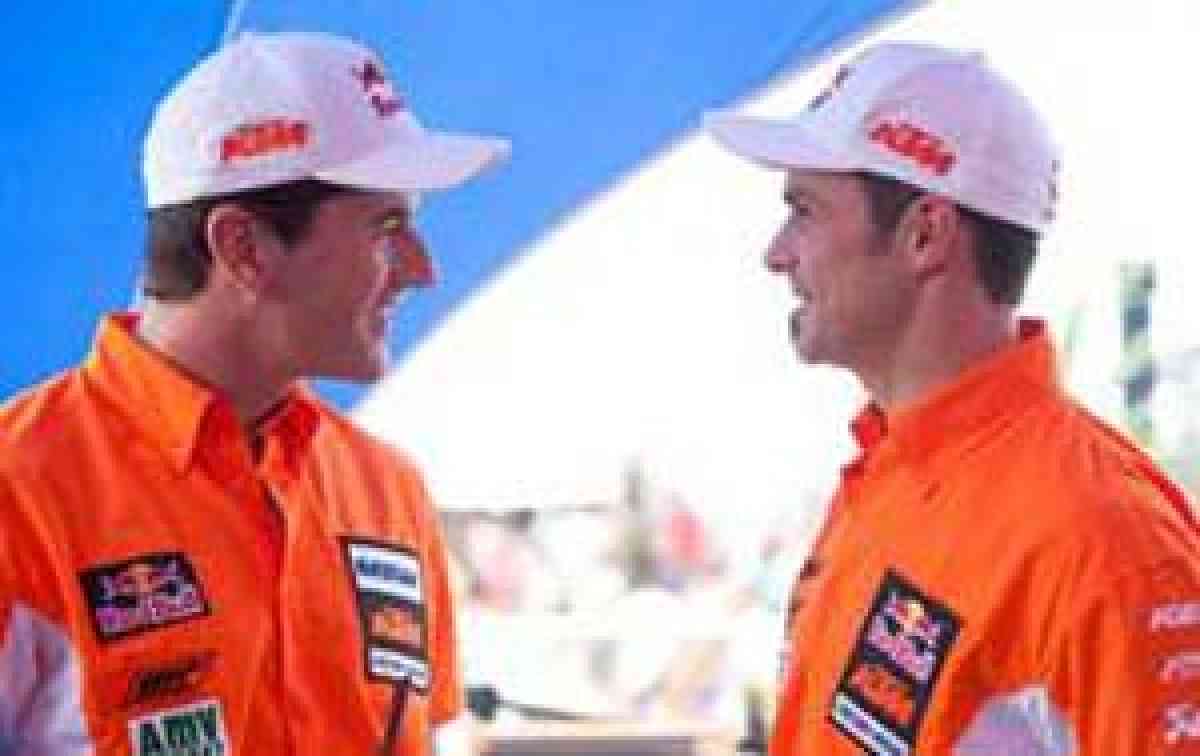
The Dakar Rally is the world’s premier off-road rally raid competition, drawing desert racers from around the globe. Yet for the past seven years, two men have dominated the motorcycle competition. Cyril Despres and Marc Coma have been thrashing the competition aboard their KTMs since 2005, with Despres winning the 2012 rally and Coma (who won the 2011 race) coming in second.
These guys are at the top of their game, but what makes them tick? How do they continue, year after year, to perform under the Dakar’s grueling conditions? According to both Coma and Despres, the game starts in the rider’s head.
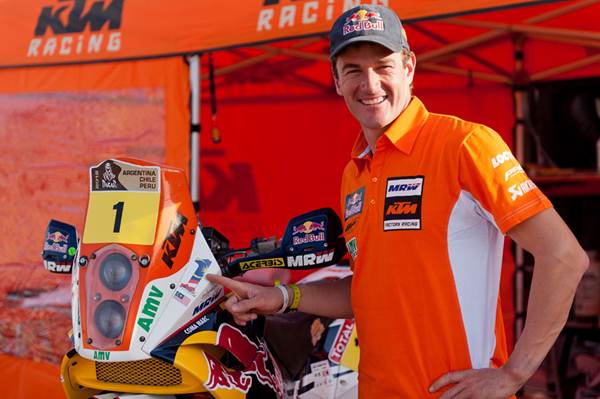
For Despres it’s simple; nobody becomes the best without first setting their mind on that goal. As he puts it, “The first thing that makes a champion is the desire to be one. There are lots of constraints and sacrifices to make and it is clear it isn’t for everybody…. Natural talent is one component, but I am not at all sure it is the most important. There are lots of talented riders out there but only a tiny percentage of them turn pro.”
Coma agrees with Despres that mental preparation is the first step towards winning at Dakar; he says the first thing a rider needs is motivation. In his words: “If you have the motivation, you can do whatever you want; otherwise it is difficult to get the victory.”
Of course, it takes much more than mind games to take home the top prize from the duel in the desert, and both champions agree on another foundation of the process as well—and it’s no fun.
“There is no secret: work, work and work,” says Coma, who spends the entire year training for the Dakar. And Despres agrees, saying it’s not just the driver who has to be willing to work. The whole race team—mechanics and other support crew—must all put long hours in, away from home, to garner the top honors.
There’s a third factor that’s very important as well. At Dakar, the support team is just as vital to the race effort as the rider himself, and both riders acknowledge that. Coma says it’s important to have an experienced team, while Despres says communication skills are another important part of the winning equation. For his multi-national team, that’s complex—the crew comes from five different countries, and they must all be able to speak the same language, in order to co-ordinate their work. If he didn’t speak English, Despres says, he doesn’t think his career would have seen the same success.
Another secret to success, says Coma, is the ability to handle pressure. Fans flock from all over the world to watch Dakar, and every racer’s team and sponsors want a championship—but you’ve got to drop that weight from your shoulders if you want to take first place.
Although they’ve both seen fantastic success at the Dakar Rally, Coma and Despres come from very different backgrounds. Coma’s father, Ricard, was a prominent Spanish motocrosser. As a result, there were always off-road bikes around the house when he was growing up. By age eight, he was on two wheels himself, first in the motocross world. He learned to ride on a Montesa Cota and Puch Cobra, eventually working his way up to a Honda CR125—the bike was his, as long as he kept his grades up.
He got his racing start in motocross, but didn’t know how much of a future he’d have in the sport, so he tried enduro racing instead. He met with success here, especially in the European cross-country championships—he was Spanish junior champion in 1995, and the world’s under-23 champion in 1998. He ran his first Dakar Rally in 2002 on an experimental motorcycle, and impressed the KTM factory team. Next year, he was riding for them. By 2005, he had finished second at the rally, while claiming a world enduro championship the same year. In 2006, he won his first Dakar title, repeating the feat in 2009, 2011, 2014 and 2015. He also managed to take world enduro titles in 2005, 2006 and 2007.
Despres—born in 1974, two years before Coma—found his way into motorcycles by a completely different route. His parents weren’t motorcyclists, but his neighbor, French trials rider Pascal Couturier, was a major influence and got his riding career started. At age 13, Despres sneaked to Paris via train and bought a motorcycle without his parents knowing.
He rode trials for 10 years, then started riding enduro in 1998 and won the French championship that year. In 2000, he financed his first entry into the Dakar Rally and spent many nights prepping his bike. He didn’t race an experimental bike the first year, as Coma did—Despres piloted a Honda XR400R to a very respectable 16th place. Winning his first stage during his next entry in 2001, he took first place overall for the first time in 2005, then again in 2007, 2010, 2012 and 2013.
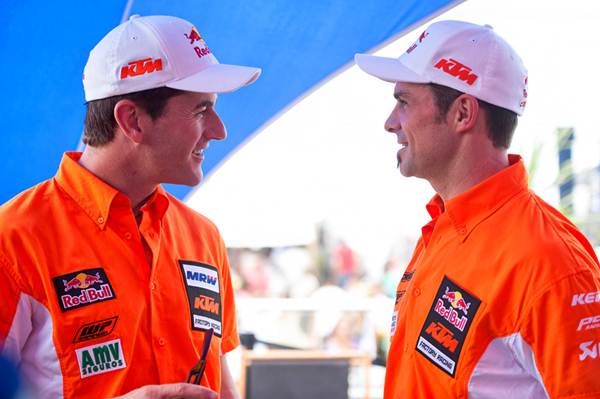
Despite their differing backgrounds, Despres and Coma have had similar successes at Dakar; even though they both race for KTM Red Bull, they are each other’s strongest competition.
That combination of competition and closeness could cause trouble for some, but so far, Team Red Bull hasn’t seen the face-slapping antics from World Superbike pits. Still, the competition is fierce, says Despres, and relations between him and Coma haven’t always been easy, although he’s always respected him.
“As they say about all motor sport, the first person you want to beat is your team mate, so straightaway that limits the potential for friendship,” says Despres.
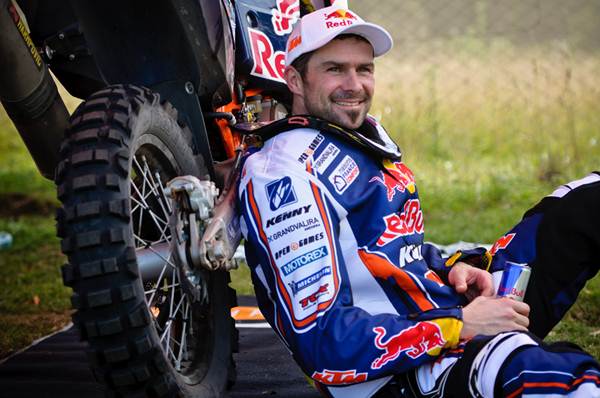
They certainly don’t share their race secrets. They haven’t learned anything from each other, says Despres, but they have certainly raised each other’s game. Even though there’s dozens of other riders at Dakar, Despres says he and Coma judge their performance at Dakar from each other.
“If I see that Marc is stronger at the end of a race I go home and train a bit more, or differently. In that way we are both constantly improving and I think it is one of the main reasons why we have pulled away from the others.”
Being a professional motorcycle racer might seem like a glamorous job at first, but it’s a profession filled with sacrifices. Despres and Coma don’t just show up at Dakar and breeze their way across the finish line. They participate in other races all year long, to keep their skills sharp. That doesn’t just mean months of hard preparatory work, it also means long stretches of time away from family and home.
“Sometimes it is difficult, but I am a lucky man because I have the full support from my wife and my family,” says Coma; the fact that his family has been living with the racer’s life ever since he turned pro makes it easier for him, though.
Despres agrees that constantly being away from home isn’t easy. He’s away from home for six months of the year, and he says it isn’t easy for his wife and daughter. When he’s home, though, he’s a hands-on father, and as he points out, he will retire someday, and should be around the house plenty after that.
Beside the time away from home, the riders must also constantly weigh the dangers their job entails. A mistake at Dakar can be fatal—racers can, and do, die in the desert. Argentinian rider Jorge Martínez Boero died on the opening day of the 2012 Dakar rally after a crash.
For Coma and Despres, the answer to the dangers is to carefully manage risks—Coma says the important thing is to know where the limit is. Despres, meanwhile, thinks his background in trials racing has trained him not to be a “full-throttle” rider, out looking for trouble; he points out that he’s entered over 85 enduros since his first Dakar, and finished almost all of them. He dislocated his hip in the 2002 Dakar, but that’s his only major injury.
With all this in mind, what do Despres and Coma have to say to inspire younger riders on to Dakar success?
Coma’s message is two-fold: First, he preaches patience; riders must take everything step-by-step, he says. Second, he reiterates the message of hard work; a rider must participate in the rigors of the world enduro championship in order to arrive at Dakar in the necessary top shape, he says.
Despres advice is equally simple: He says racers should ride for pleasure, and from the heart, saying passion and the energy will take you much further than greed or the desire to surround yourself with bling—his choice of words not ours.
We’re sure Coma would agree with that statement as well. After all, both riders have shown their determination to stay at the top year after year—and for now, it appears they’re going to stay there.