 Sticky logo
 Search


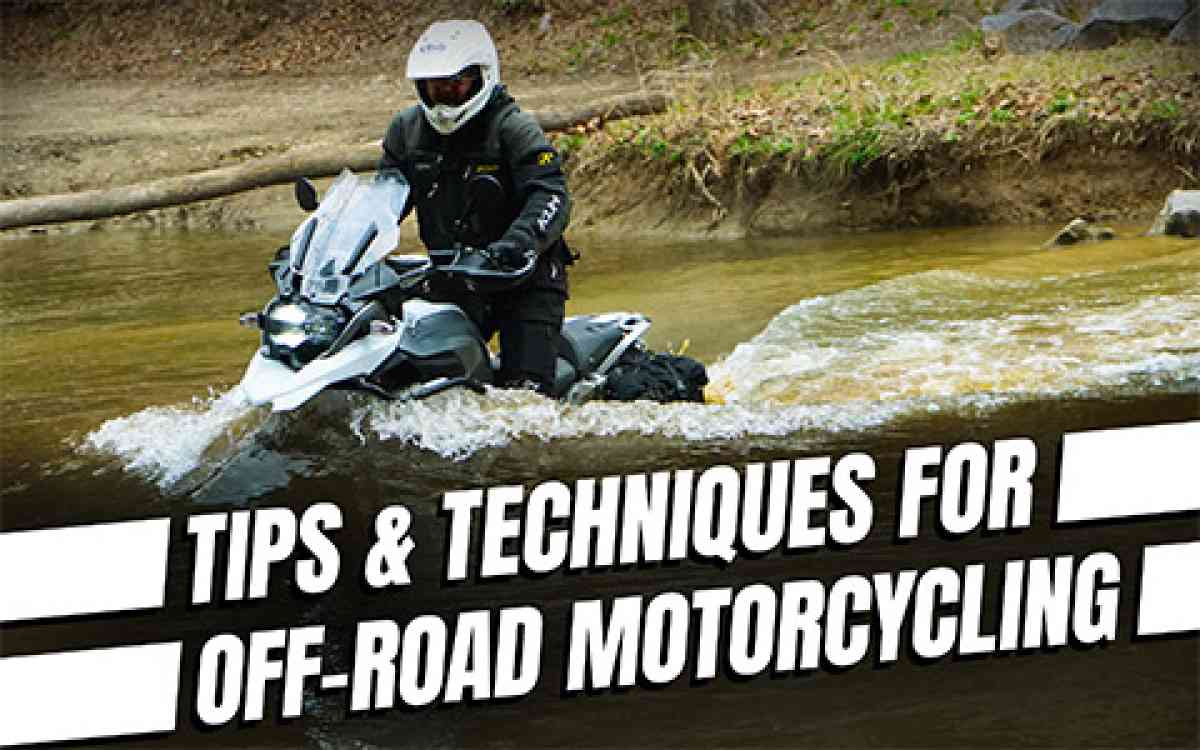
Want to improve your off-road riding skills? Some riders grew up blasting from berm to berm on dirt bikes while others got their introductions to the world of two-wheeled freedom by riding on the street before ever setting foot—or tire—off the pavement. Whatever your case, ADVMoto has some tips and tricks you can apply to your dual-sport or adventure bike off-road riding.
Puget Sound Safety Off Road (PSSOR) instructor, Paul Solomonson, joins us to cover tips and techniques to help you understand the most effective ways to handle your motorcycle off-road. There are multiple approaches to riding off-road, so this should be a supplement to the “tools” in your toolbox of skills, but if you have more to add please feel free to do so in the comments!
1) Vision - Keeping your Eyes Up Means more Time to React
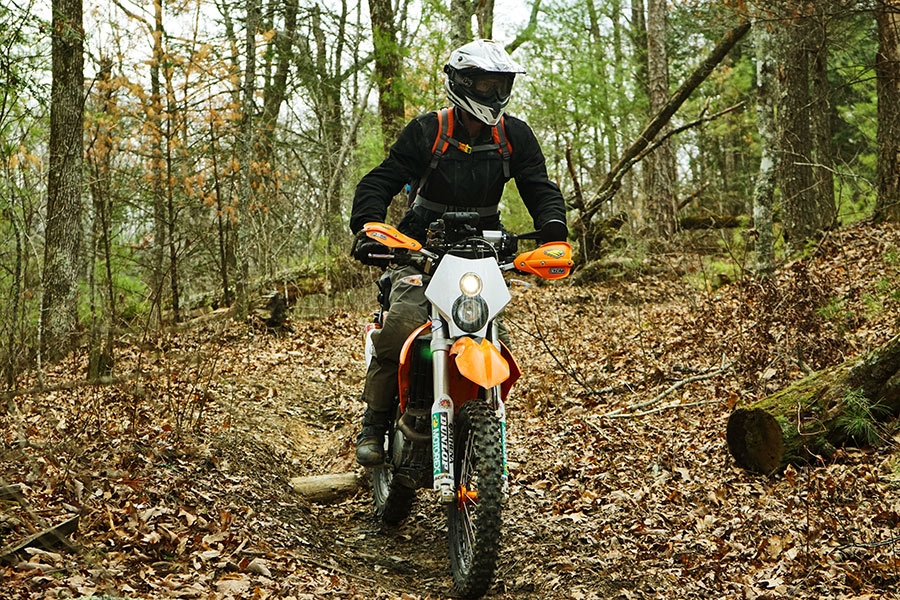 The rider is keeping his head up, looking where he wants to go, with his knees gripping the bike so his upper body can stay relaxed.
Vision is one of those factors that affects almost every aspect of your off-road riding, from tension and body positioning, to steering and traction management, and ultimately having a good time. According to Solomonson, this is one of the biggest areas where they see room for improvement in riders of all skill levels in their classes.
“Let’s face it, almost all of the information we get and have to process in our brain comes through our eyes,” Solomonson says. “If you’re looking in the wrong spot—if you’re looking right in front of your fender—you’ve just given up all of the rest of that information around you. If you have no idea what’s going on around you it’s going to cause you to tense up.”
If you stare down at the objects right in front of your wheel, you simply won’t have the time to properly respond. When every response happens frantically at the last possible second and you’re not relaxed, it wastes energy and reduces your ability to handle the motorcycle. The biggest favor you can do for yourself is to keep your head up and look as far ahead as possible.
2) Relax for more Fun and Endurance
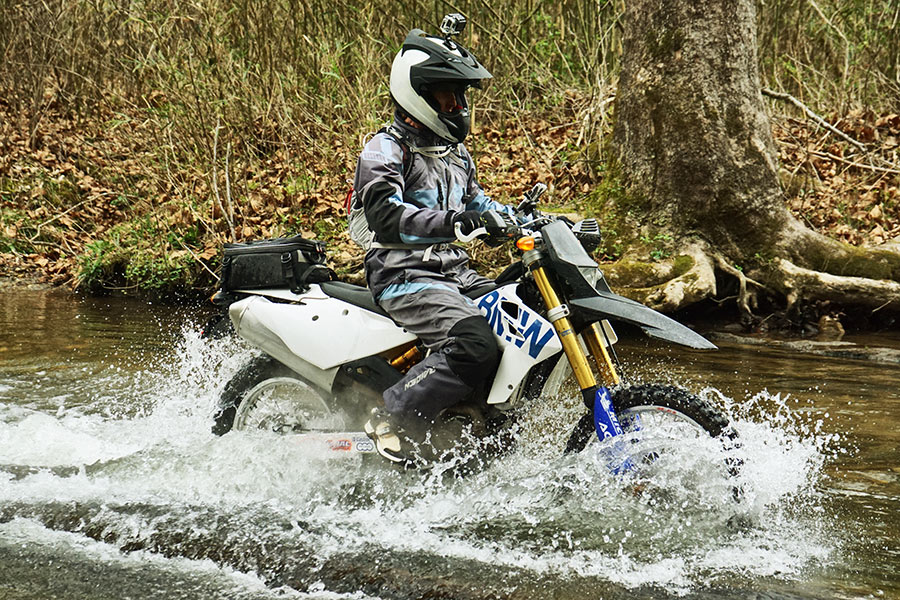 This rider understands her own skill levels and knows where she needs to stand and where it’s unnecessary. Looking ahead and staying relaxed does not change whether sitting or standing.
Because you’re looking as far ahead up the trail as possible, you’ve got ample time to respond to changes in terrain, to slow down for a blind corner or an obstacle, and to calmly handle what’s coming your way. Being relaxed on the bike will help you save energy, ride further and have more fun doing it.
“If you feel yourself start to clench up you’ve gotta find a way to relax,” Solomonson says. “I talk to myself in my helmet, sometimes that helps even just to remind yourself, ‘just calm down, calm down, take a breath.’ The other thing about being stressed like that, if you’re tense on the bike, it’s exhausting and you wear yourself out.”
You’ll have to find what works best for you, but if you’re getting tense and stressed while riding, Solomonson recommends getting off the bike to walk around, take some deep breaths and stretch out. As you look ahead down the trail, you’ll recognize the times when it’s appropriate to relax and when it’s time to engage and actively tackle the terrain. Solomonson compares the different stages of engagement while off-road riding to high-level sports where an experienced player can recognize the times to be relaxed or fully engaged.
“You’ll learn to recognize those points on the trail when you can be fully relaxed, when you need to be semi-alert, and when you need to be in that full aggressive stance,” Solomonson says.
The more experience you get, the more comfortable you’ll be in various conditions and thus the more relaxed you’ll be, which will help you handle the motorcycle efficiently.
3) Body Positioning for Better Bike Balance
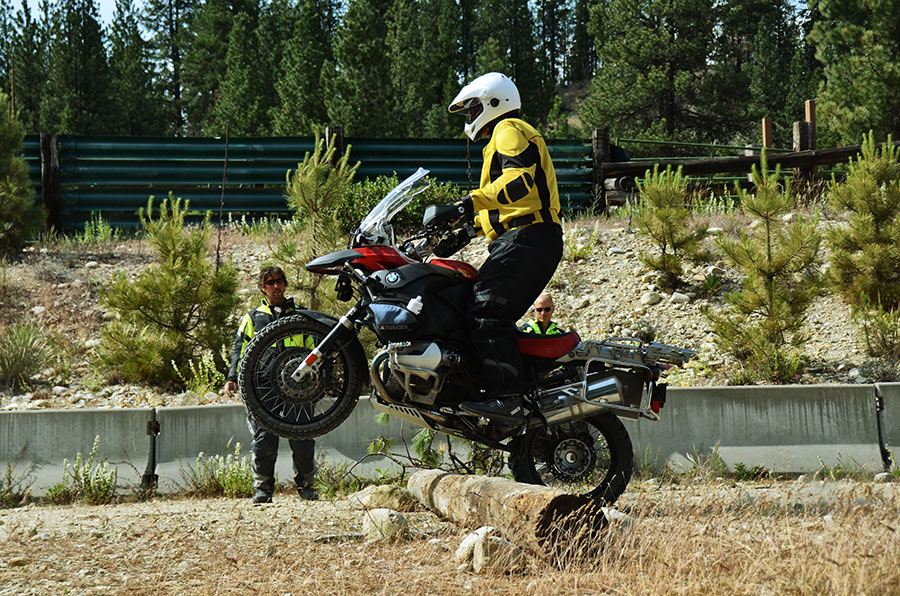 This rider maintains a neutral and upright body position even while clearing an obstacle. His head points forward, not down to his fender.
Part of what goes into efficiently handling your motorcycle off-road is your body positioning on the bike. Standing on the pegs offers the greatest amount of physical control over the bike because you can see better and your weight is a dynamic part of the motorcycle, instead of a stationary part on the seat, which also lowers the center of gravity. This allows you to move your bike around more quickly.
Another thing that can tire you out and will inhibit your riding ability is constantly leaning on or pulling back on the handlebars. This goes back to relaxing and avoiding a death-grip on the bars. Your front-to-rear weight bias should be neutral so that if you do need to weight a particular wheel, you can do so. You should be supporting your body with your legs and using your arms for more delicate controls.
Solomonson doesn’t emphasize shifting your body to weight the pegs to steer as a single concept, instead he says the focus should be on setting your whole body up for steering. By looking where you want to go, aiming your upper body in that direction, and pushing the outside knee into the bike to help the lean, you end up “automatically weighting the outside peg.”
Deep sand riding is a situation where Solomonson does add emphasis on weighting the pegs, “because that’s sort of how you steer through that, almost like a boat. Instead of doing big handlebar inputs, it’s a subtle weight shift to get the bike to go one way or the other.” On the pegs, Solomonson suggests having your feet “pigeon-toed towards the bike so that tree branches and rocks and stuff aren’t going to peel your feet off the pegs.”
4) Steering - Focus on the Front
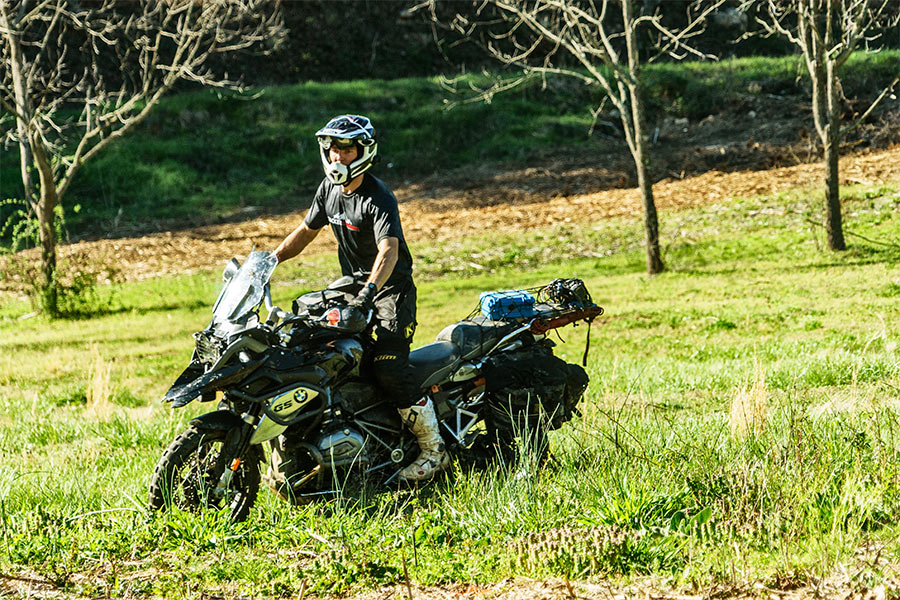 Here the rider is looking up and into a medium-speed turn. The front-rear bias is neutral and his upper body faces into the direction of the turn while his legs grip the bike.
In addition to the usual counter-steering concept on a motorcycle, there are multiple user-controllable factors that go into staying pointed in the right direction off-road. Being relaxed, looking ahead and correctly positioning your body all come together to control where you and your bike go. Instead of the focus being on the rear wheel, like when street riding, the goal is to manage the front.
“When you are on a street bike, you ride the rear wheel... when you’re in the dirt, you ride the front wheel,” Solomonson says. “You control where the front wheel goes, that’s your steering... so as long as you’re riding that thing like a unicycle, that’ll guide the bike where it wants to go.”
“The back end is gonna kick and skip and turn and spin and do all that, but it’s eventually going to follow,” Solomonson says. “So as long as your back end doesn’t pass you, you’re fine. Let it bounce around back there—concentrate on the front wheel.”
Between the rear brake, clutch and throttle you can still have control over what the rear wheel does, playing a significant role setting entry speed into corners. Here is yet another example of a prime time to look far ahead to set yourself up for a corner and choose your speed depending on what you can or can’t see. This concept applies to all riding, because it’s far easier to add speed during a corner than it is to scrub it off.
To keep your weight centered over the contact patch of the tires when standing and cornering off-road, you’ll end up leaning the bike underneath you. Done properly, this automatically weights the outside peg to help you maintain traction and hold a dynamic body position on the bike to respond to changes in terrain.
Technology such as ABS and Traction Control systems can help you manage the front and rear wheels. However, the use of those systems deserves special consideration, so make sure you understand how they affect the bike.
5) Traction Management - Clutch and Throttle, not Computers
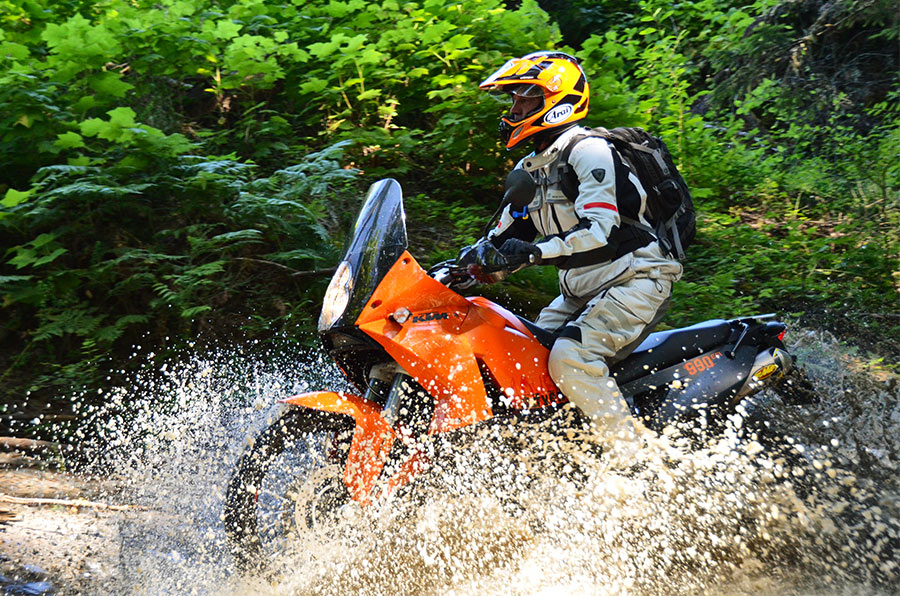 The rider is adjusting his weight bias slightly rearward to lighten the front wheel while gripping the tank with his knees, keeping his head up and looking forward.
Learning to get comfortable with the margins of traction is an important part of understanding your motorcycle that is best done in a controlled environment. Solomonson says that with friends and with access to critical resources the freedom to play around is far greater than if you’re alone in remote territory. In classes, they give students chances to play around with the different levels of electronic features to get comfortable with how those systems feel.
Traction Control and ABS are there to catch your mistakes when you pass those limits, not to be used as crutches to rely on.
“All these electronic aids are great, but they’re a backup,” Solomonson says. “So being able to recognize when the traction control is activated and when your ABS is activated we feel is very important because if you’ve activated your electronic aids that means you screwed up—you’ve exceeded your traction limits or you’ve exceeded your braking limits, which means you made a mistake and your bike had to save you.”
At PSSOR, Solomonson says they teach the importance of “the grey zone” of the clutch to very tightly manage traction at the rear wheel when accelerating and as a way to scrub off speed without using the brakes. Aimlessly dumping the clutch and spinning the rear wheel doesn’t follow their emphasis on conservation.
“We talk about the Three Es of Conservation: conserving energy, conserving equipment and conserving environment,” Solomonson says. “For example, if I use proper technique I can get up the hill without spinning my tire, which conserves my equipment, and without tearing up the ground which conserves the environment and without having to fight with the bike to get up the hill, which saves my energy, which means I can ride longer.”
* * *
In the end, staying upright while riding off-road is largely dependent on your ability to manage the traction that’s available. While your tires will likely slip in the dirt before they’d slip on the pavement, there is a wider margin between full traction and zero traction to get comfortable around. At PSSOR they emphasize learning and understanding the limits of what your bike can do in a suitable environment so you can safely ride off-road wherever your adventures take you.
“The biggest thing is that we do this for fun, this is supposed to be a recreational thing,” Solomonson says. “Take your time, work through it, solve the problem, and those are going to be the memories, you know, that emotional attachment to those events. Some kind of emotional attachment—that’s what makes those trips memorable.”
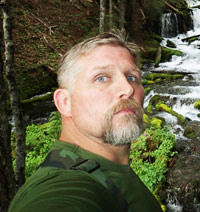 Paul Solomonson is an Off-Road instructor with PSSOR and guide with TourUSA. As a 20-year Army veteran, he is a natural trainer and coach. He challenges his students to find limits and improve themselves so that they can make it home at the end of the day, and most importantly, have fun doing it.
{gallery}ARTICLES/Rides/Tips-and-Techniques-for-riding/Gallery{/gallery}