 Sticky logo
 Search


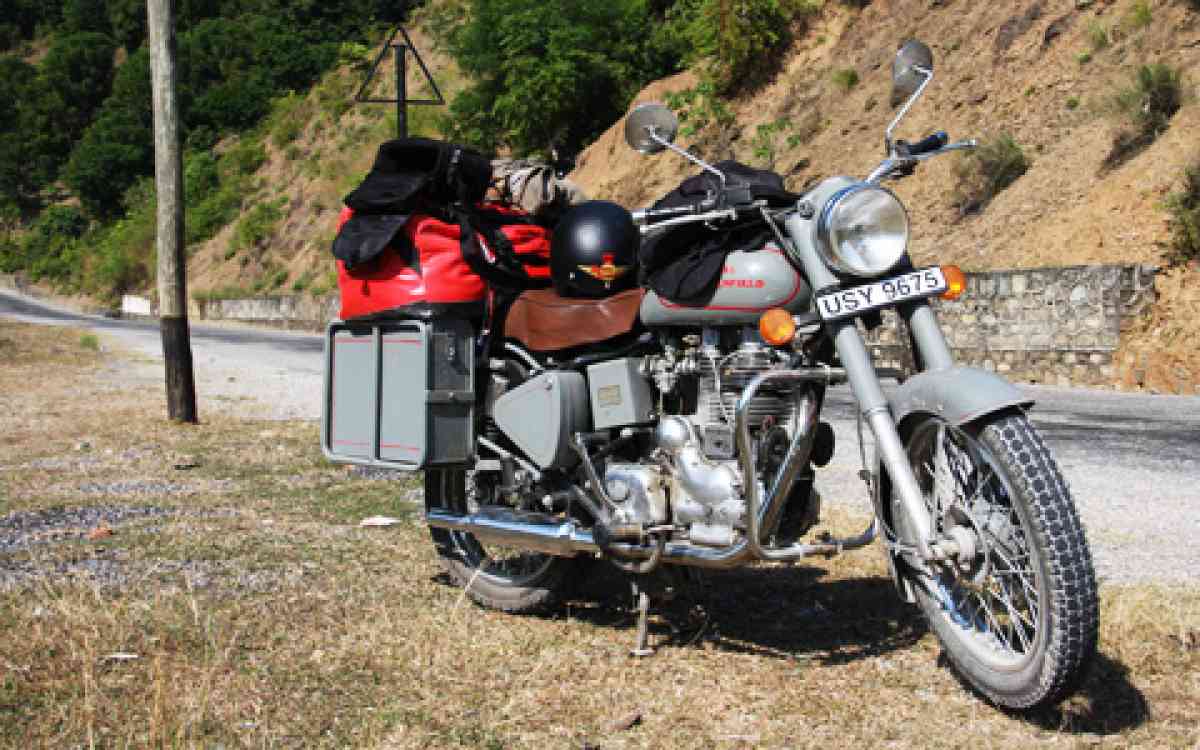
Mr. B (a pseudonym for reasons that will become apparent) had a dream to travel 14,000 km by motorbike from Europe to Southeast Asia. We met in Vietnam to discuss his 2009 journey from Moravia’s capital city of Brno to Hanoi, and how his dream became a reality.
What kind of bike did you choose and why?
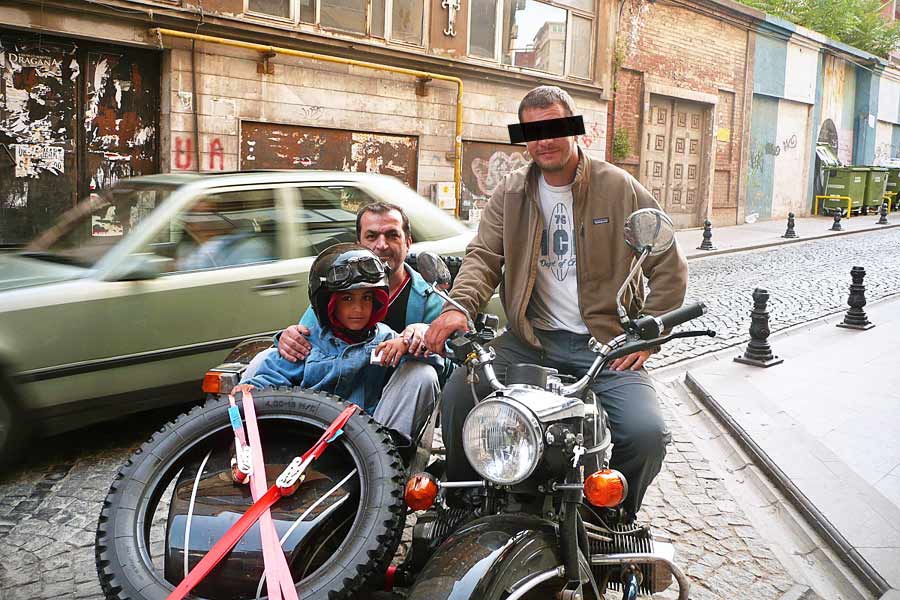
A journey like this shouldn’t be done on a shiny new model. It had to be a little bit like those old time traveler stories; like those who did it on anything they could find, low profile, without GPS and few comforts. I didn’t want to travel on an expensive bike because it could attract too much attention. So I settled on the Ural—an old design that could be easily fixed by local mechanics along the way. Besides, the sidecar is a great way to carry gear.
How about the pre-trip planning?
There were lots of visa requirements as well as the Carnet de Passage for the bike.
I knew that China was going to be complicated, and Myanmar was impossible at that time. There were two possible routes: Russia, the former Soviet republics, and then China and Vietnam. Or, the southern route through Turkey, Iran, the post-Soviet countries, and China. Getting the bike into China would be a hassle. I’d have to hire a “guide” who’d be with me all the time. The bike would also have to be registered, have Chinese license plates, and I’d have to obtain a Chinese driver’s license. China alone would cost at least $7,000!
I ended up dropping the idea of crossing China, instead going as far as I could by land before taking a ship from India to Thailand.
How long did you give yourself on the road?
A year. But I got into over-preparedness, so at some point I decided to just go, otherwise I’d never have left. My goal was to ride small 200–250 km distances each day. Although the plan was to reach Hanoi in seven months, I didn’t want rush or take the main highways. I wanted to stay on side roads. But getting away, actually starting off, was a little scary for me.
Did you have any problems?
In Iran I couldn’t get visas for Pakistan and India. Both embassies told me I needed a “Letter of Introduction” from my embassy. But for some reason they wouldn’t give me this paper.
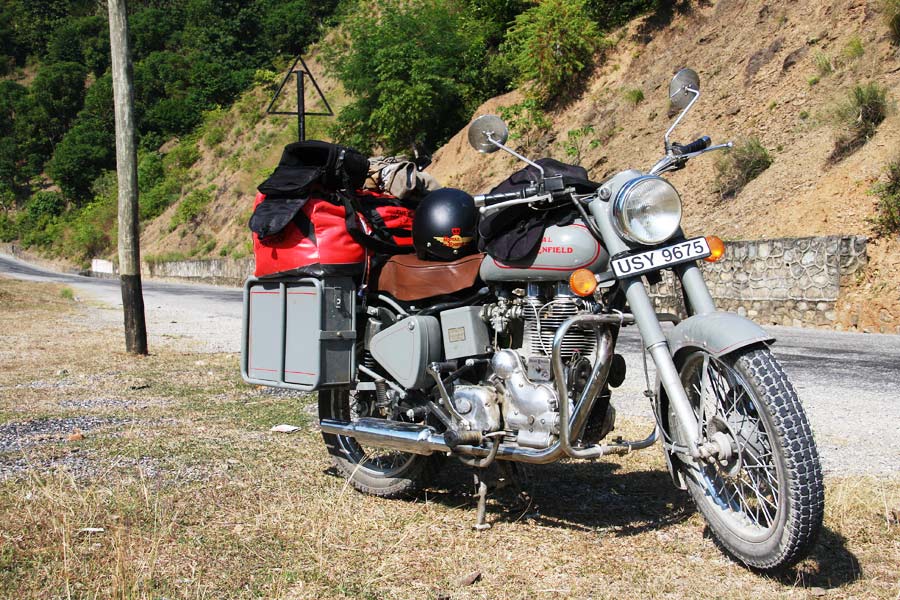
Eventually I got the Indian but not the Pakistan visa. This left a problem with the route to India. Shipping the bike would take too long, and flying it would cost about $2,000. I chose a third option—buy another bike in India. I was losing interest in the sidecar anyway; it had become tiring and heavy. And the same money would pay for a brand new Royal Enfield Bullet in India. So I sent almost everything home, kept my backpack and the toolbox, and left the Ural behind.
I loved the idea of having a Royal Enfield made to my specifications—a process that took a couple of months. So I travelled around India on a friend’s Enfield until mine was ready.
What about registration papers for the bike as a foreigner?
In India, without a residence you can’t register a bike. The only way I could ride it all the way to Vietnam was to use fake papers. And fortunately, India has an active black market for that sort of thing.
You also went to Nepal?
Yes, shipping the bike from India was impractical. So the new plan was to air freight it from Nepal. I left Delhi straight for the Nepalese border, but the Enfield almost immediately developed a rattle and began to smoke. I couldn’t find the source of the problem so continued anyway, trying here and there to get it fixed without luck.
Crossing the border on your bike wasn’t a problem?
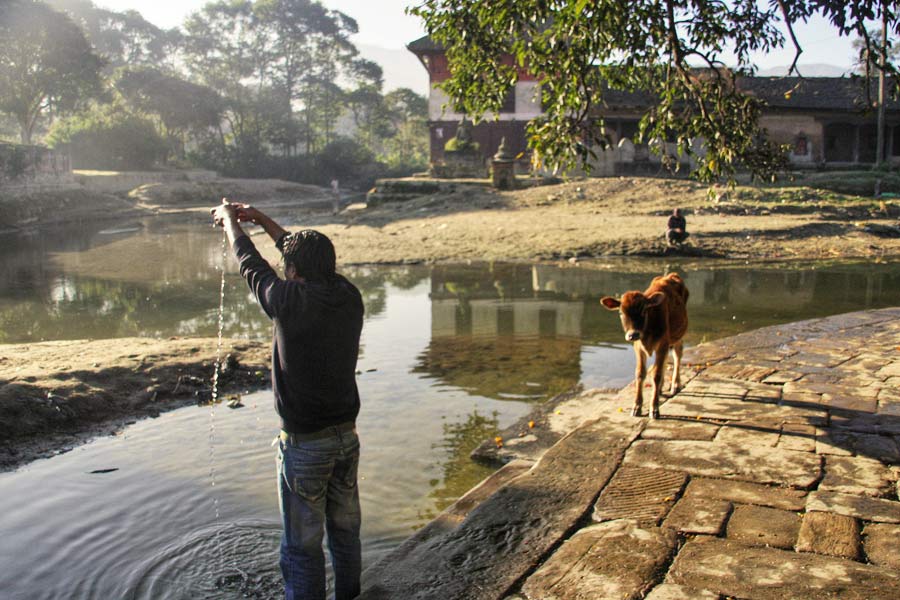
There’s such a difference between the two countries. Nepal felt like paradise. But as far as the Enfield was concerned, the choice was to either purchase expensive Nepalese plates or ride with Indian plates for a daily fee. So I paid for three days and stayed almost two months—no one ever checked. That’s one of those tricks you won’t necessarily learn on the web.
I eventually found an Enfield shop in Kathmandu where the necessary repairs were made.
How did you get your bike from Nepal to Thailand?
Shipped it via plane for $400 to an old airport in Bangkok. It’s surprising how things are super easy in Thailand.
From there I took the road to Vientiane, the capitol of Laos. But during a 60 km uphill climb the Enfield overheated and seized up. I thought the trip was over, but somehow, with batch of new oil, it kicked over and I was off again. Enfields can be indestructible in the oddest ways.
Was that your last durability test for the mighty Royal Enfield?
No, on the way to the Vietnamese border there were three river crossings. About halfway across one of them the water was too deep and swamped the bike. On shore, I removed the spark plug, used the kick starter to pump out the water, then removed and dried the filter. When I put everything together, it started with a single kick!
What about the Laos-Vietnam border crossing?
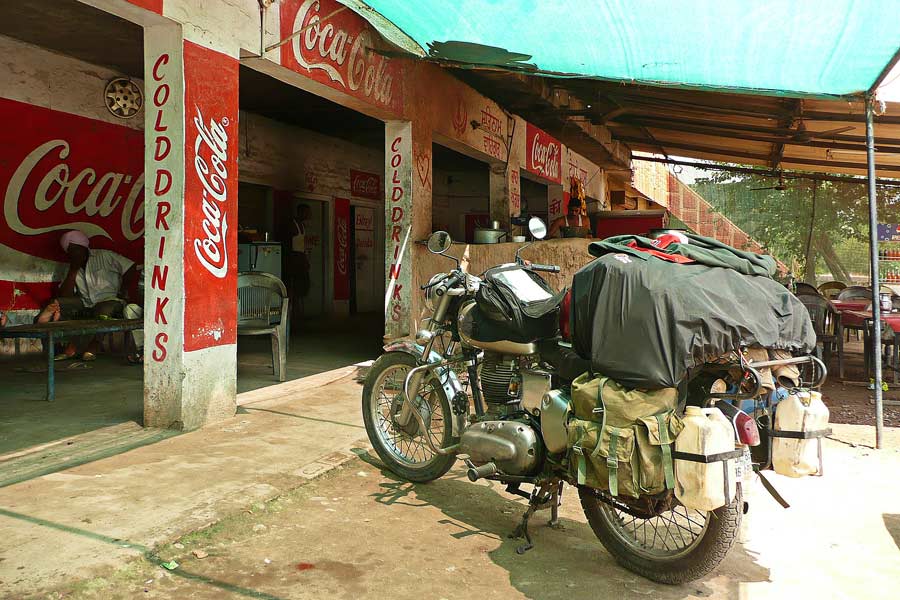
The Laos side was easy, but not the Vietnamese. They wouldn’t allow the Enfield into their country. After hours of failed negotiations the guards eventually left for the day and I was stuck at the border for the night. Some friendly Vietnamese invited me to join them for dinner and to sleep in their shelter. I awoke around midnight and in the total silence stealthily pushed the Enfield across the border and down the road for about three kilometers before starting the engine. I rode the entire way in the dark, it was super scary. But I made it to Dien Bien Phu around 3:00 a.m. where I found a hotel for a few hours of sleep before getting back on the road. After that I was safe.
You arrived in Hanoi that day?
Yes, and as it was the end of my trip I gave myself a gift by staying at Hotel Metropole. But my grand arrival was somewhat of a disappointment because it was the end of my journey and, you know, no one was there to congratulate me on the accomplishment.
What was the most difficult aspect of being on the road?
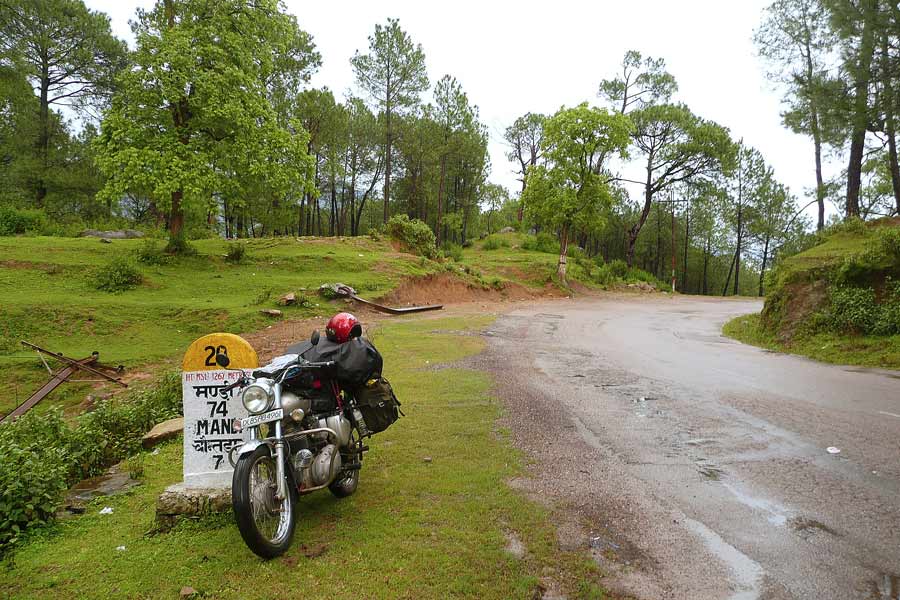
Other than a few mechanical problems it was the weather. Lots of rain, especially a few days in India where the downpours were just crazy.
Is there any particular country you’d like to return to on a bike?
I enjoyed Nepal the most overall. Which was best for riding? That depends upon the kind of bike. For example, Turkey is nice. But for the Enfield “messy” countries were the best: India, Thailand, Nepal and Vietnam.
If you could give one piece of advice to others wanting to do an extended motorbike journey, what would that be?
Other than not attempting to get a Pakistani visa in Iran, really basic things like travel light, make sure you know your bike, take it easy, meet the people and spend time with them along the way.
I saw one photo from your journey that showed a sign with “Masalah” on the back of your Ural. What was that about?
Yeah, Masalah or Mash’Allah comes from Arabic and means “It is the will of God.” They say it all the time in Muslim countries. While in Istanbul I met a really nice guy who became a good friend. I showed him the Ural and took his kids for rides. Afterwards he had the sign made and suggested that I should put it on my bike. For me it represented good luck on the road.