 Sticky logo
 Search


Unlock text to speach and become a member!
| Andrew Nguyen | Riders
If you've ever watched a rally race on TV you'll understand why the racers must be 100% committed to compete. Patrick Trahan is amongst those passionate individuals that devote their lives to racing and constantly pushing the boundaries of their limits both physically and mentally.
AM: How did you enter the world of rally racing?
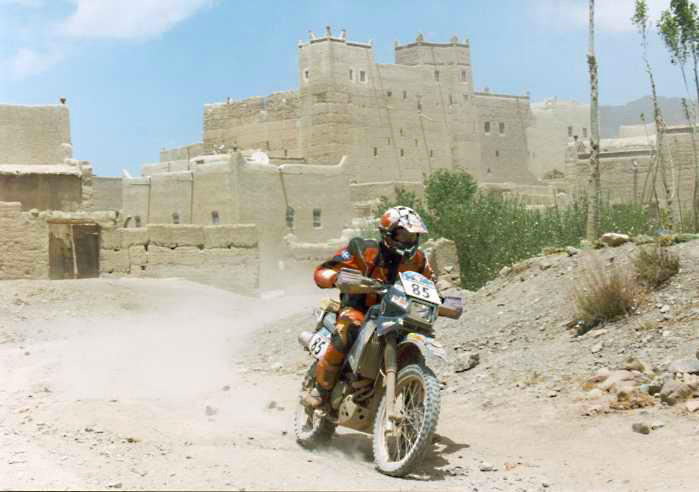
PT: When I was 15 I saw the Dakar Rally on TV. It struck me like lightning and stayed with me, but I was a skier and far from motorsports. For years I dreamed of rally and riding the dunes in Dakar and finally when I was 30 I decided the time had come to do something about it. I went shopping for a rally bike, but in Canada nobody knew what was suitable. The closest thing I could find that looked like the bikes from that TV show was a KLR650. I was not familiar with any other bike because I had never ridden one. So I bought it and registered for the 1998 Atlas Rally in Morocco. Having ridden very little, the rally was extremely difficult but I finished with tons of stories to tell. I rode a bit more then registered for Dakar.
AM: Describe one of the most challenging times during one of your races.
PT: There were so many challenges a book could be written to describe them all. The most challenging time happened during the 2005 Pharaon Rally in Egypt. After only 178km of the first stage, the engine of the engine of my KTM 450 failed. Not only was the engine broken, so was my moral. Angry, disappointed and desperate, I decided to take a break away from the bike without water or any shade. It was almost 50 degree Celsius that day. Thoughts of giving-up and staying in the desert crept into my head and I realized heat-stroke was setting in. I needed to go back to the bike and water immediately, but standing up was impossible without fainting. I thought about all the help I had turned away after breaking down and with my luck, thought nobody else was coming. I crawled my way to the bike and to reach the Balise I had to pull on the kick stand to make the bike fall. Managing to stay conscious long enough to send out a distress beacon, I put my jacket over my head then passed out. Luckily, a doctor in Jeep nearby responded quickly. When they found me they said “Morte” which means they thought I was dead. But I survived, started the next morning with another bike and although very weak, manage to finish.
AM: Tell us about some of the bikes you’ve used to race and why you selected them.
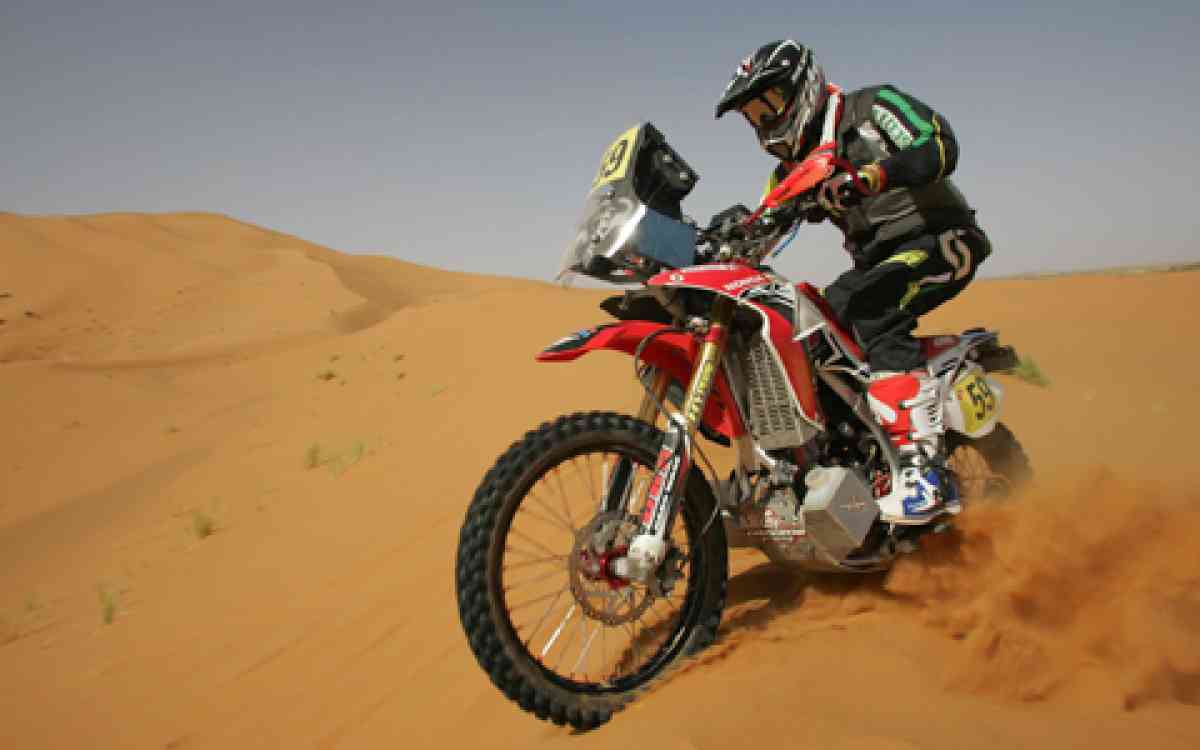
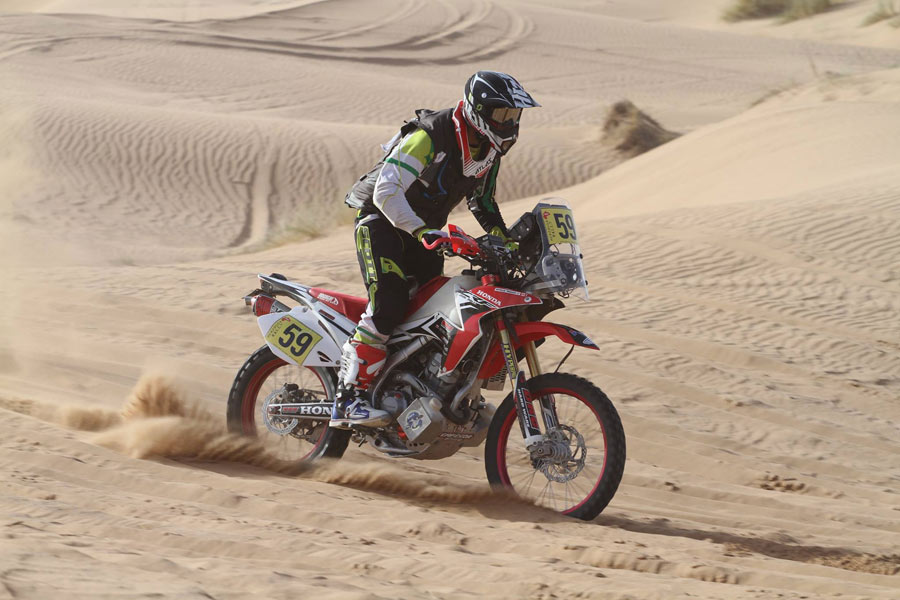
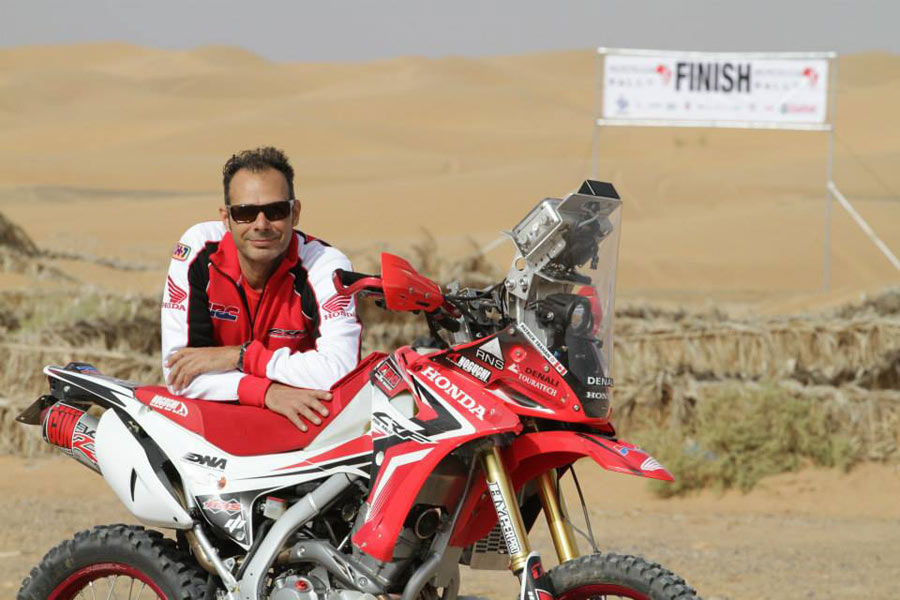
PT: My first bike, a Kawasaki KLR650, was not designed for racing although it did have a good engine. I decided to move over to Honda after noticing a racer using a Honda XR400. It never needed servicing compared to my friend who worked on his KTM every night. My history with Honda has lasted almost 15 years and is still going. I’ve raced using Honda’s XR600R and XR650R because of their reliability and a KTM450 mostly because it was easy to find parts in the bivouac. Today I am racing a Honda CRF250L Rally because it is original, reliable and inexpensive.
AM: How does it feel to be the first Canadian to compete in several of the events you’ve participated in?
PT: In my first rally, I didn’t realize it. I couldn’t believe no other Canadian had done it before! The organizer couldn’t believe that the first Canadian to ever race in a world rally, had never ridden before and did it on a KLR!
AM: What would you consider your biggest strengths and weaknesses?
PT: My biggest strength is stubbornness. I never give up. Sometimes it can also be a weakness, but in rally it is a very big strength. My weakness is probably that, like any passionate person, I am very sensitive and I take things personally. When you expose yourself, like I do, sometimes it can be hard.
AM: What makes racing in Dakar so special?
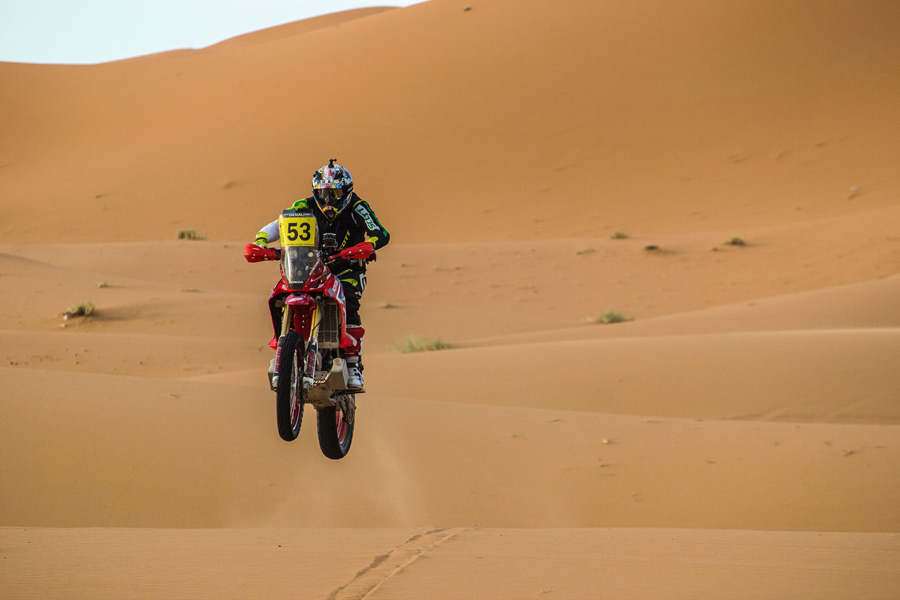
PT: It's Dakar and it's legendary. It's the toughest motorsport that exists, where racers are 75% more likely to give up than to finish. Only a few people are allowed to do it. At Dakar, you reach your maximum potential and we compete for the reward (the feeling, not the medal) if you finish.
PT: It's Dakar and it's legendary. It's the toughest motorsport that exists, where racers are 75% more likely to give up than to finish. Only a few people are allowed to do it. At Dakar, you reach your maximum potential and we compete for the reward (the feeling, not the medal) if you finish.
AM: What are some advantages and disadvantages of using a roadbook versus GPS for navigation?
PT: I love riding with a roadbook because of the unknown, which usually creates its own adventure. We make decisions and develop a sense of navigation which in turn controls our racing speed. With a GPS or Track system, if there’s an error the rider blames whoever created the navigation points. With a roadbook, you’ve only got yourself to blame.
AM: Describe some goals you hope to accomplish during your race career.
PT: I never considered myself a true racer but more an adventurer, so my ambition hasn’t been focused on winning races. Of course, my ranking is important, but the ranking doesn’t mean squat if I don’t finish. Now my objectives are to develop the CRF250L Rally and race some world championship rallies and probably Dakar with this bike, because Dakar will see me again. There are only two kinds of riders in Dakar. Those who went and did it but will never go again and those who went and will do everything to go back. Guess which one I am.
AM: What advice can you give a privateer who dreams of rally racing?
PT: That is a very simple question and I will give a very simple answer. Don’t let anybody stand in the way of your dream. The best way to realize your dream of rally racing is to believe in it. Like I did with my KLR!
Pat is currently working on a bolt-on rally kit for the Honda CRF250L. For more information about Patrick Trahan and his CRF250L Rally Project visit CRF250LRally.com