 Sticky logo
 Search


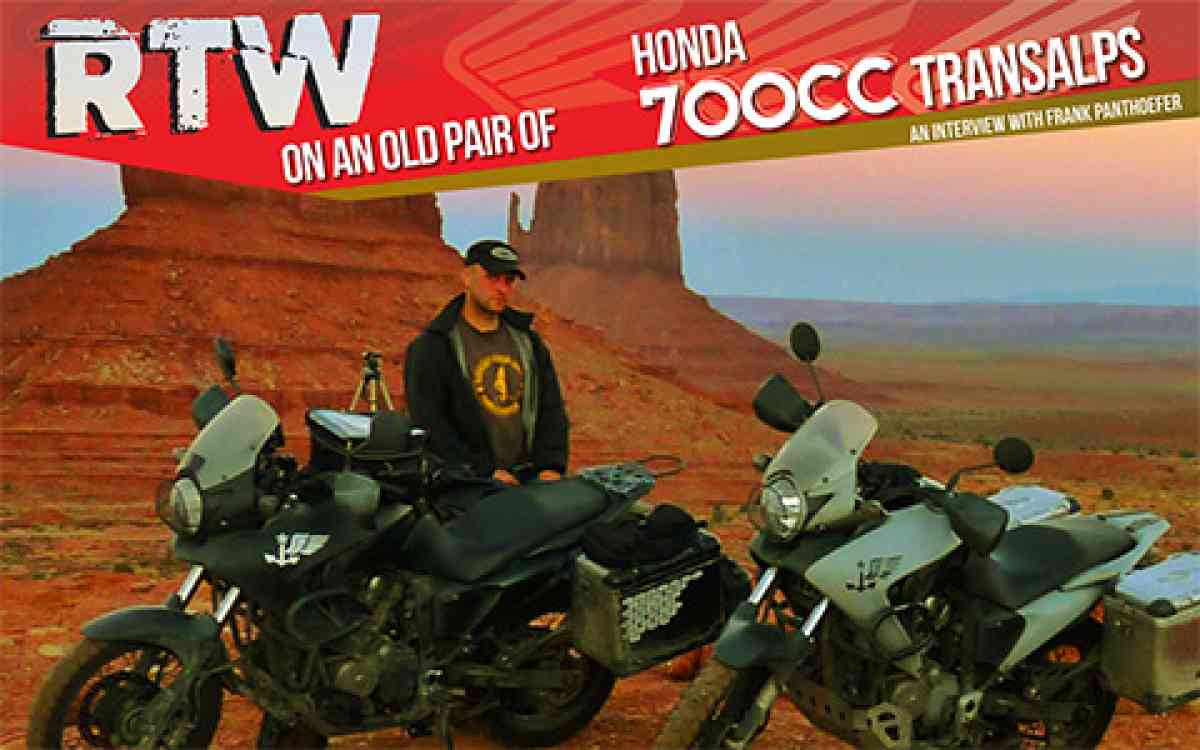
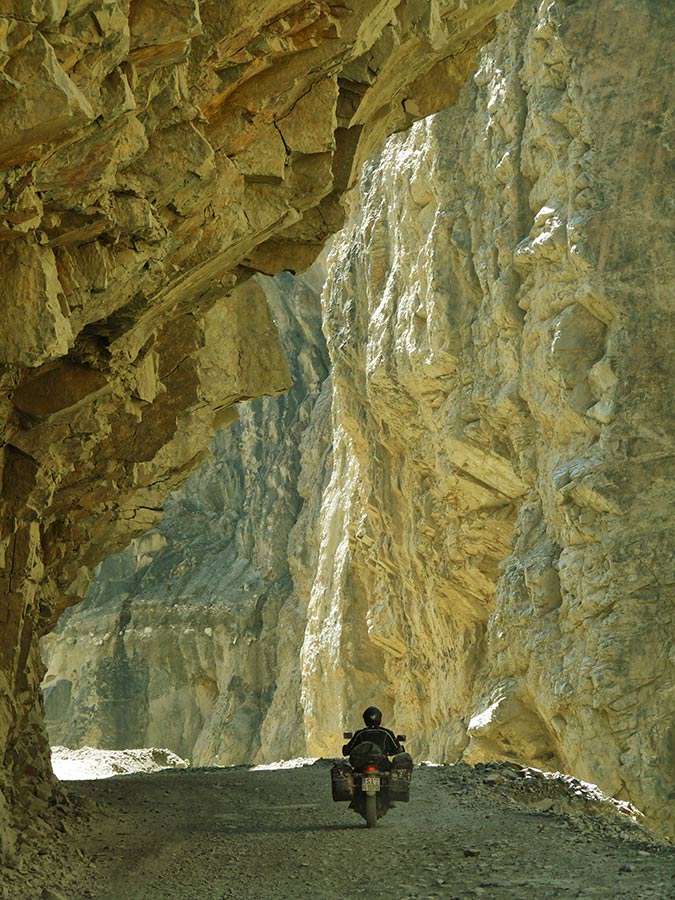 Frank Pantheofer and his girlfriend, Simone Dorner, a German couple, just completed a three-and-a-half year epic journey around the world on an old pair of Honda 700cc Transalps. You can read all about it in Frank’s two-book series titled, “Motorcycle Vagabonds” (see info at the end of this article). As the book title implies, they did it on a budget, but that’s only one of the many aspects of their tale that make their adventure such a great story. ADVMoto recently caught up with Frank to chat about their time on the road while the story was still fresh in his mind.
AM: What was your motivation for venturing off on a ’round-the-world adventure?
FP: Wanderlust and curiosity tormented us. It was also a tantalizing challenge since a trip like this was bigger than anything we’d ever done. To some extent it was also an escape, as my professional life had become intolerable. I’d already survived several nasty mergers and outsourcings, which left me feeling miserable. I couldn’t take any more. That was the moment when Simone and I realized that what looked like a big disaster was actually an opportunity. And, if we didn’t go for the Great Ride then, we’d never go.
AM: How long did you initially plan for your RTW trip?
FP: The idea was to travel through the Americas from north to south for a year, or maybe two. However, we were not sure if we would last that long, as this type of travel was new to us and would present many unknown challenges.
AM: Did you have any special qualifications for such an adventure?
FP: If you call wanderlust, curiosity, naïveté and desperation qualifications, I would say we were experts. I’m serious about that—these “abilities” were the fuel for our ride. However, it might help to have some other abilities, too. After all, such an expedition is a complex project that requires lots of research and some communications skills. Knowing other languages would be a big plus. You can travel around the world with no other language than English, if you’re willing to communicate creatively and pantomime a lot.
Before our RTW trip, we thought that such things were done only by extraordinary people: Paris Dakar Rally participants, motorcycle mechanics, sport stars—including a support crew backing you up. In the last few years we’ve met a few hundred travelers who went for long-term rides, and most were normal people without extraordinary qualifications. The difference is that they simply dared, and most grew into it.
AM: Sum up your biggest challenge?
FP: Forget criminals, terrorists, dangerous animals, deadly diseases, natural catastrophes, insufficient riding skills, crashes and breakdowns. While these all gave us plenty to worry about in the beginning, the reality wasn’t half as bad as we expected.
It turned out that the biggest challenge was our relationship. It was just Simone and me for 24 hours per day, seven days per week. There was no escaping each other, especially as we lived in a tent most of the time. And that required the ability and willingness to de-escalate conflicts and make compromises, often many times a day. Furthermore, decisions often required a consensus: When shall we stop for breakfast? Why did you buy cheese but no meat? Where to camp? Which road? We’ve seen couples or riding buddies split up on the road and never talk to each other again because they couldn’t handle it.
AM: Some think of a three-and-a-half year RTW trip as a never-ending holiday—any thoughts on that?
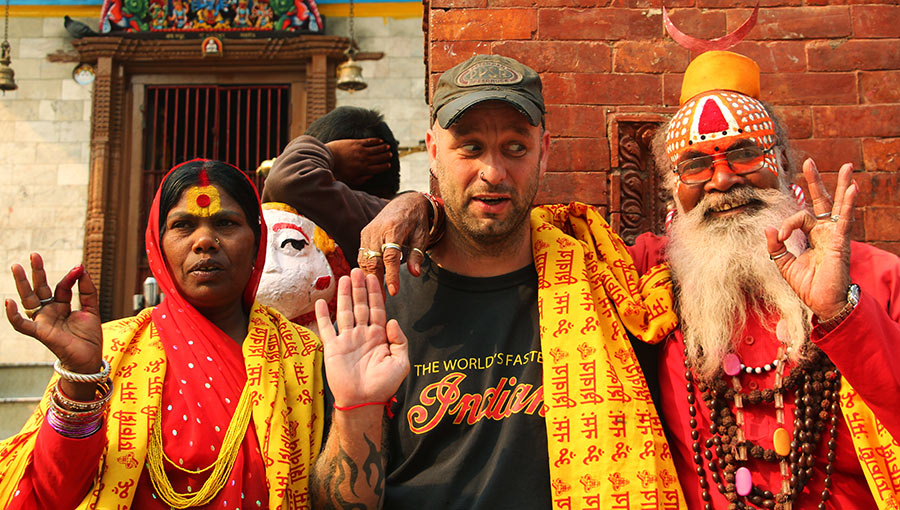
FP: There might be holiday-like moments, and sometimes you even do touristy things, but they become scarcer the longer you’re on the road. Most of the time it’s far from a never-ending holiday. It’s full of challenges and a lot of work to keep going. At times some challenges and problems seem to be unresolvable—but in the end you manage, or somebody helps you, since there are many, many nice people with big hearts out there. Either way, every problem you’re able to overcome builds self-confidence for further hurdles awaiting you down the road.
AM: What are your considerations of going alone vs. as a couple, or a group?
FP: Depends on your mentality. Going alone has some advantages: no arguments, no compromises and silence in the right moments. But for me it’s very important to have a person to reflect the positive and the negative experiences with. You might share through social media these days, but for me that’s not the same as a “Did you see that!?” in exactly the same moment it happens, like when witnessing a spectacular sunset.
Riding alone is sometimes a safety issue. Not when it comes to criminals or terrorists—typically they don’t care if you are alone or not—but it matters in case of breakdowns, crashes or sickness. There were two or three times I was seriously ill and might have died if Simone hadn’t been with me.
I can’t imagine riding in a group for longer than a day, too many people to keep in line. It might work if there’s one leader, but in a democratic way I can hardly imagine it. Furthermore, groups have one big disadvantage: There’s far less interaction with people along the way so you’ll miss one of the best things long-term travel offers.
AM: Were there any countries or cultures that were radically different than your expectations?
FP: Mexico was much safer than we expected, and even Colombia has improved significantly. It stands in no comparison to the drug lord-ruled country of the ’80s and ’90s any longer. Conversely, Venezuela is on the way down.
In Brazil, we traveled through the south, and to our dismay we didn’t see a single chocolate-skin-colored samba dancer. Instead, many had blue eyes, blonde hair, and spoke an old-fashioned German dialect of their ancestors of one to two hundred years ago.
Bikers in Argentina and Chile were far more “European” than we imagined.
We expected India to be exotic and challenging but were simply shocked by how negatively overwhelmed we became in regards to some of the social aspects we found there. Driver behavior in road traffic was an extremely antisocial experience, and we were unprepared for the impact of their caste system, and the frequency of violent acts against women (rape and burning were common). It was frustrating that our openness to other cultures was so limited there. In other countries, it was often difficult to find a compromise between respect for their customs and our own beliefs; however, in India it was impossible at times. Maybe we also lost some of our naïveté on that leg of the trip. But we tried to remain open-minded, even in unfamiliar environments.
AM: You’ve been to several Muslim countries—how did things measure up to the impressions the media gives us?
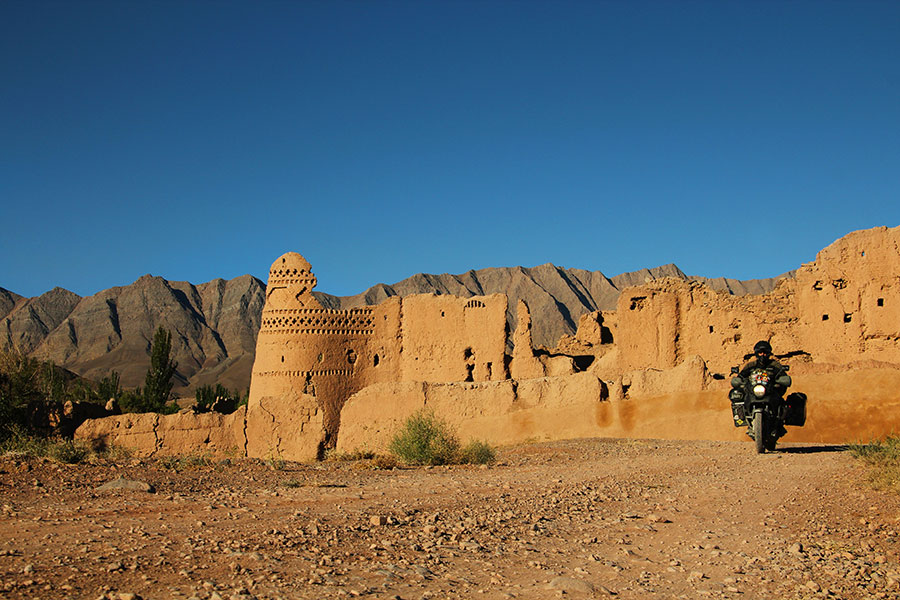
FP: Iraq is a good example. We never would have considered going there, but on the road you meet other travelers who inspire you. One of them told us about the autonomous Kurdish provinces in northern Iraq, which turned out to be totally different to the rest of this country. A truly great experience!
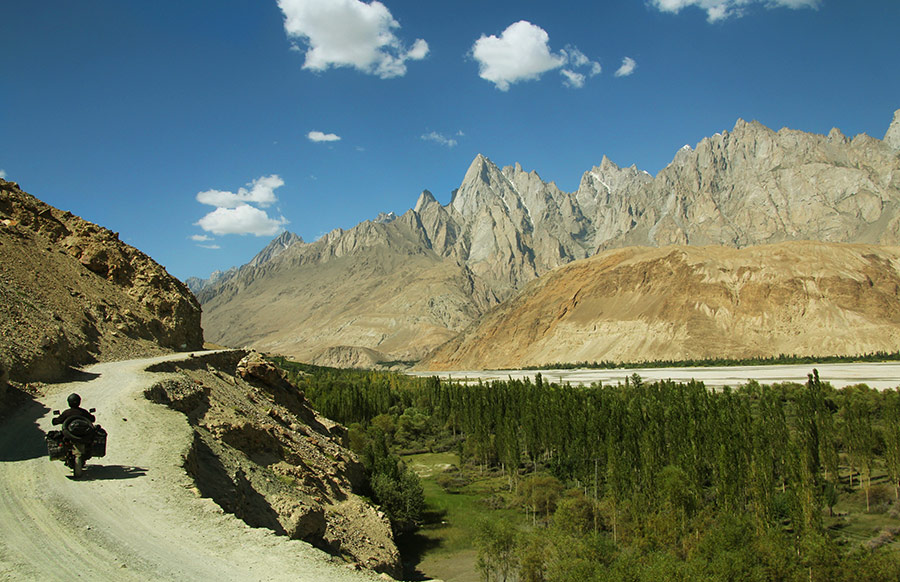
Islam has many faces. Unfortunately, the fanatics and terrorists dominate the media. The reality is far more diversified. In Indonesia and Malaysia, for example, Muslims were rather liberal. It was no problem for me to talk to women, even in public. In Pakistan, it was completely different—definitely less emancipation there. To see the opposite of what you’re accustomed to opens your eyes.
Although Islam has many faces, all the countries we visited had one thing in common: unbelievable hospitality. We were accustomed to being invited to meet people and share their homes all the time, but in these countries it was even more prevalent. Pakistan, Iran, Iraq, Indonesia—Muslims never had an issue with us not being of the same faith. They took no offense that Simone wore trousers or rode a bike. They did not seem to care that we were road-worn, tattooed and pierced strangers. But more than once I asked myself if I would act the same way if the roles were reversed. And more than once old memories came back to times when I knocked on hotel doors back in Germany in the ’80s and ’90s, as rugged as a biker can be, and couldn’t get a bed. Maybe the great hospitality we experienced in Muslim countries had nothing to do with religion. Maybe it’s just because they’re much more old-world or “underdeveloped.” Should this be the reason, then I have to say that our society has lost something great with all our progress.
AM: What’s it like being a “Motorcycle Vagabond” and your life on the road?
FP: We traveled low budget, which meant cooking for ourselves, doing lots of bush camping, maintaining equipment and our bikes by ourselves, whenever possible. Camping in nature has many more aspects than just saving money, or experiencing romantic moments. When you camp in the wild, you can’t shut the world out by simply closing a door. At times this is irritating, at others it simply feels great.
It’s the same with riding a bike compared to a car. You get the weather full force into your face: sun, wind, rain and snow. Sometimes it’s difficult, but mostly it makes you feel very alive.
From a tent or bike, it’s easy for people to connect with you. We made contacts everywhere. They talked to us, and often invited us to join them, usually many times a day. That makes the big difference between holiday and long-term traveling. You talk with them, you live with them (at least for a limited time), and you get to understand their ways of life, their religions and cultures, and it’s far more enlightening than what we get from one-sided TV views.
AM: Was there a favorite country or region?
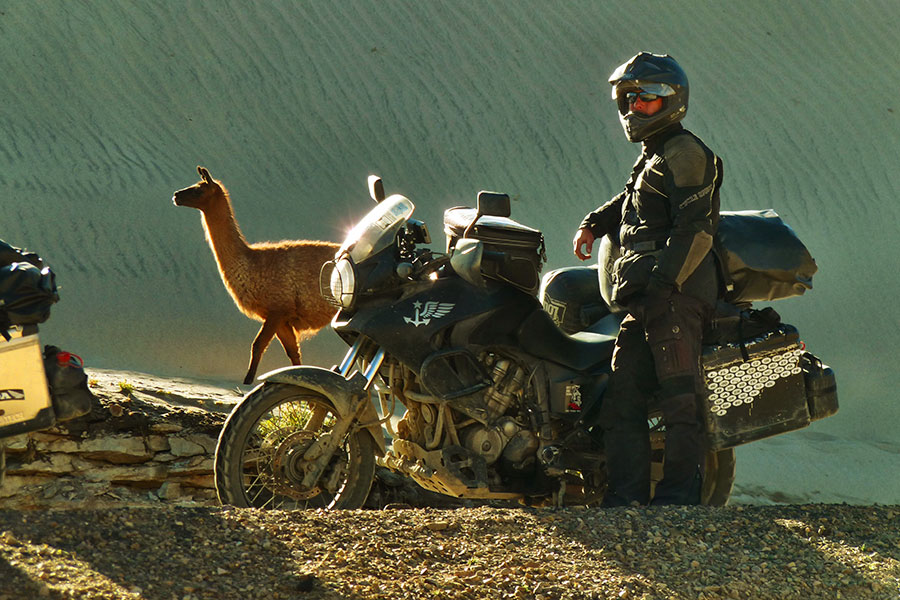
FP: Depends on what you mean—for living or traveling? For example, I would not want to live in Iran, but for traveling it’s one of the best countries we know. Extremely hospitable people, stunning landscapes of all kinds, Persian culture, cheap fuel and bush camping everywhere. Landscape-wise our favorites were the Indian Himalayas (Ladakh) and the southern parts of the Andes (Peru, Argentina and Chile). But in regards to culture and communication, we favor the U.S., Canada, New Zealand and Australia.
AM: What did you miss most being on the road?
FP: With a big exclamation mark, friends and family! You meet interesting people on the road every day, but a new friend can’t compete with relationships that grew over the decades. I have to admit that we sometimes missed some basic luxuries, too. A soft bed instead of the hard ground. A dry apartment instead of a tent in the snow or a monsoon. A cold beer from my own fridge. Or, being able to shut the door for simple privacy. But all those “missing moments” made us sensitive to these things while helping us to enjoy them. Whenever we had them, we became much more grateful.
AM: How’s life after the big journey?
FP: At first we were afraid that we wouldn’t be able to integrate into “normal” life again. Yes, we still have moments like that, but mostly we’re happier with our lives than before the RTW trip. Returning home without jobs or a place to live seemed dramatic, but it turned out to be a new chance. We’ve both switched to entirely new careers. Simone started an apprenticeship as a nurse for the elderly—a brave thing at 40+. And I did what I always wanted to do but never dared: I became a full-time motorcycle travel storyteller. I’m writing books and articles for motorcycle magazines, and I do a lot of live talks on the topic. From a financial standpoint we’re “poor” compared to our former lives, but it feels much better now.
AM: How does has this multi-year “escapade” fit into your resume and your professional life?
FP: In Germany, HR departments expect much straighter resumes than they do in America. Time out from normal life might be considered a negative thing. But more and more companies also see the advantages. I don’t worry about negative effects of a big trip on my resume. I just point out my new skills, and how they might even be a benefit for my next job!
AM: So, when do you plan to get back out there?
FP: Simone’s apprenticeship ends next autumn, after which we’ll hit the road again for a year. After that, the plan is to split our time between home and the road. Let’s see if it works. We have learned not to worry too much about the question marks that are lying in the far-off future. And we have also learned that it is far better to try things and risk failure rather than backing out and regretting a missed opportunity for the rest of our lives.
Frank Pantheofer and Simone Dorner are newly-minted RTWers. Their adventure took 3.5 years, across 183,475 kilometers, 64 border crossings and endless encounters, adventures and experiences. Frank has just released their story in the two-part book series, “Motorcycle Vagabonds.” Motorcycle-Vagabonds.com
{gallery}ARTICLES/Riders/Frank-Pantheofer/Gallery{/gallery}