 Sticky logo
 Search


Unlock text to speach and become a member!
| Michael Martin | Riders
If you’re looking for someone who truly makes their life a ride, you’d be hard pressed to find a better example than motorcycle adventurer, photographer and producer Michael Martin. With more than 100 expeditions under his belt to some of the most remote places on earth, he’s been using the BMW GS to get close to landscapes, nature and the people living life on the edges of existence. With another mammoth project—Planet Desert—in the final stages of completion, Michael explains why a life on the road is the only life for him.
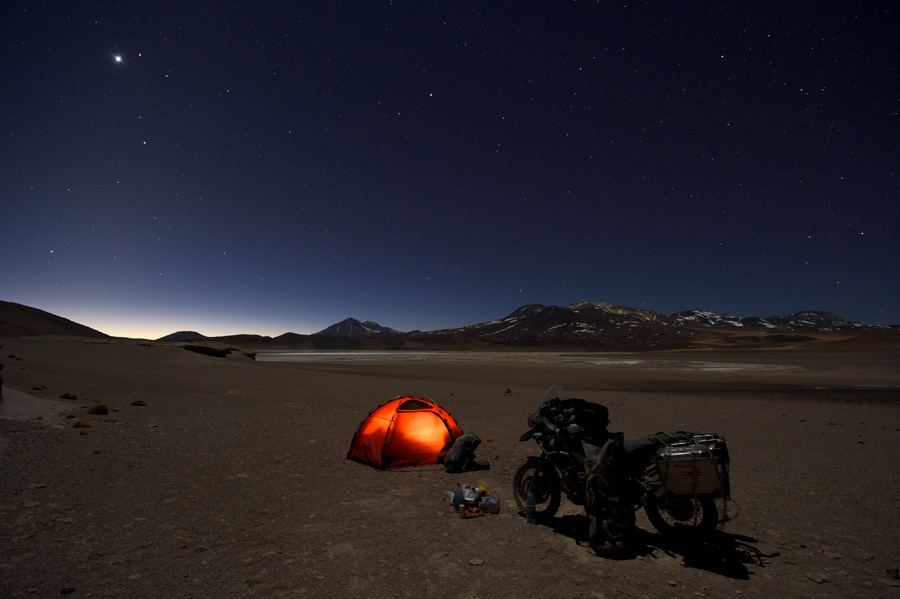
ADV: You’ve spent years traveling and exploring on two wheels, crossing ice deserts, volcanic deserts and dry deserts on various GS's. You must have amassed a serious amount of material?
MM: Over the last five years alone there have been about 40 journeys all over the world—from the North and South Poles to many of the world’s deserts. I’ve been sorting through all the images, editing the films, writing a book and preparing everything for distribution in multiple languages. All that work will culminate into a nine-hour documentary that will appear first on TV and then as a DVD box-set along with a book about those adventures.
ADV: Along with the illustrated book and documentaries, will you continue with the traveling exhibitions to accompany your project?
MM: I’ve already done lots of presentations—around 150 so far, with about another 150 to come, so I’ll be busy for at least the next three years. I’ve also been invited to the Royal Geographic Society in London, and to make presentations in South Africa.
ADV: You’ve used many forms of transport to reach the back of beyond, including dog sleds, camels, helicopters and skis, but the BMW GS is what you’re most associated with. Although you’ve ridden many models, how would you rate the latest GS Adventure, your current travel companion?
MM: I’ve ridden just about every GS in some of the harshest environments known to man. And I always thought that whatever the current edition it would be impossible to improve upon—but then they do it again. Comparing the R100GS I rode in 1991 with the latest liquid-cooled GS there’s an incredible evolution.
ADV: How about the film equipment you carry? Has the digital era changed things for you?
MM: It’s much easier nowadays. In former times I had to carry different format cameras. Now there’s just one along with three lenses. Zoom lenses are so much better now, too. And I no longer have problems with X-ray machines at airports (they were known to damage film). Thieves were another concern. In the past I’d carry as much as 200 rolls of film close to my body—after all, they were my life’s work requiring protecting and guarding—but with memory cards it’s so much easier. As for the actual reliability of the equipment, it’s great. I’ve used the cameras in temps from -50 to +50°C and I never had any real problems.
ADV: If you had to choose one place as your favorite from the Planet Desert project?
MM: Antarctica because no one is there. I’ve been at the South Pole, but it was more amazing to see east Antarctica. In the remote areas it’s a paradise that’s absolutely untouched by mankind—not how most would imagine it. At the Antarctic peninsula there isn’t the same feeling of remoteness because there’s so much activity. You have to go east—where it’s just wilderness—the last true wilderness on earth.
ADV: What’s next for Michael Martin?
MM: I’ve spent years traveling, now I’m focusing the next four or five years on presenting. Perhaps I’ll look into other areas such as the rain forests. I love my life in the desert, and I love my life at home with kids, but I also love being on stage presenting—every day another town. The balance is good right now, but that’s probably because I never stop traveling, moving and learning! Michael-Martin.de
{gallery}ARTICLES/Riders/Michael_Martin/Gallery{/gallery}