 Sticky logo
 Search


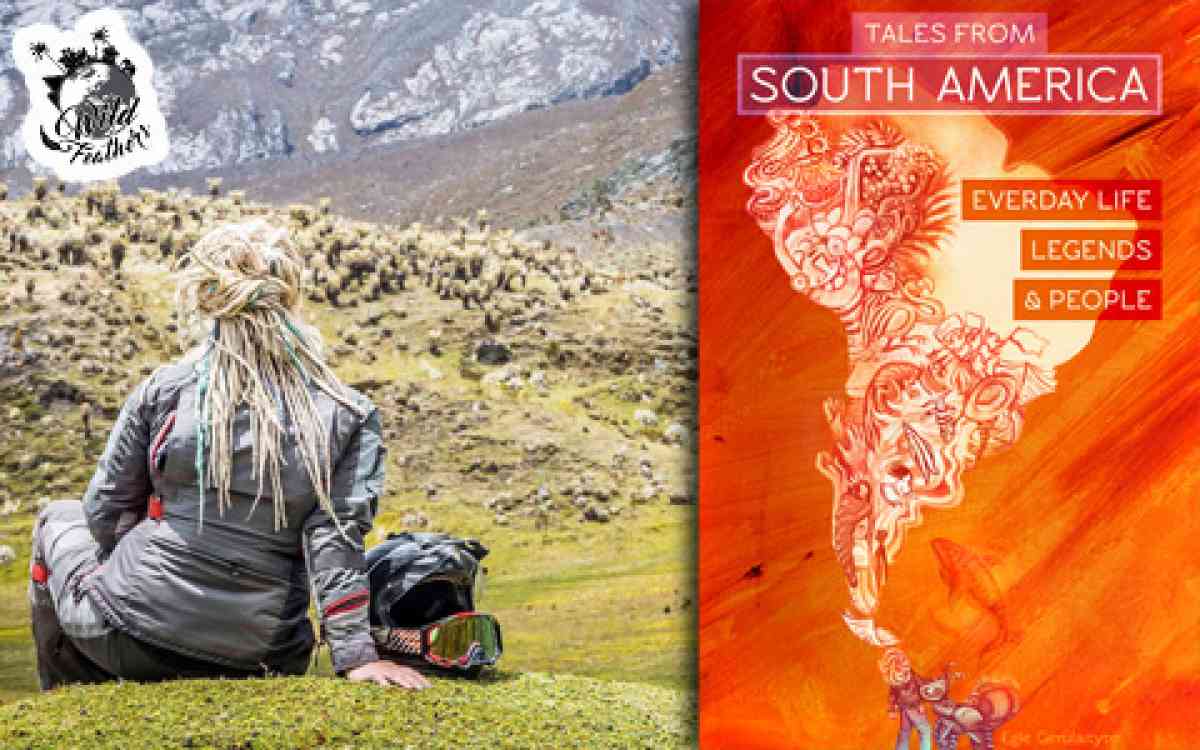
As adventurers, we are often inspired by events, moments and people that reflect something deep within us. Sometimes when we hear the dreams of others, it can be revitalizing. Listening to the someone's goals can bring clarity at times when we have no idea where we're going or why we do what we do. Magic can happen when we connect with people who inspire us. No matter where we are in the world, we can find a home in each other's comfort, whether it be through support or motivation. This is the beauty of the motorcycle travel community.
Eglė Gerulaitytė is a woman I look up to as a author, journalist, motorcyclist and a dreamer. When I read snippets from her new book, Tales from South America, I was lost in stories and narratives that only a few can tell the way she does. The thing is, she keeps it real.
I come from a small country called Malta, with years of colonization and a language that no one can understand but our own. It's a country whose name is scarcely known outside Europe and a reason that draws me closer to understanding Egle's roots and her memories of growing up in Lithuania. She's been travelling in her own world for a very long time which certainly has influenced her as a natural story-teller.
So if you appreciate travel, culture and tales from societies that are truly alive, this campaign should get you excited as much as it got me! Proceeds will go to help some of the characters in the book as well - and that's pretty darn awesome. Grab your copy here!
We were lucky to catch up with Eglė and ask her a few questions on her travel and book project.
Wildfeathers: Where and when did you get the idea of writing this book?
Eglė Gerulaitytė: To me, storytelling is magical. Books can be very powerful: they can make you believe in yourself or send you into a deep black pool of sadness. They can inspire and excite you, give you courage or make you laugh. When I travel, I’m always on the lookout for fascinating stories, and in South America - there’s no shortage of those!
My background is in philosophy and journalism so it’s only natural that writing is my passion, but it’s a little more than just jotting down travel impressions. I hope to bring all my characters and stories to life - and share them with the world.
"Roll with uncertainty and be more grateful and grounded in the present." - Eglė Gerulaitytė
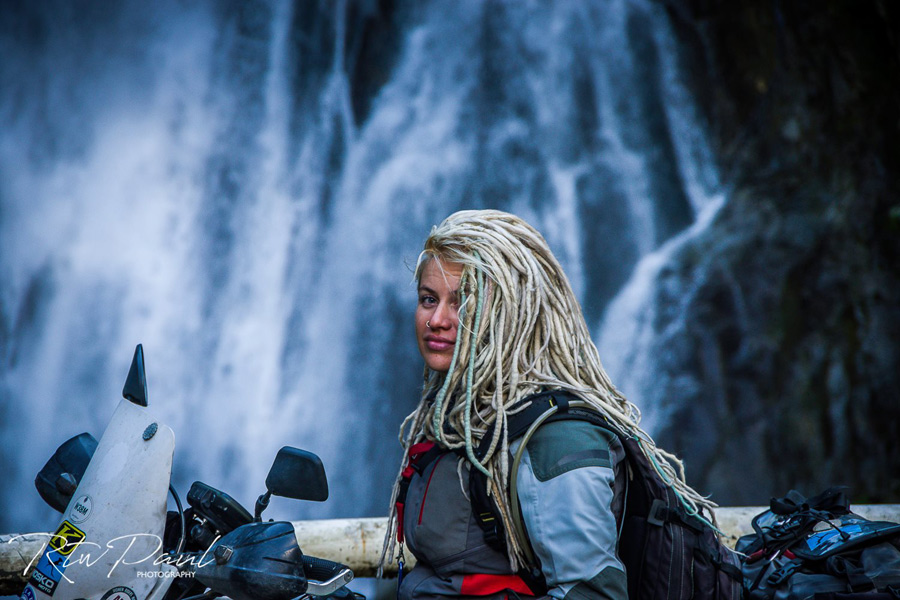
WF: What lessons you have learned from being on the road in South America?
EG: The biggest one is probably that there are a lot of versions of “normal” in the world, not just our Western “normal”. We are taught to attend school, graduate from a university, get a job, create a family, get a mortgage for a house and buy a car. And there’s nothing wrong with it; but there are so many more different ways to live. To us, it’s normal to have a 9-to-5 job, an apartment in the city and holidays in Spain or Thailand. But there are people whose normal is to dive for lobster from a dug-out canoe, or live in a hammock on a Caribbean island, or be a woman shaman who sings whales to shore, or raise llamas in the high Andes, or hunt flamingos in the Bolivian high plains… There are so many different ways to live – and they aren’t better or worse than our Western template. It’s wonderful to embrace this diversity and see how colourful and extraordinary we humans can be.
Lesson two is learning to roll with uncertainty and be more grateful and grounded in the present. Life is crazy: best laid out plans can suddenly change because of an accident or an illness, greatest ideas can come to nothing because of bad luck, and silliest undertakings can morph into dazzling careers because of being at the right place at the right time. For years, I tried to fit myself into a certain frame, be organized, be responsible, plan ahead, have a pension fund, pay attention to schedules and stick to manuals. No more. I’m not saying we should throw safety nets out the window and just live in perpetual chaos, but a little trust in the universe and the future, a little risk, a little boldness can bring a lot of joy and inner peace. And freedom.
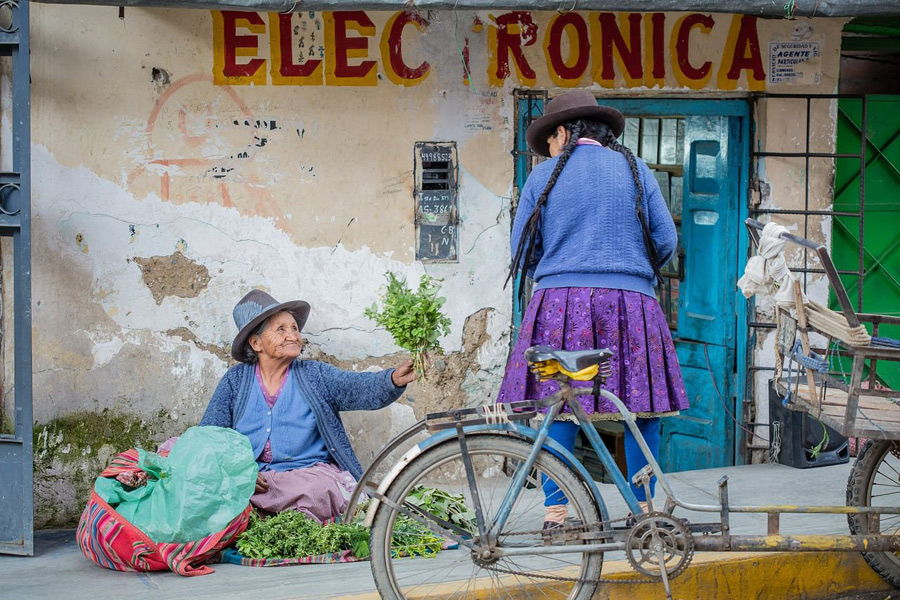
WF: What impression did you get of the women you’ve met during your travels?
EG: Women in South America are resilient and hardy. And so kind, despite all the hardships. Some of the women I met in Peru and Bolivia are incredibly strong. They have nothing and live in tiny shacks with four to six children. Their husbands aren’t always present, and they just keep at it, day in and day out – taking care of the kids, chickens, husbands, herds of llamas or fields of corn. They cook food and sell veggies and herbs at the market while soothing a crying baby and mending socks, or peeling potatoes. Their hands are calloused, but their hearts are enormous.
The wealthier, middle class women, especially in Colombia and Argentina, seemed very passionate to me. Passionate about everything: human rights and women’s rights, poverty, education, their own careers and ways to help others. They were so vibrant and determined and full of life, and they wanted to find their place in the world.
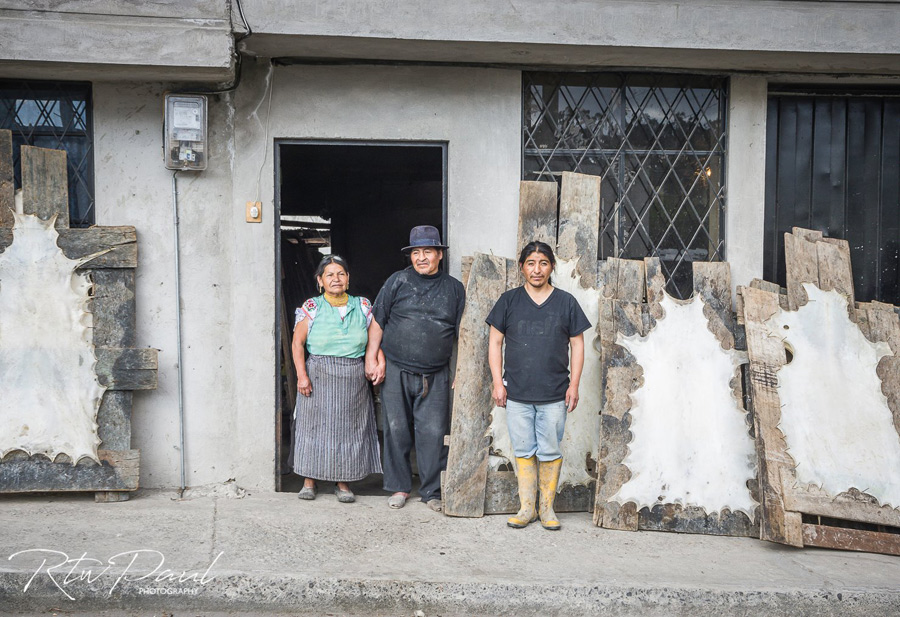
WF: In South America, to what extent do politics interfere with people’s lives? Can you give examples?
EG: Politics affects lives in some very big ways, like losing all of their life savings – or even their lives – especially in Venezuela because of the political chaos. I’ve met so many Venezuelan refugees in Colombia and Ecuador who went from a comfortable middle-class life to being homeless within a matter of months.
In Peru, there’s lots of heated debate over the government’s policies towards protecting the Amazon. On the one hand, poor Peruvians who mine gold illegally in the Amazon are in the wrong: they use mercury to separate the gold from the mud and debris, and the mercury ends up poisoning the rivers, animals and eventually, people. At the same time, the Peruvian government may sell mining rights to a big foreign company who will destroy much larger quantities of the forest. They drive indigenous tribes away, cutting down ancient, sacred trees – and get away with it. It’s no wonder Peruvians feel it’s an injustice and protest, often violently.
In Bolivia, indigenous people feel they finally have a voice of their own ever since they’ve elected Evo Morales, the first indigenous president. The rest of the world has some very conflicting opinions about Morales but for indigenous Bolivians, he symbolizes a renaissance. Under his leadership, people can embrace their roots and traditions as opposed to being treated like second class citizens by the former ruling elite of whites.
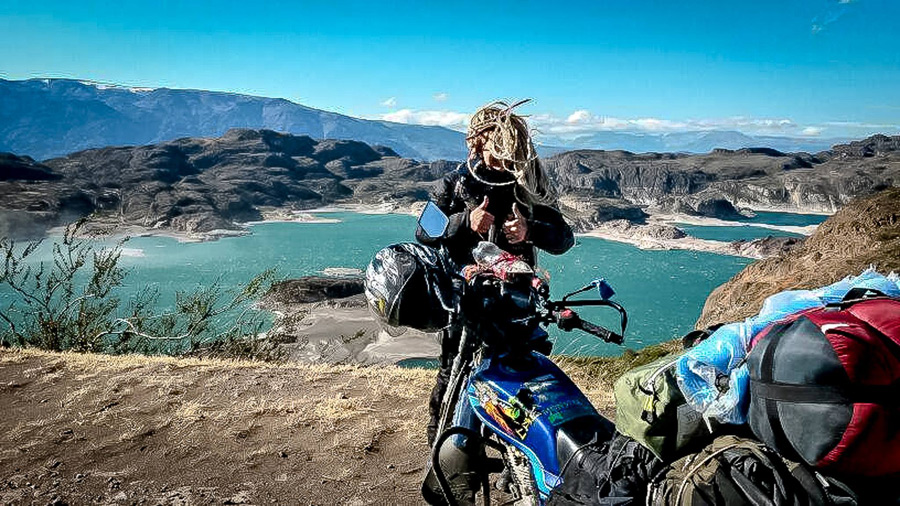
WF: How would you describe the difference between South America and other continents you have visited?
EG: It’s the New World. I’m a big fan of a Colombian writer Gabriel Garcia Marquez, known for his love of “magical realism” – a genre where the real and the imagined, the actual and the fantastical, merge seamlessly and effortlessly into a new kind of reality. To me, that’s what South America is all about. The awe-inspiring nature, from the high Andes into the deepest corners of the Amazon basin, the extraordinary people, the local colours and legends. Tt’s a completely different world.
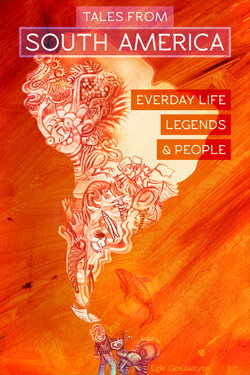 WF: Why should people support "Tales from South America"?
EG: To come along with me and experience what it’s like to sit in a kitchen of an old indigenous woman in the Andes. We listen to her stories and her recipes for a local medicinal brew that helps with arthritis, stomach pain and melancholy. Experience what it’s like to brace against the howling winds of Patagonia while riding horses with the gauchos. Or to see inside an old abandoned Chilean concentration camp in the Atacama Desert where the walls are covered with love notes and quotes from Pablo Neruda, because all the prisoners who were jailed there were young poets, students and artists… Join me to sit down and have a chat with an old fisherman on the Caribbean cost of Colombia, as the sun is setting.
WF: How does your past relate to your interest in people’s stories?
EG: When I was a kid, Lithuania was still occupied by the Soviets, which meant we couldn’t leave our side of the Iron Curtain. My dad was always passionate about travels and adventures but, unable to go out into the world, he taught me to travel in books. Together, we set out on expeditions along the Silk Road, tracing the route with a pencil in an old atlas. We went on dangerous sea voyages with Jules Verne, followed Amundsen in the Arctic, and travelled with Livingstone in Africa… oh how far we would go!
Having the freedom to travel now - I am so grateful for it. I am also very acutely aware how lucky I am. I happen to hold the right passport, which opens borders for me. So many people in this world have the wrong passport - through no fault of their own, purely through chance. Lots of people in the world don’t have enough money for the next meal, let alone travel.
I feel like by telling those people’s stories, in a way, I’m enabling them to make their mark in this world. My indigenous Andean woman may never leave her little village… But now, she will forever live in printed letters, and who knows, maybe her story will inspire someone else to brave the road – or at least, to imagine a different world out there?