 Sticky logo
 Search


We all do it. We get comfortable riding what and how we ride. Why bother stretching ourselves? Why try something different, more challenging, and unusual? Because having a student mindset focused on learning and growing will make you a safer rider. And, it’s downright fun!
Riding a motorcycle is a complex process. There’s a lot going on. That’s why we train and develop “muscle memory.” Muscle memory, the ability to repeat a procedure or movement without conscious thought, is great. Right? Well, yes and no.
Riding habitually “without conscious thought” can get us in trouble. It’s easy to get dulled into mindless riding. We form stagnant habits, don’t pay attention, and then disaster strikes.
There are three keys to having a student mindset:
- Curiosity and awareness
- Willingness to be uncomfortable
- Feedback
It’s essential that we cultivate a mindset of curiosity. This means opening to new, different, and unfamiliar ideas. It means being mindful, aware, and present to our habits, our muscle memory.
In his book The Power of Habit, Charles Duhigg states a habit loop consists of three steps:
- Trigger
- Behavior
- Reward
A trigger may be a “curve on the road.” Our reflex behavior may be to slow down, ride the smooth flat line, counterbalance, coast through the turn, and accelerate gently on exit. The reward is successfully navigating the corner.
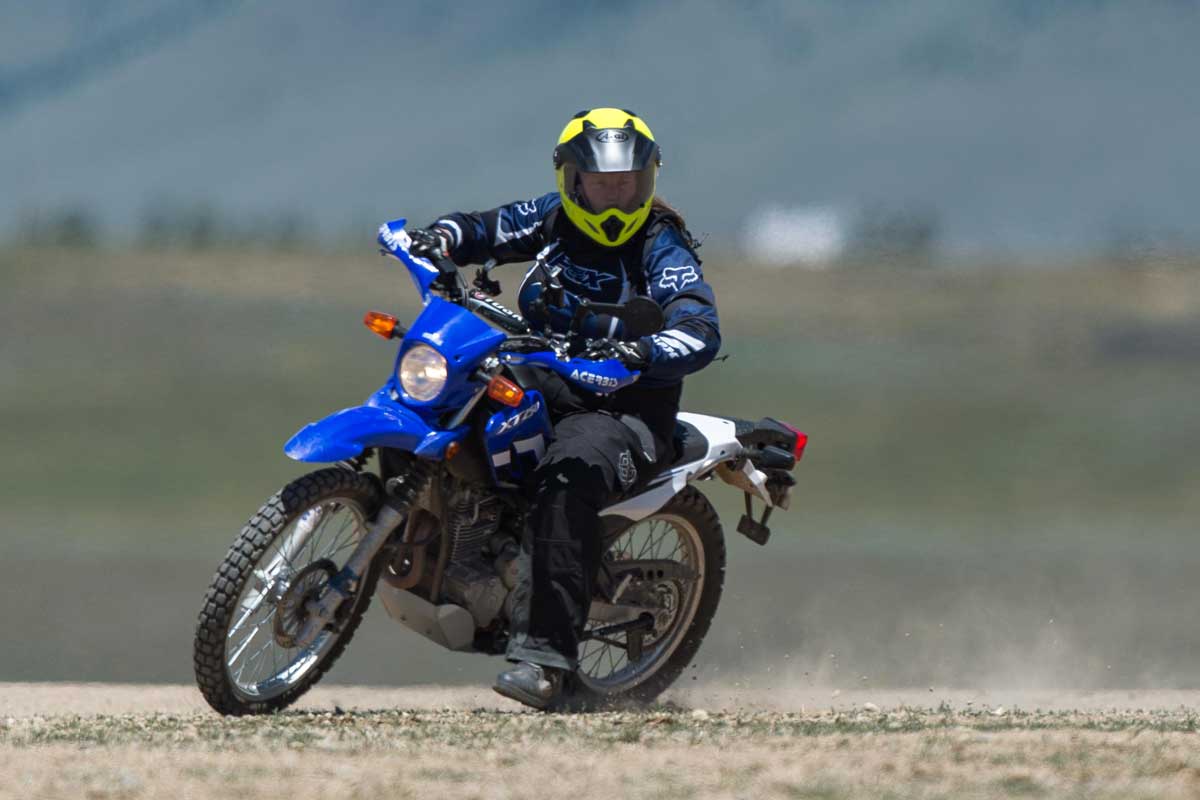
But is there another, perhaps a better, way? There are many cornering techniques: brake sliding, squaring the turn, railing the berm, or even (gasp) applying the front brake in the turn while accelerating, etc. Consider a pie with one slice representing “What We Know,” another slice of “What We Know We Don’t Know,” and the rest of the pie is “What We Don’t Know We Don’t Know.” This is an immense field of opportunity! Being mindful and curious encourages us to watch others, ask questions, and take classes in both familiar and unfamiliar riding disciplines. When we become curious, we learn and grow.
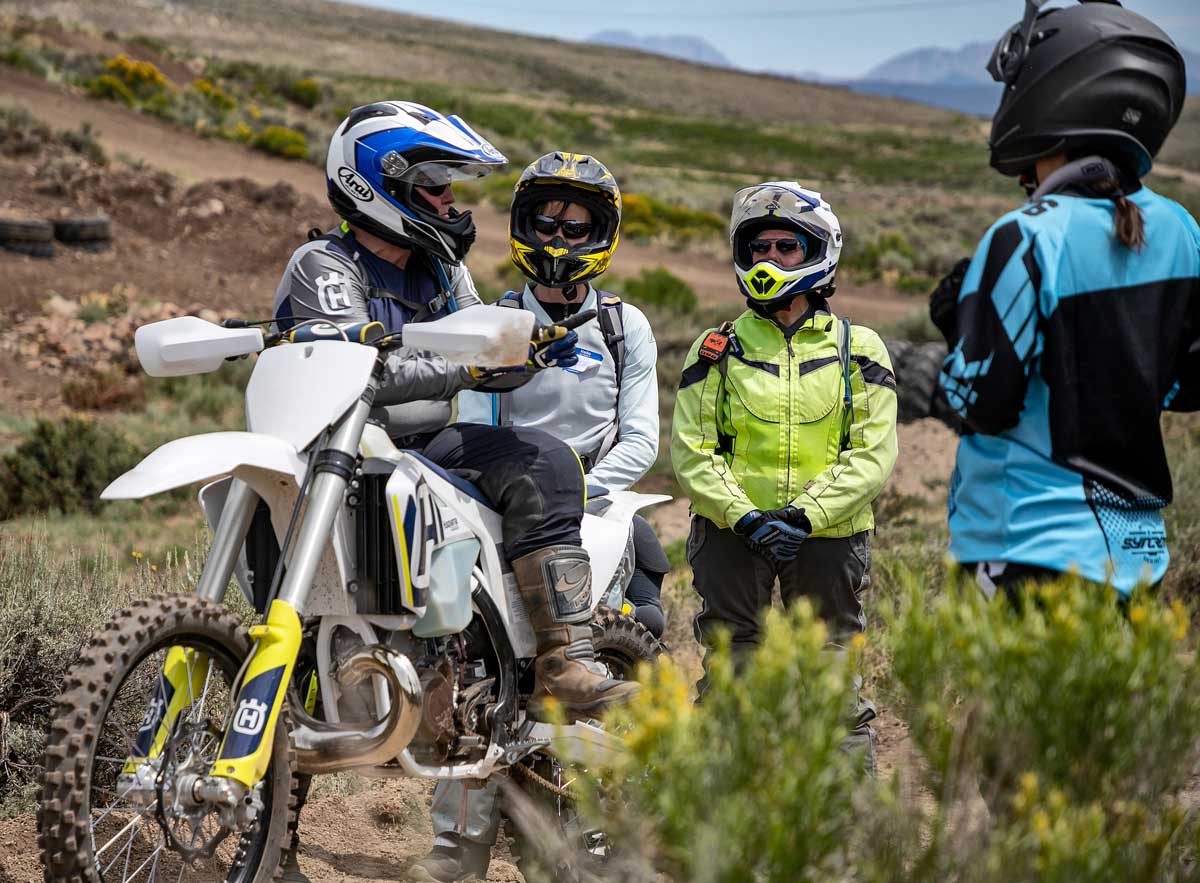
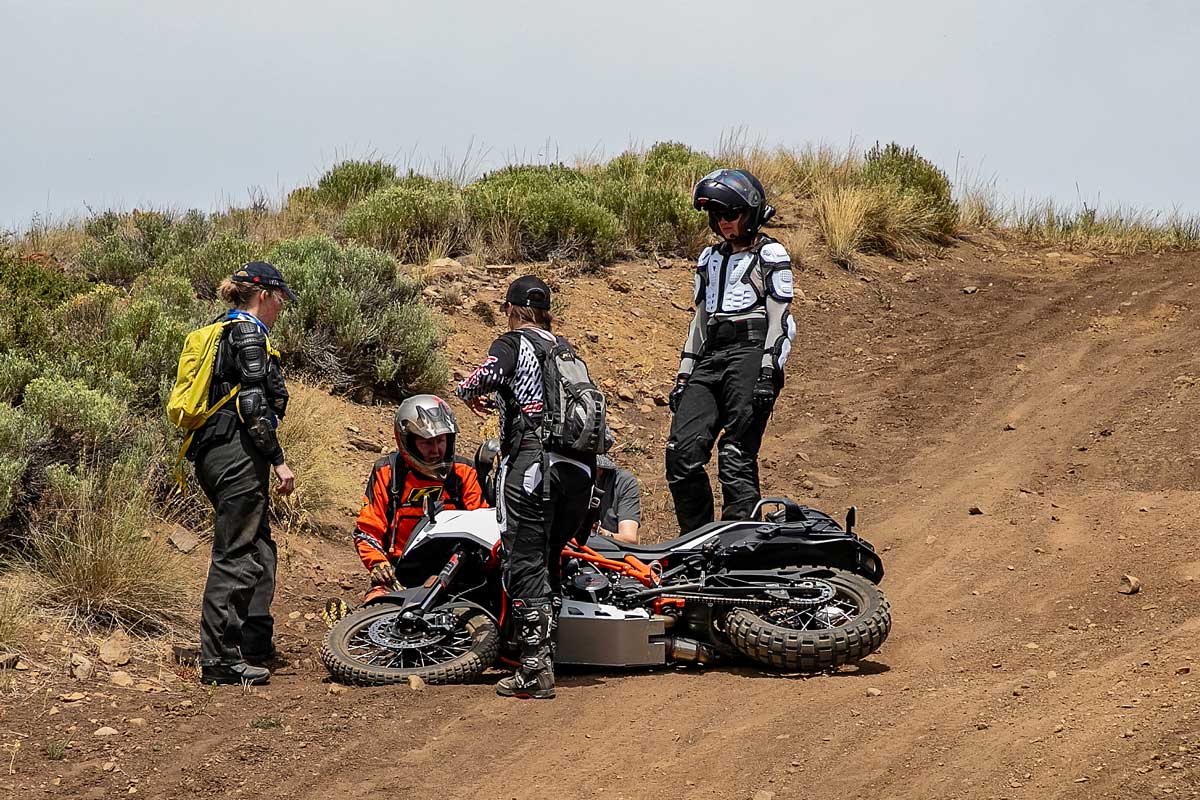
In order to have a student mindset we must get comfortable with being uncomfortable. Patience helps, too. Any time we learn something new, it feels awkward. It takes time to retrain our responses. Often, we “fail down” and want to pick ourselves up and go back to “doing what worked.” Having the commitment and patience to be uncomfortable while learning and developing new habits is imperative. Charles Duhigg found we never forget old habits, but they can be changed. He recommends awareness, practice, celebrating small wins, and writing down your plan, reinforcing the new. Interestingly, Duhigg discovered for the new behavior to stick, you must believe it will succeed. If we do not believe in the new skill, in the heat of the moment we will revert to old habits.
This all sounds great, right? But how do we evaluate what way is better? The old or the new?
What is the best technique for turning? The answer to that, and to many questions, is, “It depends.” The key is to know “what” it depends upon. This is why feedback is critical.
Cathy Hawk, bestselling author of Get Clarity; The Lights-On Guide to Manifesting Success in Life, makes “tools” to help people succeed. Former NBA coach, Phil Jackson, used her Get Clarity “Feedback Journal” with his staff and athletes while coaching NBA teams to 11 championships.
I’ve been using this “Feedback Journal” personally and professionally since 2017. It’s simple and powerful. There are six questions:
1. What’s different?
“What’s different?” is all about getting us to pay attention! Training our brains to notice the little and the big things. Is the terrain hard-pack, sandy, rutted, smooth? Am I riding a lightweight dirt bike or a fully loaded adventure bike? What’s different?
2. What worked?
“What worked?” We learn from our successes. Make note of what worked and celebrate it!
3. What didn’t work?
“What didn’t work?” We learn from our failures. Make note of what didn’t work and celebrate it!
4. What is the state of my Body? Mind? Spirit?
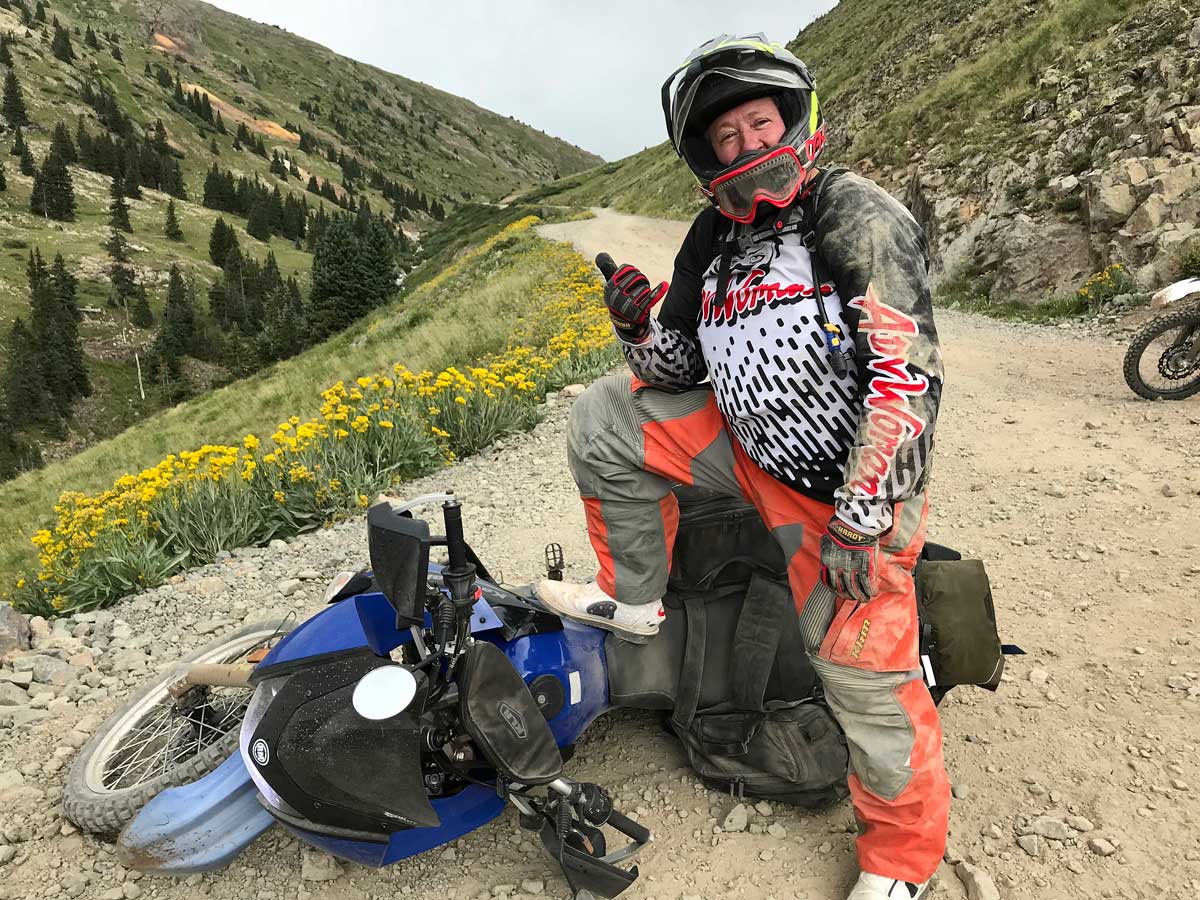
“What is the state of my Body? Mind? Spirit?” What if your body is tired because you’re riding at elevation and did not sleep well? You might be mentally alert and in great spirits, but your physical reactions are slower and weaker. Maybe your body feels good and you’re in great spirits, but your monkey mind is running in circles thinking about other things? Perhaps your body feels strong, your mind is alert and attentive, but you’re just feeling out of sorts? Is it possible that will affect your riding? Individual consideration of Body, Mind, and Spirit helps us to evaluate why things worked or did not work.
5. What am I grateful for?
“What am I grateful for?” The human brain has a tendency toward negativity. The quickest route to positivity is gratitude! List at least five things you’re grateful for. It can be as simple as, “I fell, but I’m okay and I had a friend to help me pick the bike up.” Or, “I’m grateful for this beautiful day!”
6. What is my intention?
“What is my intention?” For me, this is the most important question. It’s about riding mindfully with intentionality rather than simply bouncing around like a pinball. All competitive riders have a “plan.” Setting an intention is the macro theme of your plan. Your intention may simply be to “ride safely and have fun.” It may be to “clear that log obstacle,” or “conquer that loose, steep climb.” It’s okay for your intention to change while riding. Starting out energized, riding aggressively in the morning may shift to slowing down and relaxing in the afternoon. After a crash, I sometimes ask riders what their intention was. I get some blank stares.
As you can see, the feedback journal allows you to record and reflect on your personal experience. This helps you to evaluate how to “ride your own ride.” I coach riders to save their “Feedback Journals.” Then if you’re taking a break from riding, when you start back up, refer to your “Feedback Journal” to help get your groove back.
Now get out there and try something new! Your skills will improve. You’ll be safer. And you’ll have a lot of fun!

 Pat Jacquesis a retired motocross racer, a coach, keynote speaker, and an author. She is recognized for “thinking beyond the box,” innovative, creative coaching methods. Her mission is to empower through off road motorcycling. Monster Energy Supercross describes Pat as “The true OG of living Toyota USA Makeup2Mud.” She has been honored by American Motorcycle Association Magazine and received the Michelin “Total Performance Award” for skilled riding, taking a stand, being an ambassador for the sport, and staying active in her community. Come join Pat at ADVWoman events, tours, teaching at rallies across the U.S., and receive private coaching. ADVWoman.com