 Sticky logo
 Search


Accidents are a possibility (but not an inevitability) when you ride motorcycles. You may never have an accident, but if you ride with others, something might happen to a fellow rider. It goes without saying you should be familiar with basic first aid, and have a first aid kit packed away where you can quickly get to it. But, before you even think about first aid, or even reach for a Band-Aid, let’s take a step back and looks at one possible (and typical) accident scenario:
All winter you and two of your friends had planned this adventure. It’s your third day out and the others are somewhere ahead of you. Your bike is running perfectly and you’re enjoying the challenging mix of off-road and pavement riding.
As you approach a corner, you’re shocked to see one motorcycle down, off the rocky shoulder of the road. You brake rapidly and stop next to the downed bike. It’s Bill’s bike, the rear wheel still spinning as the motor chugs fitfully.
Bill’s lying on his back, right next to his bike, and he isn’t moving.
Alex, your other friend, comes back up around the curve. He brakes to a halt. “What happened?” he yells. “We were going a little fast, but Bill was right behind me. I looked in the mirror and he was gone. Is he okay?”
As he’s asking this question, and while you’re still trying to make sense of what’s happening, a Jeep comes around the corner and almost hits the two of you on the road. The Jeep swerves, crunches to a halt and the occupants emerge and jog towards you. Alex grabs your arm. “What’s wrong with Bill? C’mon, help him!”
How did everything go so wrong? You remember promising Bill’s girlfriend that nothing would happen, and no one would get hurt on this trip. This is, unfortunately, the way a motorcycle accident often plays out, hammering you with a jarring, stroboscopic series of events. A fellow rider is down and you don’t know how badly injured he is. Your friend’s shouting isn’t helping, and to make things worse, you almost got hit by a car while still trying to process what’s happening.
You didn’t ask for this responsibility, but it looks like you’re in charge.
Before turning off your motor, you have to ask yourself one quick question: Who’s the most important person in this scene? It’s Bill, obviously. He’s wrecked his bike, he’s on the ground and not moving. But no, Bill’s not the most important person—the most important person is you.
That’s right—you. Not Bill, no matter how badly hurt he may be. If you can’t focus on making sure the accident scene is safe, if you can’t prevent anyone else, including you, from getting hurt, then you aren’t helping anyone, in fact, you just may be making things worse. If you get hit by the next vehicle that speeds through that corner, there are two (or more) victims, and you subsequently won’t be in any position to help your friend.
The very first thing to do is to make sure the scene is safe. This only takes seconds. What threats are there? Other vehicles? Dangerous road conditions? Look around you. In this case, oncoming traffic on this blind corner is an obvious threat.
Dismount from your bike, grabbing your first aid kit from your tank bag and kneel down by Bill, hitting the kill switch on Bill’s bike (a spinning wheel and chain can easily mangle someone’s hand). You notice Bill’s chest rise and fall… good, he’s breathing.
Tell Alex to keep his hi-visibility jacket on, go to where the corner of the road begins, park his bike on the shoulder, and signal oncoming vehicles to slow down. Luckily, you have additional helpers: the two people in the car that stopped. Ask one of them to go to the other end of that curve to warn vehicles coming from that direction. Tell the other person to stay with you and get out her cellphone, see if she is getting a signal, and stand by to call 911 (for this scenario let’s assume you’re somewhere with cellphone coverage and 911 service).
Both approaches to the corner have been addressed. The motorcycle’s engine is turned off. Finally… it seems like valuable minutes have been lost, but actually it’s taken only seconds to make the scene safe… now, you, the most important person here, can take care of your friend…
Side bar:
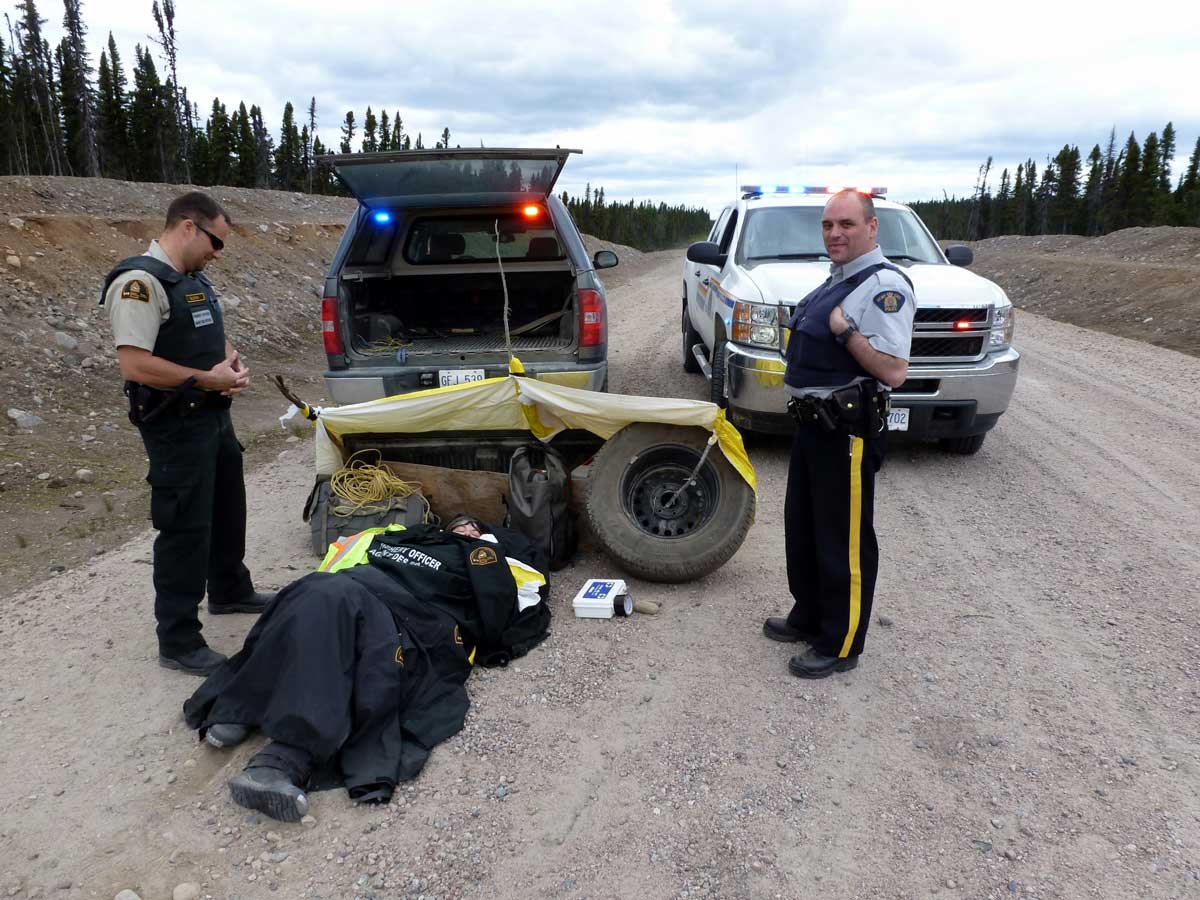
Reading about how to handle the scene of a motorcycle accident is the first step in preparing for such an eventuality, but as with first aid, browsing through a few bullet points isn’t the same as hands-on practice of what you would do when a fellow rider is injured.
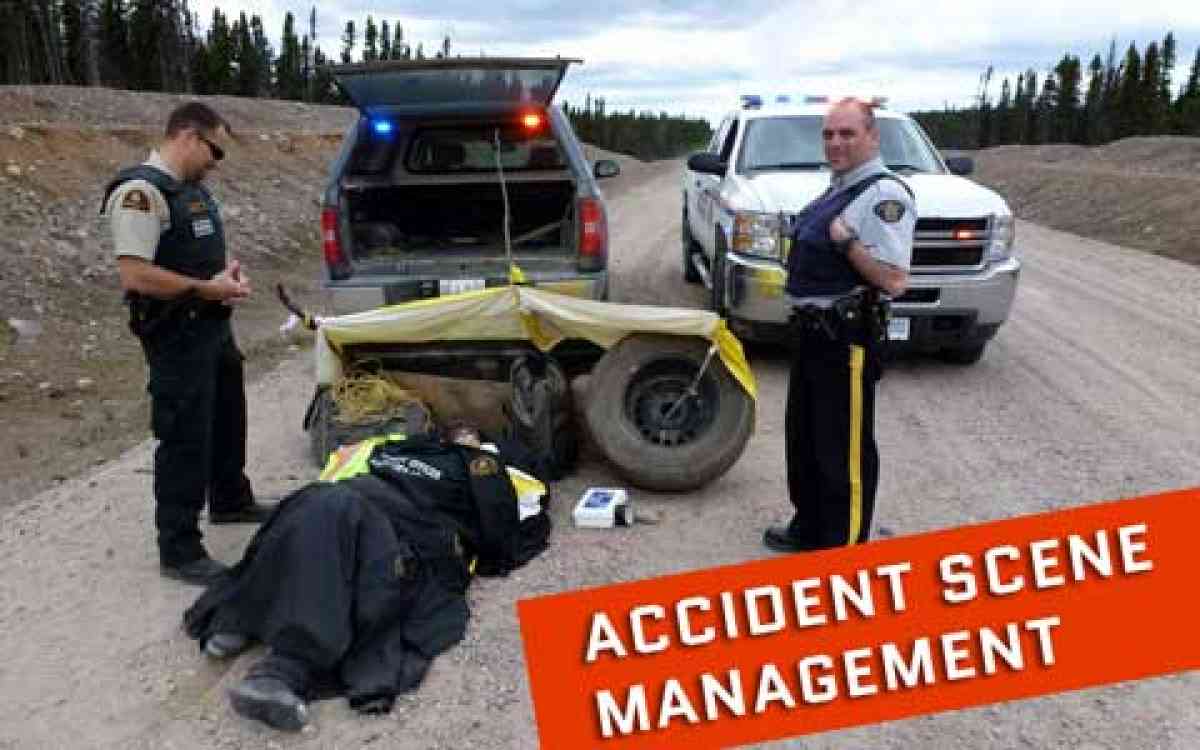
Before you buy that next farkle for your bike, take a basic first aid class. It doesn’t really matter where you take it: Red Cross, local fire department, community college… just do it. In addition to signing up for a first aid class, think about taking a dedicated class just for motorcycle accident scene management.
The appropriately named Accident Scene Management, Inc. (ASMI AccidentScene.org 877-411-8551), based in Big Bend, Wisconsin, holds classes throughout the United States in motorcycle-specific accident scene training. ASMI combines classroom sessions with realistic accident scenario training, complete with downed motorcycles and flesh-and-blood “victims.”
As Vicki Sanfelipo, founder of ASMI says, “Although many of your fellow students may be Harley/cruiser riders, the principles of what to do at the scene of a motorcycle accident are the same whether the accident occurs on a busy highway with a large group of riders, or on a dirt road with two riders.”