 Sticky logo
 Search


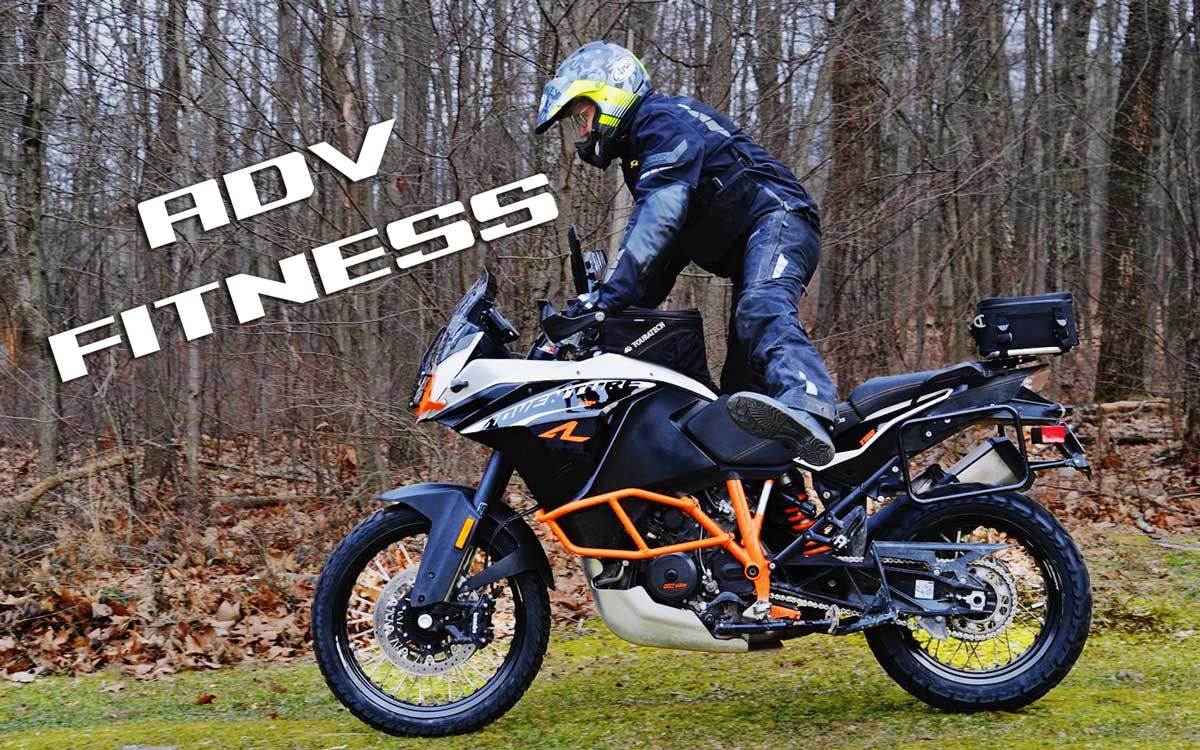
The dopamine hit of adventure motorcycling is like no other, prompting many to pursue vast goals such as riding safer, riding longer, and, for a few, riding more aggressively.
Some ADV riders crave jumping stumps like Toni Bou. Others are on different missions, such as traveling through Africa safely or learning how to take on flat gravel roads with street-biased tires.
Regardless of the mission, proper physical and mental fitness are key to achieving these goals. That’s where “daydreaming fitness” surfaces.
But for now, let’s forget about the daydreaming portion. So, where to begin?
In performance-based riding, 80 percent of the game is mental and 20 percent physical. Many of you know a few, um, larger riders that can outride many off- and on-road.
The remaining typical types need to stay fit to keep the riding safer and our bodies healthier overall (read: more fitness equals less crashing or quicker recovery from crashing, and more miles without pain).
Following are some favorite simple and fun fit regimes, derived from more than two decades of crashing and professional schooling across multiple riding disciplines.
• Stationary Exercise Bike or Bicycle
Cycling is low impact and easy on the knees—something most ADV motorcyclists can appreciate.
In 2013 I suffered a gnarly crash that resulted in 23 “foreign” objects under my kneecap and required 93 stitches. Once healed, jogging was on the list. But the impact wasn’t too good, and the knee pain soared to new levels.
Eric Bostrom told me to start cycling, and it’d provide the cardio needed and help rehabilitate the knee issues. I quickly fell for a stationary bicycle with occasional treks on a standard road bicycle. I haven’t jogged since.
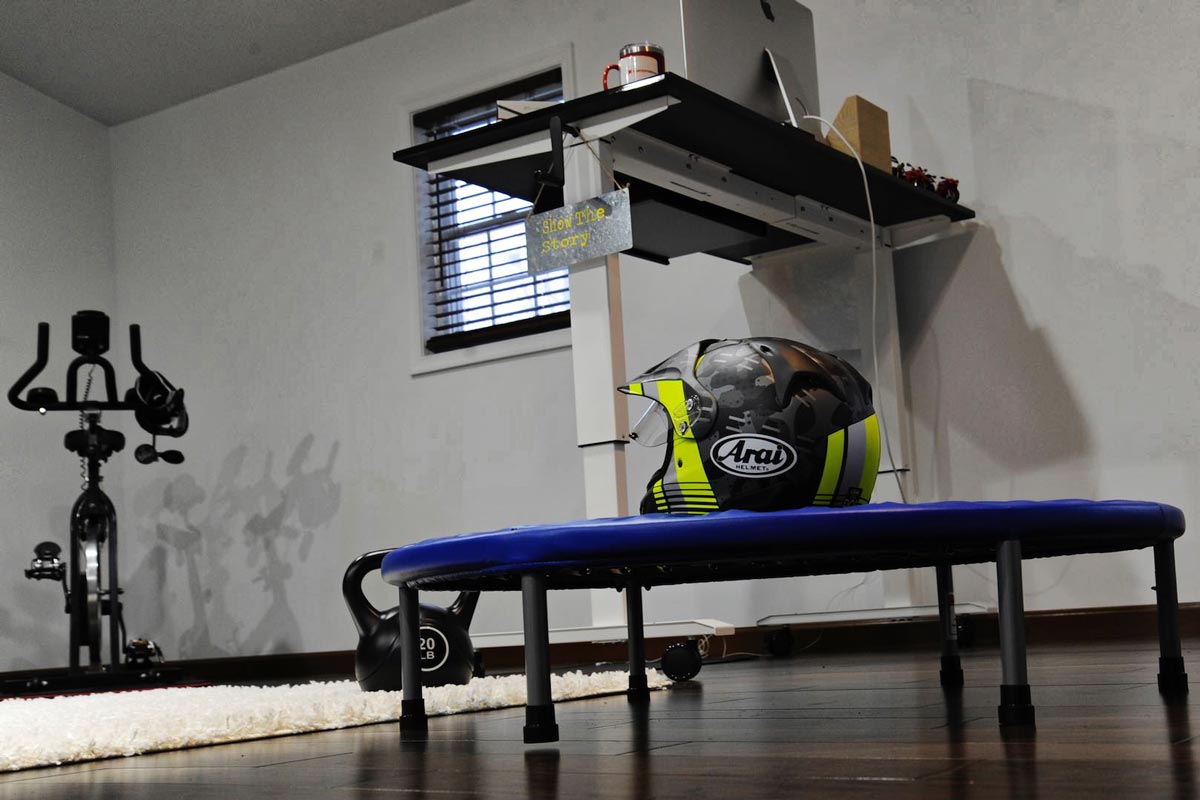
Whether stationary or traditionally, cycling will help you build core and leg strength, along with healthy cardio that’s needed for endurance for long ADV tours.
With that said, make sure your bike fits you. Many injuries occur due to the wrong sized or unadjusted bike.
Another way to get some cycling in daily? Do it while you work.
Mini floor cycling pedals are available for underneath the desk. I’ve only used a stand-up desk since 2016 and have modified a stationary cycle with removable handlebars to at-work workout needs. When you have extended periods of administrative, aka BS, work, why not get an hour or two of pedaling?
• Mini Trampoline
Various studies have shown that trampolining not only gives you a cardio workout but also relieves stress and builds balance.
Keep one nearby and use it daily; it’ll help keep the energy levels high and the focus sharp.
Two minutes here, 10 minutes there, whenever you have a moment— you’ll notice the benefits within a few days, and you’ll surely be more energetic to ride longer and safer.
And again, like a stationary bicycle, the impact on the knees is minimal.
• Kettlebell
A kettlebell is like a gym all in itself and can be used for a quick core, upper body, leg, or bicep workout.
Like the mini trampoline, keep one nearby.
Favorite daily exercises are the kettlebell swing and a one-armed kettlebell swing. Men’s Health has a great article that explains the benefits of the kettlebell, along with some effective exercises that will keep you in shape for your next ADV trip.
• Balance Training On and Off the Bike
Besides physical strength, you need balance and the ability to use all four limbs together in unison.
Balance training is simple, and you can quickly add it to your everyday regimen of taking a shower and brushing your teeth.
When you shower, stand on one leg, swapping between the other for even amounts of time.
Do the same while brushing your teeth. Two minutes means a minute on each leg, every day, morning, and night. Pick a focus spot and stare at it— balancing is initially easier when you have a sharp focus.
Do some exercises while one leg is in the air for an added benefit. Other balance practices are getting up and down from a chair without using your hands and practicing yoga or tai chi. I also do this periodically while working at the stand-up desk daily.
Want a true challenge? Close your eyes and try standing on one leg for extended periods (without getting hurt, of course).
Couple this with balance training on your ADV motorcycle.
I have 2x4s sporadically placed around my backyard and along some trails I ride, and practice riding on them standing up, sitting down, then standing with my right foot off the peg, left foot off, then left hand off the controls, and right hand off while clutching in to let the bike coast.
Think like a kid, and play. This is a lesson I learned from Nick Ienatsch during a Yamaha Champions Riding School. Ientasch had his students simply ride around the parking lot, stop with one foot on the peg, kick a garbage can, ride with one hand while standing up, etc.
This helps strengthen balance and mental muscles—two things that can always benefit ADV riders.
• Take Your Bike for a Walk
Another simple hack that helps with both physical fitness and balance?
Take your bike for a walk.
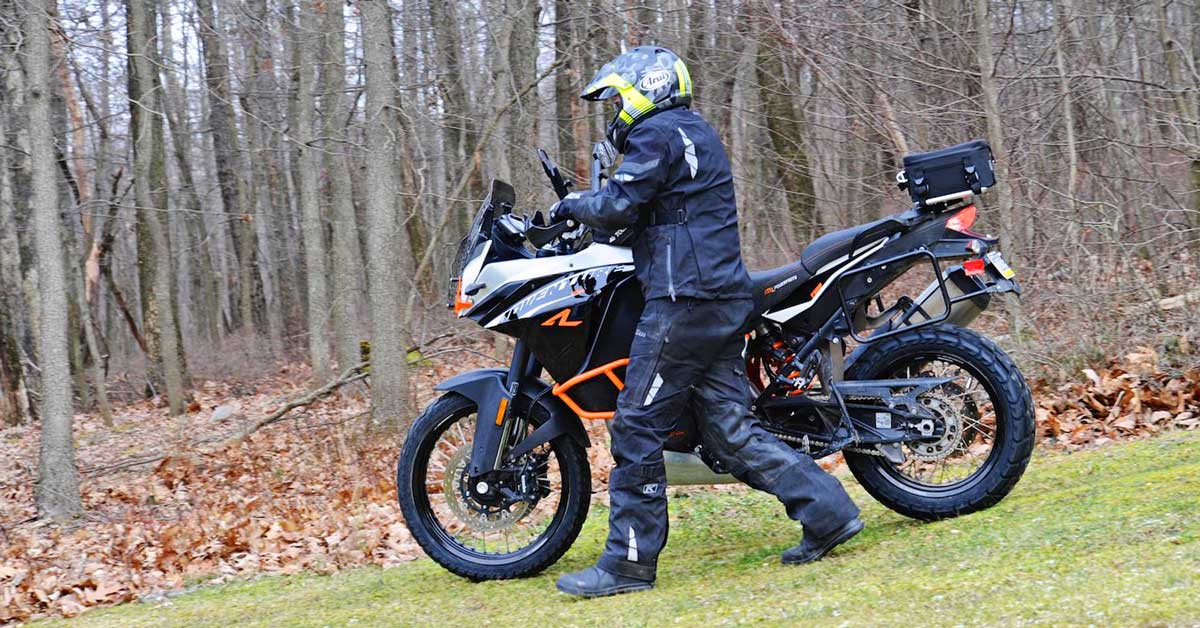
When I train new riders how to use a clutch, I have them walk alongside the left of the motorcycle using only the clutch to get it moving.
This helps them get a feel of the clutch quickly on flat ground. The next step is to introduce inclines that require proper throttle and clutch use. This helps riders get a feeling of the engine character, also.
Every time I test a new motorcycle, I do this. And when I’m practicing my ADV riding regime, I sometimes begin by walking my KTM 1190 Adventure R around my house, the land featuring many inclines and declines that forces me to focus. This practice also helps organize the mind and push it into riding mode, something most riders do subconsciously during the initial moments of a ride on the streets where much danger is present.
Before longer rides, push your bike up some hills to get an added workout and the bursts of subsequent energy both mentally and physically.
• Visualize The Ride And Improve
When achieving ADV riding goals, 80 percent of the game is mental, and 20 percent is physical.
Notice all of the above are fit regimes. So how about the vital 80-percent of the mental game?
This is where visualization comes in, which complements all of the physical fit regimes above.
Let me divert a bit.
Shortly after launching my first business in early 2017, I became obsessed with neuroplasticity. In simplest terms, neuroplasticity is the act of our brains rewiring themselves, forming new connections and pathways based on interactions with our environment.
Mirror neuron thinking argues that brains rewire themselves to think like those around us. I truly embrace this argument because I experienced it over and over. For example, I quit hanging out with negative people when I wanted to get away from negativity. When I wanted to learn how to run a business successfully, I studied and hung out with reputable business leaders.
Same with motorcycles. When I wanted to learn how to ride fast and safe, I tapped into the best, which included training with some of the top names in the game, constantly reading/studying videos, and practicing the techniques relentlessly.
Mirror neurons also arguably work when you literally imagine yourself accomplishing something. I’m far from a psychologist or anything close. I just know what works from experience, and before I ride anywhere or tackle a riding obstacle or trip, I picture myself successfully accomplishing that feat.
And it always works. I think it helps suppress the fear or thought of crashing. Who knows—but it certainly works.
And the best time to practice visualization of being the best rider possible, whether wheeling over a log on a big adventure bike or riding 1000 miles straight on an F 850 GS? While completing the physical regimes above.
The more you visualize it, the more you’ll mentally be prepared.
Whether your goal is dominating a single track on a big ADV bike or riding across Africa in record time, or taking on that next creek crossing, try visualizing the actual act.
First, picture yourself on the bike from a third-person perspective, then yourself riding. Imagine the wind, the feel of the controls, your knees gripping the tank, the sound of the engine.
The best time to complete this visualization? While completing the physical training above. I refer to this as “daydreaming fitness.” Regardless of what it’s called, try it.
And expect some weird looks along the way. Adventure motorcyclists think differently, so there’s nothing wrong with getting fit differently.
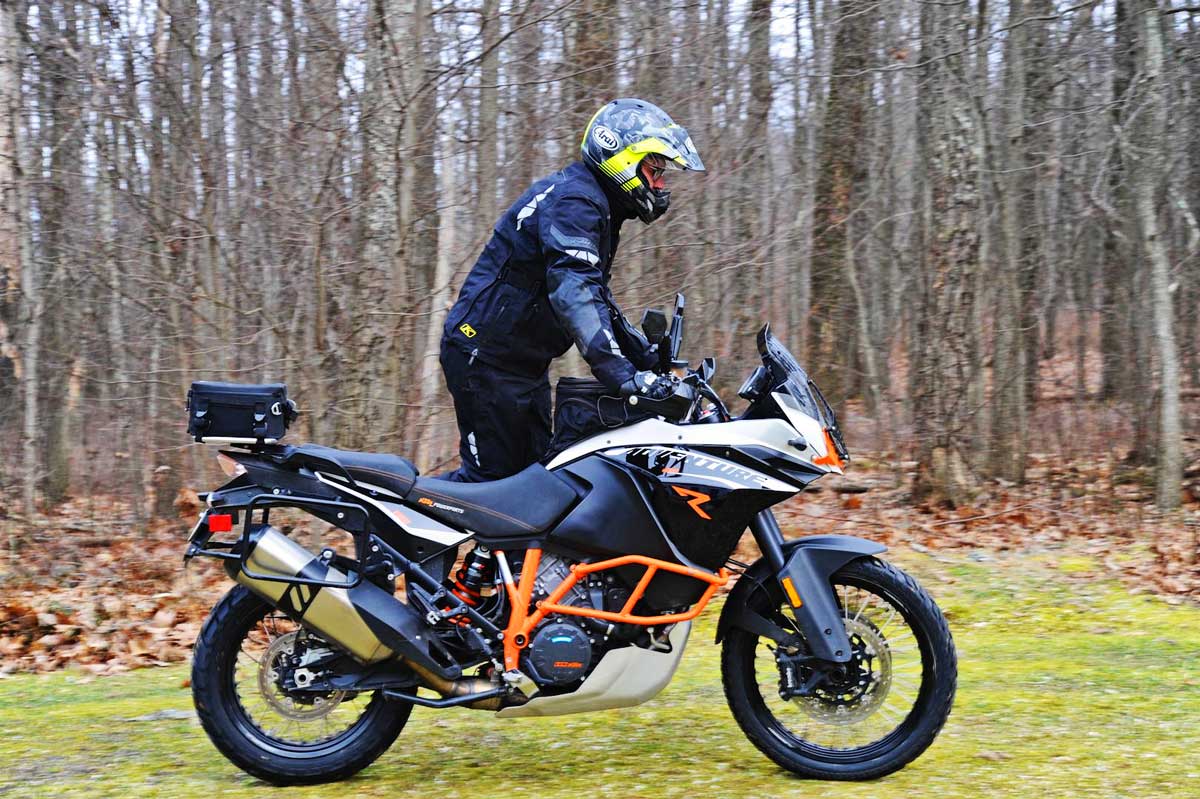
ADV motorcyclists are passionate and constantly on a mission to build riding skills. Being physically and mentally fit will help you develop your riding skills much faster.
The above fit regimes can help keep you fit and strengthen your focus. And the best part? These regimes are simple to implement into your everyday lifestyle, and you’ll have some fun doing them.