 Sticky logo
 Search


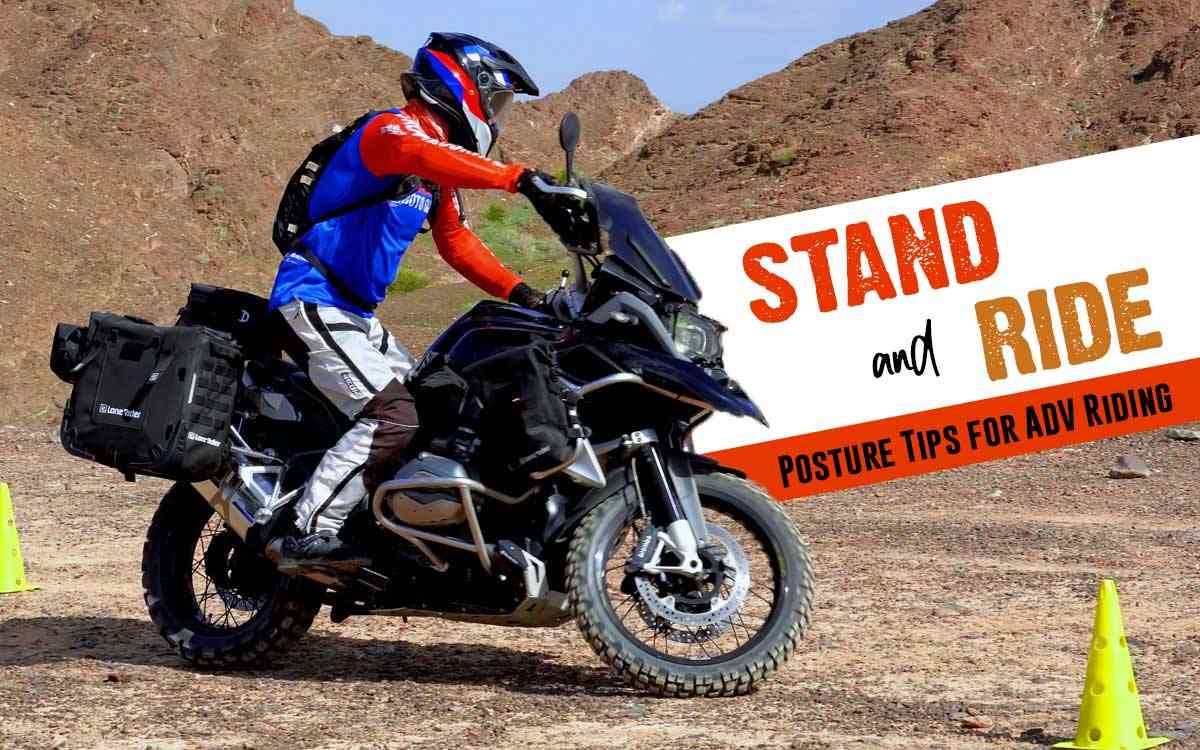
There is nothing quite like riding an off-road trail knowing that you are in complete control of your motorcycle. That’s the power of dialing in the right standing posture—a skill that can supercharge bike control and efficiency.
When you’re riding off-road, you must know when to stand on your motorcycle’s footpegs. Standing can provide better control, stability, and visibility—but timing is key.
When to consider standing:
• Over rough terrain—when bumps, ruts, or rocks dominate the terrain, standing allows our legs to act as natural shock absorbers, while letting the bike move more freely beneath you.
• During technical maneuvers—tight cornering, ascending, and descending steep slopes often require precise control and balance. Standing can provide both. It enables the shifting of one’s body weight more effectively, to counterbalance or gain more traction as needed.
Remember, standing is about maintaining an active, flexible posture that allows for adaptation to changing terrain and conditions. Everything from the ankles to knees and hips will assist the bike’s suspension in absorbing shocks and bumps. The right standing position helps to keep the motorcycle on-line and maintain momentum.
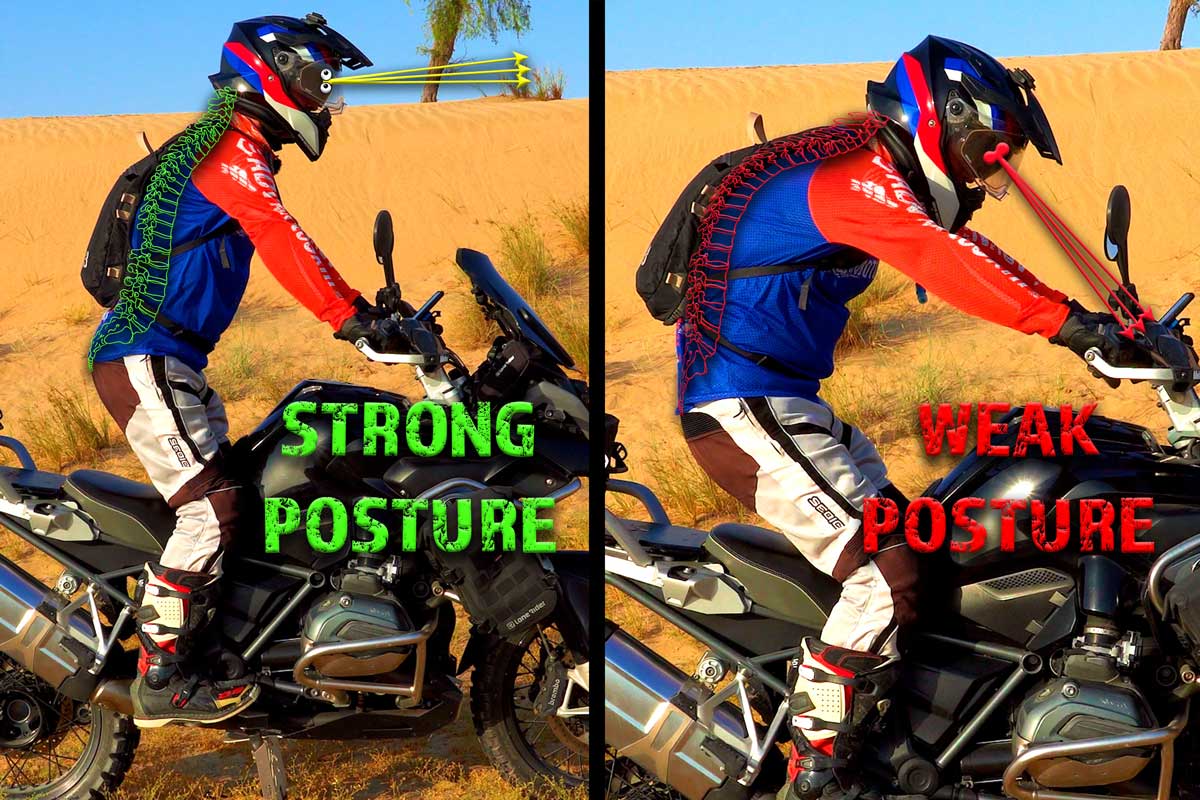
• Engaging Core Muscles
Remember, activating your core is crucial. This often involves a gentle shift in your hips, allowing the lower back to adopt a neutral position while maintaining an upright chest. Doing so provides strength and stability on the bike, providing a stronger stance that’s less prone to collapsing.
• Perfecting Your Feet Positions
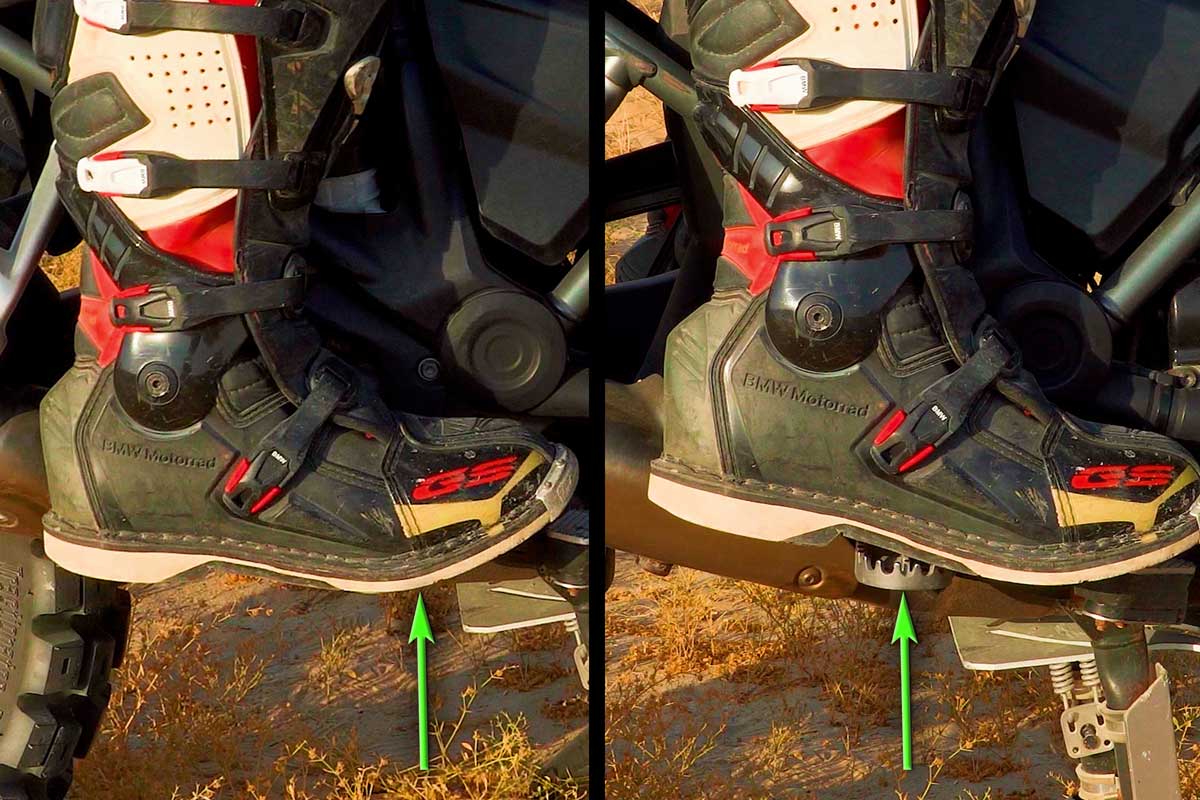
A vital aspect of the standing position is foot placement. Ideal positioning is feet on the pegs, somewhere between the ball to the mid-arch. Contrary to popular belief, we don’t always have to position the ball of our feet on the footpegs. Yes, the ball of the foot does offer the best range of motion for ankles to absorb some of the bumps and shocks. However, when riding with narrow footpegs, bouncing around on the balls of the feet, there’s a greater risk of sliding off. So, experiment with foot placement closer to the mid-arch, especially when heavy braking or lifting of the front end is required.
• Why Elbow Position Matters
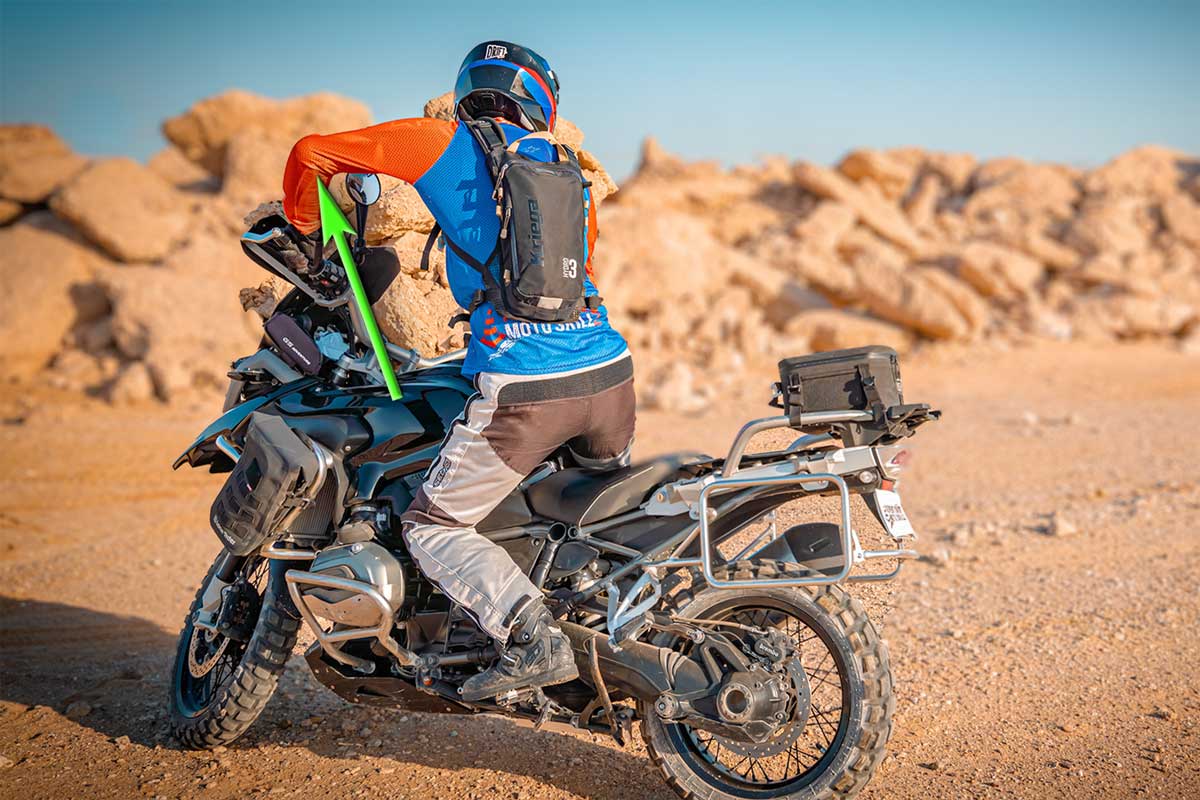
When it comes to upper body positioning, elbow placement plays a big role in maintaining balance and control. Keeping your elbows wide allows greater freedom to move from side to side, helping to center your body weight over the pegs. Such posture also puts you in a stronger position to react quickly for urgent braking or if the front end of the bike hits an obstacle.
• Leaning Forward for Standing Acceleration
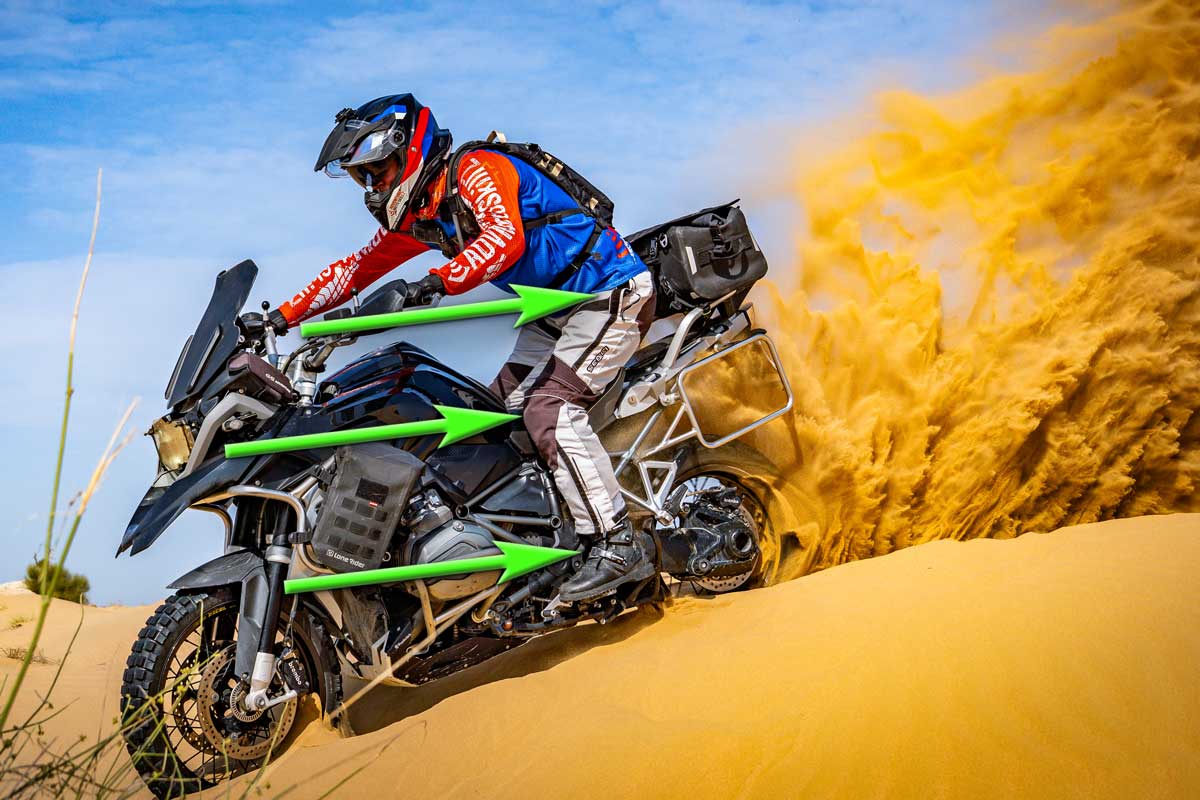
Just before accelerating when standing, lean slightly forward. This position does two things: First, it puts more weight on the front tire for better traction. Second, it prevents us from being thrown backward and inadvertently pulling on the handlebars.
* * *
By focusing on the correct standing posture, we set the stage for a more comfortable and safer ride. The body plays a crucial role in aiding the motorcycle’s suspension, smoothing out bumps, and reacting quickly if it unexpectedly veers offline due to a loss of traction. As these basics improve, more advanced techniques, like drifting the rear wheel or lifting the front tire become easier to learn. Remember, practice matters, and the goal is to train until these postures feel natural and instinctive, allowing you to ride with confidence.
{youtube}7Ep1UqOlgss{/youtube}
 ADVMotoSkillZ coach Mike Carroll is an off-road motorcycling enthusiast and instructor. Once a Harley rider, Mike now thrives on off-road adventures with his BMW R1200GS. He is a certified Enduro Action Team Off-Road Instructor and channels his passion into ADVMotoSkillZ. AdvMotoSkills.com