 Sticky logo
 Search


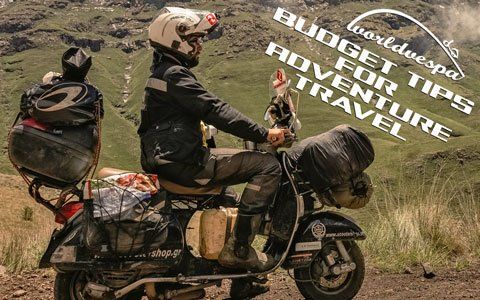
I’m sure you’ve already read hundreds of tips about how to save money on travel. Let’s forgo the obvious and those already covered and get straight into a few handy ideas that are not so well known.
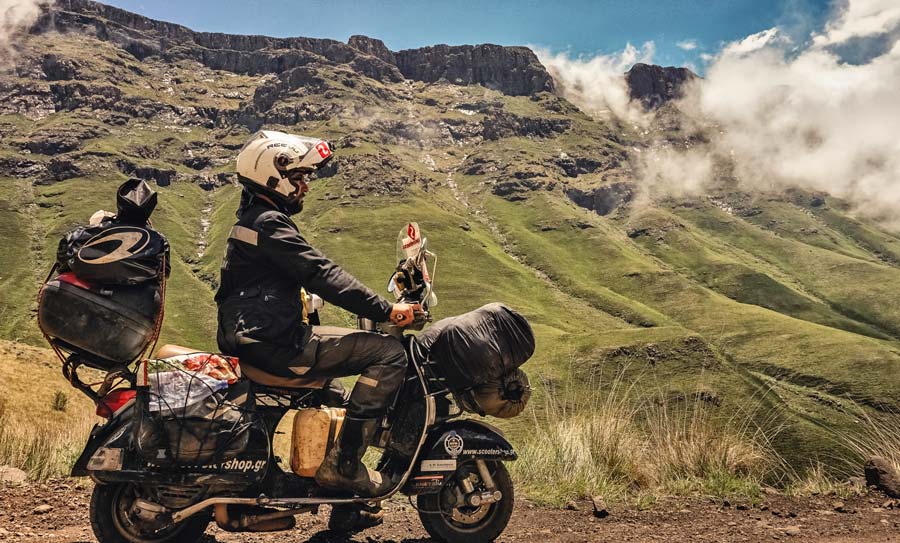 Sani Pass, Lesotho – So, you were saying that my scooter can't take me wherever I want...
1. Find the travel-budget switch in your head and turn it on.
If you start calculating everything according to days on the road*, you’ll soon understand what your real priorities are. For example, spending $5 on a coffee may be nothing in your home country, but in a country where the cost of living is significantly lower, that $5 could cover your accommodation for a night, or an entire meal. So, maybe instead of buying that coffee, just make it yourself. Likewise, do you need to have 10 pairs of pants? Or expensive brands? Really? Now, apply this theory to everything you typically do or are planning to carry on your trip, then tally it all up. It won’t be easy at first and you’ll probably need to take small steps toward adjusting your thinking/conditioning. We also recommend using a budget monitoring app (many are free!), and getting to know it well before hitting the road.
Once the travel-budget switch is turned on, it won’t be just money saving as budgeting is a liberating experience!
- *We refer to our days on the road as “days of freedom.” How much freedom can you buy with only $5? Now, you get it.
2. Consider how you’ll be using the stuff you plan to carry.
You’re likely checking other riders’ gear and may be confused over what’s ideal to take along and what’s not. Bear in mind that the options and choices are far more than you likely imagine. We’ve read countless stories and articles about popular products used by riders and honestly we don’t use any of them. And guess what? Our life on the road is still great! To help you know if something will be important, consider how your gear will actually be used. Will you be camping enough to warrant the need for a $2,000 tent? Does your riding style and experience necessitate top-of-the-line hi-tech garments? I’m sometimes a bit jealous the gear others bring along. But, don’t over-think it, and it’s not the end of the world if you can’t afford some of this stuff. Just get out there and work with what you have. You’ll be surprised at just how little you actually need.
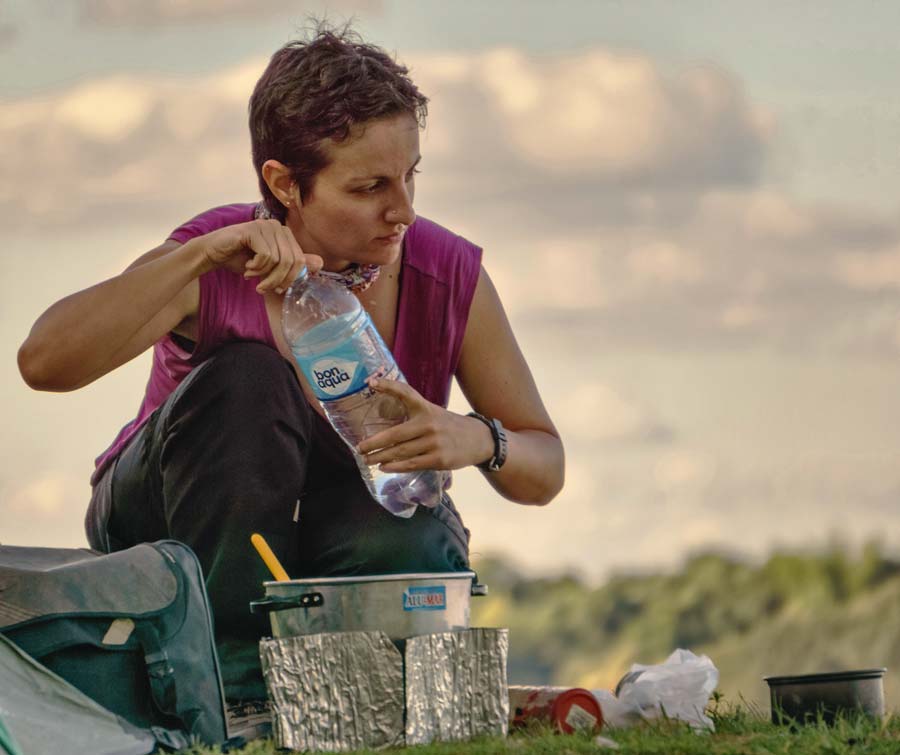 Santo Tomé, Argentina – Cooking lentils and rice, one of our favorite delicacies.
3. Decide what’s really important for you.
Opening a guidebook to check out the what-to-do’s and what-to-see’s, is usually the first step in organizing a trip. And it makes sense as there are some global locations that we all agree are unique and “must see.” But do you really care about them all? We’re sometimes guided by the fear of missing something rather than genuine personal interest. For example: is Machu Picchu important? Obviously. Was it really important for us to see it? We were in Argentina, planning a trip up there just because we were told “You can’t miss it!” But our friends who had been there weren’t traveling for the same reasons as us, nor did we have the budget for a mass tourism/high cost/overpriced site.
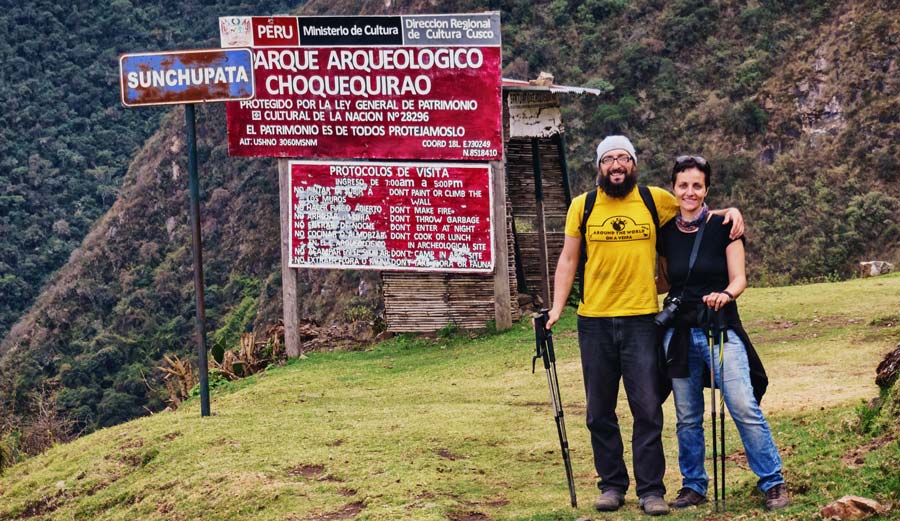 Choquequirao, Peru – 60 kilometers of trekking, exhausted but happy!
4. Leave behind as many comfort zones as possible.
It’s normal for anyone to seek after a sense of safety. It’s also reasonable to identify with what seems familiar. So, after leaving our normal live comfort zone, there’s a tendency to build other little comfort zones. Such places include western-style hostels and restaurants, or even the foodstuffs on the market shelves. These kinds of services/products are often the priciest and their quality isn’t necessarily higher. We’ve encountered so many examples of overpriced “gringo” hostels and questionable “European” goods, that we ended up avoiding them at all costs. And guess what? Our costs on the road have dropped significantly.
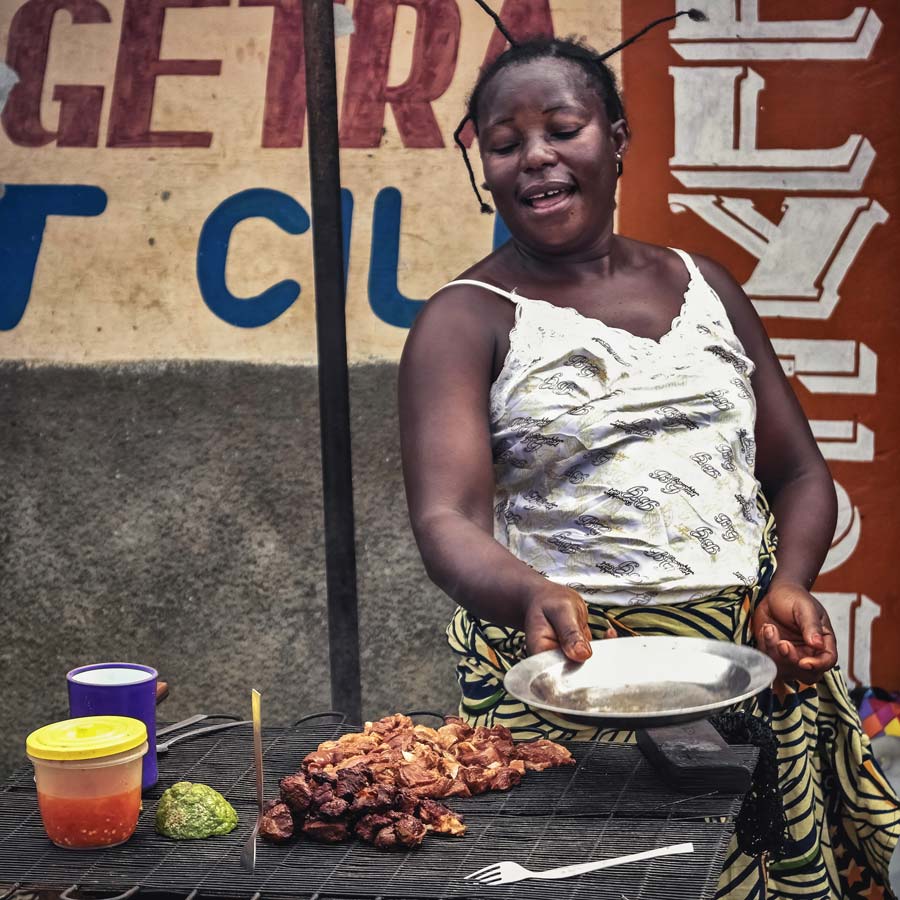 Ilebo, Democratic Republic of the Congo – Never ask what kind of meat it is, just try it.
Exploring the unknown is fun, but sometimes that may be energy draining. In such moments, park for a while and allow yourself to feel the comfort of becoming familiar with a location, the food, local activities, etc. Or if you’re missing home, go to a hotel, eat at a western-style restaurant, buy something that reminds you of your home and give yourself the time to decide what you really want. While life on the road is often about adaptation and new experiences, there’s nothing wrong with taking a moment to reorient and plot your next chapter.
 Stergios and Alexandra (both Greeks) first met in 2014 in the DRC while he was on his RTW and she was doing Ph.D. fieldwork. Since then, they’ve been traveling together. They write, film, photograph and ride their scooter around the world, combining their passions—and have recently released their first book “Rice & Dirt: Across Africa on a Vespa.” WorldVespa.net