 Sticky logo
 Search


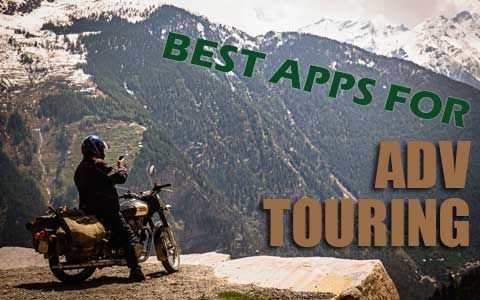
Six apps I used every day while riding across South America and India
There are plenty of things wrong with smartphones and the way they impact our behavior. Personally, I spend far too much time scrolling social networks. However, they can also be invaluable assets. They can help us find campsites, get turn-by-turn directions even when offline, capture and share photos, connect with locals even when we don’t share a common language, and much more.
Last year, while undertaking my first ride through South America, the smartphone question was put to the test and it proved an invaluable tool. But more recently, I spent 10 days in Northern India exploring mountain roads and getting lost down dirt trails. With a patchy signal and better things to occupy my time, I barely touched the 100+ apps on my phone. There were six, however, that I used almost every day of both trips. Here are a list, and a few details. I hope they will help you, too.
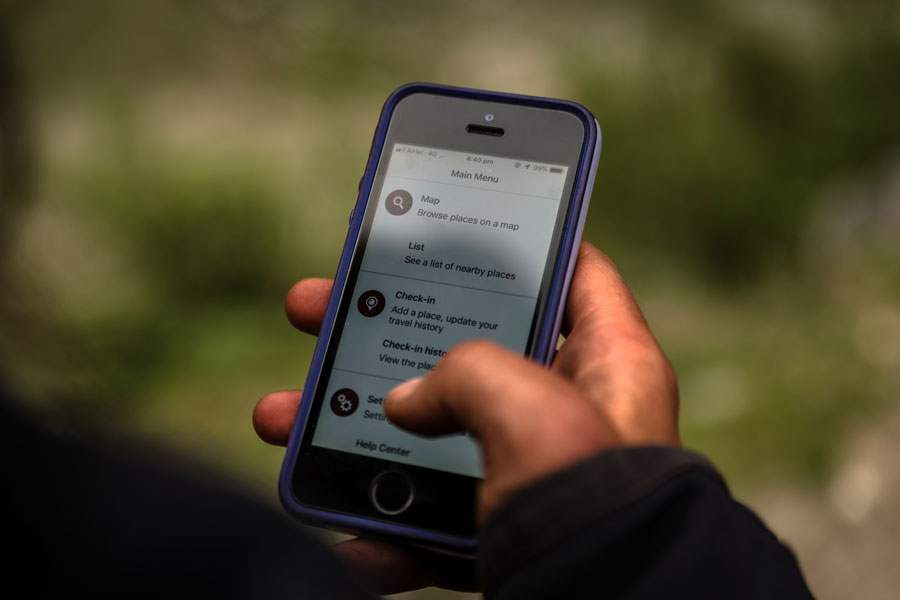
Couchsurfing
 Couchsurfing was a revelation for us. It allows you to connect with hosts for local knowledge and a place to sleep, but best of all it’s a way to connect with people and get to know a country and culture. For those unfamiliar with the concept, you set up a profile and get in touch with locals who will let you crash at their places for anywhere between a night to a few weeks. It’s all about paying it forward, trusting others and getting back a sense of community. If you’re not on the road at the moment, then you can still sign up and start hosting surfers at your place. Generally, there is an expectation that you return the favor and host surfers when you can, but the community is pretty understanding about those who aren’t able to, for whatever reason.
 Alternative: As there were three of us traveling South America together, sometimes finding a host willing to accommodate all of us was difficult. You won’t get the same experience, but if you need a place to crash for a few nights, Airbnb can actually be a pretty cheap and viable option. It might even be a better choice if you just need to get a bunch of bike maintenance and other jobs done before heading off again and don’t have a lot of time to get to know the host or explore the area.
Maps.me
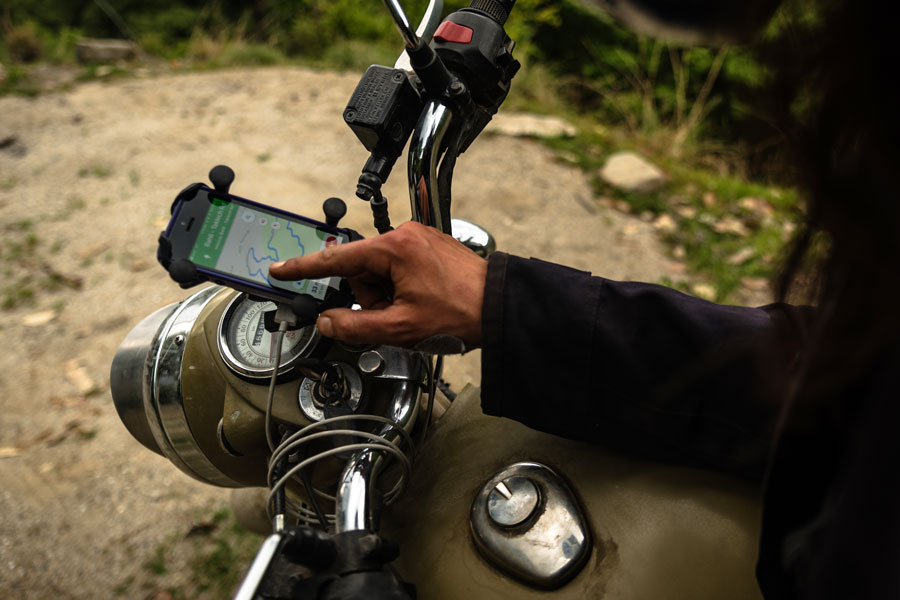
 One day, I hope to be as positive about life as Maps.me is about estimated arrival times. A 62-km ride through gravel switchbacks in the Himalayas apparently should take just “37 minutes,” assuming we’d match the 110km/h speed limit. It often took me the wrong way down one-way roads, and consistently failed to find street addresses. Despite its faults, it’s still one of the most useful travel apps I’ve ever encountered. The ability to save whole regions and even countries offline with turn-by-turn directions and places of interest while utilizing the smartphone’s GPS (but without cell tower access) is amazing. This is only topped by the pins feature, allowing you to share recommendations with other travelers along with keeping the routes of all the places you’ve been, as you go. Sure, it’s got character and might not be as refined as some other mapping applications, but it’s been a life saver on our journeys, and you’ll grow to love it for all its quirks.
 Alternative: If you have good cell tower access then Google Maps will almost always be better. It doesn’t take you down one-way roads (as often), gives a more accurate time estimate, provides live traffic updates, and rarely leads you into the middle of the desert on a closed and unmaintained road. But then, where’s the fun in that?
iOverlander
 iOverlander looks like it was designed in 2007, but it’s so useful that aspect won’t bother you. It relies on a community of overlanders who contribute points of interest, which can be anything from wild camping spots and border checkpoints to fuel stations, restaurants and hostels. You can then open these locations directly in Maps.me to get directions. Some regions are more detailed with iOverlander spots than others, but especially if you’re somewhere with lots of contributions, it’s a godsend.

 Alternatives: We lived off iOverlander in South America and could find almost everything we needed on it. However, in India, it was a lot less complete and useful. I found in Australia there are other more popular apps for finding free camping sites such as CamperMate and WikiCamps. Check iOverlander before you head off to see if there are lots of points where you’re going; if not, try asking overlanders who’ve been there what they used.
Google Photos
 If you’re on Android then you’re probably no stranger to Google Photos. But for the iPhone folks, it’s a photo storage, Cloud back-up and editing app all in one. You can set it to immediately upload your photos to the cloud (unlimited storage for 16-mb photos, anything larger count against your Google Drive storage). Where it really stands out is as a photo editor. Google uses some of its machine learning wizardry to make your photos look super snazzy. It will even put together little albums and videos of what it thinks are your best photos from a trip or event, and remind you to look back at them. Really, it’s worth it just for the simple back-up of your photos (a must when traveling) and the rest is icing on the cake.
 Alternative: If you want a Cloud backup that utilizes more of a standard file structure, Dropbox is a great alternative. It doesn’t have all the fancy editing or photo reminders of Google Photos, but not everyone needs them, either.
Google Translate
 It’s almost unimaginable to travel these days without some sort of translation app for a country where you don’t speak the language. Google Translate is the obvious choice, because you can save languages for offline translation, use voice translation, and translate words. It’s a life saver.
 Alternative: Google Translate killed it in South America, but I found it fairly useless in India. A few others have recommended iTranslate, but I haven’t tried that, yet. Alternatively, you could carry a dictionary, do a lot of miming or try learning the language the old-fashioned way.
 In Australia, the U.S. and parts of western Europe, WhatsApp isn’t all that popular. But in most of South America, Asia and other parts of Europe, it’s the go-to messaging app. If you want to keep in touch with locals, message mechanics and pretty much anything else, WhatsApp is what you need. It’s also great for keeping in touch with other travelers. You can also make phone calls with it, but for me, the killer is the ability to easily send voice messages. We used voice messaging for everything, from quick five-second messages while out running errands to 10-minute updates back home from the road. The messages download or send whenever you get a connection, so you can do them in the middle of nowhere and they’ll send the next time you pick up a signal. As a bonus, you can keep the same WhatsApp number even as you switch in new SIMs for each country.
 Alternatives: A down side to WhatsApp is that it’s owned by Facebook. This may not bother some, but with all the recent scandals, you may not want to rely on Facebook for yet another service. Unfortunately, there aren’t many alternatives. There’s iMessage, but you’ll have to have an iPhone and that won’t work in a lot of the world where iPhones aren’t popular. Signal is awesome, but not widely used.
#####
If you’re anything like me, you alternate between loving and hating your smartphone daily. Our ever-connected state may sometimes paradoxically make us feel isolated and disconnected from society. However, plenty of times we would be absolutely lost without them. When used in the right way, smartphones can foster adventure and take you to places you’d never have come across otherwise. Just make sure that when you find your spot, you put the phone down and enjoy the moment.
 After landing in South America with no plan or riding experience, Pat Corden has just polished up 10 months riding the length of the continent. He is a travel and adventure photographer who is most inspired by the ocean and the mountains. His passion for true adventure generally takes him to where the road ends and the unknown begins.