 Sticky logo
 Search


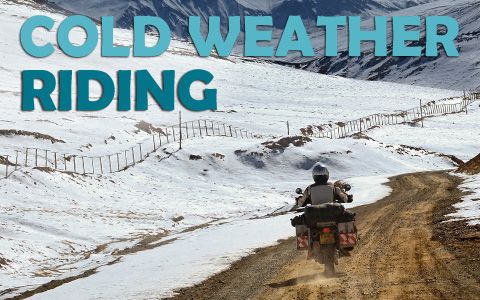
In the cold morning light, we’re wearing as many layers as we can find, and the bikes feel heavy with 20 gallons of fuel. Last night the temperature plummeted to 15°F and by the time we reach the Tajikistan border compound, at the base of the Alay Mountain range, our hands are painfully numb. Our heated jackets and grips seem to have little effect.
Inside the small border compound, we complete the exit paperwork and steel ourselves against the cold. Back on the bikes, the route ahead is indistinguishable among the vast slabs of rock and snow-covered ground.
The red clay soil of the track is more slippery than snot as we climb in altitude in second and third gear. We’ve read countless stories of the severe weather in this region even in summer, and here we are with winter closing in around us. We’re giving this range the full respect it’s due. Two tired Brits without cell or satellite phones could easily get in trouble up here.
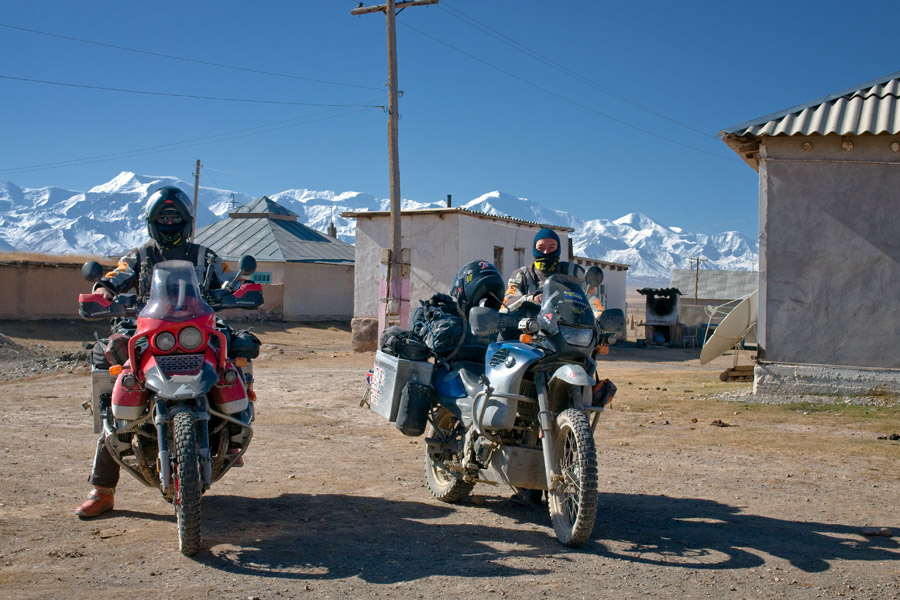 Simon and Lisa cover up with every layer they have along with heated jackets and grips, to ready themselves against another sub-zero day.
KALASHNIKOVS AND TOENAILS
Cresting a rise, we see the Tajikistan compound. It is a sorry-looking affair. Two large, rusting fuel tankers rest in the red mire, repurposed as passport offices.
A half-dozen young (and visibly bored) soldiers, Kalashnikovs slung over their shoulders, huddle outside. Inside the cramped steel can of a room the scene is bizarre. By some miracle, a set of bunk beds have been squeezed in, occupied by a guard who sets about our paperwork. He’s only wearing his stained thermals; the longest set of yellow toenails I’ve ever seen stick out of the holes in his woollen socks. A TV hisses in the corner, and a small, smoky iron furnace belts out welcome heat.
Two hours later we’re pulling alongside Lake Karakul, the highest lake in Central Asia. At 12,800 feet, the vista is spectacular, the lofty silence only broken by icy waters lapping the shore. The snow storm ahead rules out any chance of us crossing the 15,000-foot pass before nightfall. A quick scan of the small village to our west reveals a hand-painted sign that reads “Home Stay.” We cross the hard ice and park in the cramped yard. Inside, the room is simple, a low fire sits in a grate waiting to be stoked, and a stack of 20 thick rugs offers a glimpse of night-time warmth. Around a low table we sip on sweet, warm tea as life finally begins to re-enter our hands.
In the morning, a thick layer of frost covers both bikes. The freezing air is already stabbing our lungs as we begin our steady push to the Ak-Baital Pass. Rising from the plains too quickly, we’ve no chance to acclimatize. At 13,000 feet, waves of nausea hit Lisa hard, accompanied by a pounding head. She’s showing signs of altitude sickness, a deadly concern in this remote location. We have to push on. Our fastest way down is up and over; returning won’t get us low enough, fast enough. It’s -7°F, and 50 feet to our left a seemingly endless fence of wooden posts and barbed wire marks the Chinese border.
ACUTE MOUNTAIN SICKNESS
At 15,000 feet, we’re up on the pegs and riding rough over ice-encrusted muddy streams and loose rock. Deep snowdrifts across the track aren’t making this any easier. Even with sunglasses and dark visors, the glare from the snow is painful. This is truly a giant’s playground, and we are just specks passing through.
Two miles from the summit, our progress is halted as the thin, dark trail we have been following disappears under deep snow. Lisa is feeling worse, and I haven’t told her that her lips are now dark blue and her eyes have the sunken look of the oxygen-deprived….
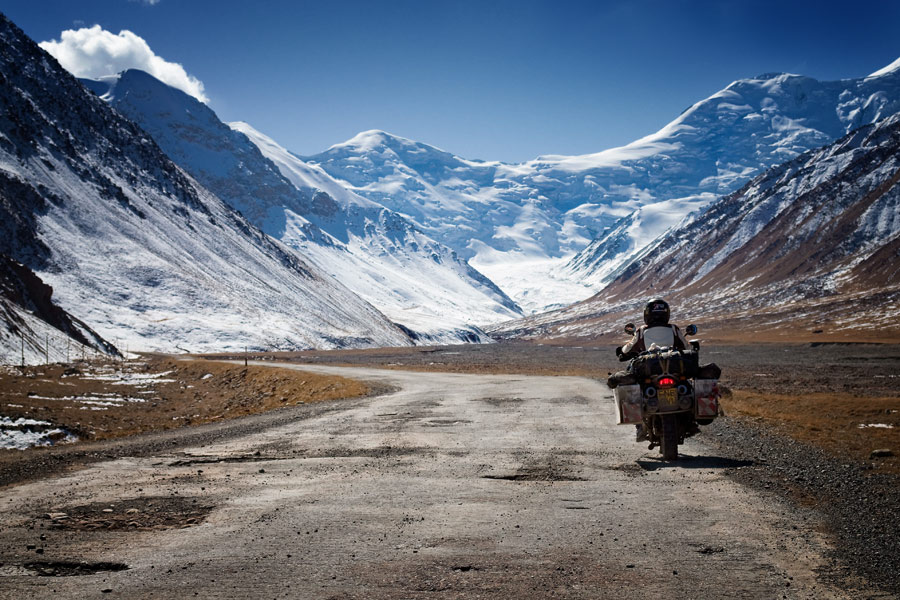
It’s all too easy to think that only Antarctic explorers suffer from frost-bite, hypothermia and the other extreme cold issues that we see on Discovery Channel. Think again. Cruising down any highway on your bike at 60 mph, the air temperature may be above freezing, but if you’re in the wrong riding gear, dealing with both rain and wind-chill, you could be in trouble before you know it.
Here are some cold weather riding techniques that Lisa and I employ to beat the cold. Some may seem obvious, but when you get really cold, believe me… they’re easy to forget.
1. HEATED CLOTHING
The key to staying safe in cold weather is making sure that your torso is warm. Our bodies are incredibly efficient, so if you manage to keep your torso warm, your arms and legs will take care of themselves. Heated jacket liners are becoming more commonplace, better designed and a lot more affordable. Most are powered by simple 12V systems connected to the bike’s electrical system. Try to find one with a heated collar. Keeping your neck warm doesn’t just feel great but also micro-heats the blood passing through your carotid artery on its way to your brain. The better jackets come with heat-trollers that allow you to select the ideal temperature for given conditions.
2. HEATED GRIPS
There was a time when I thought “real bikers” didn’t use heated grips. At 17,000 feet on the frozen plateau of the Bolivian Altiplano I fell in love with a set of these hot rubber babies. If your bike doesn’t already have heated grips then look for aftermarket versions. Most are easy to install.
3. CONCENTRATE ON YOUR BREATHING
As our bodies cool, the joints, muscles and tendons tighten. As this happens we take shorter and shallower breaths. Do this for long enough and one’s cognitive abilities begin shutting down. A way around this is to concentrate on controlled, regular breathing. This will also distract you from discomfort in your extremities. Breathing in and out through your nose and keeping your mouth closed minimizes the amount of heat loss.
4. LAYERING
Layering is not just for Arctic researchers and mountain climbers. Layering is crucial to staying warm. We wear long-sleeved micro-weave tops as base layers, then a couple of thin synthetic T-shirts followed by whatever else we can squeeze under our riding gear. Remember to stay away from cotton, which wicks moisture slowly. Moisture mixed with cold temps is a recipe for misery. Layers trap heat and this keeps you far warmer than using a single thermal piece of riding gear alone.
5. MINIMIZE WIND CHILL
There’s no clever trick—just do whatever you can to shelter your head, body and hands from that rush of freezing air. Even at low speeds, wind chill can double the physical effects of the actual air temperature.
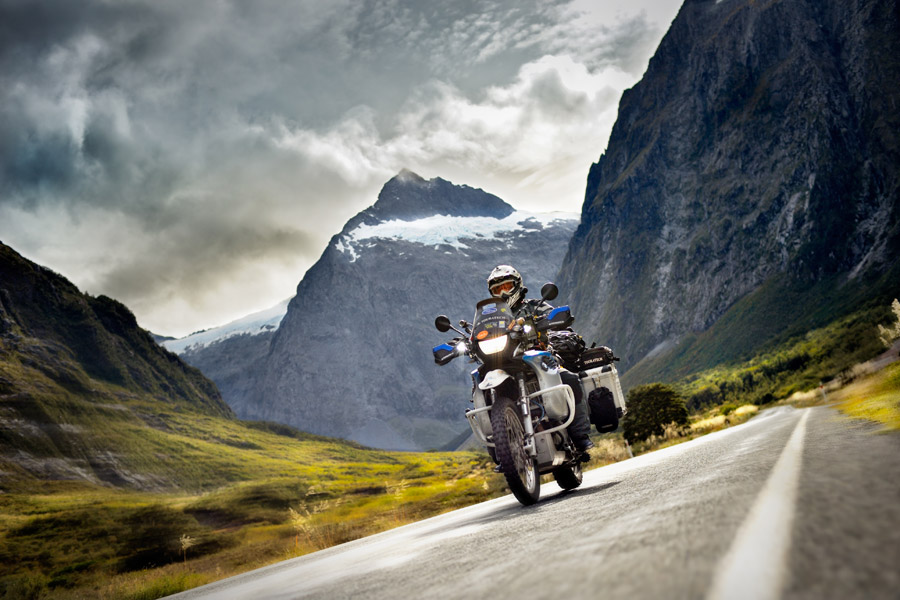 Lisa cruises the ice-laden valley en route to New Zealand’s famous “Milford Sound.”
6. LOOK OUT FOR THE INITIAL SIGNS OF HYPOTHERMIA
It’s important to keep an eye on yourself and your riding partner. Hypothermia can be deadly, so here’s what to look for:
EARLY SIGNS
1. Puffy or swollen face
2. Pale skin
3. Shivering (in some cases the person with hypothermia does not shiver)
4. Slower than normal speech or slurring words
5. Acting sleepy
6. Being angry or confused
LATER SIGNS
1. Moving slowly, trouble walking, or being clumsy
2. Stiff and jerky arm or leg movements
3. Slow heartbeat
4. Slow, shallow breathing
5. Blacking out or losing consciousness
7. KEEP YOUR HEAD WARM
Use a balaclava, just make sure it’s a synthetic material or silk. Another great piece of gear is a neck-wrap or Buff (BuffUSA.com). We lose up to 90% of our body’s heat through our heads. Helmet choice is important, too; if you know you’re heading into colder temperatures a full-faced helmet with a visor is going to be warmer than an enduro style helmet with goggles.
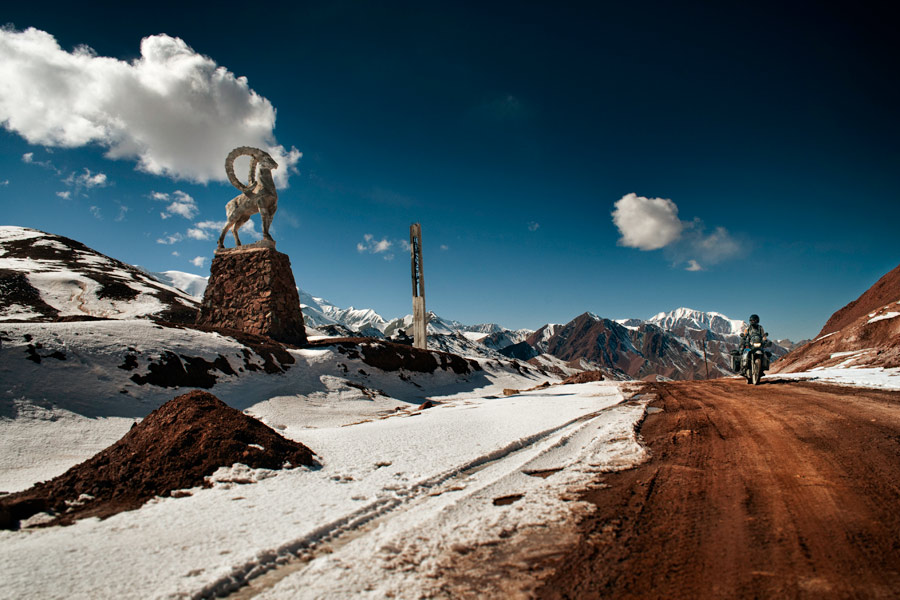 Lisa crests Tajikistan’s 15,000 foot Kyzyl Art Pass.8. TAKE REGULAR STOPS TO MOVE AND WARM UP
It’s all too easy to fool ourselves into “just another 2, 5 or 10 miles, then I’ll stop.” This is your brain playing tricks and another symptom of hypothermia. Get off your bike, jump around, swing your arms and get that blood moving. This also releases endorphins that will make you feel better.
9. USE CHEMICAL HOT PACKS
Once only used by elite military, many outdoor stores now sell chemical hot packs. Agitating the material inside the pack causes a chemical reaction, that generates heat. Many hot packs can be reused and are a great way of bringing painfully numb hands back to life.
10. STACK AND PACK YOUR GEAR TO ENABLE QUICKER STOPS AND HOT DRINKS
Stopping by the roadside for a quick brew is also a simple way to warm up. So, make sure your stove, fuel, mug and beverage of choice are easily accessible. If there’s a café or gas station, go in, grab a hot drink and warm up.
11. HUDDLE AROUND THE ENGINE
On a few occasions in remote areas of the world Lisa and I have actually stopped the bikes, knelt down and hugged the cylinder heads of my R1150GSA. It’s about using what’s at hand to regain crucial warmth. Hey, whatever it takes!
12. STAY DRY, USE WATERPROOF BOOTS OR WATERPROOF SOCKS
In cold climates, staying dry needs to be at the top of your priority list. Make sure you have good quality waterproof riding gear. If you know you’re heading into cold weather, your riding suit, gloves and feet need to stay dry. A wet body will freeze five times faster than a dry one. If your riding boots are not waterproof, consider waterproof socks like Sealskinz (Sealskinz.com).
13. NEWSPAPER MAKES GREAT INSULATION
Some of the simplest tricks are the best. If you get caught without your cold weather riding gear, try using crumpled sheets of newspaper or magazine pages. Grab handfuls and stuff them down the front and back of your jacket. If you can stuff them into the top of your sleeves, do that, too. However, not into your lower sleeve area as this can cause a cold draught that will cancel any positives of this technique.
Simon & Lisa Thomas are considered by many to be the world’s foremost adventure motorcyclists, with more real-world experience than anyone on the road today! They’ve ridden their way into a life that most of us can only imagine. Since setting out on their journey in 2003 the duo has so far amassed a whopping 500,000 miles on their ride, through 78 countries on six continents. Along the way they’ve traversed 27 deserts, survived a broken neck in the Amazon, cheated death, and are still traveling today. It’s easy to say that Lisa and Simon helped define what we now call “Adventure Riding.” As explorers, writers, photographers and public speakers this pair inspire adventure. 2RidetheWorld.com
{gallery}ARTICLES/TechTips/Cold_Weather_Riding_Techniques/Gallery{/gallery}
This story first appeared in the January/February 2015 edition of Adventure Motorcycle Magazine.