 Sticky logo
 Search


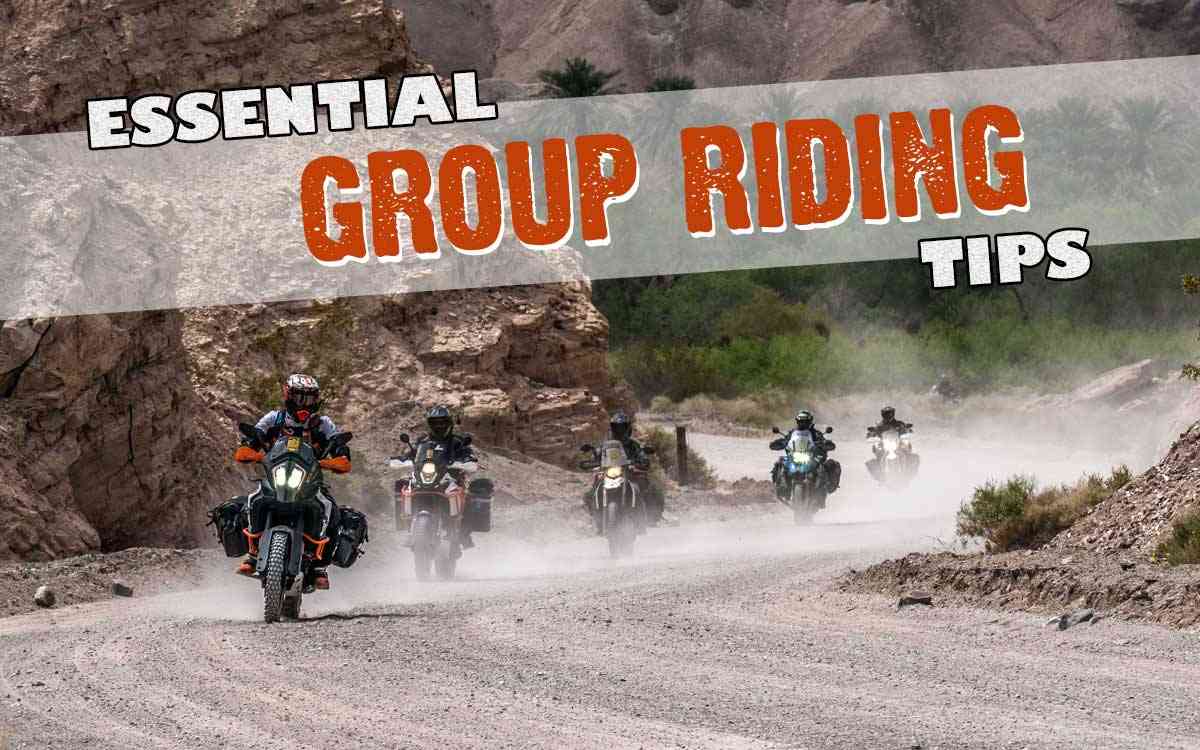
By following these guidelines and understanding proper group riding etiquette, you’ll ensure a smoother ride for the entire group.
You know that feeling when you’re on a no-destination adventure riding trek, the one when you’re totally immersed inside your helmet, and the outer chatter has ceased. No worries about work, business, or pleasing others. Just you, the open road or lonely trail, and the amount of throttle input equal to your emotions.
Being alone is part of motorcycling, but sharing the excitement of adventure motorcycling with like-minded individuals via group riding can enhance your experiences—not just in riding, but in life.
I bet some of your closest friends are motorcyclists, and when you’re riding with them, those bonds grow. But if you want to keep this going, you must take necessary precautions to ensure everyone’s safety. All participants must comprehend how to manage circumstances appropriately so they can return home to tell the stories of adventure and discovery that make these experiences human.
I’ve participated in group rides for two decades, from leading expert and intermediate groups at Touratech rallies, to traveling up front with local ADV groups, to trailing in the back while training riders. Without proper motorcycle group riding etiquette, none of those rides would be enjoyable. Stuff happens quickly that can ruin the day—especially when off-road. The following are some beginner and advanced strategies for maximizing group riding safety, including off-road riding techniques and preparations for emergencies.
• Effective Communication Techniques
To ride safely as a group, you must have clear communication among all members. There are various ways to achieve this:
- Hand signals: Learn and use universal hand signals for common actions like stopping, turning, or pointing out hazards on the road. My go-to on this is the Motorcycle Safety Foundation (MSF), where you’ll find a helpful signal guide pdf.
- Rider-to-rider communication systems: Invest in reliable intercom devices that allow communication directly between all riders. This is especially essential for lead and sweep riders. The most popular brands are Cardo Systemsand Sena Technologies.
- Briefings before departure: Before setting off, discuss important details such as route plans and distances, rest stops and distance between them, fuel breaks, and potential hazards such as river crossings, known muddy sections, or high-traffic areas along the way.
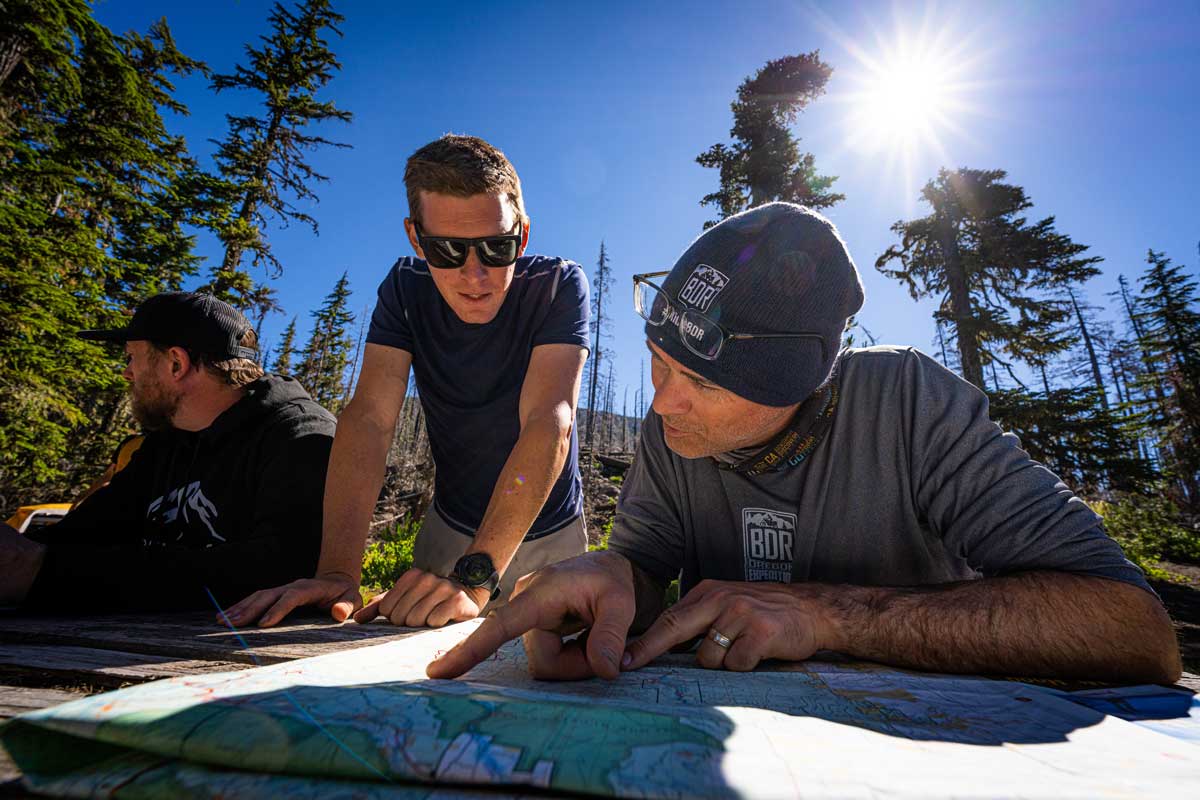 Don’t just head out; always brief each day’s ride, especially with ride leaders. And yes, always bring a paper map!
• Maintaining Proper Formation and Spacing
A well-organized formation helps maintain safety by providing adequate space between motorcycles and ensuring everyone always remains visible. It also ensures there’s enough time to react to unexpected hazards. Here’s how you can maintain proper formation during your ride:
- The Staggered Formation: This formation is ideal for highway and open-road riding. Riders should position themselves in a zigzag pattern, with the leader on the left side of the lane closest to the middle line (double-yellow or dotted on highways; reversed if in countries with opposite driving), followed by another rider about a second behind them on the right side of the lane. Continue this staggered pattern throughout the group, maintaining at least a bike distance between riders for every 10 miles per hour.
- The Single File Formation: For off-road or twisty roads where visibility may be limited or the track is narrow, switch to single file formation with ample space between each motorcycle. The space depends on speed and comfort around other riders. I can ride fighter-jet style with a few of my normal riding buddies, and even bar-to-bar with two (a good practice of skills), but distance is imperative on group rides where not everyone has the same skill level.
• Speed Control and Riding within Your Limits
Riding at a comfortable pace that suits everyone’s skill level is crucial for group safety. Here are some tips to ensure speed control during the ride:
- Ride at your own pace: Don’t try to keep up with faster riders if you’re uncomfortable doing so. It’s better to arrive safely than risk an accident due to excessive speed. If the front riders are faster, which is nearly always the case, let them ride at their pace. But…
- Check your mirrors at least every 5–10 seconds: This is imperative for safety on the street when riding solo, but even more so when in a group ride. This also helps you slow down to allow the ones behind not to get lost (something especially crucial on dirt roads). If you don’t see someone in the mirror, slow down and wait—especially if you have turned onto a different road or trail.
- Select an experienced lead rider: The person leading the group should have experience navigating various types of terrain and possess strong decision-making skills when it comes to adjusting speeds based on conditions and other factors like traffic or weather changes.
- Avoid abrupt actions: Sudden braking or acceleration can cause chain reactions within a tightly-packed group, increasing the risks of accidents. Ride smoothly and predictably while maintaining constant communication with fellow riders about any upcoming changes in speed or direction. I made this mistake just last season while making an abrupt turn into a non-planned eating spot. A buddy almost ran into me at 75 mph.
Taking these precautions will help maximize safety during your adventure motorcycle rides as part of a larger group, allowing everyone involved more enjoyment out on both paved roads and off-road trails alike.
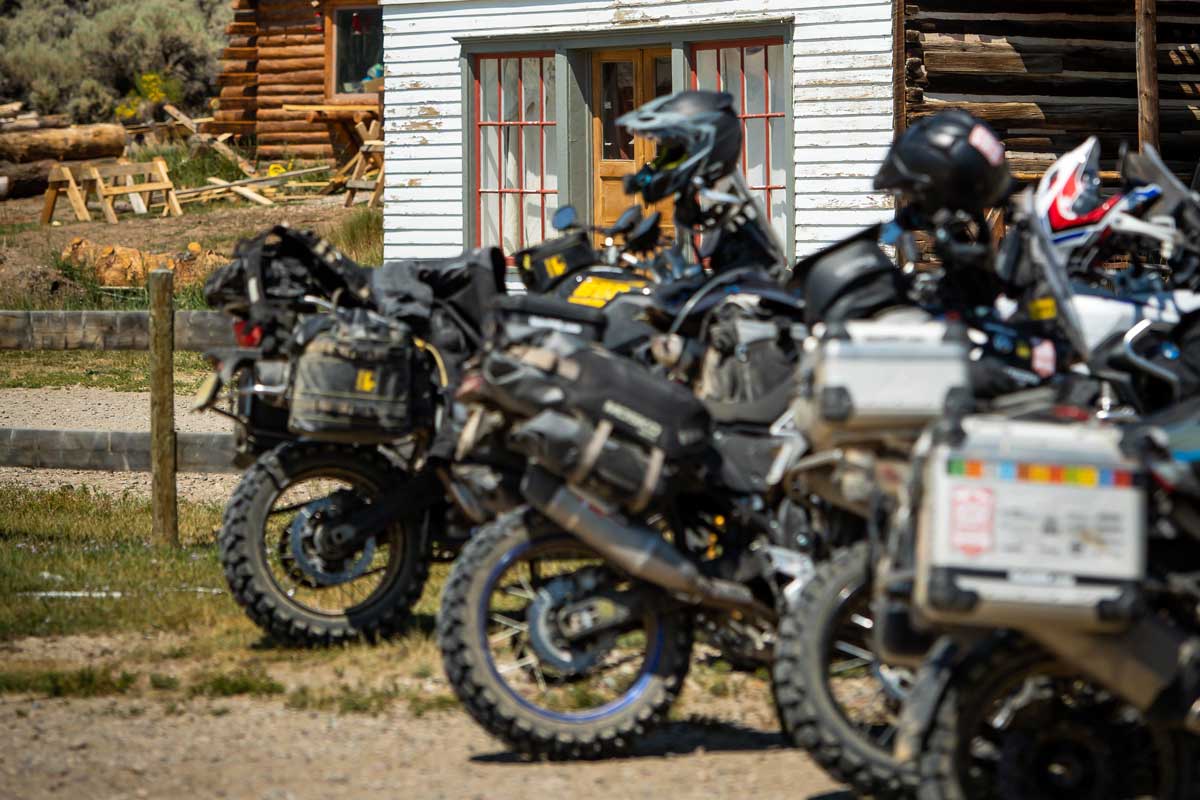 Always have a few pre-determined meeting spots planned—for a rest, and in case other riders need to catch up.
• Off-Road Riding Strategies
When it comes to group riding on adventure motorcycles and dual-sports, off-road terrain presents unique challenges that require specific strategies for a safe and enjoyable experience.
The first step in planning an off-road group ride is choosing the right trails that cater to all riders’ skill levels. Research whatever off-road routes are available beforehand by checking online forums or local clubs dedicated to adventure motorcycling. When selecting a trail, consider factors such as difficulty level, distance covered, elevation changes, weather conditions, and availability of support facilities like fuel stations or camping spots. I’m a sucker for a tight single track on big adventure bikes like my KTM 1190 Adventure R. But I only ride single track in situations when I’m with like-minded riders of that skill level.
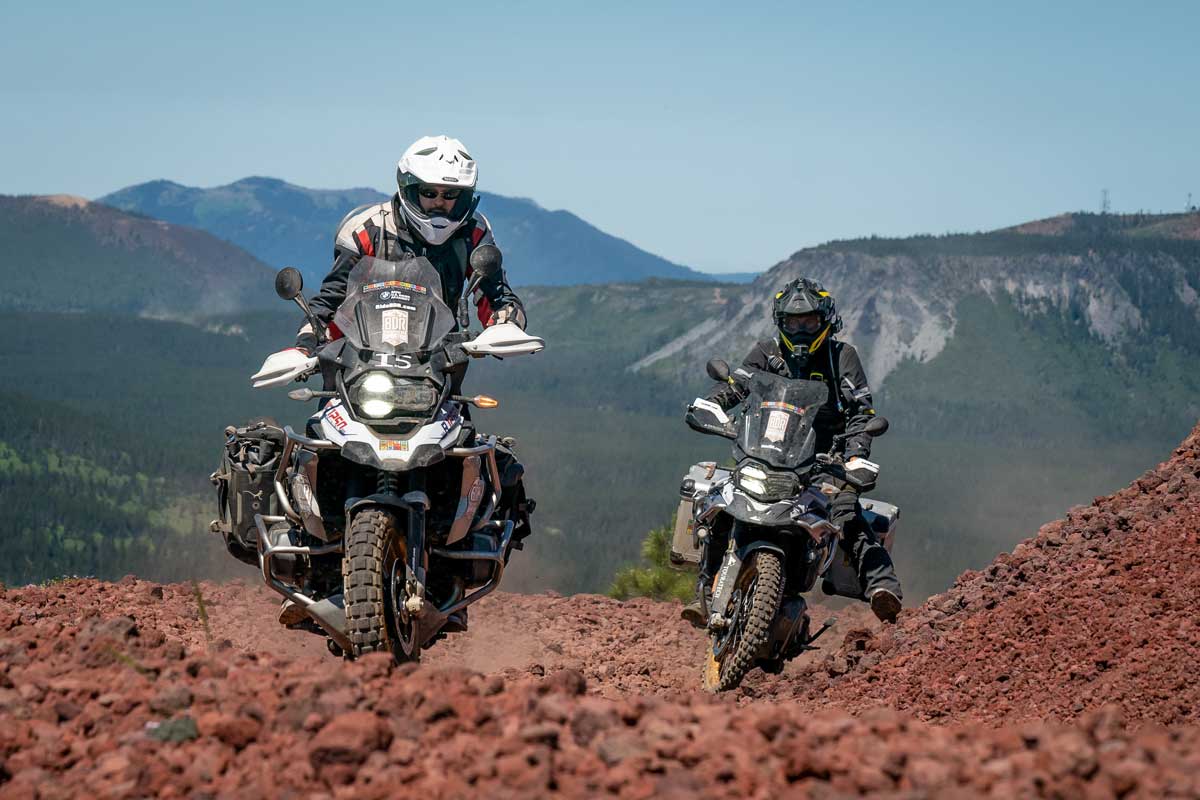 When the terrain becomes challenging, take a breath and put your training to work. And the best part of group rides beside the enjoyment of experiencing the riding world with like-minded people? You have more help to pick up that bike when it drops!
• Navigation Techniques
Navigating unfamiliar terrain can be challenging during an off-road group ride; therefore, having reliable navigation tools is essential. Equip yourself with GPS devices specifically designed for motorcycle use, like Garmin’s Zumo series, which offers features such as glove-friendly touchscreens and rugged designs built for outdoor adventures.
Additionally:
- Before embarking, ensure all riders are aware of the route by sharing plan detailing waypoints and expected obstacles.
- Assign a lead rider specifically experienced in navigating off-road terrain—they should be responsible for guiding the rest of the pack through tricky sections.
- Incorporate regular stops at key waypoints throughout your ride—this allows the group to regroup, discuss any challenges faced and make necessary adjustments to the route plan.
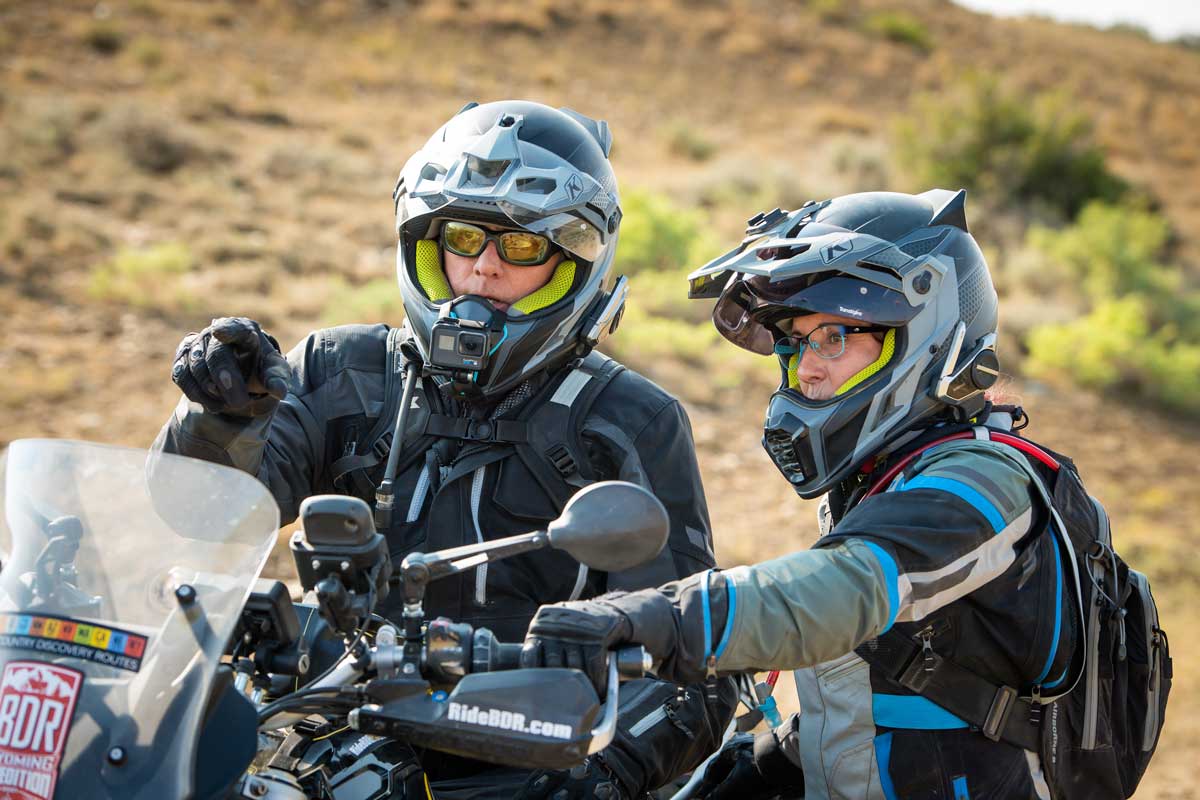 Uncertain of what’s ahead or a challenging section? Take the time to stop and prep, or plan guidance for the newer riders on how to tackle the situation.
• Hazard Avoidance
Riding off-road can be fraught with dangers. I’ve already covered maintaining safe following distances, communicating effectively with hand signals or communicators, and riding at your own pace. But there’s more to say for the off-road scene. Stay vigilant for potential hazards such as wildlife encounters, loose rocks, slippery surfaces, or unexpected drop-offs (all situations that sent me sliding one time off a 20-foot embankment that took four hours to get my bike out!). Alert other riders immediately if you spot anything dangerous ahead.
Incorporating these off-road riding strategies into your next adventure motorcycle group ride will ensure a safer and more enjoyable experience for everyone involved. Remember that teamwork is key; supporting one another through difficult sections will strengthen bonds within your riding community and create lasting memories filled with thrilling adventures.
Off-road riding strategies should always be taken seriously, and proper preparation is essential for a safe ride. Having established the importance of adequate preparation, it is now crucial to consider emergency preparedness.
• Emergency Plan
Before starting on a collective ride, invest some time in constructing an emergency strategy that delineates what actions should be taken if trouble arises, such as collisions, mechanical failures, or becoming disoriented. Some key points to consider include:
- Rider Roles: Assign specific roles and responsibilities to each rider (e.g., first aid responder, mechanic).
- Contact Information: Exchange contact information with all riders and establish a designated point person for emergencies.
- Rendezvous Points: Identify pre-determined meeting spots along the route where riders can regroup if separated.
- Towing Services and Repair Shops: Research local towing services and repair shops near your planned route in case of a motorcycle breakdown.
Incorporating these emergency preparedness measures into your adventure motorcycle group riding plans will provide peace of mind so you can fully enjoy paved roads and trails alike.
Group riding can help maximize the fun of motorcycling by building bonds with like-minded friends. But be prepared for any potential issues by having a plan and necessary items with you while riding. By following these motorcycle group riding tips, riders can ensure they have a safe and fun adventure.
 Ron Lieback is an east coast motorcycle enthusiast and moto journalist with an addiction to piloting larger ADV bikes through tight and technical off-road terrain. When not riding, he’s growing his SEO-driven content marketing agency, ContentMender. He’s also the author of “365 to Vision: Modern Writer’s Guide (How to Create More Quality Writing in Less Time).”