 Sticky logo
 Search


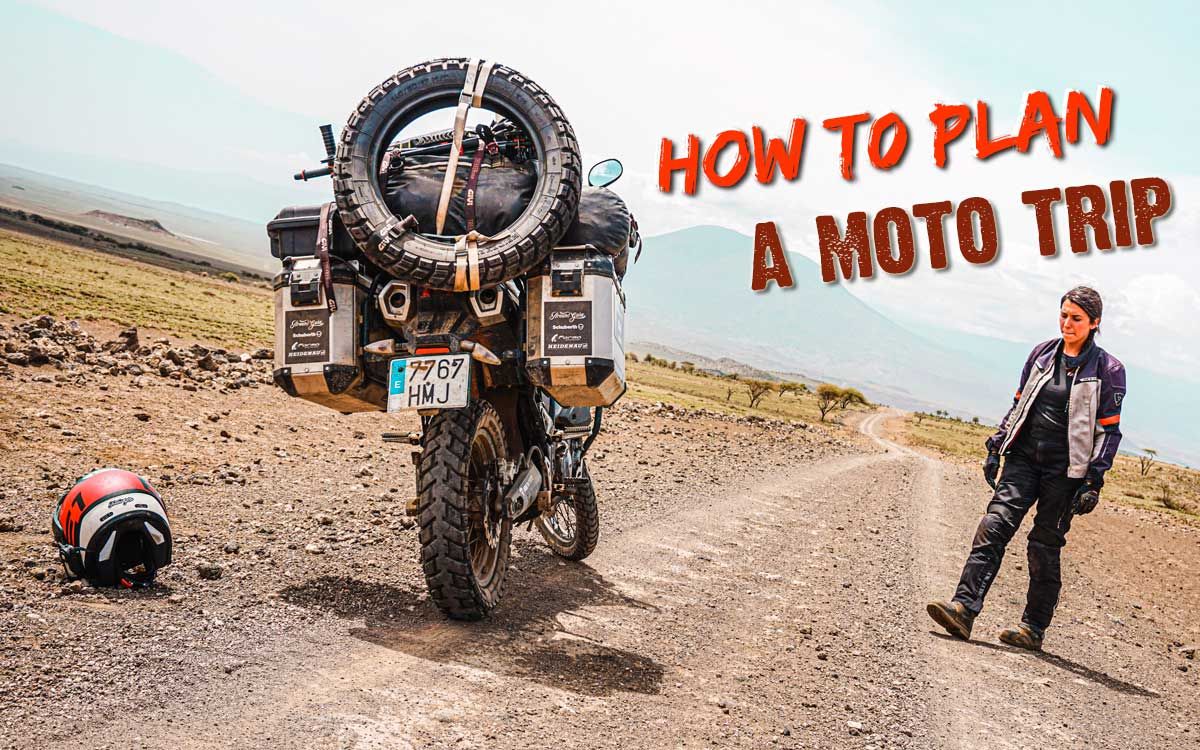
How to Plan a Moto Trip — from a Weekend Getaway to the World
In planning an adventure, there’s a world of difference between a weekender and a journey to other lands that may take months or years.
At first blush it may seem odd, but we recommend viewing long trips from a perspective similar to that for shorter ones, in that the focus on the day to day. It could be said that a great journey is only the sum of many weekend getaways, and all motorcycle travel will share some commonalities, whether the distance is short or long.
In some cases excessive planning, in an attempt to cover every possible situation, actually inhibits success. Many who’ve taken this approach have worn themselves out, becoming overwhelmed and giving up before even starting their adventure. Perhaps approaching the challenge from a short-term perspective will help achieve your goal. That said, there are some not-so-subtle differences between long- and short-term travel, and based on our experiences there are some basic points to consider when planning either type of motorcycle trip.
The Route
When it’s for only a few days, take note of the weather forecast to best determine the routes you intend to ride, which will help you make the correct gear choices. On the flip side, if the trip is going to be extended, you’ll need to pack for varying conditions. You’ll also have to obtain visas, travel and vehicle insurance, vaccinations, and, if necessary, the Carnets de Passages (a type of vehicle visa required in order to pass through some countries).
Camping Considerations
Your choice of camping equipment will depend on comfort preferences and trip duration. Options may include a thicker, better insulated sleeping mat, a pillow, or hammock. For long trips, especially those without a specific return date, invest in higher quality, more durable gear. Most tents used by adventure motorcyclists are good for a few weeks of wear and tear but won’t hold up for the long haul, constant sun, storms, etc. And it’s usually far easier to source a quality tent from home than somewhere on the road after your tent’s been ruined.
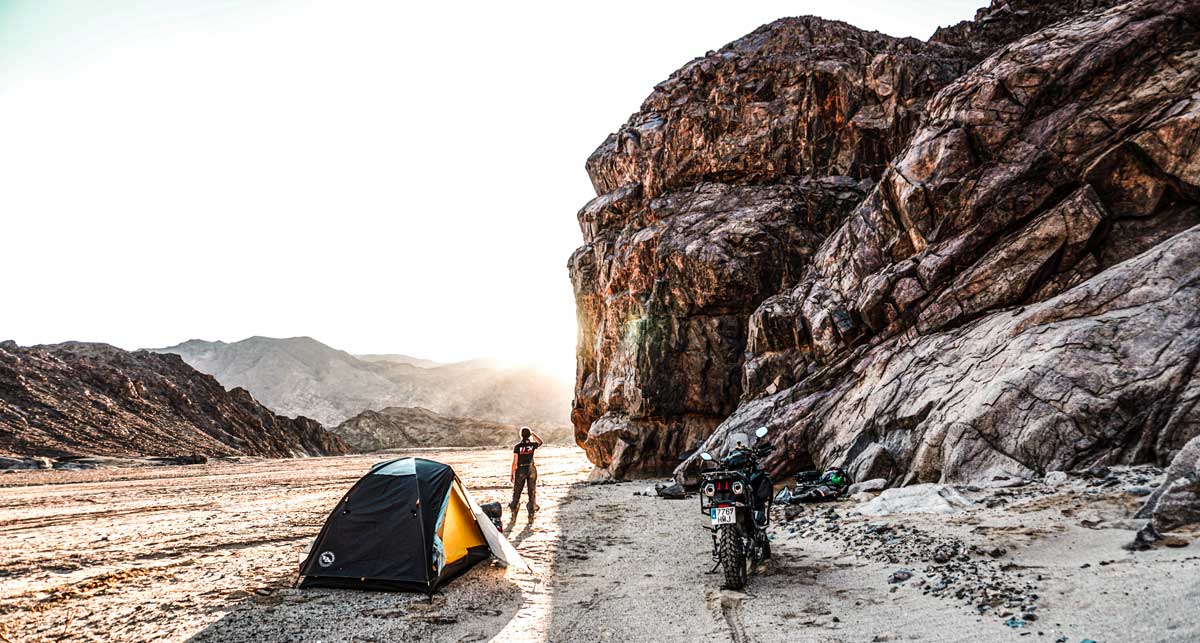 Namibia, camping in the dry bed of a seasonal river, enjoying the sunset and saying goodbye to a long day of riding.
What to Wear
We’ve learned much from several years of traveling the world. These days we focus on three aspects: compactness, versatility and quality.
By compactness we mean that we each carry only two or three outfits. Generally, synthetics are lighter, stain less, and require less space. And, they will dry more quickly than cotton. Waiting around for a piece of clothing to dry, or worse, having to pack it wet, can hinder things.
Regarding versatility, take along only clothing that can adapt to different climates and uses. Zippered openings and lightweight materials facilitate layering. You’ll be constantly exposed to the elements and it’s not uncommon to go from freezing temperatures to a scorching sun and back again, all in one day. Convenient layering will allow you to more easily adapt to the prevailing conditions.
And quality—rather than having a different outfit for each day of the week, it’s best to go with very good quality clothing that will hold up to the demands of this type of travel. Wind and other conditions associated with motorcycle travel can make short work of lesser garments, so it’s wise to start off on your adventure with more durable clothing.
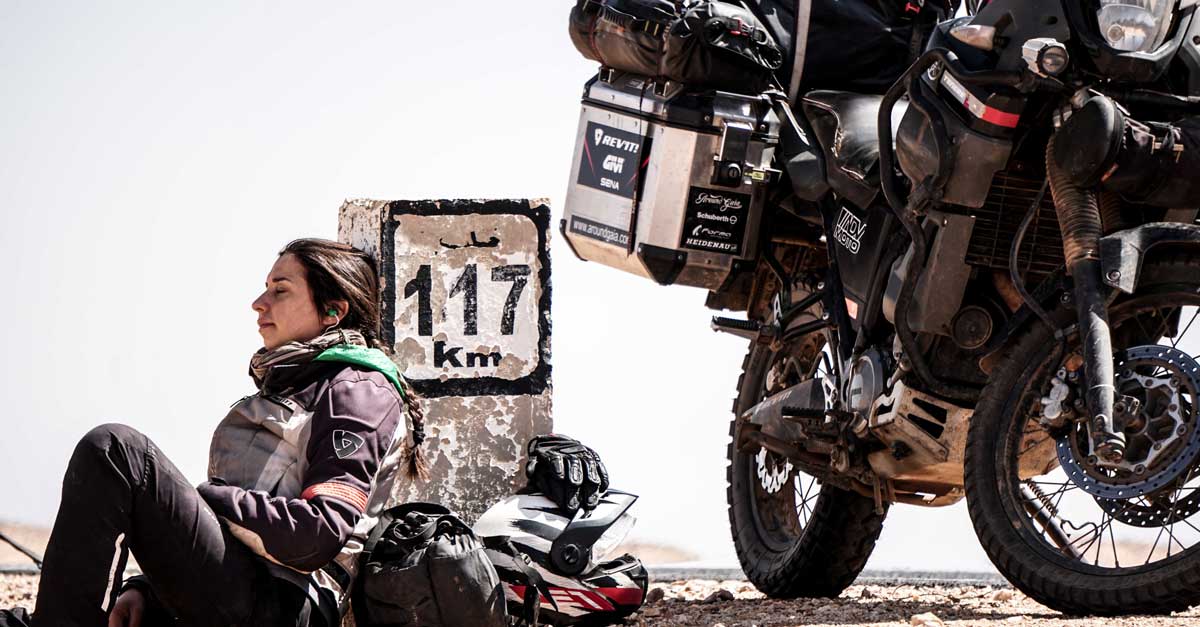 Convenient layering will allow you to more easily adapt to the prevailing conditions.
Navigation
For weekend getaways, we’re good with GPS apps on our smartphone. But when it comes to journeys through remote countries, we’d never dismiss classic paper (or even better, Tyvek) road maps. “Old fashioned” maps never fail and are extra handy when asking assistance from locals, who are not as likely to understand how to use a GPS.
Tools and Motorcycle Maintenance
A weekend getaway will barely require more than a general inspection of your motorcycle before departing, including checking the oil, tire pressures, and snugging up loose nuts and bolts. And, as you’ll be closer to home, if a breakdown does occur, it’ll be relatively easy to get picked up, or make a repair.
If the idea is a long journey, however, the story changes. Roadside assistance is usually not going to be available and you’ll have to be your own mechanic. Self-sufficiency means tools, a puncture kit, spare spark plugs, fuses, and possibly a spare part or two. A 12-volt air compressor, or a manual pump, is also recommended because you’ll need it not only for flat tires but to adapt tire pressure to the conditions (think switching from tarmac to sand and back again).
An additional liter of oil is also essential. For various reasons, your motorcycle may consume more oil than usual, and it’s better if you have extra at your fingertips.
Food
There is not much to plan when it comes to food for a weekend ride; you can stop anywhere for a bite or to rehydrate. But on long trips the story changes; we recommend having a backpack that includes a two- or three-liter bag of water, nuts and a jar of honey (a healthier kind of sugar) for hydration and a quick source of energy—these items are easy to store and transport.
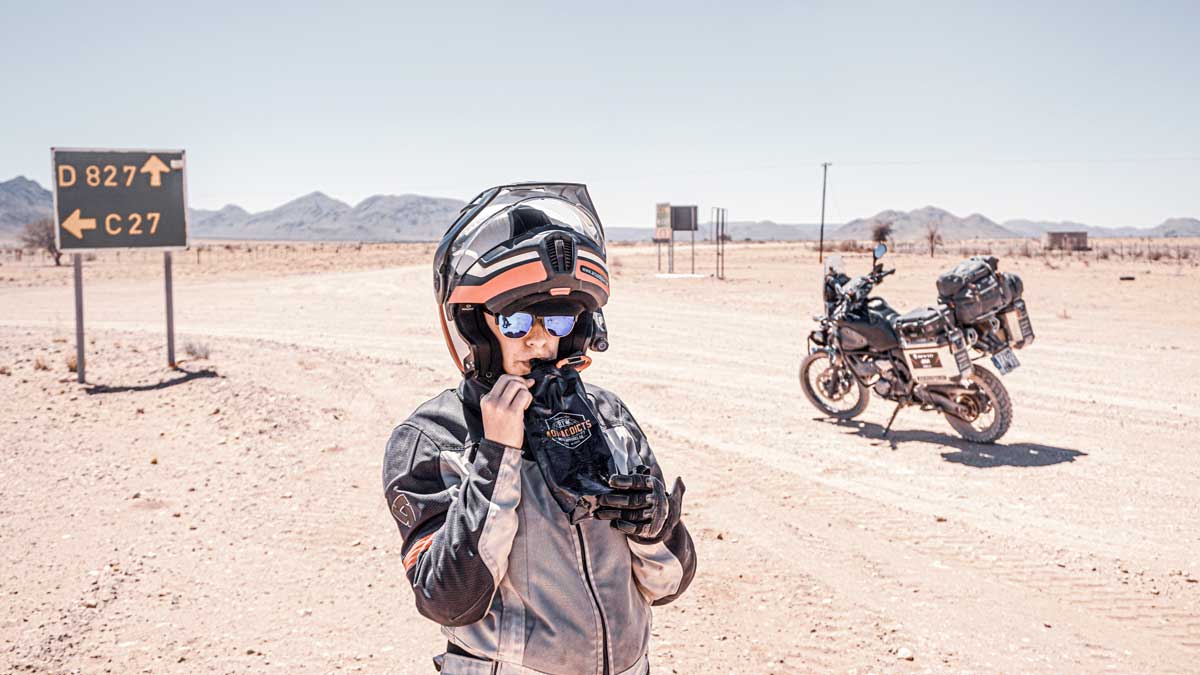 Rehydration is important for long trips, espcially in dry area.
Panniers—the Hard or Soft Option
Soft or aluminum panniers? It’s a question many riders debate. Each has its advantages and disadvantages. Aluminum is heavier and easier to damage, but also safer when it comes to protecting our luggage from possible theft. On the other hand, soft luggage is lighter and, if well made, is resistant to damage from falls or scrapes. The main downside of soft luggage is less security.
We used aluminum panniers through most of our travels, although on recent trips we switched to Mosko Moto soft bags and are now convinced this is the best option for long trips. For us it’s essential to reduce weight and the risk that a simple fall could break a pannier, or even worse, catch a leg and break a bone—a fairly common occurrence with hard panniers.
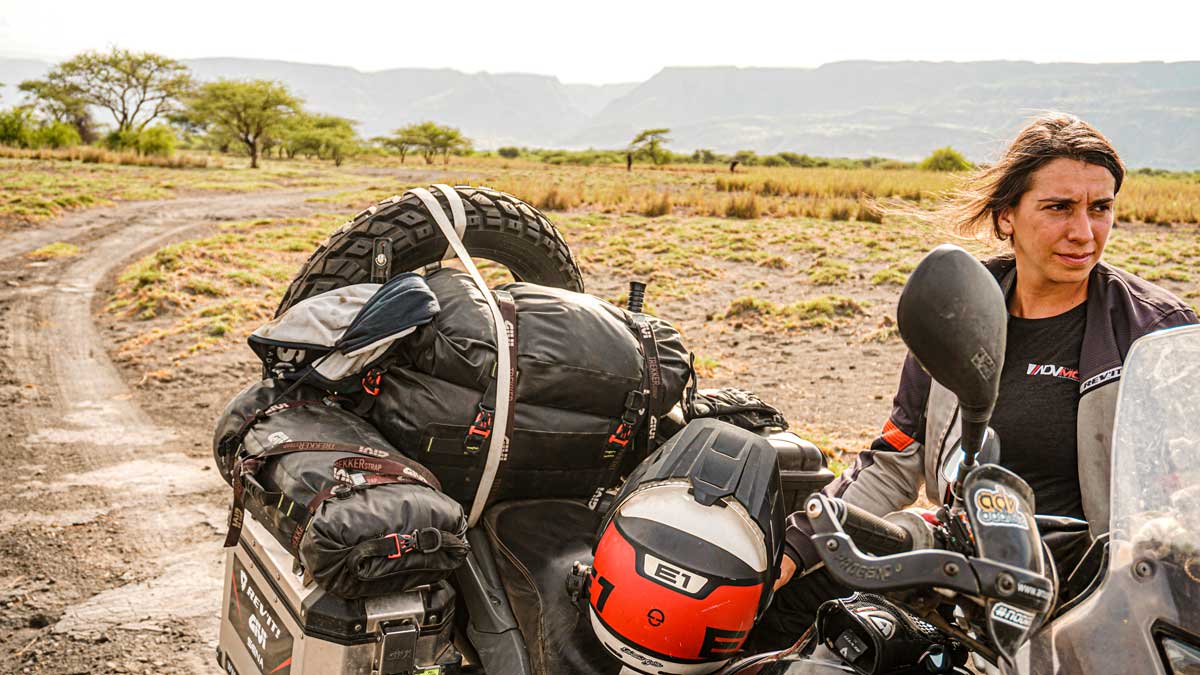 We used both aluminum panniers and soft bags until we found our best option for long trips.
 Manu Torres (Spain) and Ivana Colakovska (Macedonia) have been traveling the world since 2007. Meeting the diversity of humankind is one of their main motivations for being constantly on the road. After an experience with a Royal Enfield in India back in 2011, they decided it was time to dream big and in 2013 they acquired a Yamaha Ténéré XT660Z to hit the world’s roads another way. It was a journey that so far has taken them to 69 countries and over 170,000 km. AroundGaia.com | Instagram | Facebook | YouTube