 Sticky logo
 Search


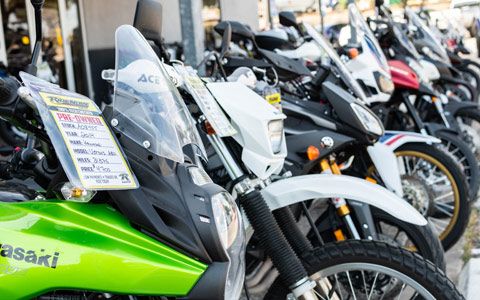
After spending almost a decade in motorcycle sales, life at the dealership has given me some insight as to why new motorcyclists may struggle when choosing their first dual-sport or adventure motorcycle. The tricky thing about this category is that there’s so much to choose from, and the spectrum spans from barely street-legal enduros to $30,000, high-tech travel machines. All too often I see bikes get traded-in that simply shouldn’t be there—a three-year-old Tiger 800 loaded with high-end aftermarket gear and 800 miles on the odometer, or a KLR with a small dent in the tank that hasn’t even been broken-in. So, as a new and aspiring motorcycle traveler, where do we start and how can we avoid mistakes that many riders make when choosing your first ADV bike?
1. Is ADV Riding for You?
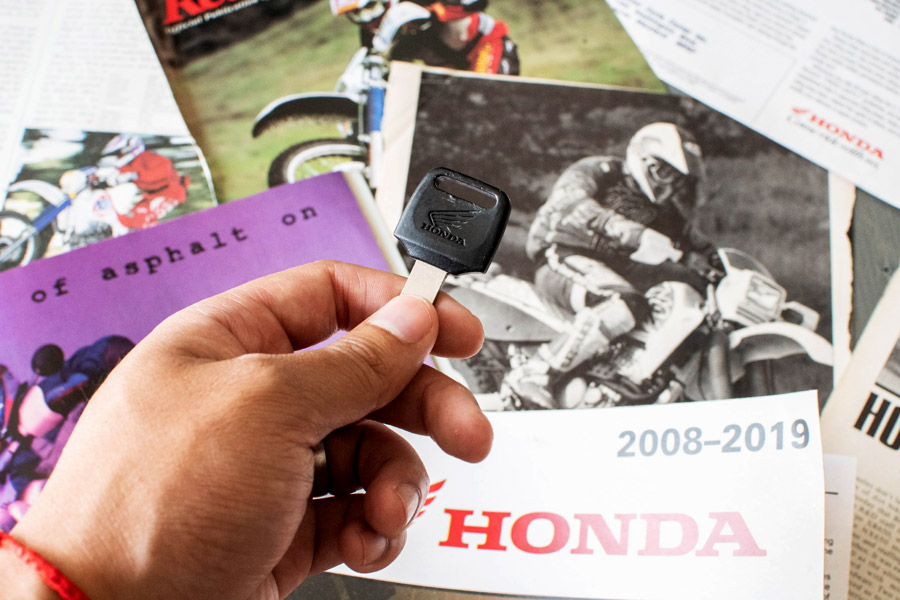
Many motorcyclists may find themselves in an experience they didn’t sign-up for. There are lots of documentaries that paint an unrealistic picture of what adventure motorcycling could be, depicting wheelies through incredible landscapes while piloting really cool machines and moto camping on top of the world under the Milky Way. What these movies often fail to show is the rough patches one experiences along the road—spending hours fixing a mechanical issue in a desolate location, or even overcoming social and economic boundaries that can get very real, very fast. And while I don’t wish to scare anybody out of the idea of exploring the world of adventure motorcycling, it’s not for everyone.
In many ways, ADV riding can be the pinnacle of the overall motorcycling experience. You’ll make life-long friends, explore incredible landscapes and maybe even absorb unique and enlightening cultures. But, living the ADV life can get dirty. If the idea of not showering for a few days is a deal-breaker, or taking a tumble every now and then, adventure motorcycling might not be for you. Think about how you’ll realistically use the motorcycle now and in the future.
2. New or Used?
While buying new or used both have their advantages, there are other factors to consider besides price tags. My advice to customers when they’re considering a new or used ADV motorcycle is—if you can comfortably afford a new bike, buy the new bike. We have to remember that these are machines built with a range of tolerances and things can and will go wrong. When it comes to the dual-sport and adventure bike categories, the most important thing to me is reliability, and bikes are generally most reliable when they’re new.
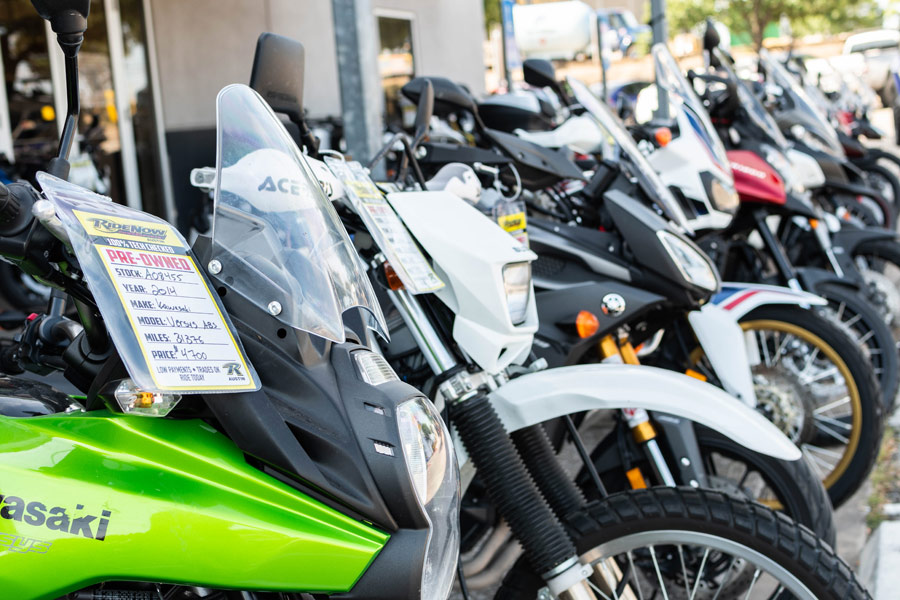
However, one of the big advantages of going with a pre-owned bike is many times they’ll come with sensible upgrades like luggage, crash protection, and comfort items. Do lots of research before you buy a new or used bike, and be sure to poke around on a couple of forums to learn about the most common issues with each bike. Take your time to inspect it, ask for service records and definitely take it for a test ride.
Pro Tip: A second or third model year of a motorcycle may be more reliable than the first. Manufacturers need a few years to work out lots of the bugs and kinks that can only be found through selling thousands of units.
3. Wrong Fit
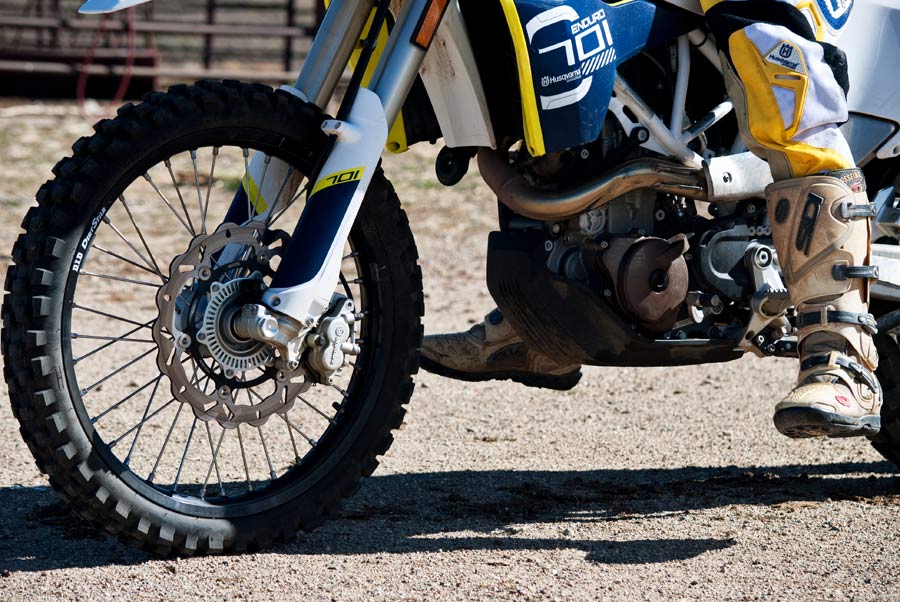
Because there’s so many bikes to choose from, new motorcyclists may easily pick a bike that doesn’t fit his or her needs, or even physically. For some motorcyclists, the answer is to eventually have two motorcycles—a lightweight dual-sport or enduro, and a long-distance adventure touring rig.
Even if your heart is set on a specific motorcycle, take the time to go and sit on all of them. Some of them have adjustable seat heights and a few manufacturers offer "low-seat" models as well. A well-tailored suit in the wrong color is still a better option than one that is too big or too small.
Read more about ADVMoto’s 10 Tips for Short Riders
4. Overspending
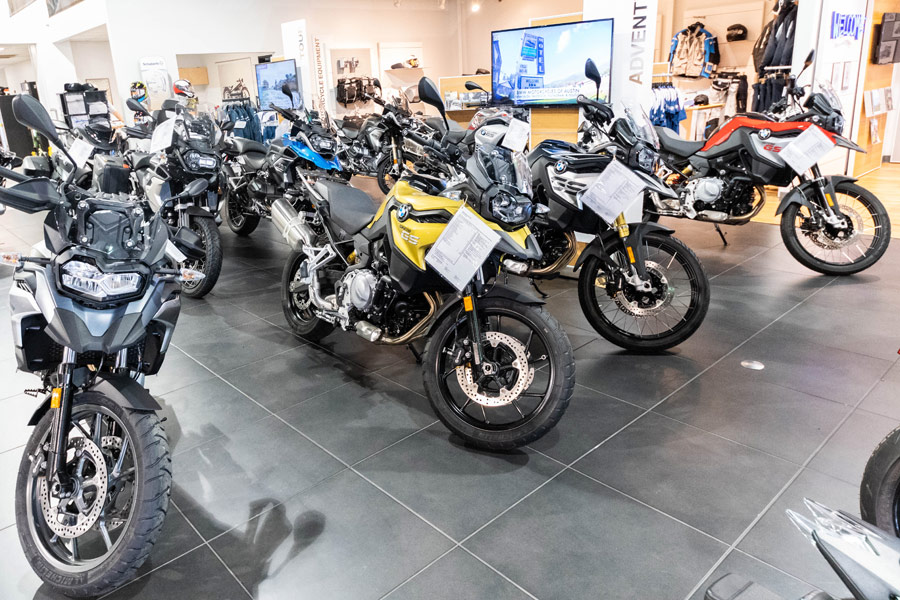
When it comes to recreational vehicles, I’ve always had the mentality of—if you can’t buy it with cash, you probably shouldn’t. Interest rates are generally higher on powersport vehicles, and all too often I see new riders buy “too much bike.” Customers may think the more they spend on a machine, the more “capable” it is, which simply isn’t true. That said, if there’s one place I can recommend to splurge a little bit, it’s with your safety gear.
I’ve seen lots of new riders sign paperwork on a deal that doesn’t make sense for them financially (there’s no good reason to sign a contract on a motorcycle with a 20% interest rate). If your financial house isn’t in order, you can purchase a motorcycle to help rebuild your credit, just be sure to do it on a deal with a low interest.
{youtube}oB6usIXm-mE{/youtube}
Pro Tip: Don’t be afraid to negotiate on price. If you don’t bother asking, the answer is always “no.” My recommendation is to have a clear, reasonable, out-the-door number in mind with a couple of hundred bucks to sway either way.
5. Listening to Bad Advice
In a world of filled with social media influencers and internet machoism it’s easy to get wrapped up in bad advice (you should also take my words with a grain of salt). No motorcycle can “go anywhere and do anything” and no gear is “100% waterproof.” No bike is “perfect for every rider” and yet we hear these phrases time and time again.
One analogy I use to talk someone down from buying too much bike—Imagine you’re learning to drive a car. Technically, you could learn how to drive in a Corvette Z06, but from a safety and practicality standpoint you should probably first spend a couple of years in something like a Mazda Miata. Your next car could be a Camaro. And by the time you’re ready to upgrade, you’ll be a much more confident and competent driver in a Z06. A common excuse to over-purchase is “you’ll outgrow a bike if it’s too small.” But, that should be the point and we should view motorcycling as a learning process.
Pro Tip: If you can’t strike a deal on a specific motorcycle, don’t fret. There are many others like it. I’d say the most powerful skill to learn when buying a motorcycle is knowing when to say “no.”
We all start somewhere. Go your own pace. Forget the specs. Do your research. Buy the bike, get training, then go out and get your money’s worth.
* * *
If your best friend or spouse wanted to dive into the wonderful world of adventure motorcycling, what type of advice would you give them about buying his or her first bike? Let us know in the comments section below!
Andrew Nguyen joined the ADVMoto team after completing his solo, coast-to-coast Trans America Trail trip in 2015. His obsession and passion for motorcycling allows him to become fully involved in his work as a photojournalist and editor. While he appreciates all bikes, he’s most interested in old, rare, or unique machines. Expect him to show up on something different every time you see him.