 Sticky logo
 Search


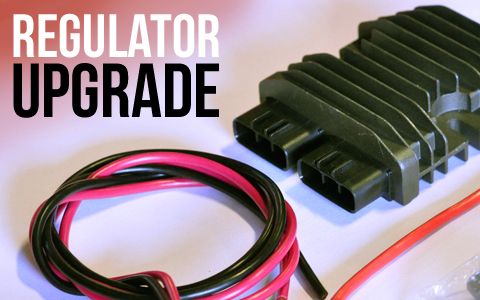
Many of us who ride adventure bikes have experienced charging system problems, and know just how frustrating it can be—especially on long trips. Nobody wants to spend a good riding day troubleshooting an electrical problem, trying to track down replacement parts far from home, and waiting for them to arrive.
Unfortunately, motorcycle charging systems have a tough job in a very stressful environment, and component failures are not uncommon. The charging system on most modern motorcycles consists of a stator, which produces alternating current (AC) for charging the battery, and a voltage regulator/rectifier which has two distinct responsibilities: rectification and regulation. The rectifier function is responsible for converting stator output to direct current (DC), which the battery requires for charging. The regulation function is just as important, preventing damage to the battery from high voltages due to overcharging.
Consider upgrading your voltage regulator/rectifier using a Universal MOSFET Regulator Kit from RM Stator. The kit works on almost any bike, and will improve the charging system with more accurate voltage regulation, cooler regulator temperatures during heavy use, and long-term reliability.
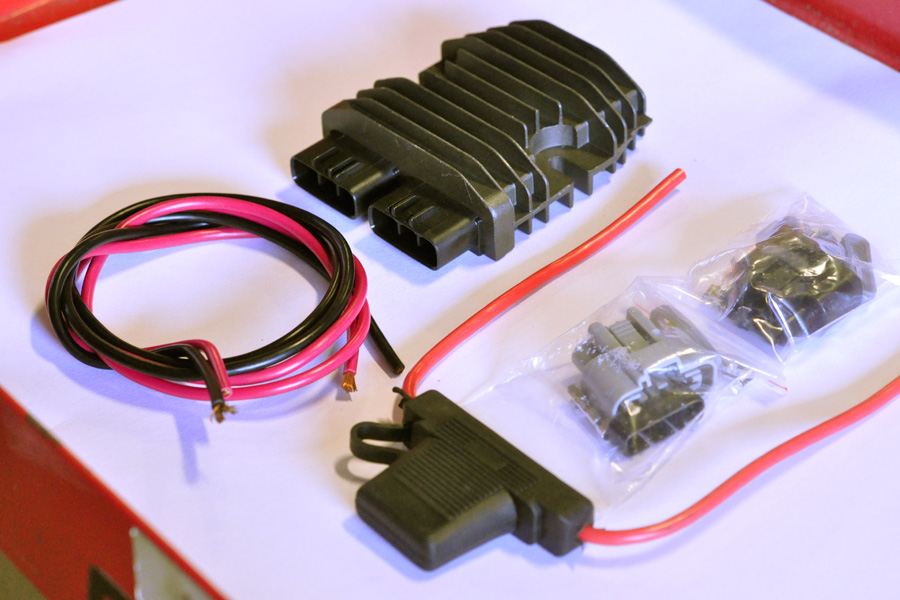 The RMSTATOR RM30510H Universal MOSFET Regulator Kit with all necessary components for a complete installation, including regulator, battery wiring with fuse holder, and brand new sealed connectors and terminals.
This component is often called a regulator, a rectifier, or both, which can be confusing since it performs both functions in one unit. What many are unfamiliar with are the different types of voltage regulator/rectifiers. Most manufacturers use what is often called a shunt-type regulator, although newer and more expensive models sometimes use a Metal Oxide Semiconductor Field Effect Transistor (MOSFET) regulator. But technically speaking, both types are shunt regulators, the difference being in the components they use to do the job.
The regulator function of a voltage regulator/rectifier is shunting, or redirecting, current from the stator to ground to be dissipated as heat when it senses the battery voltage is high enough, and therefore fully charged. A more common shunt-type regulator uses a solid-state electrical component called a Silicon Controlled Rectifier (SCR) as a switch to send stator current to the battery or to ground when the battery is full. A MOSFET-type regulator, however, uses the much more efficient MOSFET transistor to perform the switching.
The main differences are in switching speed and heat generation. The SCR is very slow to switch, requiring lots of electrical current and resulting in a great deal of heat, and variation in the battery voltage. The MOSFET is extremely quick to switch positions and requires much less current, resulting in a much cooler unit and significantly more stable battery voltage. Remember, heat is the primary killer of voltage regulator/rectifiers, so an upgrade that runs cooler and works better makes a lot of sense.
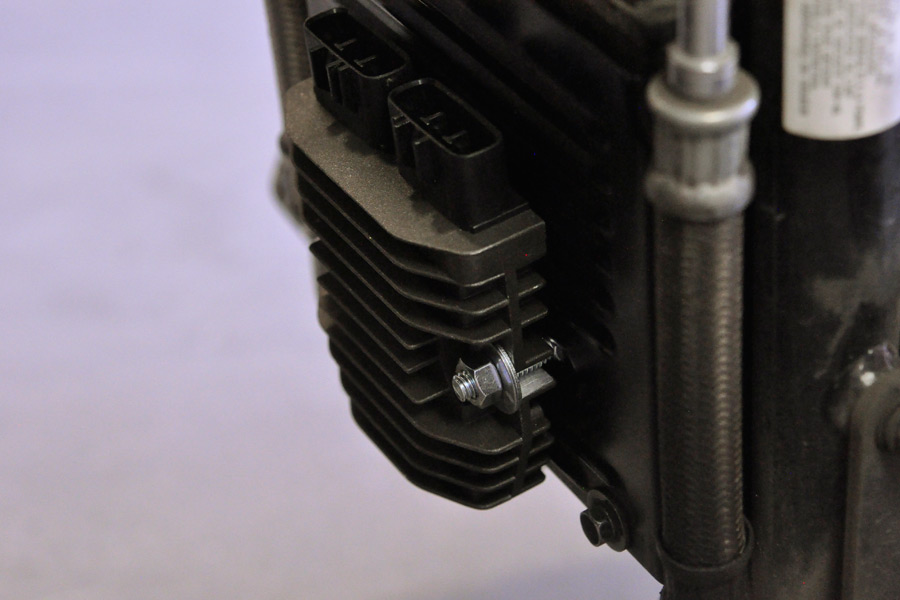 The Universal MOSFET Regulator mounted in an excellent location for airflow and reliability on the front of the frame. This example is mounted on a Suzuki C90 Boulevard cruiser motorcycle, but the idea applies to all makes and models.
Before you begin, it’s important to make sure your stator is in good working order. A stator test can be done easily with a common multimeter and a few simple resistance tests. To begin, identify where the stator is located (see your service manual), find the wiring harness exiting its side cover through a rubber grommet, and follow the wires until you find the connector. You’ll want to identify the stator wires, which are usually three wires of the same color (often yellow or white) attached to a three-pin connector. Unplug this connector from its mate and set your multimeter to the lowest resistance (ohms) setting available. Take three resistance measurements between each pair of two out of the three wires. You’ll want the same measurement from each reading; depending on your meter this can be 0.4–0.8 ohms or so.
Next, repeat this test between each of the three wires and a good frame ground or the battery—you’ll want this measurement to read “OL” (or however your meter identifies an open circuit). These tests tell you that your stator coils are in good shape, and there are no internal shorts to the stator core or engine case, which would reduce or remove output. If this checks out, you’re ready to upgrade to a MOSFET regulator.
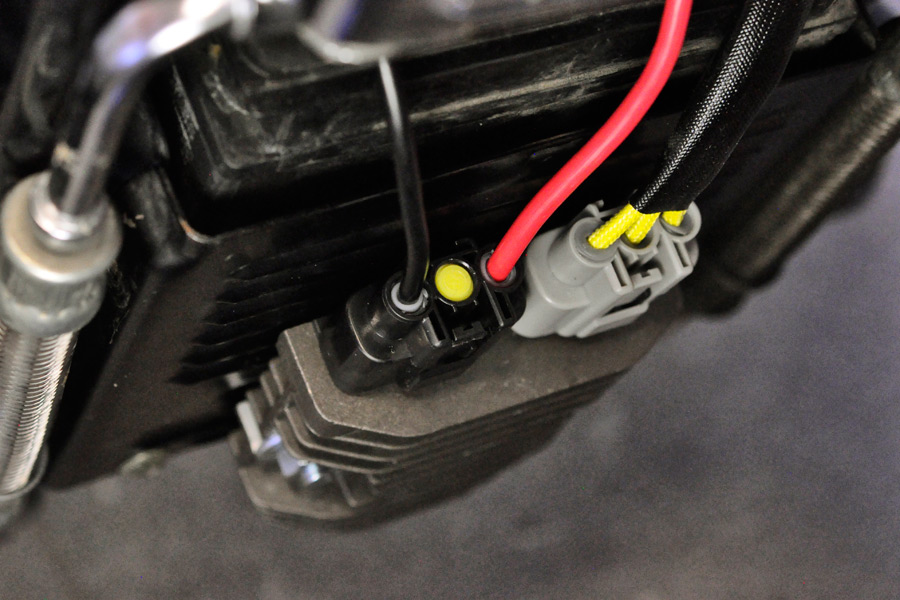 The included new stator connector is installed on the three stator wires with the included new terminals and seals. The included new red and black battery wires with inline fuse holder are installed as well.
The RM STATOR Universal MOSFET Regulator Kit comes with everything you need to easily install it on almost any motorcycle. First, identify a mounting location. The mounting holes are slotted, and on many bikes it will mount in the same location as the original voltage regulator/rectifier. However, for an ideal installation, find a spot where the unit can be mounted away from any heat-generating components (engine, exhaust, radiator) and outside of any bodywork, oriented with the cooling fins in line with airflow.
This can often be done utilizing an existing mounting bolt, but if nothing is available a simple bracket can be fabricated from aluminum or steel. Once the mounting location is identified, route the three stator wires to the regulator connector. The original connector can be removed, and the included pins crimped on, new connector installed, and plugged into the three-terminal mating connection on the MOSFET unit. And that’s all there is to it!
While motorcycle upgrades are often focused on power, braking, and suspension, don’t overlook your electrical system. Only a couple of hours in the garage are required to install RM STATOR’s Universal MOSFET Regulator Kit, but the results will give you a charging system with greatly improved performance and peace of mind.
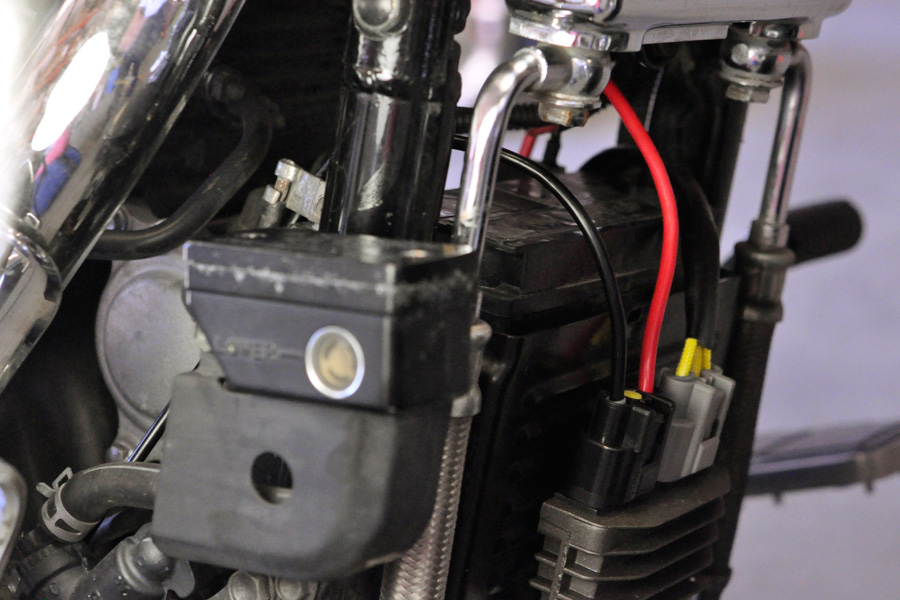 The new connectors are attached to the MOSFET regulator. The new red and black battery wires are attached to the battery terminals using the included ring terminals.
 Evan Grist is an electrical engineer from San Diego, CA, who’s been buying, selling, trading, wrenching on, and riding motorcycles for almost 15 years. Evan specializes in powersports electronics, specifically charging and ignition system components, and currently works for RM STATOR. He enjoys street, dirt, and adventure riding, often doing all three in the Northern Colorado mountains on whatever bike is in his garage at the moment.
{gallery}ARTICLES/TechTips/MOSFET_Regulator_Upgrade/Gallery{/gallery}