 Sticky logo
 Search


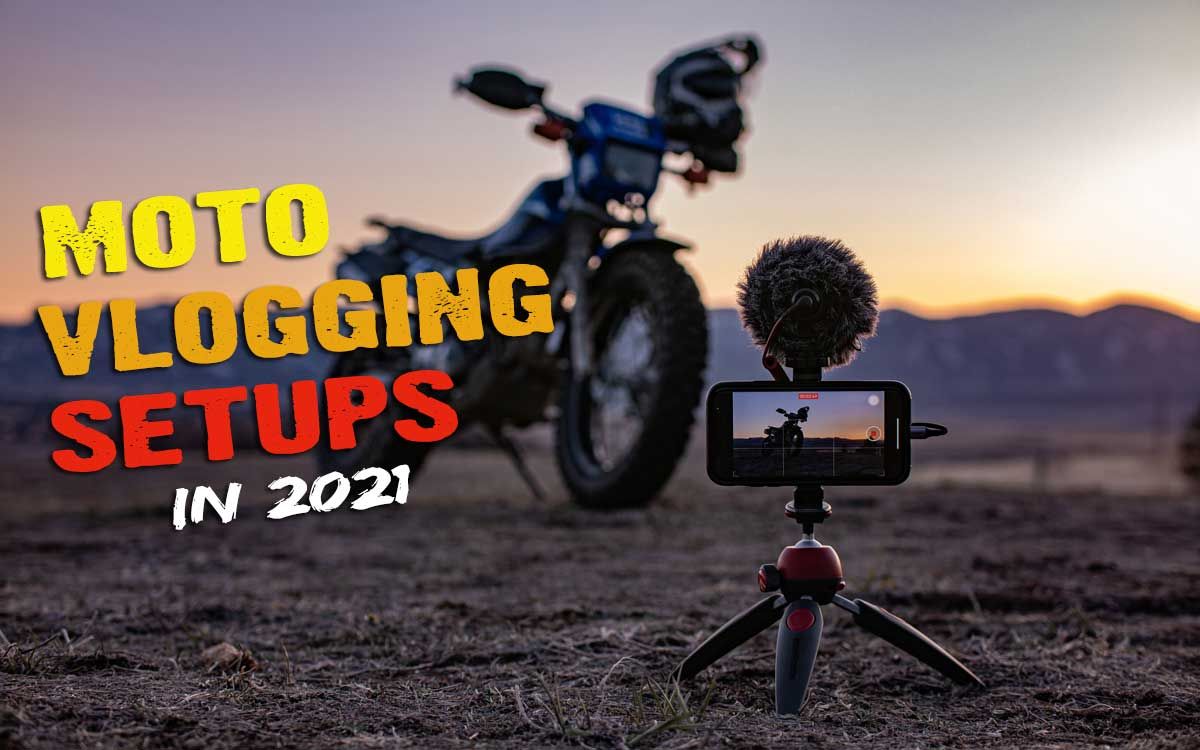
Video logging, more commonly known as “vlogging,” is a way to share day-to-day events and ideas, typically with an online audience. An early Youtuber named “M13” back in 2007 may have been the originator of moto vlogging. With a camera and microphone attached to his helmet, you could see what was going on and hear what he was saying as he rode in Taiwan. Moto vlogging has dramatically increased in popularity since then, and there are many ways to do it. However, fancy camera gear won’t necessarily make a video any more interesting. What’s important is how you tell your stories, and there’s plenty of technique that’ll help you do it well.
Helmet Cams
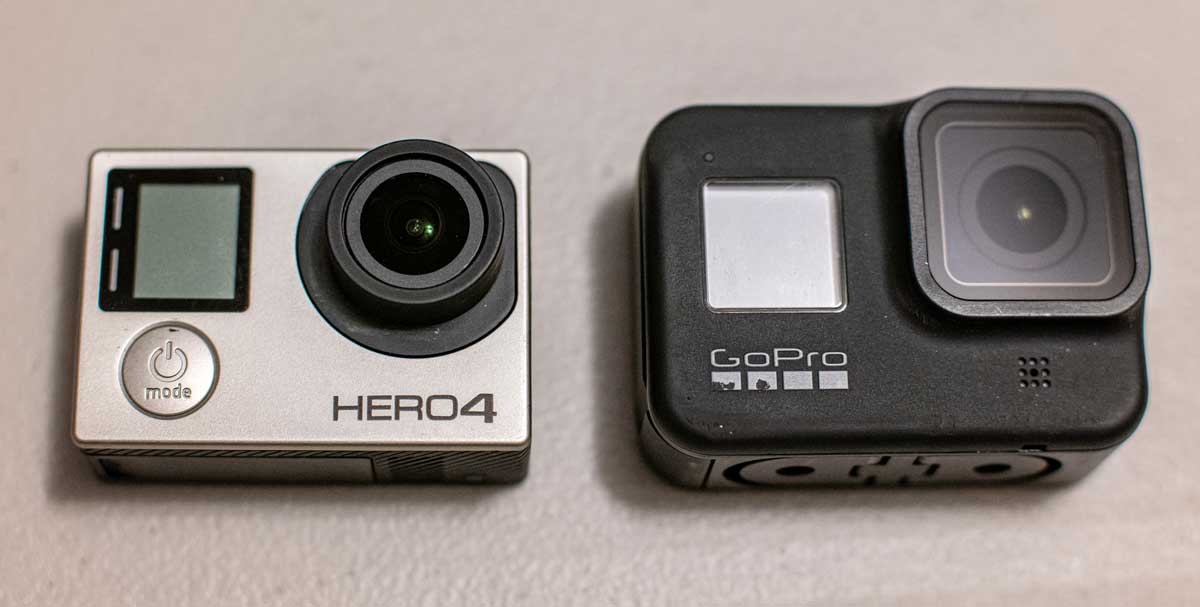
There are many kinds of action cameras that can be used on a helmet. GoPro developed the concept of an action camera and arguably still makes one of the best. Image quality, features, and the available accessories set their cameras apart from the pack, but competitors are catching up fast. If highly stabilized footage is desired, look at the GoPro Hero 7 Black and up. These have HyperSmooth, which gives footage look almost Steadicam quality. The downside to the newer models is that a large, expensive adapter is needed for an external microphone.
The GoPro Hero 4 is still an excellent camera for moto vlogging. The Silver model has a touch screen on the back but doesn’t do 4K; the Black model lacks a touch screen but shoots in 4K. Used or refurbished Hero 4s are relatively inexpensive these days. Either type lacks any kind of image stabilization but will shoot in SuperView, which provides a very wide field of view, making the camera appear to shake much less noticeably while still providing a natural off-road look. What makes the Hero 4 great is that the microphone adapter can be found in different angles and is much smaller, lighter, and cheaper than the adapter for the newer GoPros.
The best video in the world won’t matter if the audio is terrible. A motorcycle is a noisy machine, and it can be challenging to get good audio from inside a helmet. Of course, a voiceover can be over-dubbed, although it’s often preferable to hear what the rider is saying in real time. The original Apple EarPods provide the best moto vlog microphone. This mic doesn’t allow the engine and wind noise to overpower the rider’s voice like more expensive mics tend to do, yet it still sounds good, with almost voiceover quality. Simply cut the earbud parts off and wrap the microphone itself in a piece of craft fur to help cut the wind noise. A TRRS-to-TRS adapter will also be needed to make this setup work with any GoPro mic adapters. The mic usually works best when mounted inside the helmet around the chin area. This setup works on a GoPro but may not on other cameras like the Sony FDR-X3000 action camera.
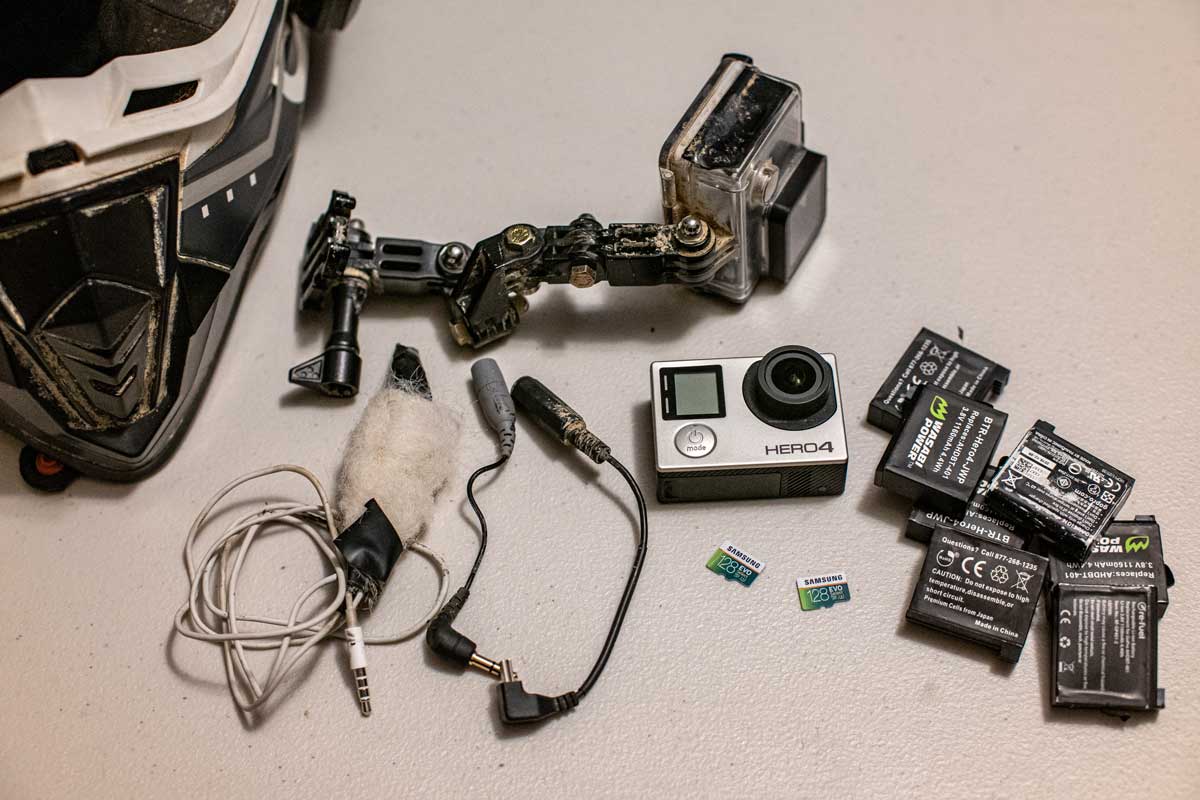 Everything needed to film a moto vlog.
Mounting an action camera on a helmet seems simple enough but can be a bit tricky. If you plan on using a GoPro with HyperSmooth, make sure that no part of the helmet will be in the frame. Otherwise image stabilization will make the helmet appear to move independently of the camera, which can be awfully distracting. The simplest way to mount the GoPro is to use one of the included sticky mounts. Getting the camera in the right spot will require some arm mounts. A couple of arms come with the GoPro, but more may be needed. They also can be found in many different lengths and styles. Take some time to plan where you want it to go. Cleaning the surface beforehand with rubbing alcohol will allow the adhesive to stick best. Another method of camera mounting is using a specialized helmet chin mount like the Proshot helmet cam mounting system. This allows the camera to be in the perfect spot where a sticky mount just wouldn’t do the job.
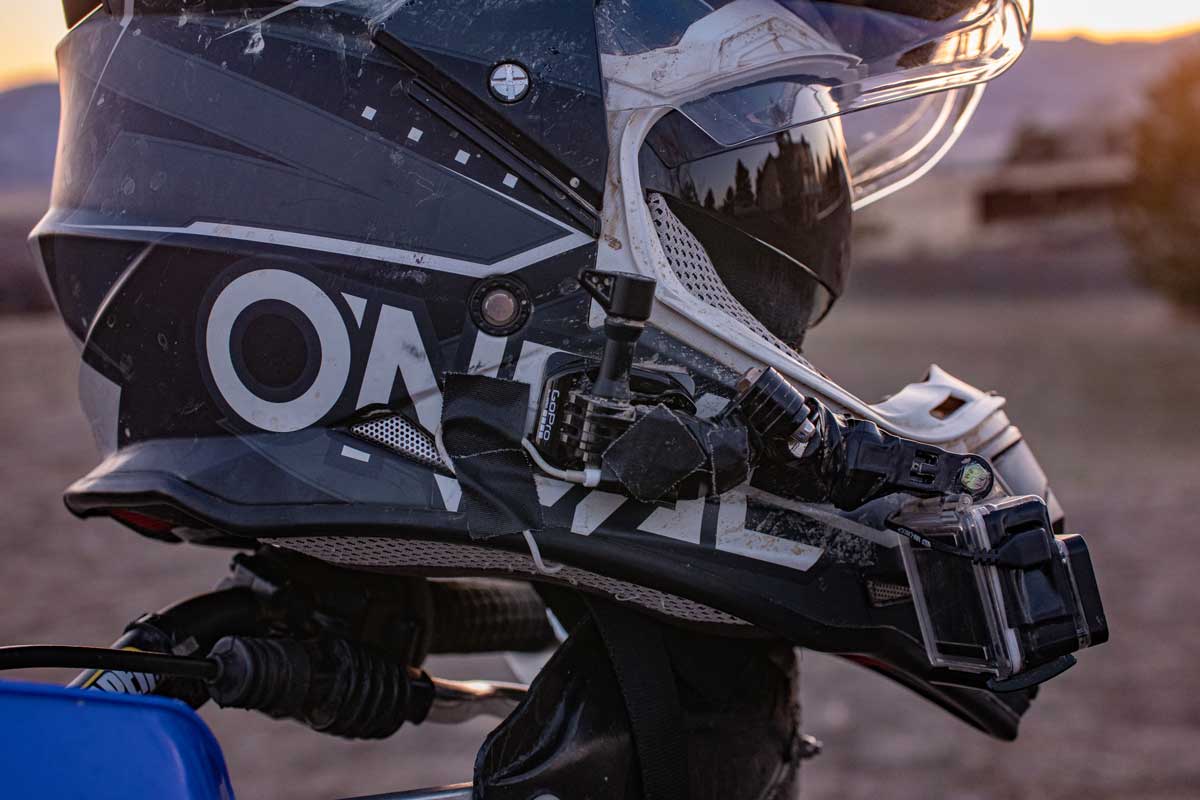 A different adapter arms were used to get the camera in the perfect position so the helmet would not be in view.
Before filming your first moto vlog, test everything. The camera should be pointed at the right angle, the sound acceptable, batteries charged, etc. Be certain to have plenty of spare batteries and memory cards for however long you intend on videoing. Ideally, you should have a battery system that’s easy to swap when the camera is attached to the helmet. Organize the audio cables using electrical or gaffer tape. The big microphone adapter of the new GoPros will mount best with some 3M Dual-Lock strips.
B Camera
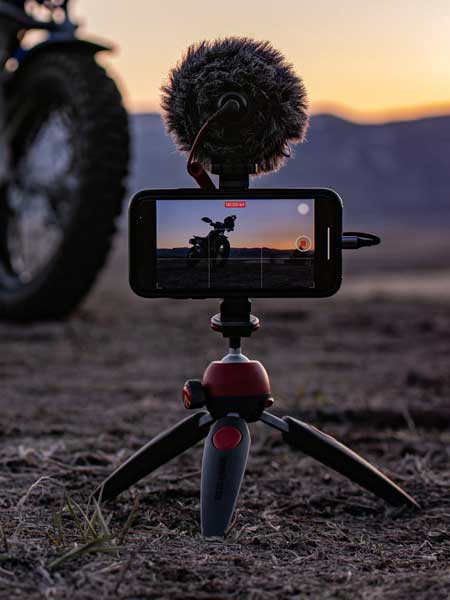 Using a smartphone with a mini tripod to get some sunset footage.A helmet cam will often be the primary in a moto vlog, but to make things more visually interesting another camera can, or perhaps should, be used to capture what’s known as “B-roll.” Extra footage, separate from the main footage, is essentially what B-roll is. It’s edited in with the main footage to help show context, make things more interesting, fill in details, and show what’s going on around you. For example, a time-lapse showing the clouds moving by, or a detailed shot of a gadget you are discussing.
A second camera can really come in handy. But while a fancy big camera with interchangeable lenses can take some great video it also takes up valuable space on a motorcycle. Why not just use the extra camera most everyone has with them such as those built into the new smartphones these days. Multiple focal-length cameras mixed with high-resolution video are just the beginning of what these modern phones can do. They’re also quick and easy to set up and use.
There are a few accessories that make it easier to capture B-roll. A mini tripod allows the camera to be held at any angle, say for capturing a ride-by shot. Tripods also keep the camera still for time-lapse work, or as a makeshift selfie stick to get some regular talking head footage when needed. To mount a phone on the tripod, you will need a tripod phone holder. These can be cheap or expensive, but getting one with a cold-shoe mount built in will allow for adding things like a microphone or a light. The built-in microphone on most cameras are subject to wind noise. Having an external microphone with a windscreen can make a huge difference.
Editing
A single long video clip is seldom interesting or exciting. We’ve been editing moving pictures since the early 1900s, and cutting clips together is the basis for video editing, which provides endless creative potential. The goal of an edit is to find the best way of telling the story. Every story basically has a beginning, middle, and end. The beginning usually establishes where you are and what the story is about. Think of the middle as the journey with all the obstacles along the way. And the end is the final destination, along with an appropriate and fitting conclusion.
Today, there are many computer programs and smartphone apps available to aid in editing video. Before signing up for expensive editing software like Adobe Premiere Pro, consider getting a cheap or free option. Blackmagic Design offers an entirely free editing environment called DaVinci Resolve. There’s a paid version, but the free one offers plenty of features that will be good enough for most users. The downside is the learning curve, and that it also requires a more powerful computer to run correctly. Imovie is another decent video editing package if you’re using a Mac. There are also plenty of phone apps available to edit video, like the GoPro Quick app.
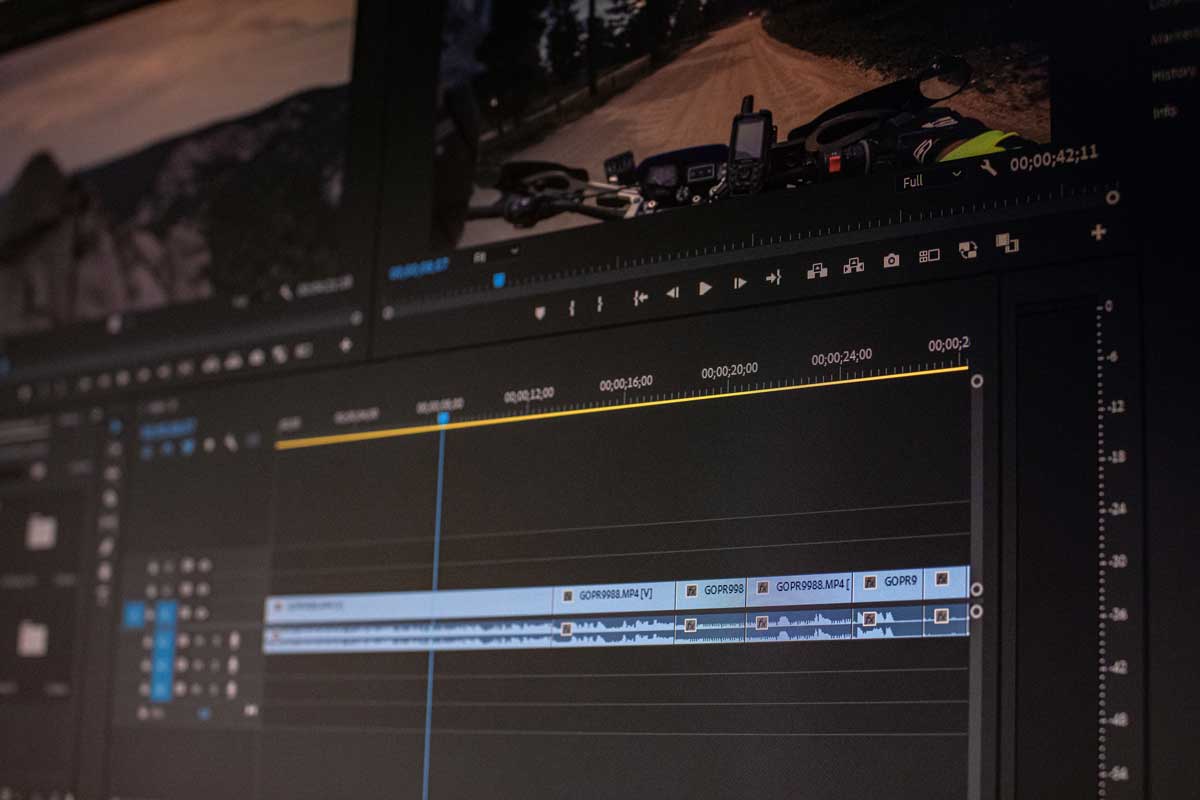 Editing a moto vlog in Adobe Premiere Pro.
Filming and editing video can certainly be a challenge to learn, and take a lifetime to master. With endless creative ways to make an adventure moto vlog, what story will you tell?
 Wes Mathias lives on the front range of Colorado’s Rocky Mountains and rides a Yamaha TW200. Taking all backroads, he explores the many OHV and jeep trails the beautiful state has to offer. Wes works as an automotive technician for his day job and uses that experience to learn how to work on his motorcycle as well as teach others how to do the same through his YouTube channel, TDubsKid.