 Sticky logo
 Search


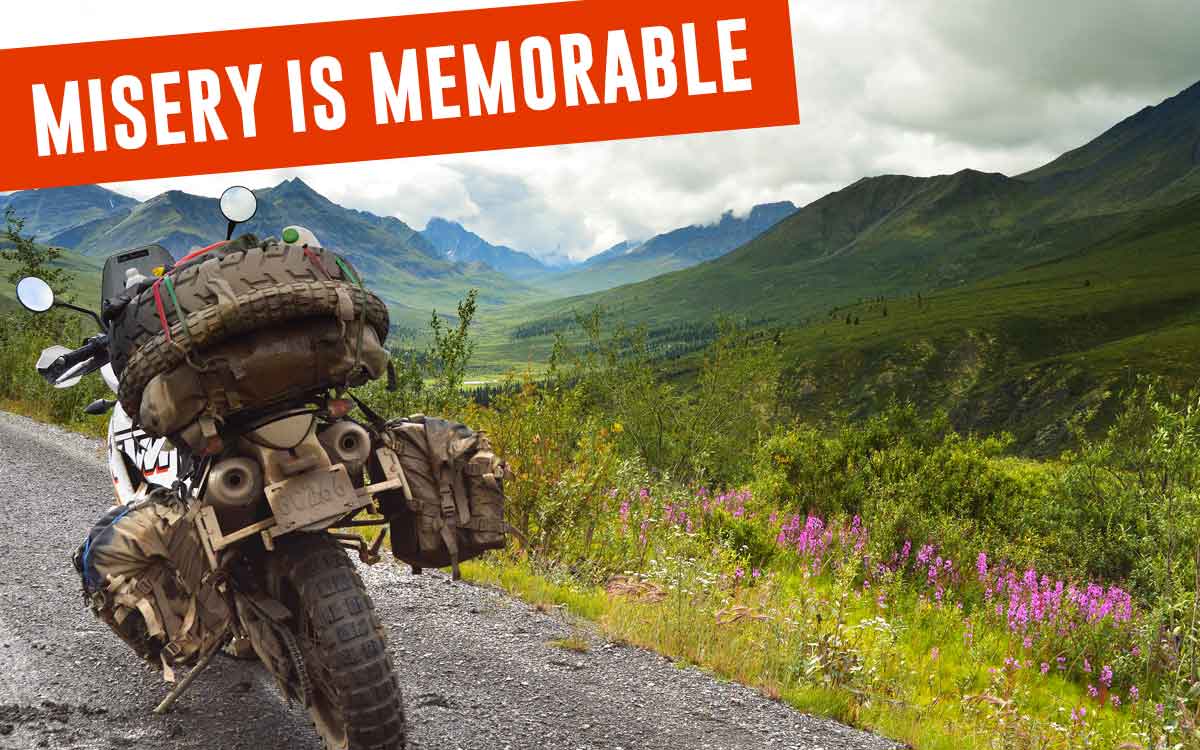
The hotels we stayed at during this last decade of moto travel weren’t the constant highlights of our trips. Sure, there were some situated around jaw-dropping landscapes. And yeah, getting out of the riding gear to grab a beer felt good. But nothing much was burned into our memories.
On the other hand, every time we camped at a remote location with no one around, a small fire and only the sound of the wind, the trees, the night noises, and stars to keep us company―those memories remain with deep-felt reminiscence. Not even the slickest hotel will ever beat the fragrance of fresh mountain air and pine trees, mind-blowing sunsets, and campfire smoke under the Milky Way.
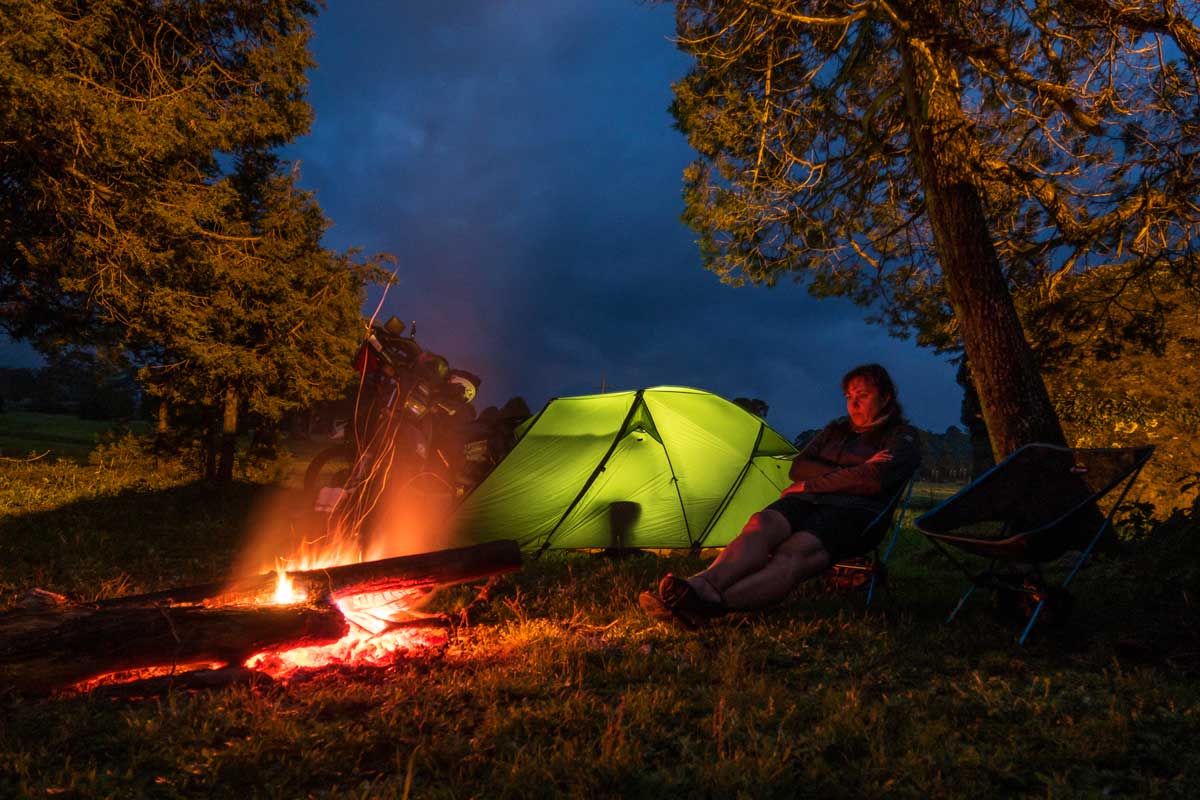 In Copper Canyon, Mexico, the aroma of pine trees and fresh rain were absolutely priceless. This is what actual five-star accommodations look like.
Camping with the bare essentials is a minimalist activity that can have a remarkably positive effect on many. If you camp often enough, there are bound to be horrible days as well, but even amid the damp, cold sleeping bags, the smelly undertones of moldy canvas, the ice-cold nights where you can see the stars through the threadbare tent seams, camping still has an indisputable enjoyment and thrill. And for the adventure-minded who love camping, it often comes down to the old question, no matter how hard your night’s sleep was: “But did you die?”
Of all the countries we’ve overlanded on motorcycles, the U.S. has the best campsites. There are options to wild/free camp on vast amounts of government land or in unique national and state parks. Our South African currency is a joke compared to the U.S. dollar, so when we planned our six month-plus trip to the U.S. we knew camping would make up the biggest portion of our budget. However, we don’t just camp because it’s more affordable, we camp because we love it, and it allows us to stay in places with fewer people amidst incredible scenery and surroundings.
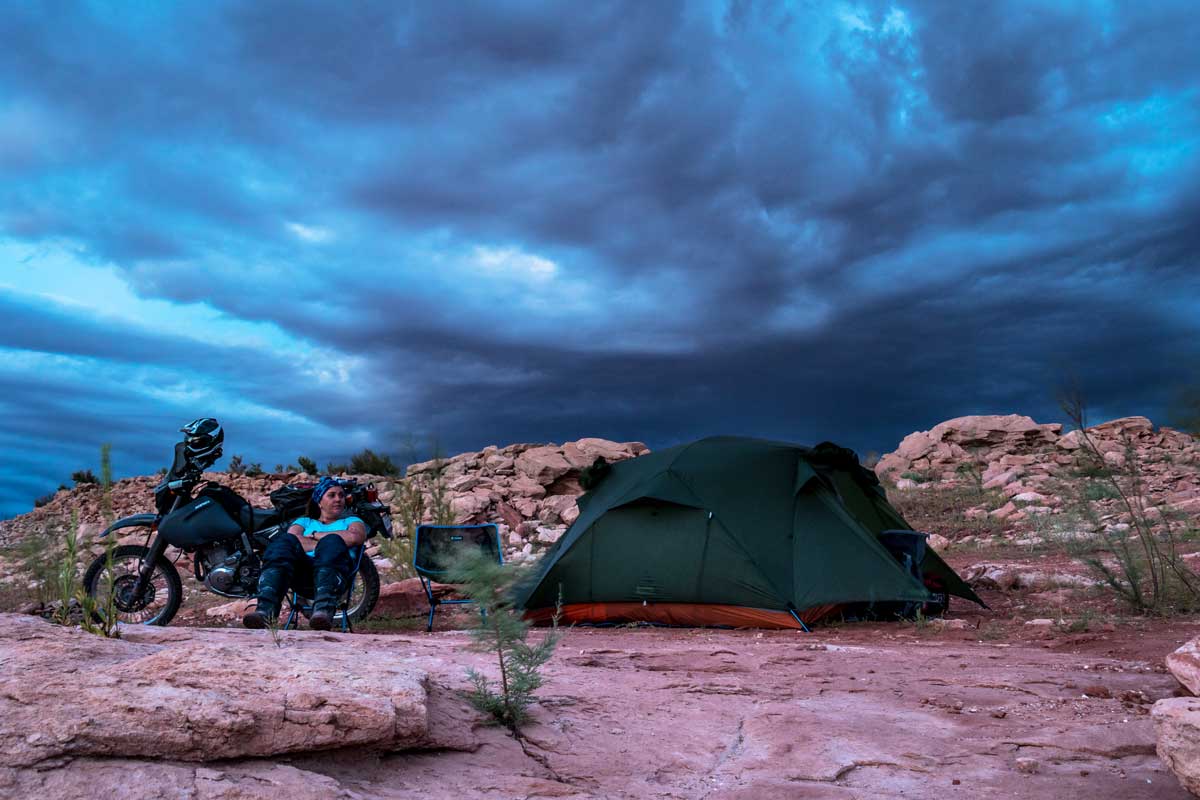 Lake Powell, with the mother of all storms rolling in. Thunder and lightning rained on us with some scary moments. Nevertheless, the landscapes and dramatic views were unforgettable.
In our wildest dreams, we couldn’t have imagined the camping nirvana that awaited us throughout the U.S. Local friends quickly hooked us up with campsite applications, websites, and the necessary passes to enter and stay in most national parks. Most campsites are well-run and clean, and many had the type of surroundings where afternoon or day hikes were possible. What was supposed to be a money-saving exercise turned into the ultimate American motorcycle road-trip experience. The camping part allowed us to experience and stay in places no city or smelly motel room could ever offer.
Combining a motorcycle trip with camping in a country as big and diverse as the U.S. is the perfect recipe to create epic memorable adventures.
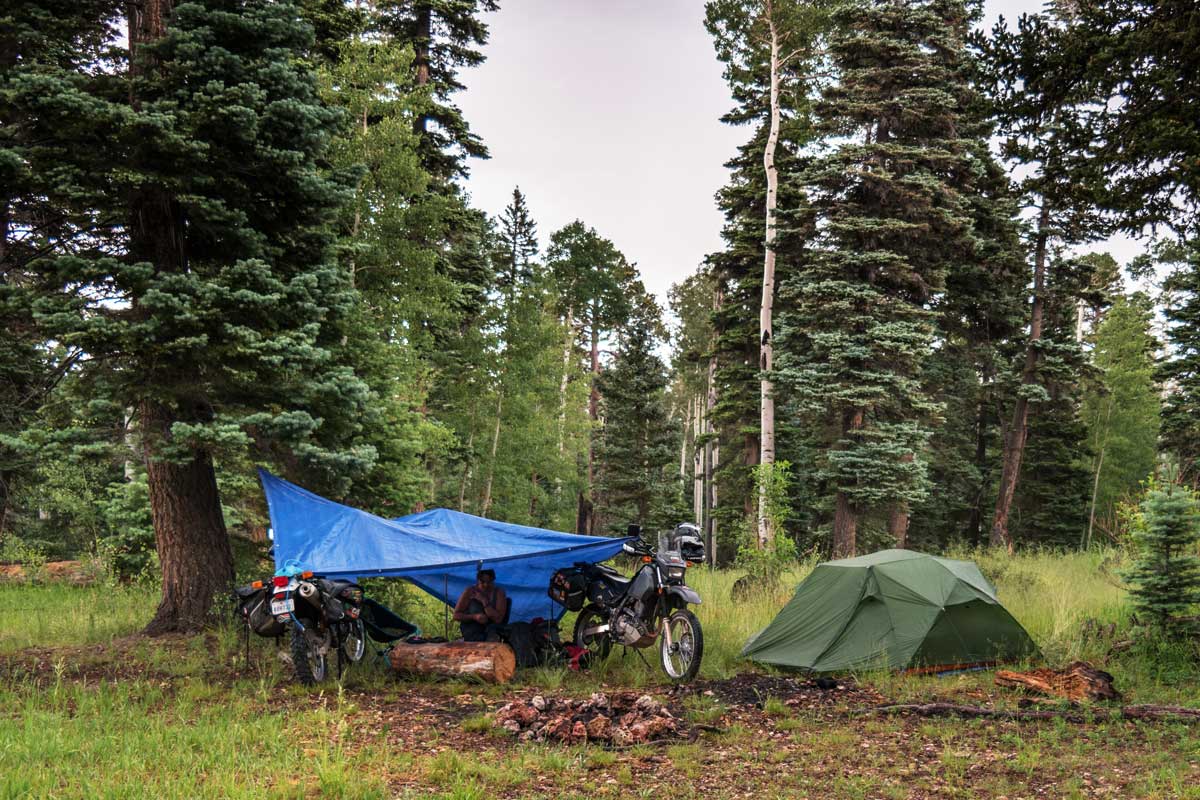 Raining at the Grand Canyon north rim. Not that the rain bothered us that much, and it helped make for incredibly vivid clear views over the canyon.
What are some of the common reasons why people choose to rough it, and why it is such an integral part of motorcycle travel?
Adventure motorcycling is all about getting out, exploring remote places, which often means riding into landscapes where tourists don’t venture. It’s about riding tracks in landscapes where there is not a soul in hundreds of miles; the freedom to get away from the crowds and grind of daily life. Most motorcycle adventure riders and outdoor enthusiasts are automatically drawn to nature. It’s primal stuff that’s embedded in our DNA; we want to make bonfires and rough it. Those who camped as children now camp as parents and grandparents. They want to keep a tradition alive and unplug from the fast-moving world around us.
Motorcycle riding is a source of happiness; blame it on all the serotonin and dopamine, the “happy hormones”—those wonderful chemicals our bodies produce. As a primary driver of the brain’s reward system, it spikes when we experience something pleasurable. With more sunlight, increased oxygen, increased physical activity, camping, and riding motorcycles, you are likely to hit all those spots. It’s the best affordable fix to the system.
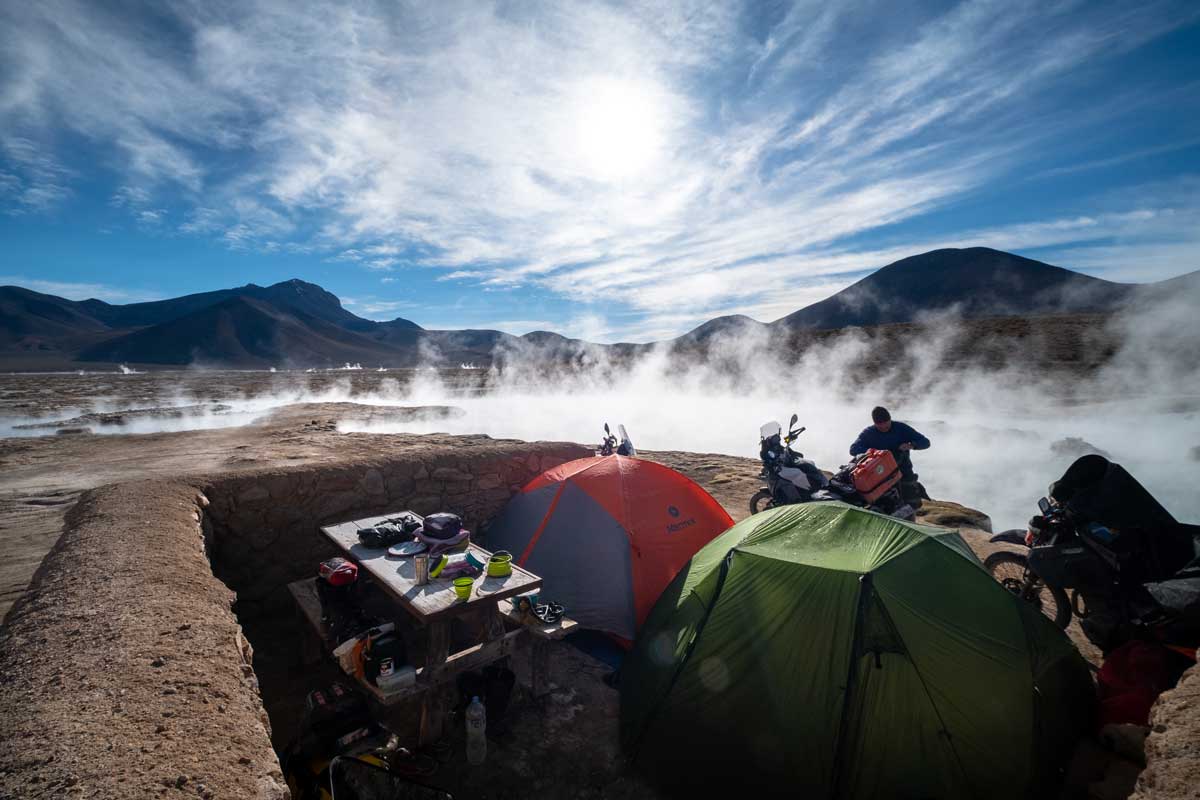 At 4,800m (15,700 ft.) the Atacama Desert, close to the Bolivian border, camping next to a hot spring. Very few venture there. Flamingos roaming close by and desert views made for some spectacular memories. And we had underfloor heating!
Over the last couple of years, having that ability to get away and be off the grid has become our preferred way to recharge. But speaking of recharging, that’s often a tricky issue for phones and other devices in remote camping spots. This is a good thing, allowing us to focus, be fully connected to the present, enjoying the surroundings and each other’s company. The great outdoors has a way of calming nerves, something that won’t be achieved in a motel being fed the latest “news” from the tube. Wouldn’t you rather be enjoying an idyllic campsite after a stunning day of riding dirt tracks on the Trans American Trail?
Camping essentials—some thoughts on camping equipment basics.
There’s no need to go overboard with camping gear. Nevertheless, be clever and invest in quality equipment that will last many years.
From poverty-spec tent camping to glamping: On a bicycle, a very small inconspicuous tent like a Swag makes sense, because a bicycle can be tucked away under some bushes allowing you to be near invisible as a camper. In some areas, if your body can handle a hammock, it’s a super lightweight shelter alternative. For solo minimalist motorcycle trips, the one-man freestanding tent with a removable flysheet is a good choice. They can pack less than 3.3 lb. and be remarkably compact. Freestanding tents pitch and pack in double time and also make camping possible on hard surfaces where regular-style tent will just not work.
For two people, a three-man freestanding tent is a great option as it also offers enough packing space for motorcycle gear inside the tent. Most quality freestanding tents have two entrances and vestibules for easy entry and exit.
I’m not a big supporter of the tents with a room to park motorcycles. They take up too much space when packed, and they’re heavy at around 12 lb. In addition, they’re not likely to survive high winds or sandstorms. We’ve also discovered it’s wise to use a tarpaulin or a dedicated cover to protect our motorcycles from the elements and sometimes prying eyes. On the other hand, dedicated tent footprints (the additional fabric added to tent floors as protection) are a complete waste of money. Instead, for years we’ve used cheap tarpaulins to help guard against floor punctures, to make a roof for when it rains, or cover our motorcycles. When a motorcycle is covered it “disappears,” making the tarp an excellent security option. But ultimately if you don’t feel safe somewhere, move on.
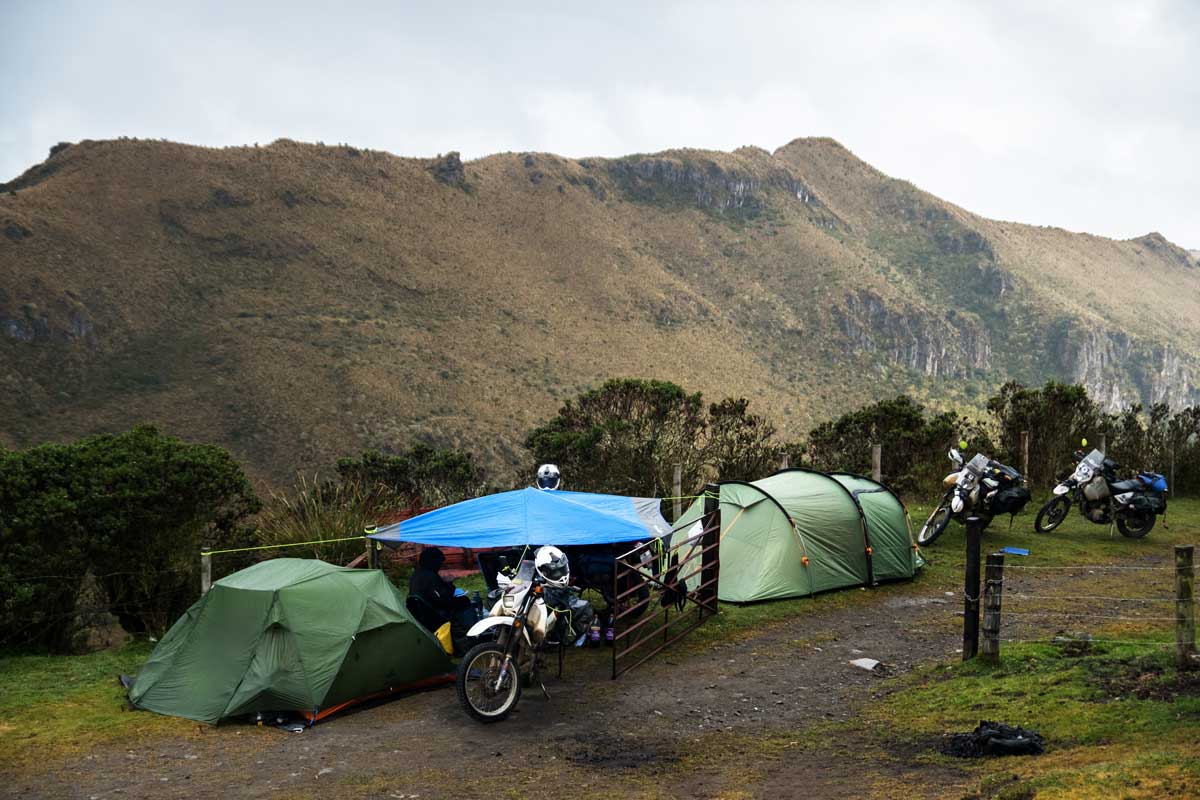 Sitting a rainy day out with friends in Colombia, it is good to have proper tarpaulins to use as a make-shift roof when you just must sit out the rain. It turned into a fun day of hot alcoholic drinks, card games, and sharing quirky travel stories.
Buy good gear to be eco-friendly
Quality tents can last 10 years, which limits the waste of buying several cheap ones and their impact on the environment. However, expensive brands do not necessarily mean quality. That said, we use our tent more than most. In Africa, for example, we pitched and packed our tent for more than 340 days.
Self-inflating mattresses
We have tested so many types of mattresses and, without a doubt, the 2.75-inch-thick blow-up mattresses are the most comfortable and are as compact as 1.25-inch-thick self-inflatables. They’re also available in lengths for tall people. Our current brand has been with us for more than five years and shows why investing in quality products saves money over time.
What’s cooking?
Cooking up some tasty grub while camping is quite a lot of fun and a very sociable event. Having a small fire going or using the multi-fuel stove is as basic as it gets but adds to the entire vibe of camping after a day on dusty tracks.
In the U.S. it’s still possible to use white gas with multi-fuel stoves, and we normally just use fuel from the motorcycle which also saves on stowing a separate cannister. On short trips we use a butane-powered Pocket Rocket. It’s an excellent piece of kit with the added benefit of being compact. And for the camp “kitchen,” we always carry a long-stem titanium spoon and a multi-tool with a knife.
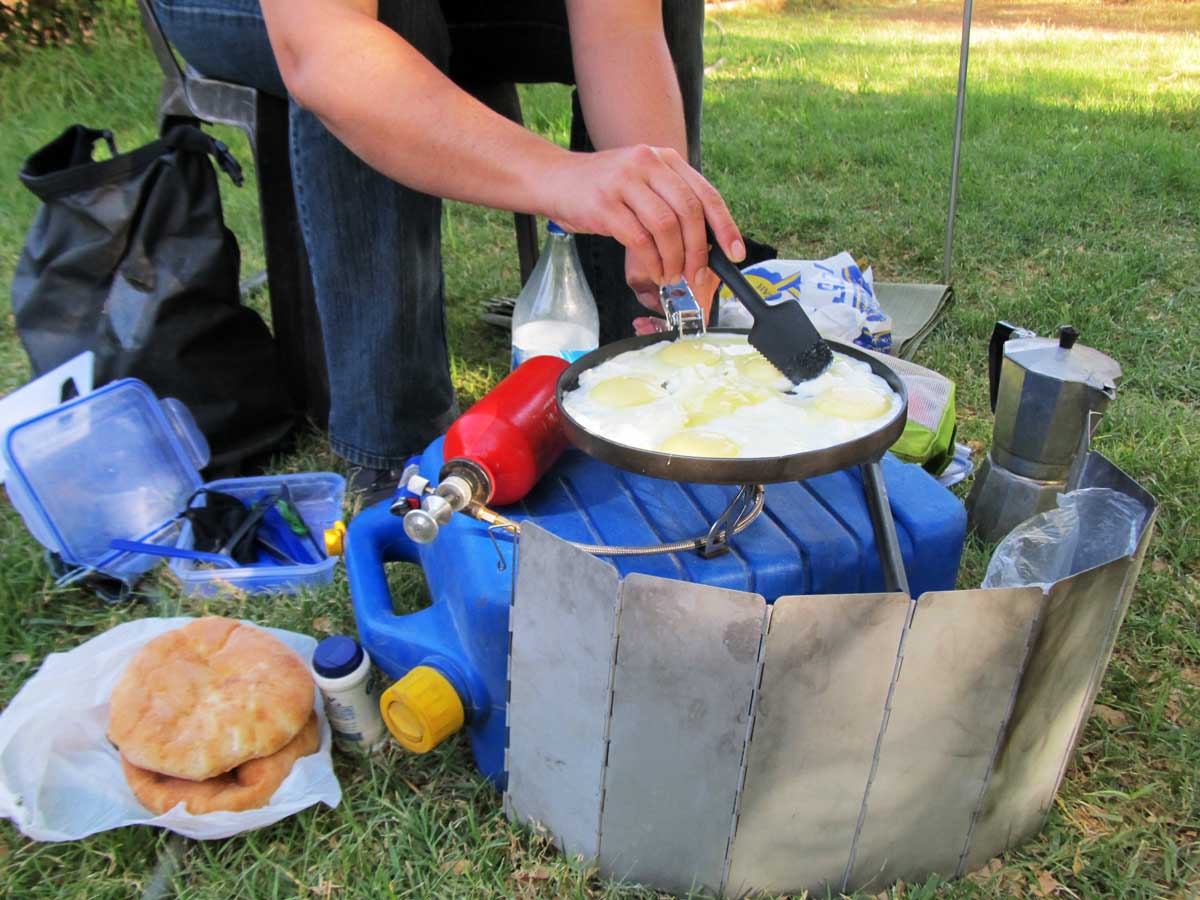 Breakfast in Sudan. There is absolutely nothing that beats a camp breakfast with eggs, toast, and coffee on a fire or a multifuel stove. We made our own aluminum non-stick skillet that went halfway around the world with us.
There is a myriad of ingenious camping products available today. From coffee presses to fancy over-the-top expensive cookers that can also charge gear via USB ports (ironically, the same stuff you may be trying to get away from!). That said, camping and adventure riding is about keeping things simple, uncluttered, and basic.
Enjoy and relax with the simple pleasures and that camping offers.
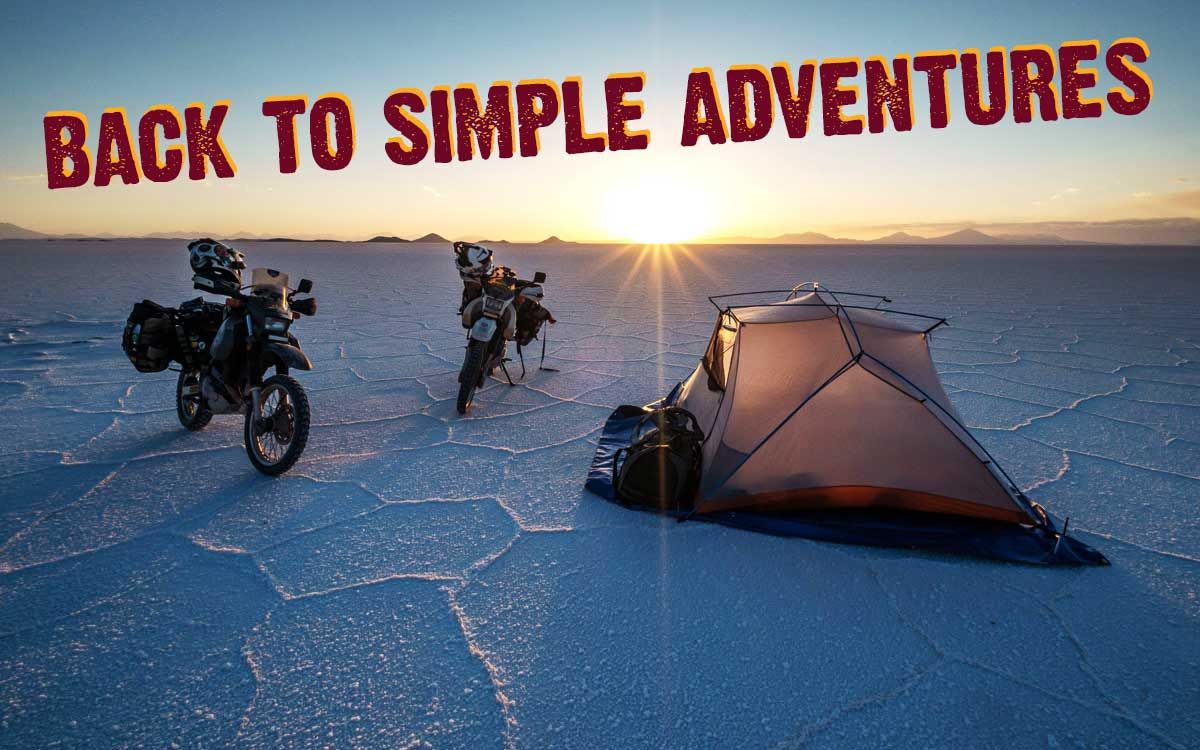
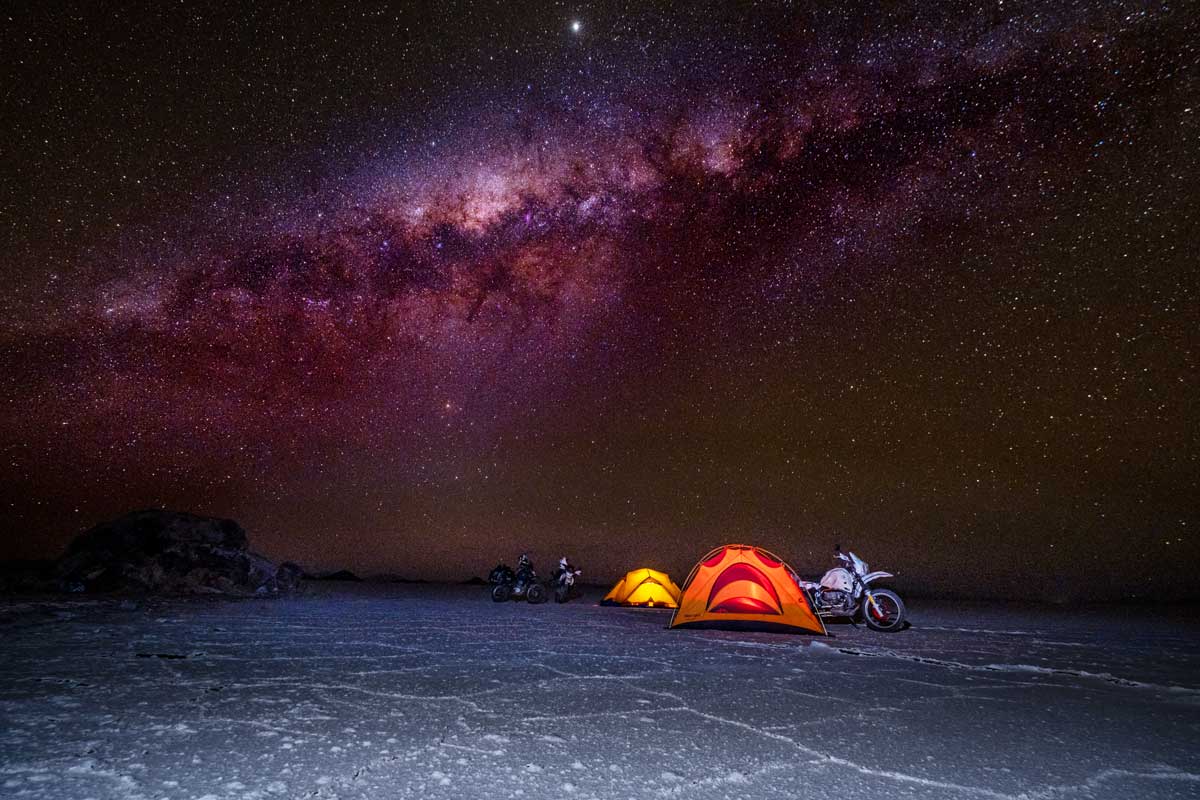 The Milky Way drifting overhead on the Salar de Uyuni in Bolivia. Not much to say, just speechless stuff!
 Michnus Olivier, genX’er born and bred South African product. Known on PikiPikioverland.com as the tire fixer. Not known to follow or believe his own advice however he loves to share stories and inspiration with others. Michnus and his better half, Elsebie, left South Africa 10 years ago on an initial six-month planned motorcycle trip up to Europe through Africa. Sold mom and the family pets, hit the road exploring on a semi-permanent basis to this day.