 Sticky logo
 Search


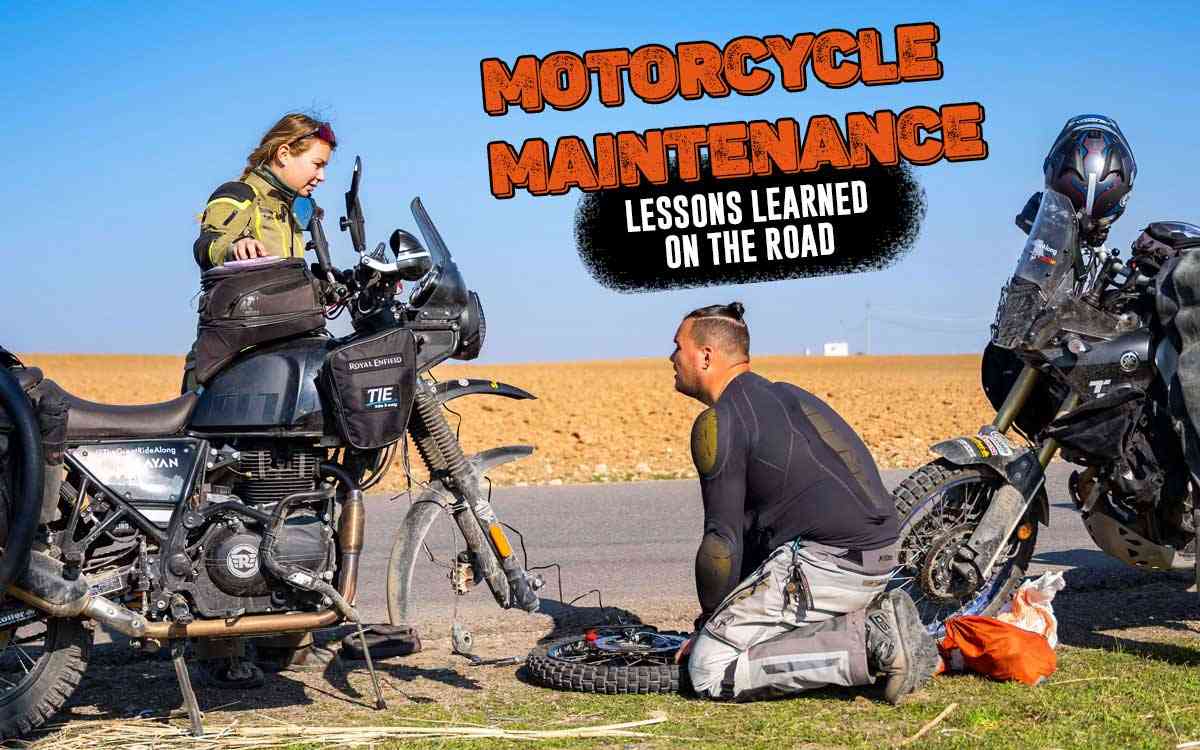
Some riders love it, others hate it, but it’s an important aspect of long-distance overlanding. I’m talking about maintenance on the road. It might seem easy to do some checks and replacements at certain intervals, but it’s not always that simple when you are on a long journey. In some regions and countries, obtaining spare parts and even decent oil can be extremely difficult, and it’s impossible to bring it all with you. To avoid complications, here are some suggestions to help you prepare for road maintenance and deal with setbacks such as the unavailability of parts.
• A Dealer Will Not Always Be Close By
One of the main challenges faced by motorcyclists traveling long distances in remote regions or foreign countries is the lack of motorcycle dealerships or the long distances between them. This can make it difficult to find spare parts or get repairs done, especially for models that are less common locally. If parts cannot be found, the solution is to order them online, possibly even internationally, using DHL. This typically leads to higher costs and long delays.
Even if you find a big dealer, they might not always provide a proper solution. When we were in the Middle East with our Yamaha Ténéré 700, we ran into issues. Even though in-country dealers sold the motorcycle, the demand for parts was so low that they didn’t stock spares. Most of the time, they weren’t even able to order them within two months. That’s why we bring certain parts with us (see the tips about tools below).
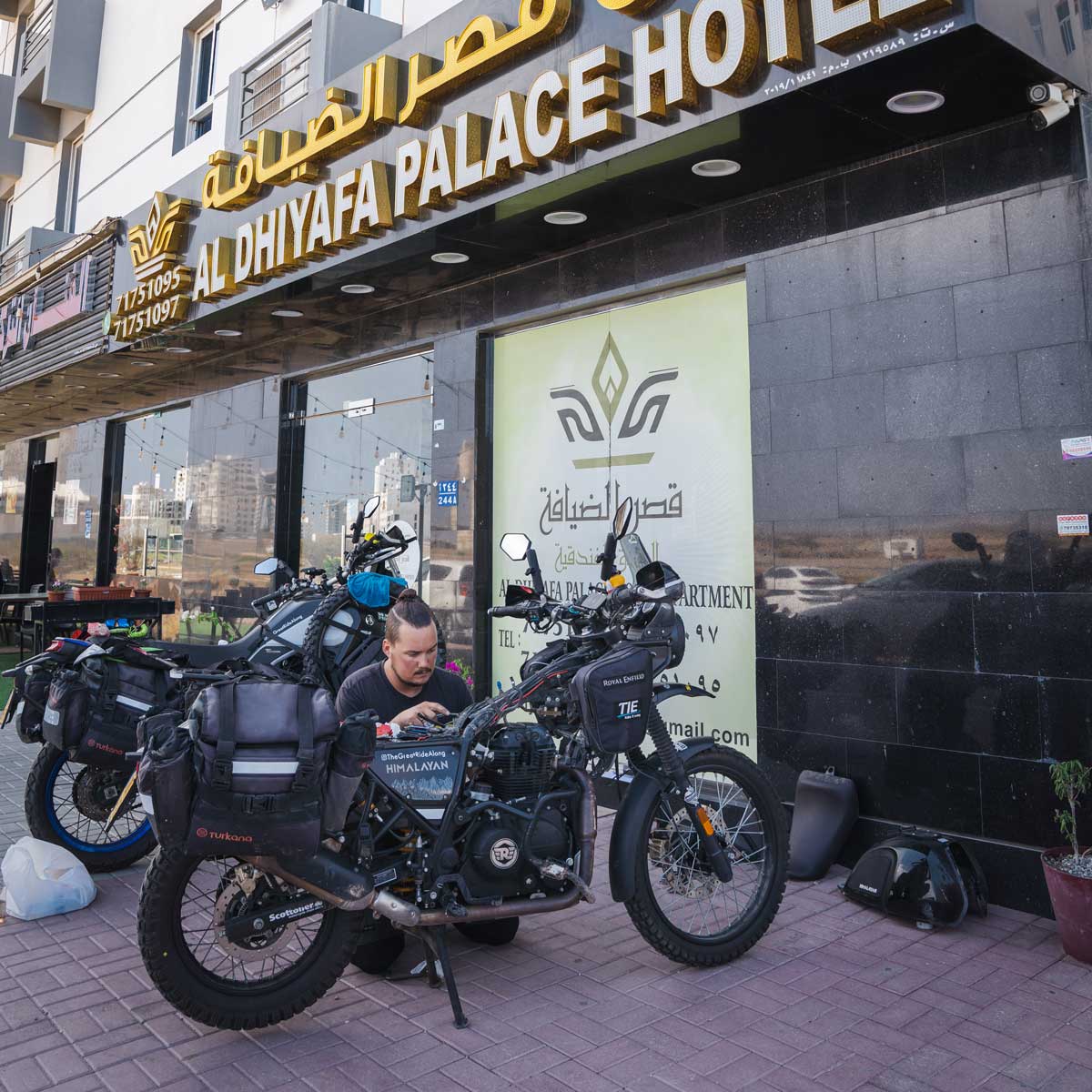 After hearing a ticking sound from the engine, we checked the valves and discovered it needed some adjustments.
• Getting the Tires You Want
Getting tires is usually not a problem anywhere in the world, but finding the exact tires you want can be challenging. In some countries, certain brands may not be available or may cost significantly more. Additionally, some countries may not stock suitable all-road or long-lasting tires.
During our 20,000 miles of travel so far, we’ve had to deal with this issue. In one instance, we had to have tires flown in and pay higher prices. Another time, we even ordered a full set from Amazon when local dealers were unable to deliver. Fortunately, Amazon delivered the next day.
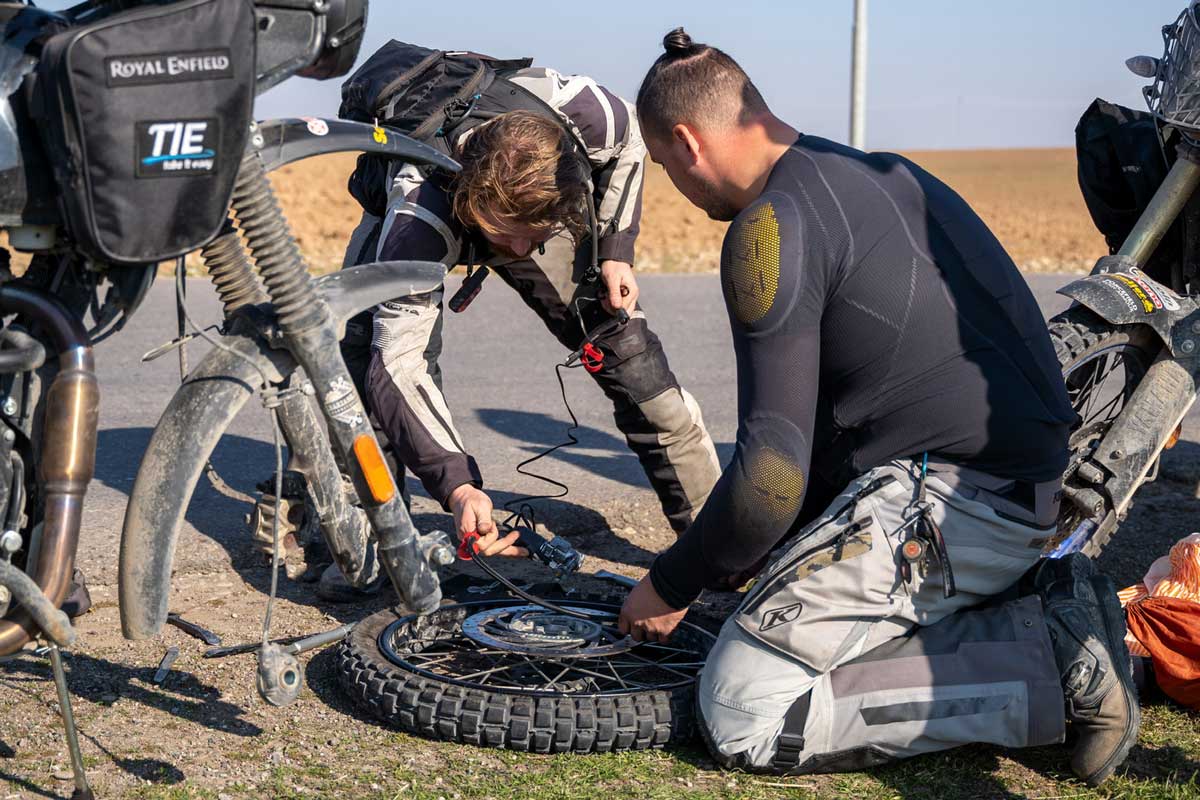 Fixing a flat front tire in Iraqi-Kurdistan. For some reason we’ve had only flat front tires so far.
• Bringing the Right and Affordable Tools
When it comes to a toolkit, there are two philosophies:
- Keep it lightweight by bringing only what you will probably need and improvising for the tools you don’t have.
- Bring a more extensive toolbox, enabling you to handle a wider range of situations and just deal with the added weight.
That said, we bring a more extensive toolkit than we might need. The most questionable item is a full-size, 10-inch steel wrench. Though it weighs almost two pounds, it has helped us out in many situations where smaller or lighter tools would have (or have) failed.
Then, there’s the question of whether to choose steel or lightweight aluminum tools. This is a personal decision, depending on your situation, needs, and budget. Aluminum is generally more expensive but can save weight. The downside of aluminum is that it is weaker than steel and thus has a greater chance of failing. We had such a failure when changing a flat. Since then, we’ve been traveling with the steel version.
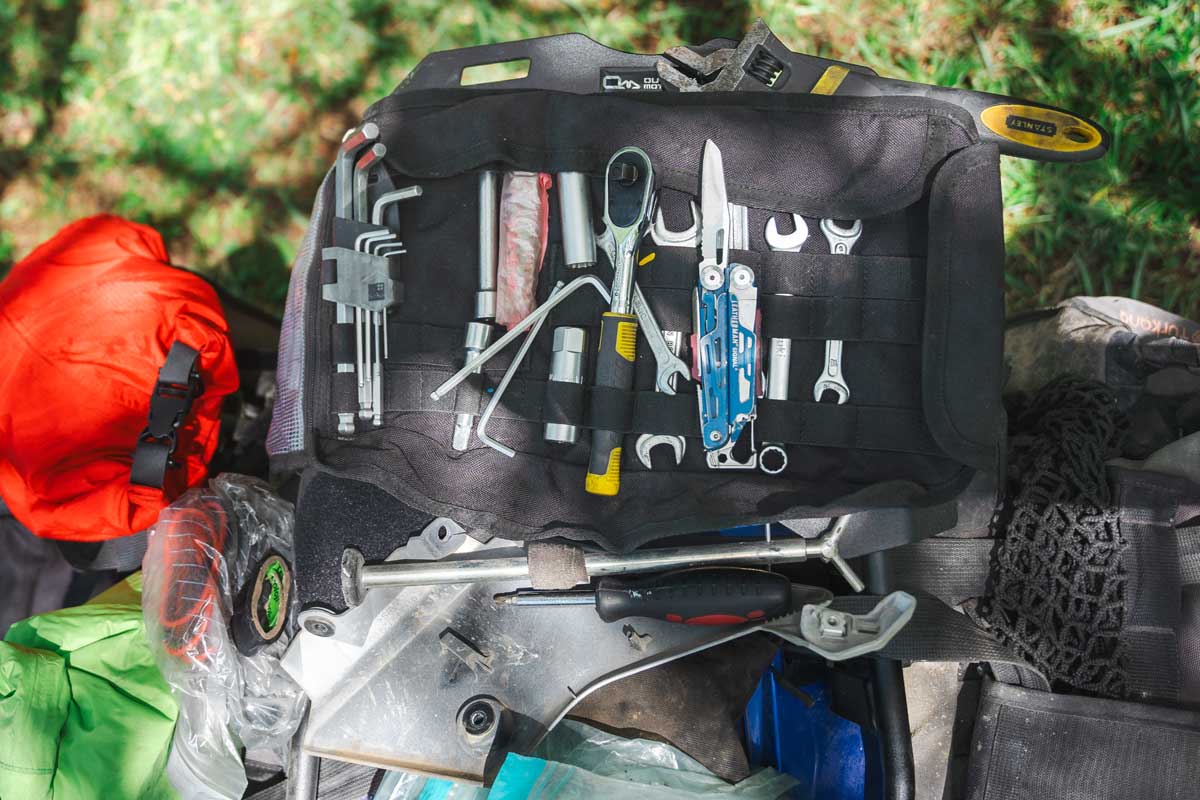 Part of our toolkit. What’s the most important tool? The multifunctional Leatherman of course!
• Knowing What You are Doing
Oil changes are easy enough after you’ve done them a few times. The same goes for minor maintenance like changing brake pads or checking coolant. However, things can become exponentially more challenging when it comes to diagnosing certain mechanical or electrical failures.
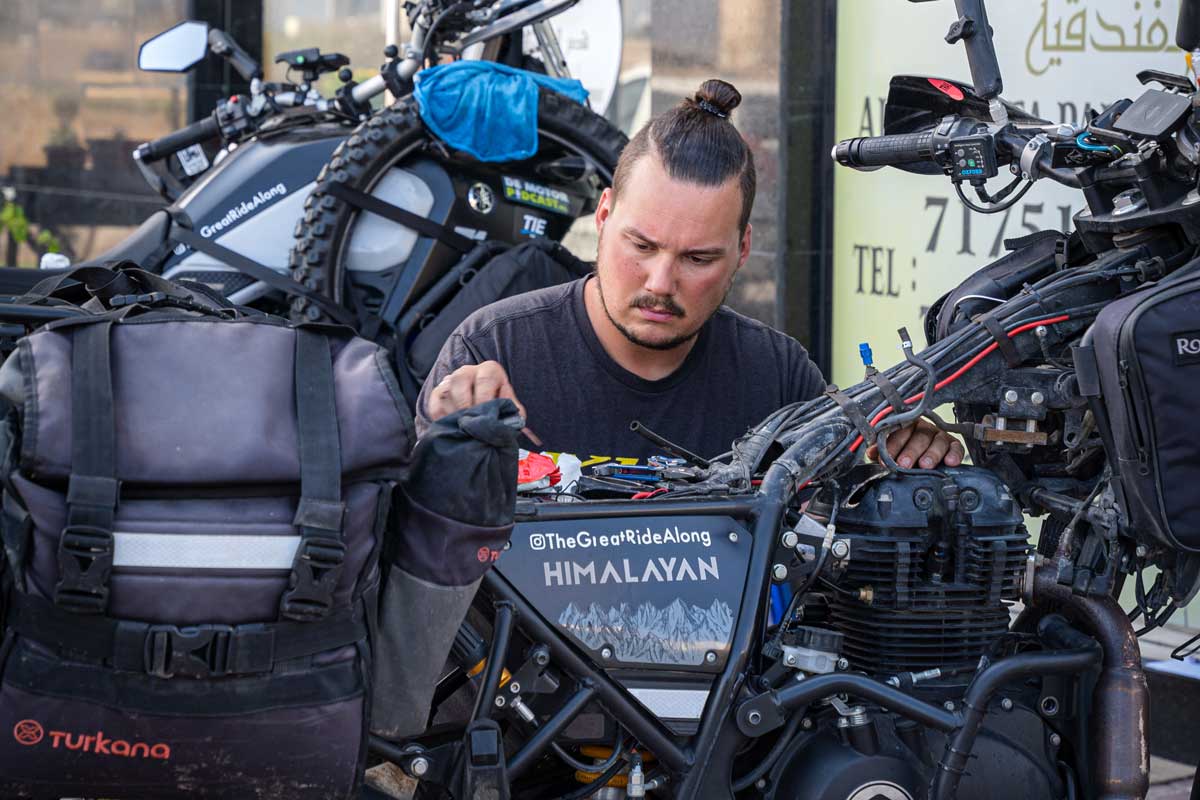 The Royal Enfield Himalayan 410 is a mechanic’s dream. Everything is easily accessible.
It’s impossible to prepare for every possible situation or breakdown. Therefore, it’s crucial to know what not to do. If you are unsure, don’t worsen the situation by trying stupid stuff. In Kenya, a “trained mechanic” came to jump-start our T7 with a charged car battery. Fortunately, we noticed just in time that he was connecting the negative to the positive terminal, which is very dangerous and can even cause an explosion. The only reason I knew how to jump-start a bike was that my battery had died before, and a real mechanic had taught me how to do it properly.
Before heading into the unknown, here are the six things you need to learn without having to go to night school:
- How to fix a flat tire roadside and how to maintain proper tire pressure to prevent flats.
- Proper TLC for your chain and sprockets or drive shaft.
- Changing the oil and filter.
- Changing the air filter.
- How to access the most important parts, such as the battery, air filter, spark plugs, and fuses.
- Being in tune with and knowing the meaning of different sounds your motorcycle should make vs. when there’s something amiss.
• What Not to Do
On our world journey so far, we’ve ridden through Europe, the Middle East (including Iraq and Oman), and Africa, covering more than 20,000 miles across different cultures, terrains, and weather conditions. We encountered various mechanical challenges and made some mistakes along the way.
Assumptions: We rode south through Iraq, and when we arrived in Erbil with a few days to spare, we invested time doing maintenance and checking for wear and tear. Continuing south, we encountered really bad weather for almost 1,400 miles. Once we got to Saudi Arabia, we did another 2,000 miles in sandy conditions. Around then, T7 started to act weird. I consulted some friends for advice. Although it was all guessing, based on the signs and sounds, we thought the injection might have been clogged after some dirty fuel in Iraq. Long story short, after riding an additional hundred miles, we couldn’t continue as the shaking was too intense, and ended up having to get towed to a workshop. Upon inspection, the front sprocket had gone from looking brand new back in Erbil to being completely worn out. I had assumed it would be fine since it was still in good condition in Iraq.
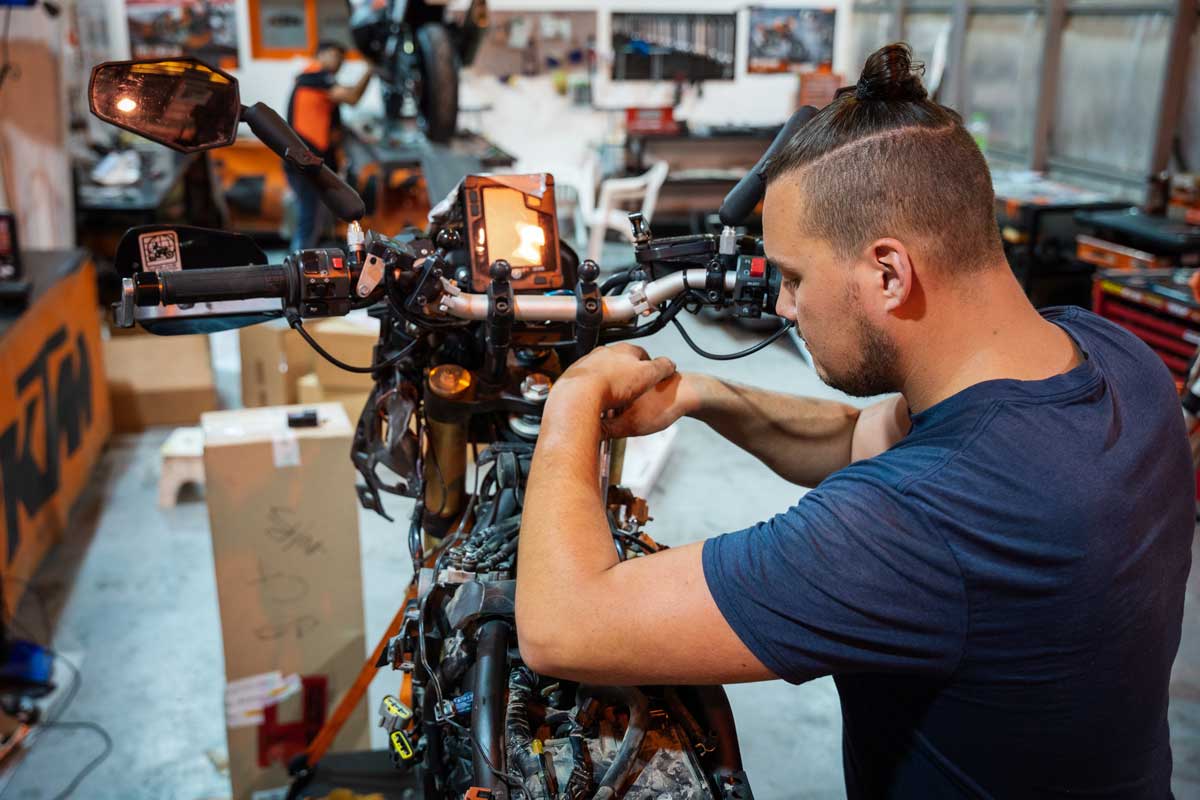 After stripping the T7, replacing the spark plugs is easy, it just takes a lot of work to access it.
Rushing: In the Balkans, we decided to take a few days off. Unbeknownst to me, an accessory had been damaged while off-roading on the way there, which drained the battery. Fortunately, it’s easy to push-start a motorcycle. A local enthusiastically offered to help push, but I completely forgot to go through the checklist I learned from YouTube. After three attempts, the bike didn’t start. That’s when I noticed the ignition was switched off! Although turning it on was on the checklist, I rushed and forgot to do it.
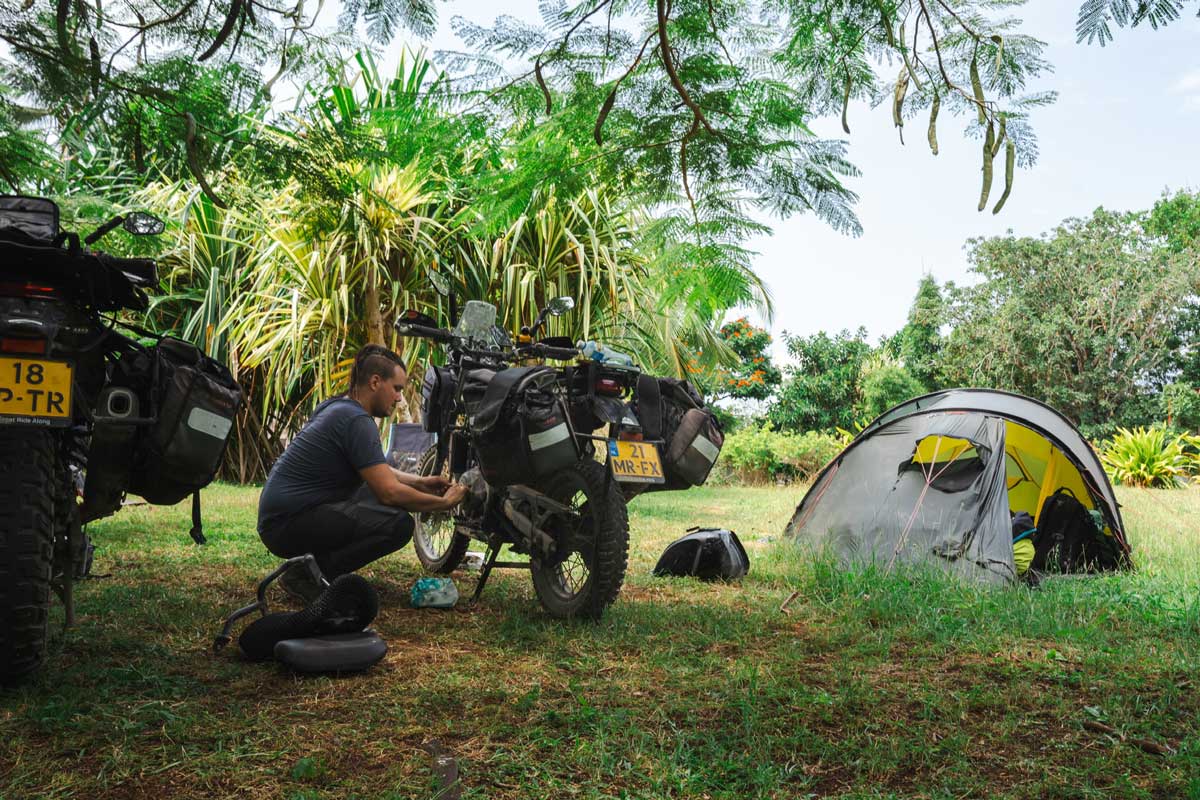 While in Mombasa, Kenya, we took a few days to fix and upgrade anything we needed to prepare the bikes for harsh road conditions to come.
• 10 Quick Tips and Tricks
- Regularly check your tire pressure and replace tires on schedule. Or if you’re riding in extreme conditions, check for excessive premature wear.
- Keep an eye on your brake pads and replace them when necessary.
- Always carry a basic toolkit, including a tire repair kit and a set of screwdrivers and wrenches in case of emergency repairs.
- Take good care of the chain and sprockets. We use an automatic chain lubricator from Scottoiler to make things easier.
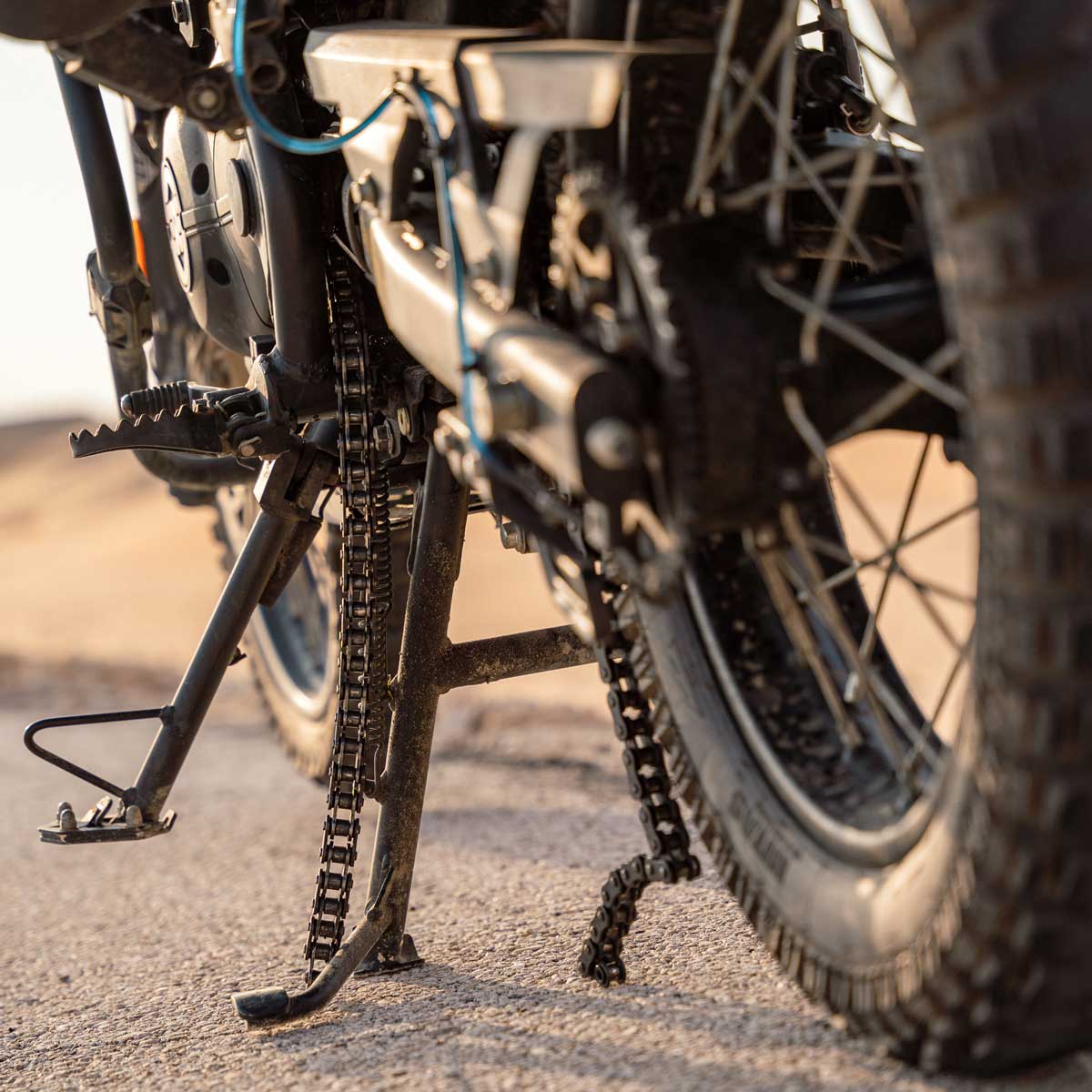 Keep an eye on chain wear! A snapped chain can cause nasty damage and even hard crashes.
- Do a walkaround inspection of your bike regularly and see if something is out of the usual, loose, or missing parts. Do it daily as a routine, the first thing before getting on the motorcycle.
- Change the oil and filters more frequently when riding in harsh environments. Follow the manufacturer’s specifications and schedules.
- Evaluate the performance of your air filter and replace it if necessary.
- Find a reputable workshop to visit if you need repairs or maintenance. In some places, we can use their workshops for free or at a nominal charge.
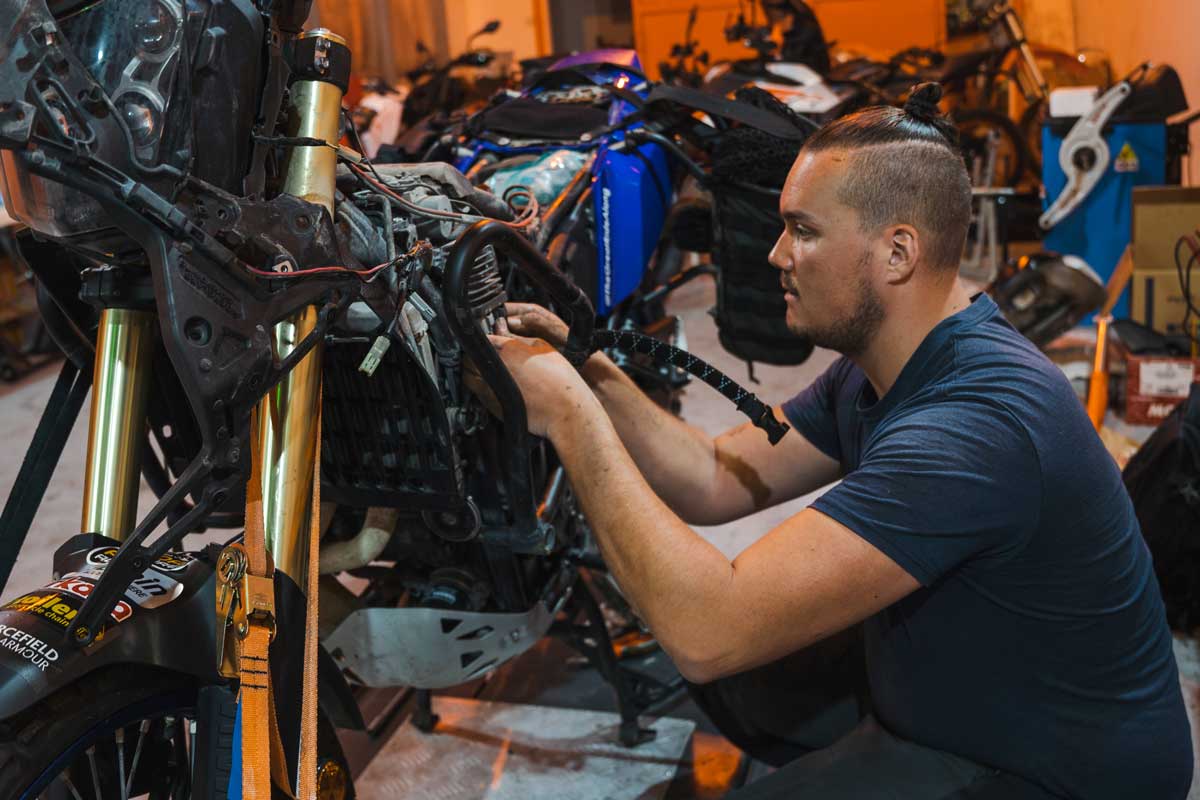 A KTM dealer in Al-Khobar (Saudi- Arabia) was friendly enough to allow us to use the workshop. What a luxury!
- Check and replace your fuel filters as needed, especially if you’ve been using dirtier fuel.
- Always stay calm, even if you don’t know what to do. The road will provide a solution.
 Young adventure-destined couple Mitchel and Nadia de Jager are out to explore the world. Creating a life as adventurers, digital nomads, content creators, and brand ambassadors, they share their journey into the world of ADV. Join Mitchel and Nadia’s adventures with their “The Great Ride Along” on Instagram and YouTube as they explore a new world: @thegreatridealong