 Sticky logo
 Search


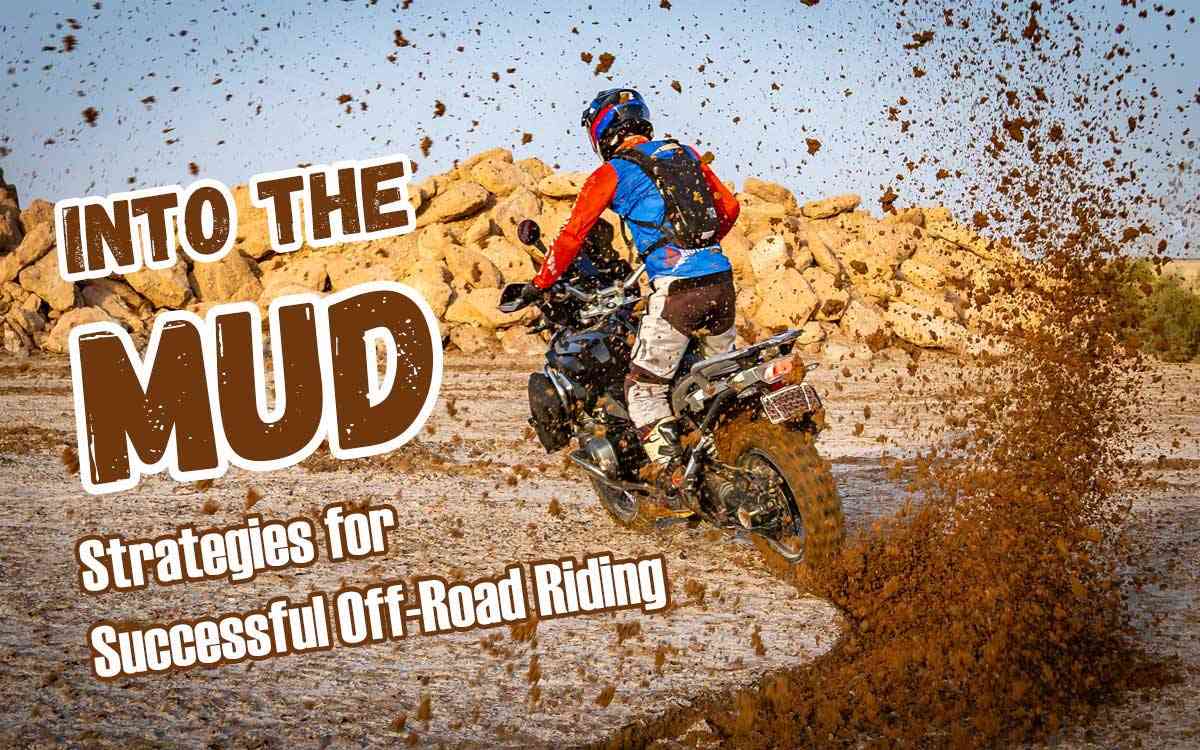
Mud… love it or hate it, we all should still know how to ride it. Mud is one of the more challenging surfaces for ADV riders. It is unpredictable and often hides rocks and roots. However, with the right skills, these challenges can be turned into fun rides.
• Key Techniques for Mud Riding
Throttle Control and Balance: Whether you’re crossing thick, sticky mud or navigating slippery, hard-packed terrain, throttle control and balance are crucial. Each approach may vary; sometimes you need a free-spinning rear wheel; at other times, a gentle touch on the throttle as the rear tire seeks grip. Mastering clutch control, throttle modulation, and balance are key.
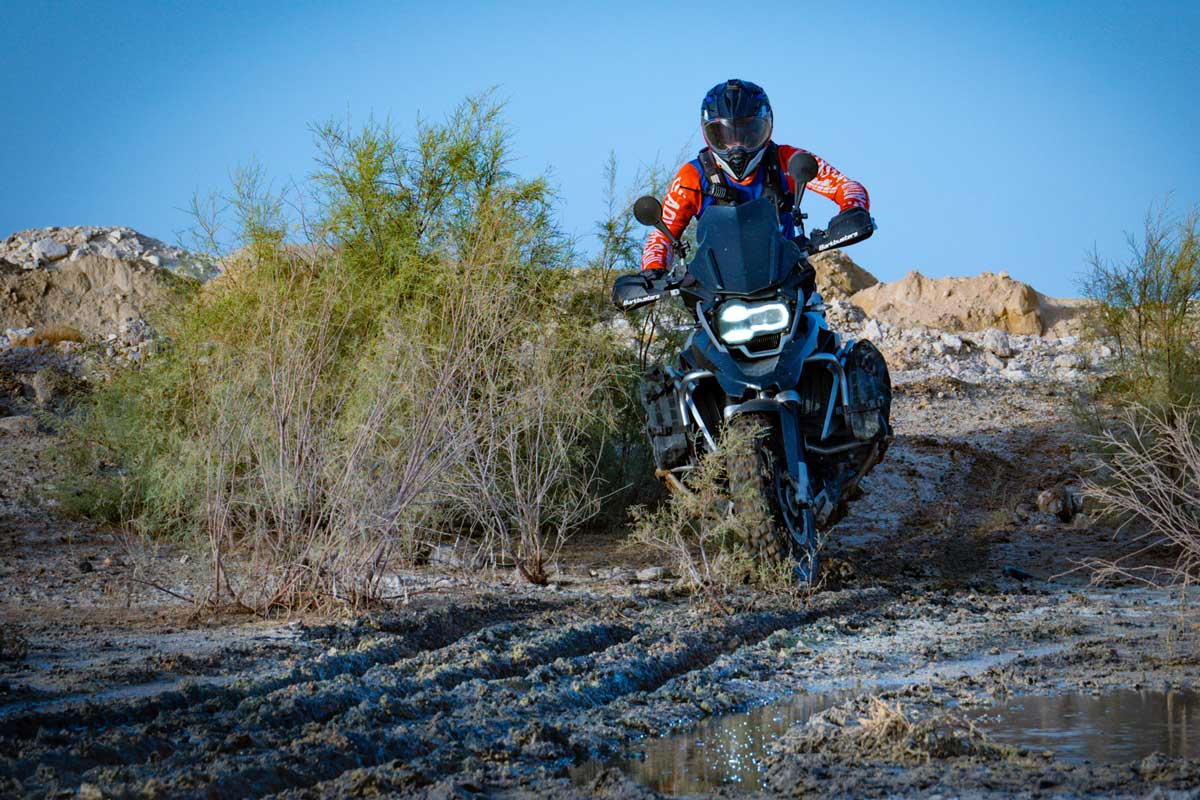 Mastering clutch control, throttle modulation, and balance are key.
Standing vs. Sitting: An ongoing debate in off-road riding is whether to stand or sit—should you attack mud standing on the pegs, or planted in your seat? In technical or unfamiliar terrains, a mix of both often works best. Standing allows for better control and balance, especially when navigating slick paths. If the rear wheel begins to spin too much, moving your hips rearward can help regain grip quickly. Standing also allows for counterbalancing movements on those unexpected wobbles. Smooth, deliberate movements are essential on slippery surfaces. When your bike starts to get bogged down, sometimes there is no alternative but to sit and paddle-walk the bike.
• Practical Tips for Mud Crossing
- Approach with Caution: Begin at a slow speed, typically in second gear, which allows for more torque. The lower RPM range is useful if the bike starts to lose momentum.
- Manage Traction: If the rear wheel spins without traction, throttle up. If necessary, downshift for more wheel spin or feather the clutch for bursts of momentum.
- Reacting to Slips: If the rear wheel starts to slip sideways, pull the clutch lever quickly. This disengages the engine from the wheel, allowing it to regain traction, potentially preventing a fall.
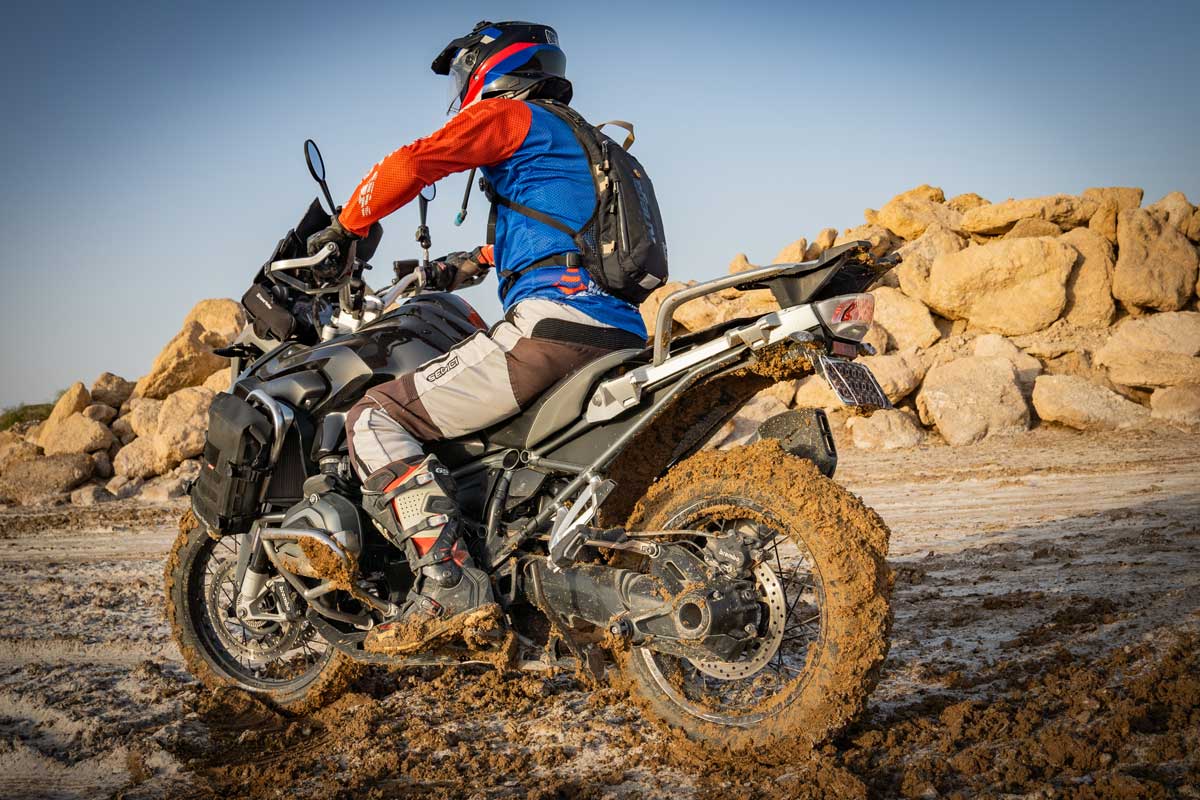 Kick into second gear, that’ll help you push through the muddy stretches.
• Traction Control (TC) and Its Uses
If your motorcycle has traction control, it can be a big help in off-road conditions. The decision to use TC or not comes down to rider skill and terrain conditions. Familiarize yourself with your bike’s settings and experiment. Once you have selected the amount of TC you feel is appropriate, you can be more generous with the throttle. But limit your clutch feathering as it will interfere with the rev reduction that the TC is trying to do. Just let it do its thing.
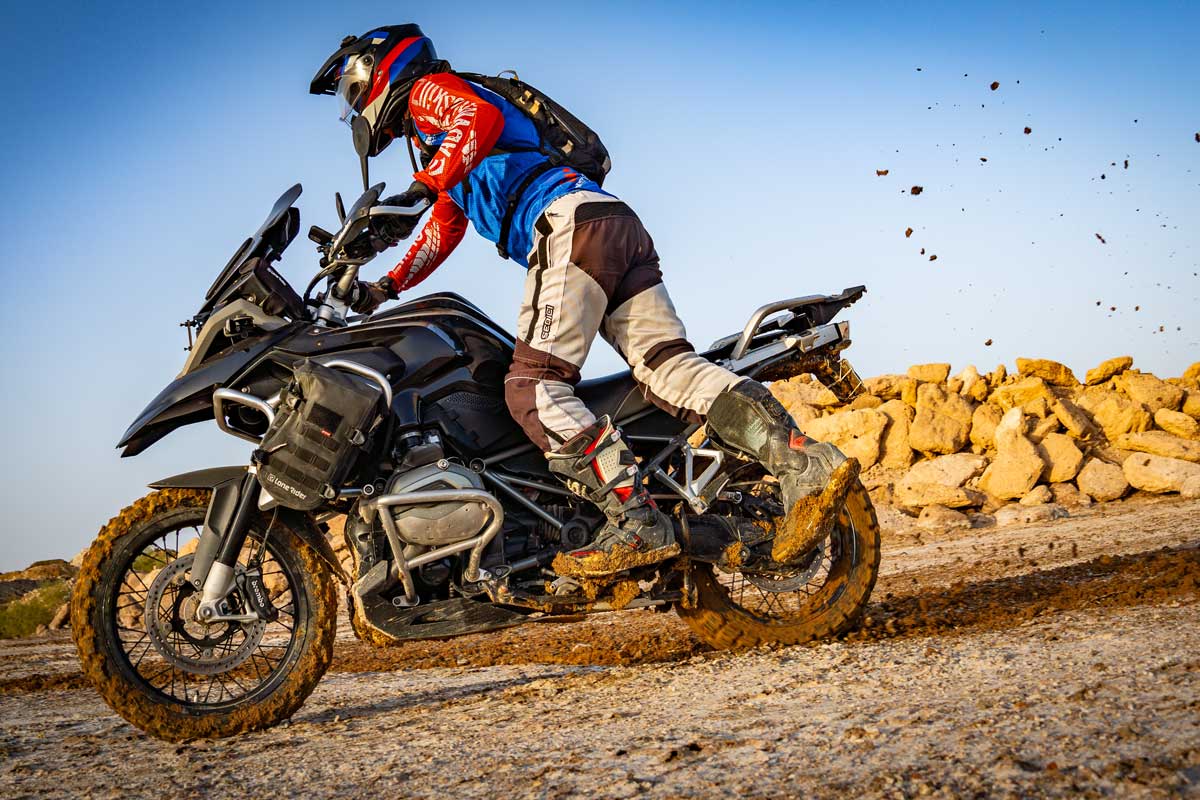 Keep it light on muddy restarts—opt for a side peg mount to keep that rear wheel from burrowing down.
• Planning and Terrain Scanning
For longer muddy stretches, anticipate challenges. Look for high-traction areas and spots that might require acceleration. On hard-packed, slippery terrains, avoid abrupt changes in throttle and body position. Scan the terrain constantly, looking directly in front of you and further down the trail in repetition.
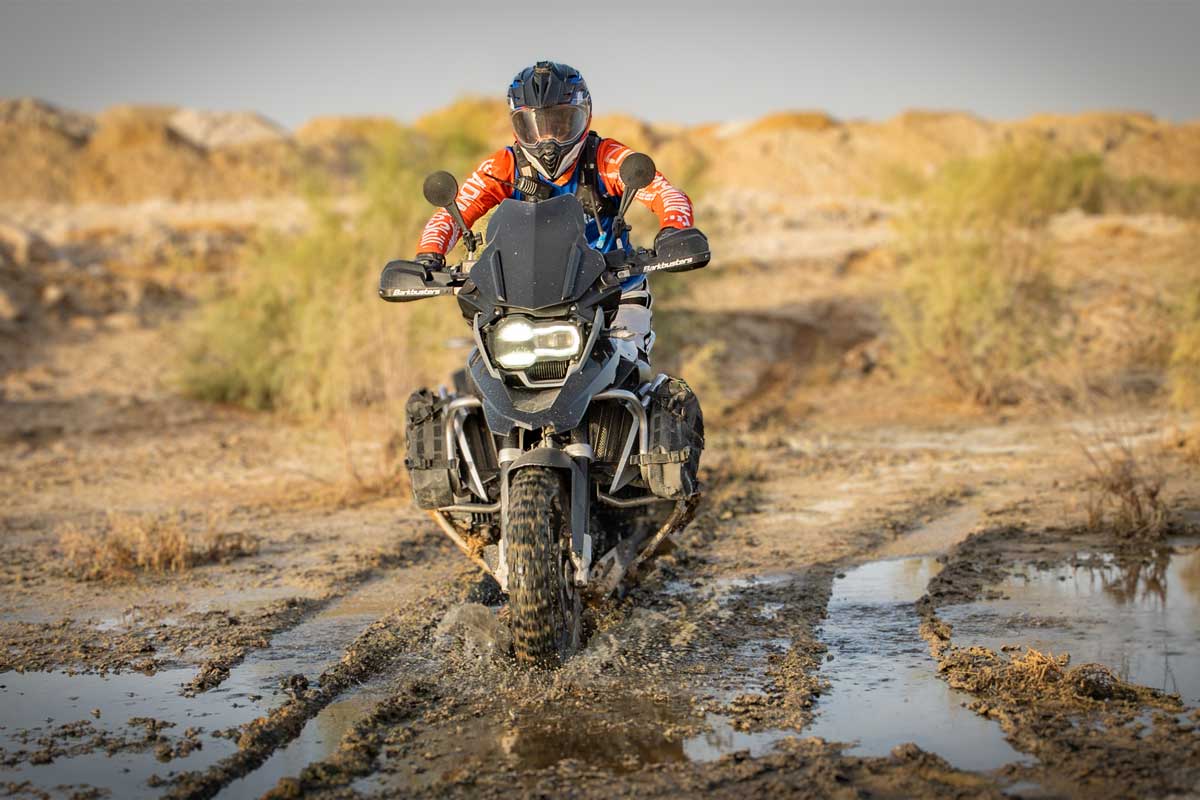 Let your vision guide you through the muddy maze.
• Tire Tips for Muddy Conditions
Airing down to increase your tire’s contact patch size can be helpful. Finding the right tire pressure in mud requires a balance between creating more grip and retaining protection of the rims. There is always the risk of damaging a rim on an unseen object in the mud, so be careful. In thick mud, some riders will air down as low as 10–15 PSI/0.7–1 bar (depending on bike size and weight). If you air down, be sure to reinflate once you are clear of the challenging section.
Tire type matters when riding mud. A touring tire (70/30) that has road wear will not provide the same level of traction that a (50/50) knobby tire will. If you’re regularly tackling muddy trails, consider investing in the appropriate tires.
• After-Mud Bike Care
Sticky, thick mud tends to act like Velcro on the bike. If you have built up mud on the wheels and rims, be sure to clean it off before traveling at high speeds. The extra weight can create dangerous vibrations and make steering difficult.
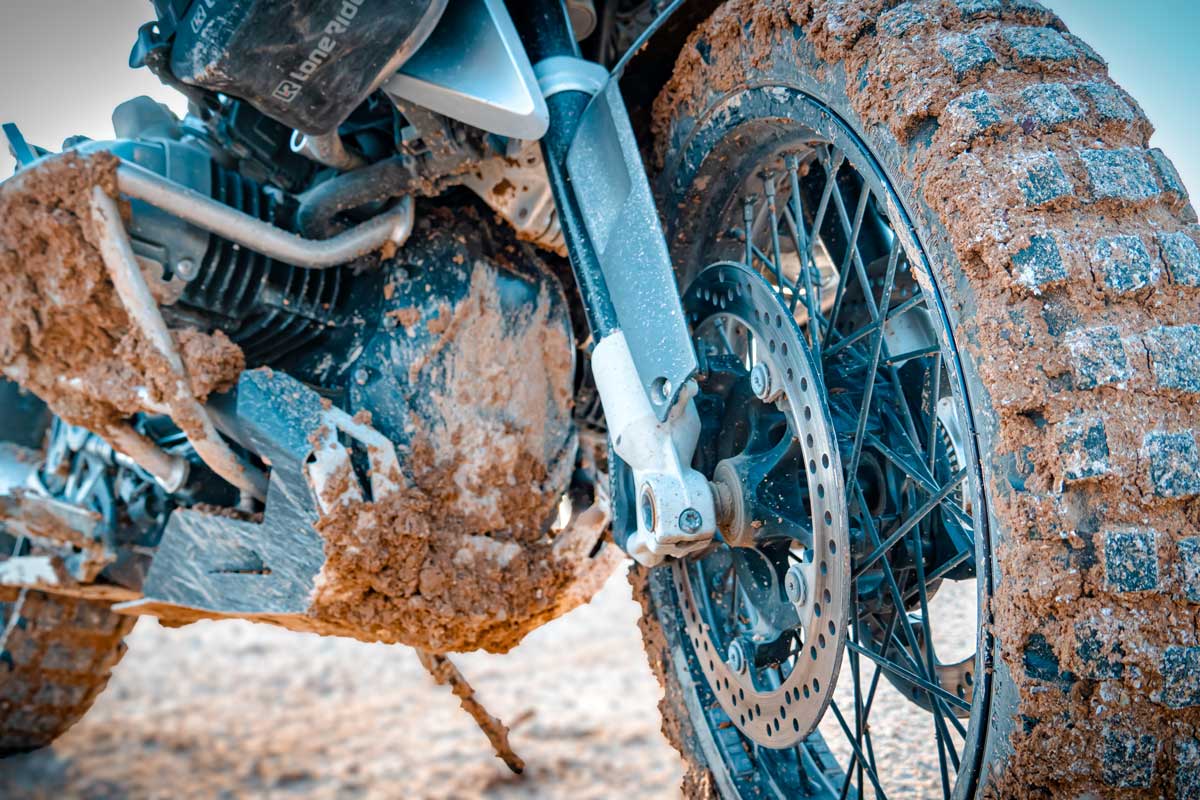 Mud-splattered patina tells of your bold adventures, but remember to clean off those wheels for a safe return to higher-speed trails or asphalt.
Riding in mud can test even the most experienced riders. But with the right techniques and preparation, you can navigate muddy terrain confidently. Always remember to adjust your approach based on the specific conditions and your personal comfort level.
 ADVMotoSkillZ coach Mike Carroll is an off-road motorcycling enthusiast and instructor. Once a Harley rider, Mike now thrives on off-road adventures with his BMW R1200GS. He is a certified Enduro Action Team Off-Road Instructor and channels his passion into ADVMotoSkillZ. Mike and his wife, Kristen, co-founded ADVMotoSkillZ and enjoy helping riders improve their off-road capabilities. ADVMotoskills.com