 Sticky logo
 Search


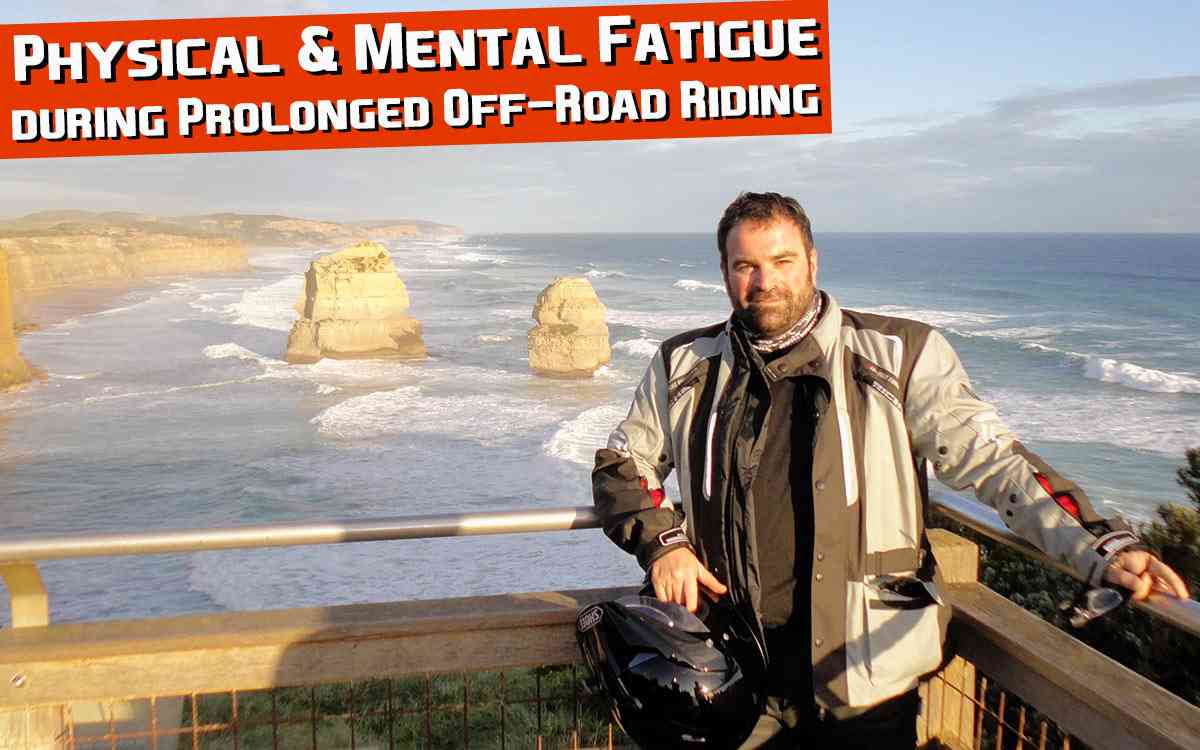
We admire Dakar racers riding their motorbikes for 8,500 km over 14 stages. Of these stages, 4,100 km consisted of hard off-road riding whilst navigating through a variety of terrains and environments. This prolonged physical and mental exertion has significant effects on human performance known as “fatigue.”
Every adventure bike rider is well aware of the feelings of tiredness and lack of energy associated with hard and long rides. However, we should not rely solely on these subjective feelings of fatigue to decide when to stop and have some rest. In fact, a significant reduction in physical and mental performance can occur well before we feel fatigued.
To minimize fatigue and reduce the risk of an accident, the suggestion is to plan frequent breaks. Research on car and truck drivers suggests 15-minute breaks every two hours. However, because motorcycling is more demanding, more frequent breaks may be necessary.
But what are the negative effects of prolonged physical and mental exertion on human performance? We can classify these effects into whole-body, muscle, and mental fatigue. Whole-body fatigue is a reduced capacity to perform aerobic exercise such as running and cycling. Interestingly, researchers at York University in Canada have recently found that riding a motorcycle off-road consumes the same energy as slow jogging or cycling at 11 miles per hour.
• Whole-Body Fatigue
A fit individual can sustain this level of physical exertion for a very long time. This is why regular aerobic exercise is included in the physical training of many Dakar racers. However, adventure bike riders with poor cardiorespiratory fitness may struggle and fatigue very quickly off road. For those who are middle-age, sedentary and a bit overweight, it may be a good idea to do some aerobic training before embarking on your next adventure.
• Muscle Fatigue
Although off-road riding is whole-body physical activity, it places much stress on specific muscle groups such as the forearm muscles, back and neck muscles, and leg muscles. Such stress can induce muscle fatigue—a progressive muscle weakness that is reversible with rest. But why do we get weaker when we use our muscles for a prolonged period of time?
Most of the weakness is due to changes within the muscles themselves. Physiologists call this component of muscle fatigue “peripheral fatigue.” A major role is played by the accumulation of substances, called metabolites, produced when muscles contract intensely. When muscles contract intensely, metabolites are produced in high quantity. Furthermore, blood vessels are squeezed and circulation is impeded. As a result, metabolites accumulate in the muscles causing weakness. In addition, these metabolites generate the sensation many riders call “arm pump.”
• Mental Fatigue
Another important component of muscle fatigue is “central fatigue.” Basically, prolonged physical exertion has some negative effects not only on our muscles, but also on our central nervous system (CNS = brain + spinal cord). These changes within the CNS mean that our capacity to send motor commands to the muscles is reduced.
Basically, when fatigued, we become unable to fully activate our muscles despite our maximal efforts. Some of the changes occur in the spinal cord which is sort of a relay station between the brain and the muscles. When fatigued, the spinal cord becomes less efficient in conveying to the muscles the motor commands coming from the brain.
Furthermore, during prolonged physical exertion, brain oxygenation is reduced and brain temperature is increased. As a result, the brain itself becomes less efficient in generating motor commands to the muscles. This central fatigue may explain, at least in part, why riding at high altitude and in the heat is so tiring.
So far we’ve discussed the physical aspects of fatigue. However, off-road riding requires continuous attention, quick reactions, and decision-making.
When prolonged, this mental exertion can cause a significant reduction in mental performance including the ability to control the motorbike, avoid obstacles, and make the right decisions. Although this mental fatigue is likely to contribute to accidents, there is very little research on rider fatigue, and no evidence-based recommendations can be provided at present.
During my “London to Beijing” expedition this year, I will conduct the first ever scientific study on the effects of caffeine supplementation in motorbike riders. Caffeine supplementation has been shown in the lab to reduce both physical and mental fatigue, and I hope my study will provide some preliminary evidence that it can be safely used by motorcyclists.
Although it is useful to differentiate between physical and mental fatigue, these two types of fatigue are not completely separate. In 2009, I demonstrated that mental fatigue significantly reduces physical performance. There is also much evidence that aerobic training improves mental performance.
Therefore, strategies to reduce fatigue during prolonged off-road riding should target both the physical and mental aspects of it. These strategies (caffeine, hydration, nutrition, aerobic training, and muscle endurance training) will be discussed in more detail in future articles on ADVMoto, and on my blog (http://adventure-motorcycling.blogspot.co.uk/).
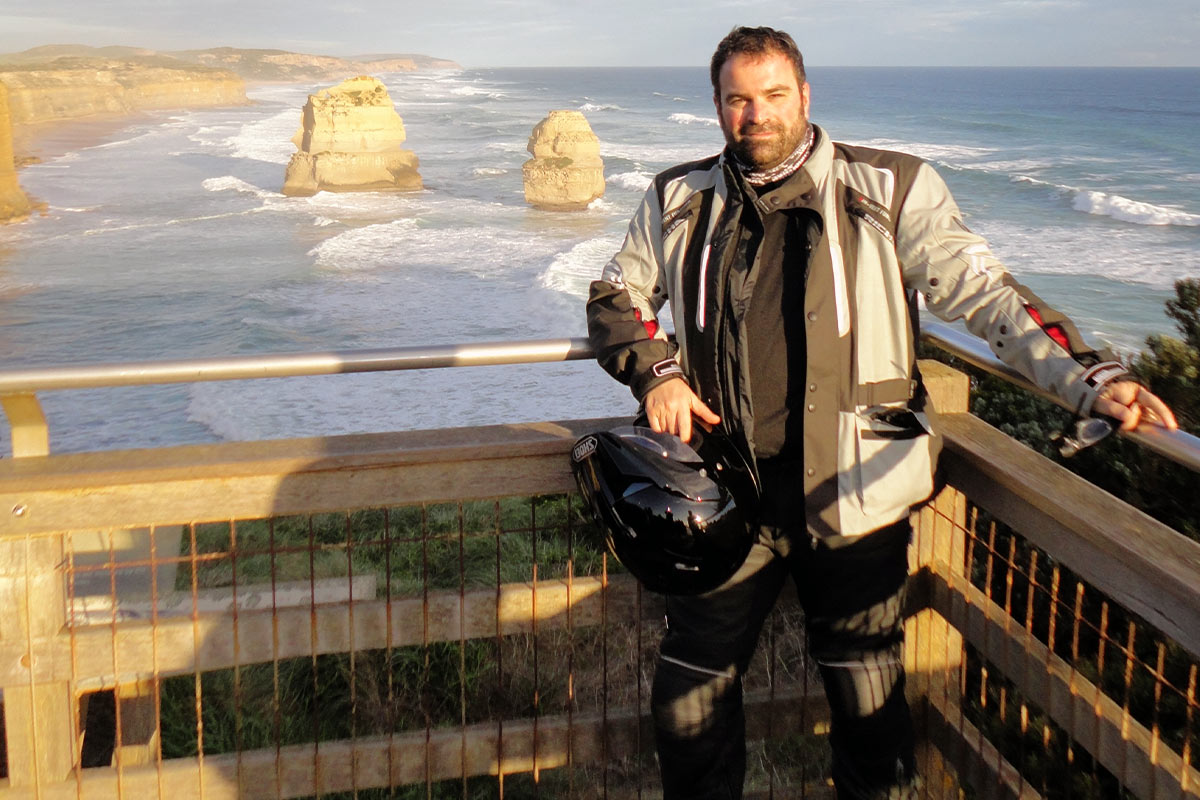
Samuele Marcora is Professor of Exercise Physiology at the School of Sport of Exercise Sciences of the University of Kent, UK. He is internationally recognized for his research on physical and mental fatigue, and is an expert in many areas relevant to adventure motorcycling such as physical training, hydration, nutrition, and the effects of altitude, heat and cold on the human body.