 Sticky logo
 Search


The choice of the “best gear” is unique to every individual. It’s best to start by asking yourself the following questions to help with the decision making.
Itinerary: Is it likely to experience rain in the area and time frame in which you’ll be traveling? Will you be riding in monsoon season, which is very wet and hot? Or, are you looking into gear that can be a good all-rounder?
Comfort: If you’ll be riding through cold temps, how many layers of clothing can/should you have to deal with?
Body Temperature: What is bearable for one person might not be for another. Different waterproofing options allow different levels of breathability, yet another consideration.
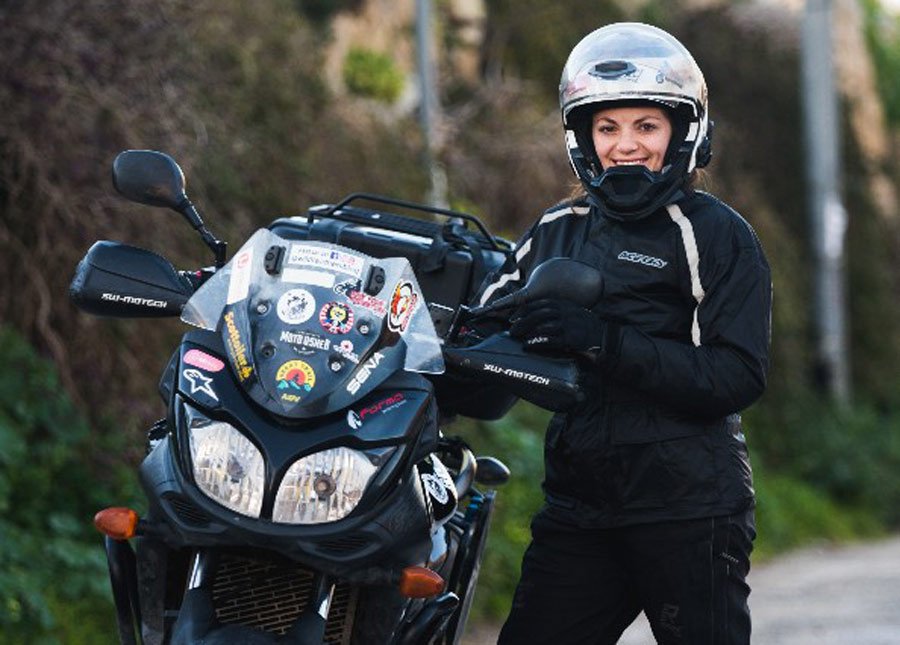
Thermal Types
Let’s discuss thermal liners or layers. On long hauls, traveling light is a priority for most. In our opinion, especially after traveling through an extreme range of climate types, thermal liners that cannot be worn if not attached to motorcycle gear are not worth taking along. If you invest in good quality mid-layers, you can use them anytime, including under motorcycle gear, saving weight and space. Other options which will not be discussed here include heated jackets which either come with a rechargeable or plug into a bike, which eliminate this issue.
The Overalls Option
We started our trip using Held two-piece overalls for waterproofing.
PROS:
• Overalls can be used both on and off the bike. Some brands also design the jackets with a compact hood in a pocket behind the neck which is ideal in the rain.
• When riding in cold weather, overalls can be used as an extra layer for keeping warm.
• When riding in the rain, overalls keep the water out and the warmth in.
• Probably the most affordable option.
CONS:
• When it’s raining, you have to stop, take out the overalls and pull them on over other gear. The pants we had, were annoying to put on. And the bigger the boot size, the more of a hassle it was.
• You do remain dry, but ventilation and breathability are heavily restricted. We often found ourselves sweaty, even in cold weather.
• Overalls take up valuable space and need to be packed in a practical, handy location so that they’re easily accessible.
• Overalls are easily damaged, ripped or torn.
The Liners Option
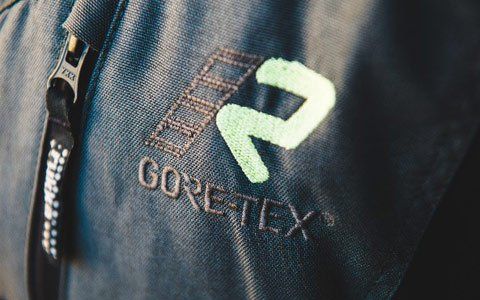
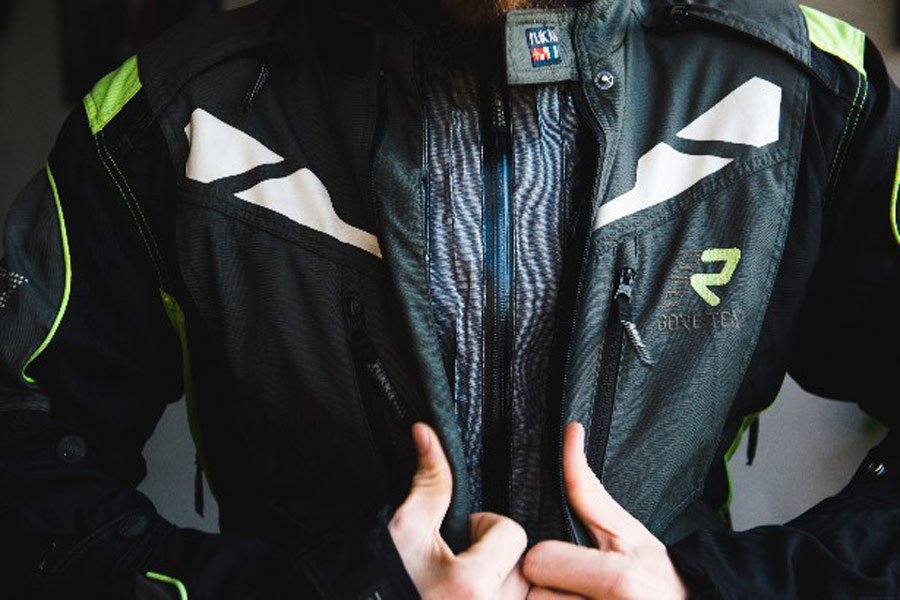
When it comes to inner and outer layer waterproofing, there’s other options. We’ll be sharing our experiences with GORE-TEX as we used with Rukka’s Roughroad and Orbita models.
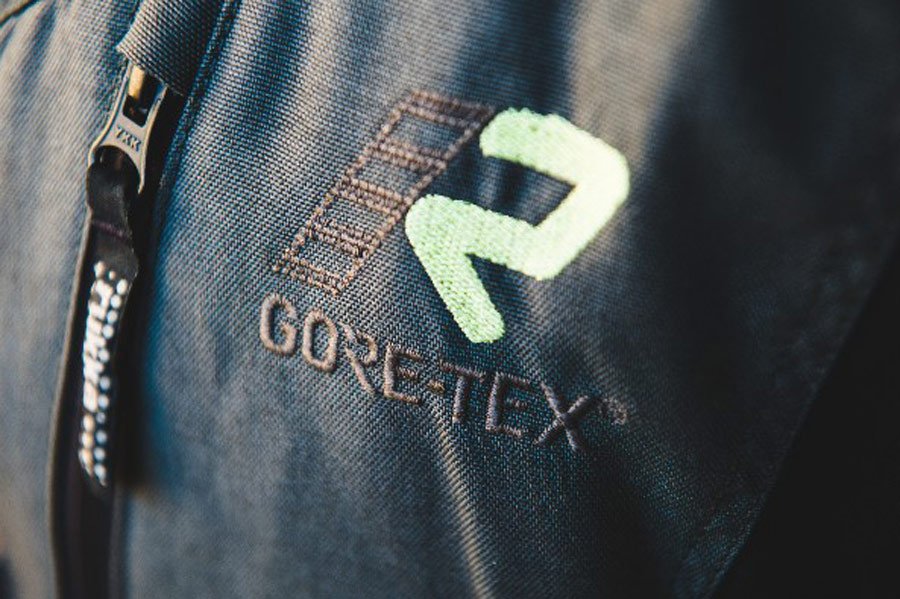
The Roughroad has an inner layer of detachable GORE-TEX, while the Orbita has built-in laminated GORE-TEX. Before outlining the pros and cons, we’d like to point out what we’ve experienced related to body temperature. When the gear gets soaked in cold temperatures, we felt colder, and lost body heat, as compared to wearing overalls, where despite getting sweaty, it was easier to retain warmth. On the other hand, in monsoons, there’s the advantage of keeping cooler with GORE-TEX which has quite a bit more breathability.
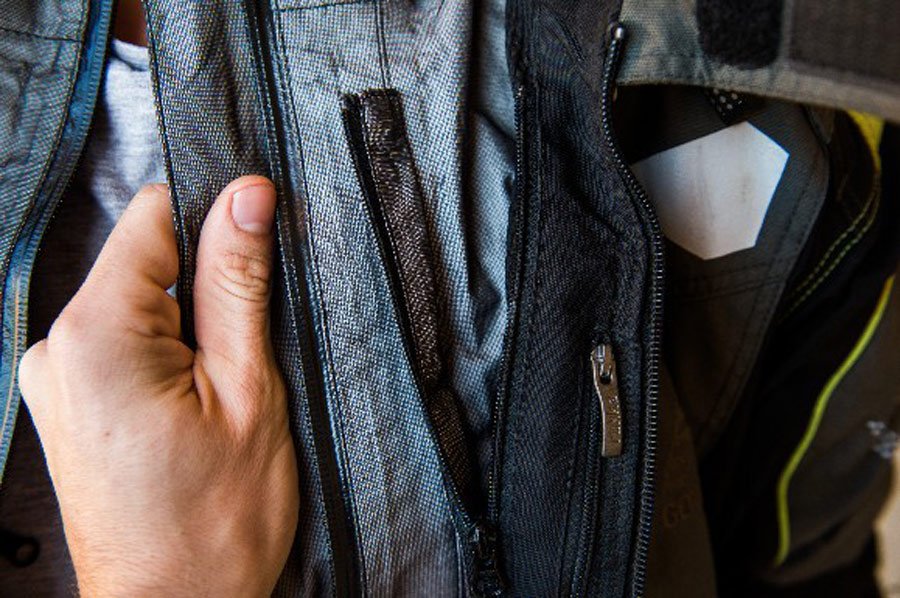 Inner-liner detachable GORE-TEX
PROS:
• A detachable liner can be removed for better airflow. Even though GORE-TEX is known to be the best when it comes to breathability, being able to remove the liner is often a better option in hot, dry weather.
• If traveling light is a priority and the upper liner can be worn on its own, it can also serve as a rain jacket when off the bike.
• In case of an accident, a GORE-TEX layer adds protection.
• Inner liners are breathable as opposed to overalls which tend to be sweaty, in both hot or cold environments.
CONS:
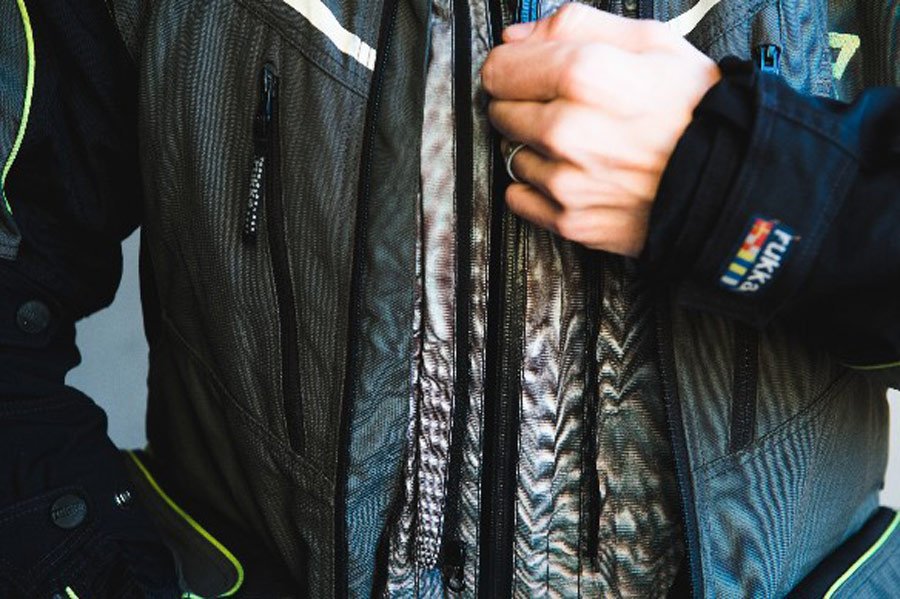
• In countries with monsoon seasons, temperatures are high with heavy rains, making inner liners annoying to put on and take off! If you start riding without them due to heat, keep in mind that you’ll likely have to remove them in the middle of the road when it starts raining. Therefore, when it comes to inner liners for pants, you have to weigh these possibilities.
Rukka Roughroad’s GORE-TEX inner liners of this model are thin thermal layers. This is an advantage in cold weather, as you have both waterproofing and a layer to keep you warm in one jacket. However, in monsoons, this becomes a disadvantage as you cannot separate the two.
 Built-in laminated GORE-TEX
PROS:
• If it starts raining, you just keep riding.
• It saves space as you do not need to carry overalls, or pack the inner liners when removed.
CONS:
• Less ventilation and breathability in hot temperatures.
• In an accident, you are more likely to damage the waterproofing
Conclusions and Insights
If we had to start over, what would we choose? For a long-term trip, where we planned to ride through a vast range of weather conditions, we both agreed on the following set-up. We’d definitely leave any inner liners behind.
Pants: Summer laminated GORE-TEX pants. This way we’d have breathability and ventilation adequate for hot temperatures without having to stop to wear or remove the pants when it rains. In cold weather, we would wear good quality base and mid-layers. While riding in Pakistan, for instance, we experienced temperatures as low as -2°C and were fine with just a base layer under our Cordura four-season pants.
Jackets: We would choose a three-quarter season jacket that mainly offers a high-level of protection and carry a separate versatile overall jacket that offers features like a waterproof hood, which would also be used as a rain jacket off the bike.
One disadvantage that might bother some with this option is not having a full suit of the same model and style, but for us, practicality and comfort are the main priority. But remember, it all depends on the individual and one’s itinerary, budget and comfort requirements.
__________________
 Daryl & Deborah left home to tour the world in September of 2017. They are currently traveling Asia on a Suzuki V-Strom DL650. They call themselves Wild Feathers and share their adventure on their website, Facebook and Instagram. They love writing, photography, meeting locals wherever they ride and chasing sunsets off the beaten track. WildFeathersBlog.com