 Sticky logo
 Search


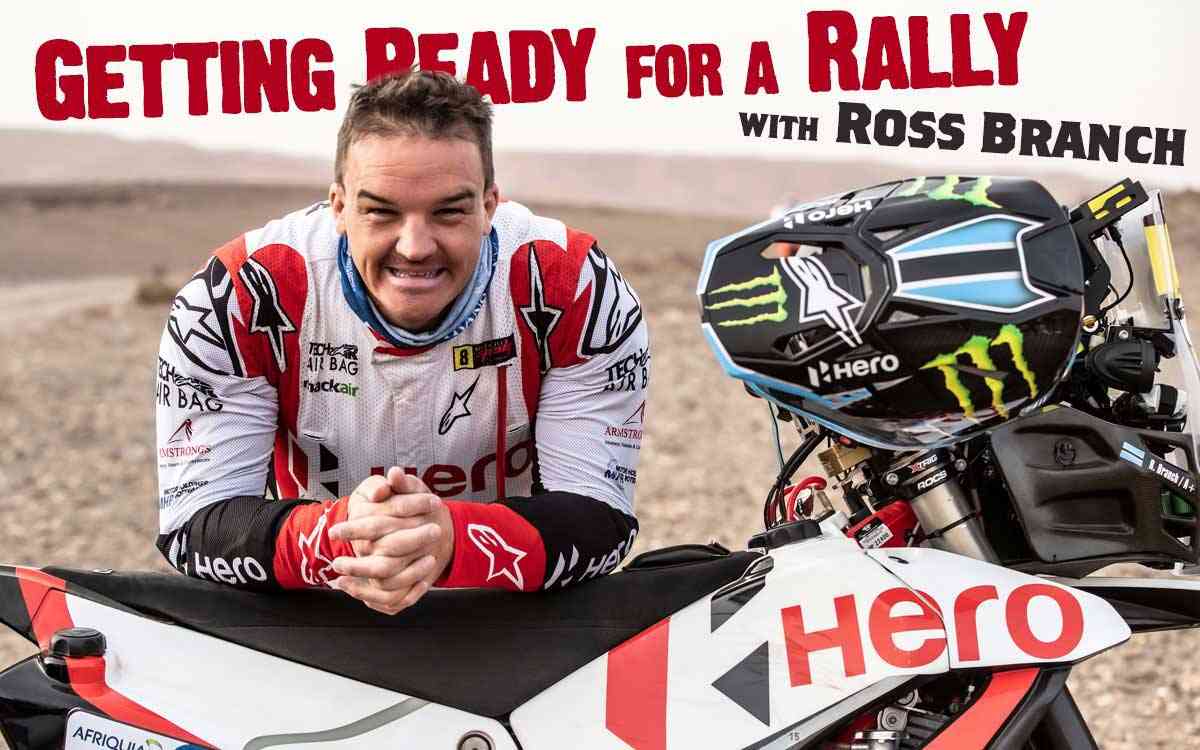
I’ve come a long way from using two sets of gear over 14 riding days vs a fresh set every day, raising over a million Botswana pula to compete in my first Dakar Rally, being a part of Hero MotoSports Team Rally and best of all, being paid to do what I love. I’m humbled and grateful to be on this rally journey. I hope that with the limited experience I’ve gained, I can share a glimpse into what it’s like in our no longer elusive, but rather unlimited and achievable rally world.
Although I raced for years, my first big international rally was the biggest event of them all—the Dakar. At that time in 2019, the entire rally world seemed like a dream. But it was a dream I’d wanted ever since I watched the finish of the 1992 Paris-Cape Town rally with my dad, who played a huge role in my racing career. It was only after my success in motocross and cross-country racing that I began to believe that the international rally scene was the next step. From an independent rookie to racing for the Hero Motorsports Team, it was a dream come true. But with that came the expectations and responsibilities of performance. I no longer have the problems of a privateer rider, but to be successful, I must appropriately utilize these new resources. This means lots of pressure but attached to that is a lot of pride.
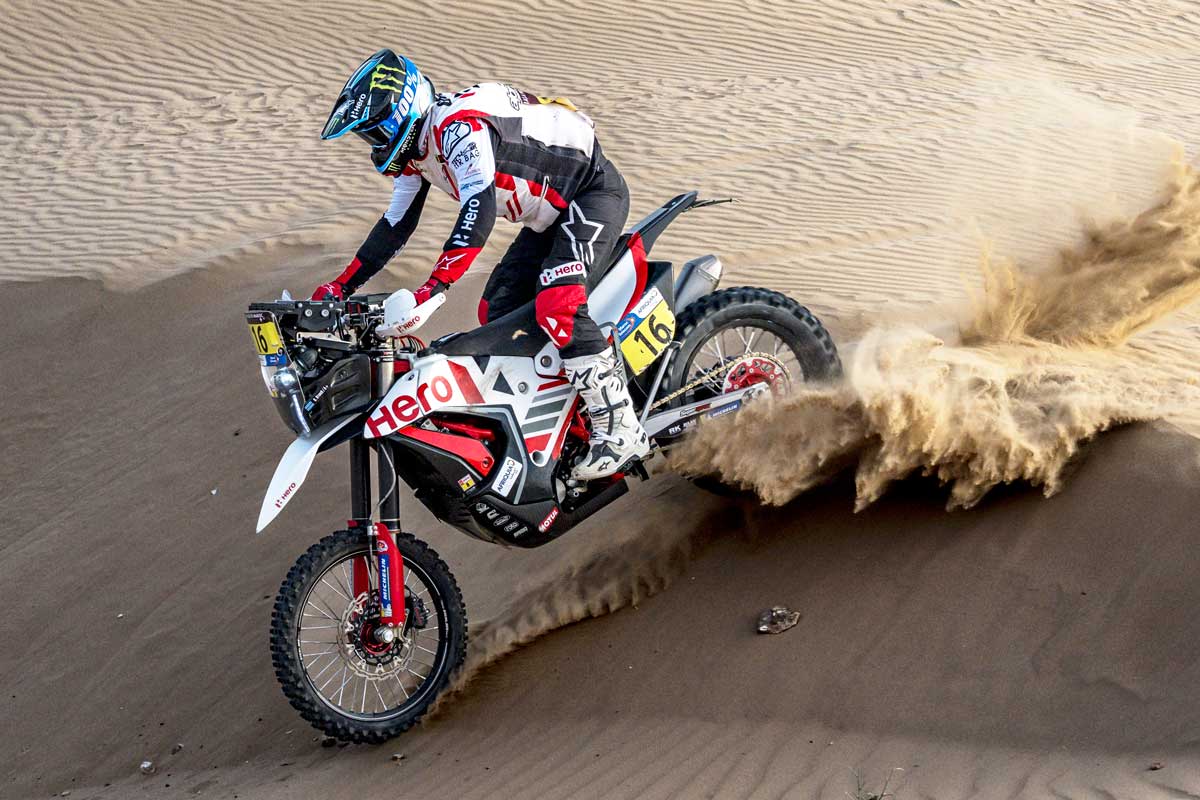 The start of Ross’s journey with the Hero Motosports Rally Team at Round 2 of the 2022 World Rally- Raid Championship, Abu Dhabi Desert Challenge. Let’s GOOOO!
Rallies involve thousands of kilometers on a race bike, difficult terrain and conditions, high speeds, and insane competition, so you must be well-equipped and prepared both mentally and physically. You need to learn to dig deep, to keep pushing hard when your body is telling you to stop; mental strength makes a big difference here.
In terms of long-term preparations, you need a massive amount of commitment, focus, and positive energy to push through an entire season of racing. I truly believe in finding a balance between testing, training, and confidence-building time on the bike, and then having fun and surrounding myself with those who know what it takes, believe in what I’m capable of, and who keep motivating and inspiring me to be the best I can.
Over the past couple of years, the COVID-19 pandemic has added another level to the preparation process. With all the postponements and constant changes, we had to make sure that we are race-ready all year round. You must be flexible and positive; if a race date changes, take it as it comes, and get yourself ready for the next challenge.
In the days leading up to a rally, I tend to focus on short-term strategy. I try not to overthink things; by this time, my team and I know what needs to be done. I stick to a routine and surround myself with family and friends. Or, if I’m already traveling, I surround myself with positive influencers in the team, like my teammates. They have a huge amount of experience in the professional racing industry, and I can bounce ideas around, ask questions, and have a laugh with them.
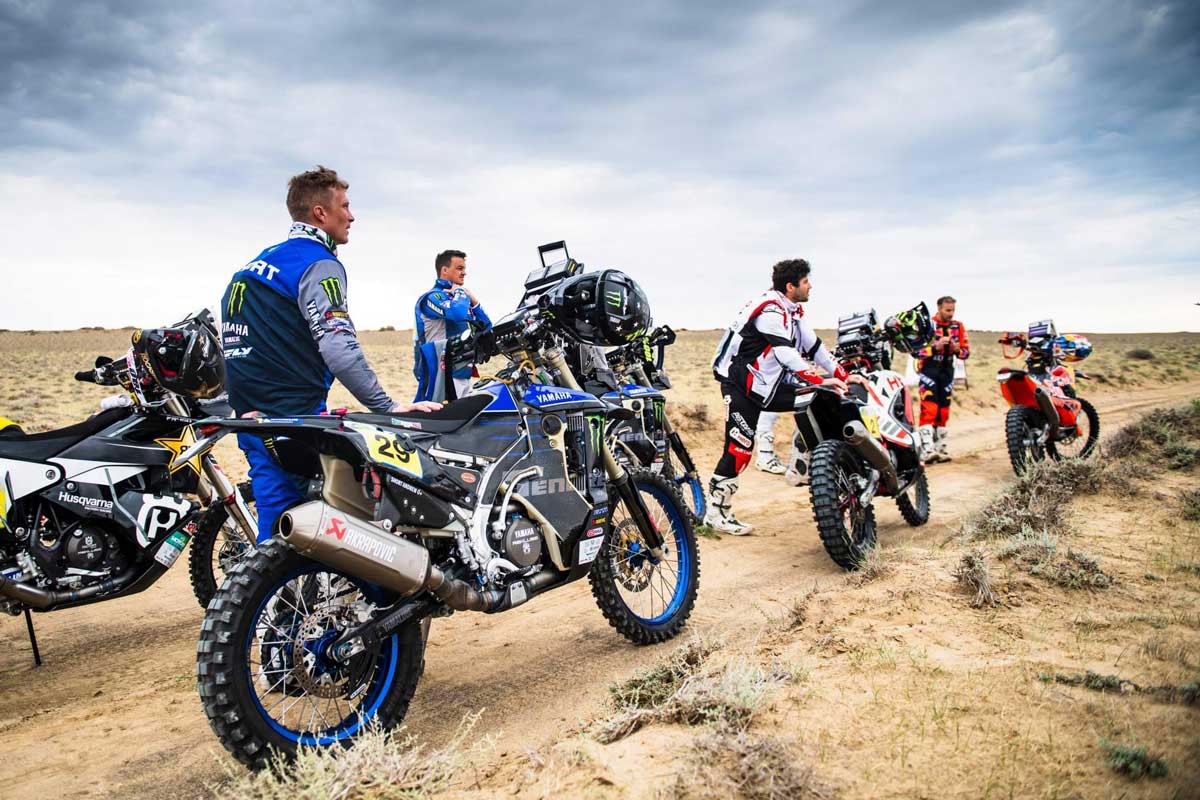 I surround myself with positive influencers in the team, who I can bounce ideas around, ask questions, and have a laugh with them.
Rally preparation, like life in general, is all about balance. While I believe mental preparation is an important factor in the game, you also need to be physically prepared for competing in some of the world’s longest and toughest off-road races. My workout routine is probably a little different than most pro racers. I don’t have a trainer and mostly train on my own, except for the time on the bike. It works for me, and it’s what I’ve always done. I throw in a mix of gym work, cycling (road and MTB), and running. And I spend quite a bit of time on my motocross and rally bikes either on my MX track that I built on our ranch in Botswana, or roadbook training on the beast, my WR450. I’m extremely lucky to live in a country where I’m able to ride thousands of kilometers in vast open landscapes with ideal rally terrain directly out my front door without crossing any borders.
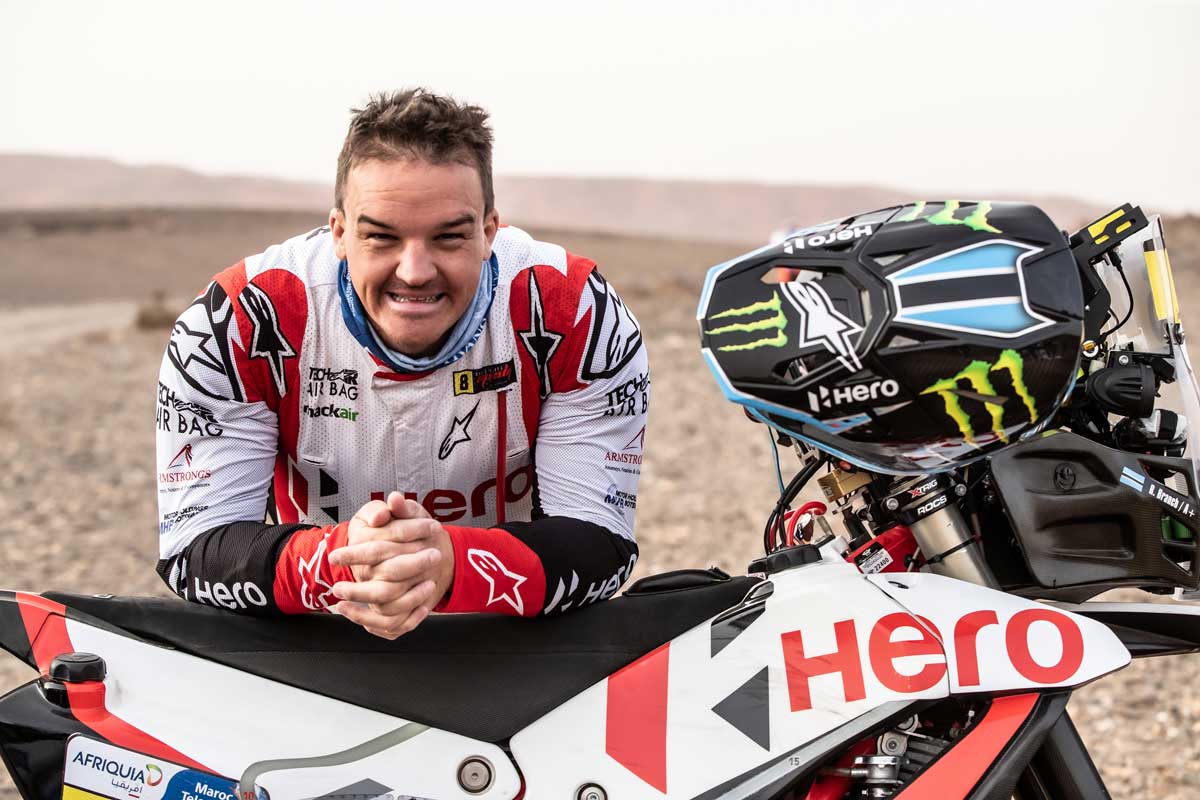 While I believe mental preparation is an important factor in the game, you also need to be physically prepared for competing in some of the world’s longest and toughest off-road races.
For this sport, you must make certain your body gets all the nutrients it needs. I normally eat and drink what I feel my body needs on any given day. I always tend to come into a rally a little bigger, as I can lose up to eight kilograms during longer rallies like the Dakar, and I also feel that my body absorbs the impact of hard landings throughout the race a little better.
Hydration is a huge part of rally racing and deserves to be mentioned separately. The distances are long, the conditions are often harsh, and dehydration can end your race quickly. Every rider has a different hydration or electrolyte combo they use for hydration and recovery. I have found a formula that works for me and have stuck with it ever since. In my rally jacket is a three-liter USWE hydration bladder filled with water and a sachet of electrolyte powder. It’s then refilled with another two liters of water at the halfway point, and I probably drink around another liter at the bivouac.
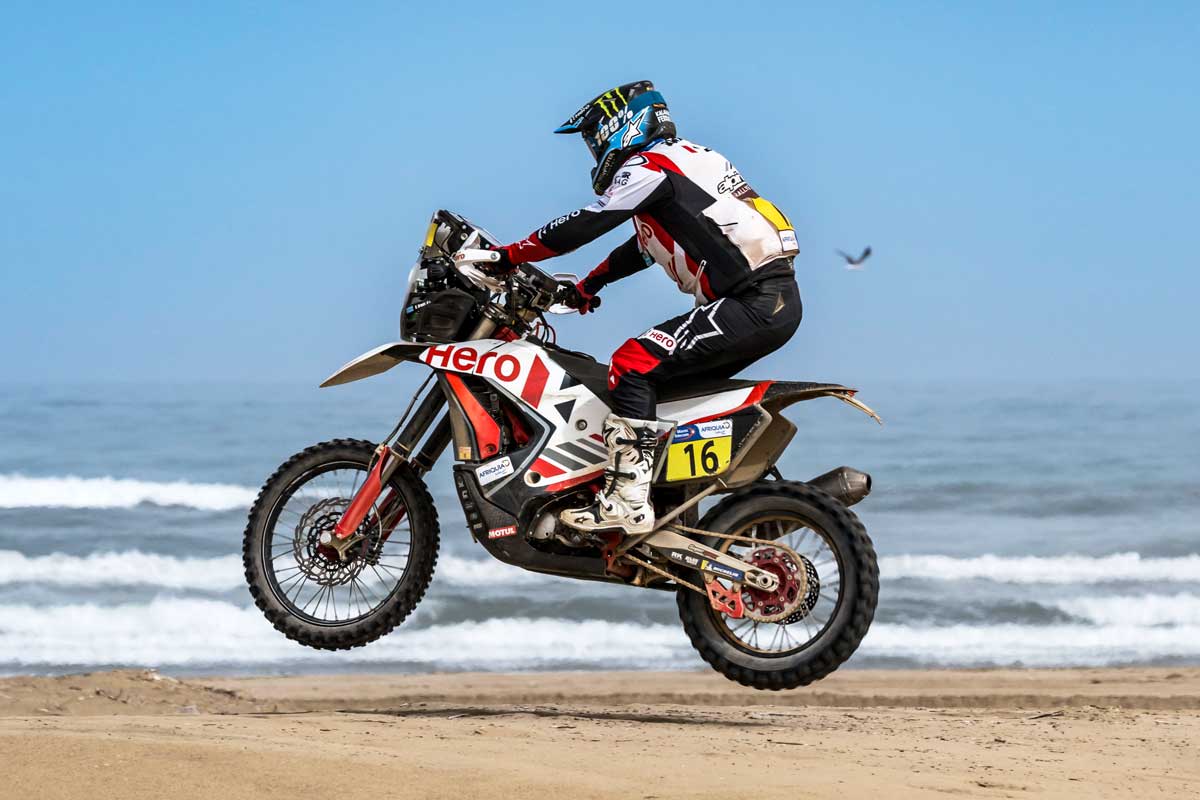 I always tend to come into a rally a little bigger, as I can lose up to eight kilograms during longer rallies like the Dakar. You can see how “full” the rally jacket is with food, nutrients, water, etc.
When gearing up for a day’s racing, I go through my kitting-up process to make sure nothing is forgotten. I start with extra-length racing socks, followed by CTI knee braces, Outsiders racing pants, and Tech10 Alpinestars boots. The top half starts with the Alpinestars airbag vest. It’s a recent development in our sport, a welcomed mandatory safety requirement considering the speeds we are reaching. I also pack an Alpinestars cooling undervest, Outsiders racing shirt, and custom Kenny rally jacket, which is specifically designed with pockets for storage, the already-mentioned three-liter water pack pocket, and removable sleeves for warmer weather. Add to that a rain jacket, 100% racing gloves (the thinner, the better for me), Alpinestars helmet, a Buff, and finally my 100% goggles with clear or tinted lenses complete the list. Not to forget the custom-made ear plugs—highly, highly recommended for long days on a bike with a loud rally engine!
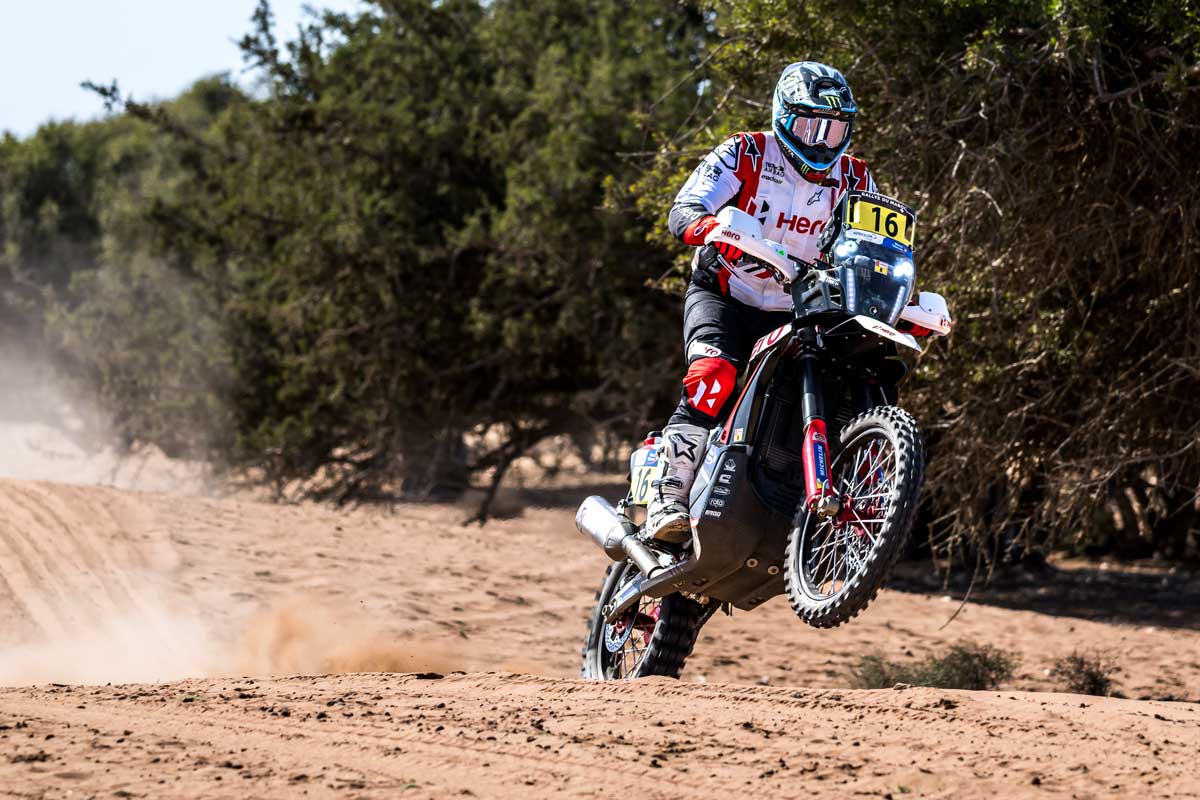 When gearing up for a day’s racing, I go through my kitting-up process to make sure nothing is forgotten.
With the current rules and regulations and the level of competition, we all have pretty much the same tools in our cases, except for small things that make life better—for me that’s good shoes, and I also bring some Kalahari sand from home. Apart from that, I’m a pretty standard guy. When packing, I tend to bring extra, just in case.
As I throw a leg over a bike, along with gear and water, I always have a few medical supplies and daily snacks as well as energy gels. I also ride with a spare goggle lens and some TP. As for the bike, my Hero 450 Rally is custom-fitted with a few extras I might need during a stage, including duct tape, cable ties, a medical kit, a small toolbox, spare gearshift, and brake levers, a tow rope, an emergency flare, an Emergency Locating Transmitter (ELT) and a satellite phone issued by the team.
So, what does a racing day for a factory racer look like? Every sunrise at a rally requires a bit of different preparation, depending on distances, terrain, and positioning, so let’s take a typical Dakar stage to give you an overview of a factory racer’s routine.
I rely heavily on sleep and naps, so I always get an early night, as we are up starting at 3:00 a.m. There’s a quick breakfast, team chat, and kit up before heading to the start. Routine is extremely important to me, to make sure I have everything that I need for the stage.
We then do the liaison, a non-timed route section to the start of the racing special stage, which is a timed section. We normally get to the start 15–20 minutes earlier if all went well on liaison, and I’ll have a snack, change goggles lenses, and kit up again before receiving the roadbook for the day’s stage. We have 20 minutes to put our roadbooks in before start time, which is a bit tight and stressful, but we’re all in the same position. Then we haul ass in the racing stage. I can be in the saddle for up to eight hours on some stages, even if no delays pop up. Once the day’s racing is complete, it’s back to the bivouac for a shower, food, team debrief, physio, dinner, and bed, to do it all again the following day.
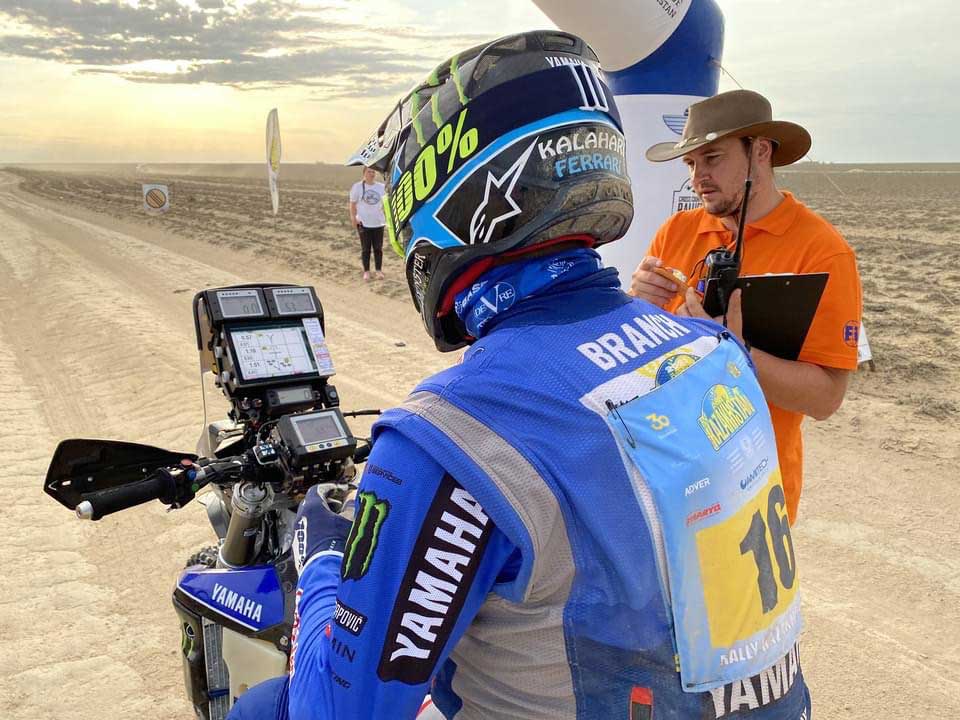 We have 20 minutes to put our roadbooks in before start time, which is a bit tight and stressful, but we’re all in the same position.
There’s a whole lot of learning from your first rally to the years that follow. If I had to give advice to a competitor who is joining the rally scene, my first piece would be to take in everything you can. From the elite all the way through to the legends and the rally organization, everyone has a different experience level that comes with valuable insight. I still have much to learn and appreciate all the guidance and advice I continue to be given.
The next piece of advice would be to work on your mental game as I mentioned above. Most of us come through the cross-country scene, but nothing quite compares to the distances and extreme conditions of rally raid. If you’re new to rally raid, your mental toughness will help you compensate as you build experience.
And finally, get organized. The days are long, but they are structured. Everything you need must be with you, as a lost glove can end your rally. Stay ahead of the game wherever possible; this includes hydrating and some sort of full-body recovery drink! Create a routine that works for you and make sure you stick to it. And—never stop learning!
 Ross Branch AKA “Kalahari Ferrari” is a commercial pilot and at the same time Hero MotorSports Team Rally factory racer, a stage winner at Dakar 2020, multiple winner of the Botswana 1000 Desert Race, South African Cross-Country Championship, and the African National MX Championships.