 Sticky logo
 Search


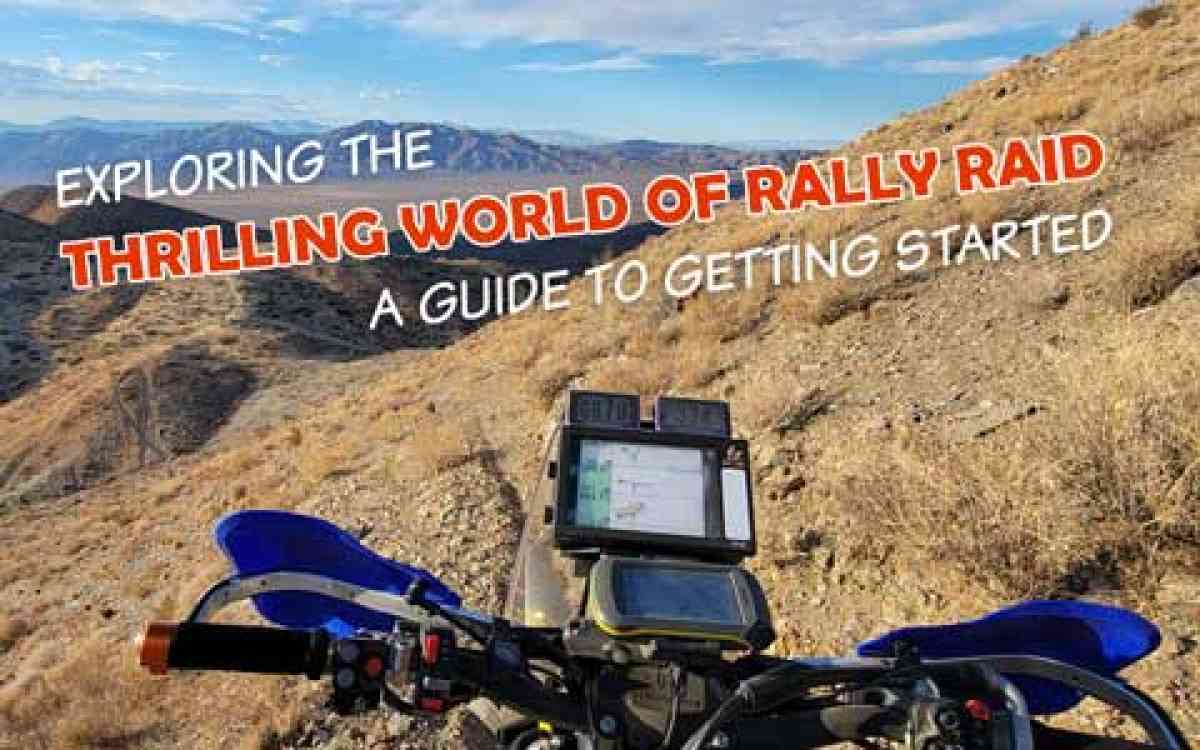
When they hear the word “rally,” off-road enthusiasts immediately think of the legendary Dakar and the adrenaline-fueled image of race bikes conquering massive dunes. But to the average person, rallies like Sturgis or Laconia Bike Week dominate their understanding of the term. What is the difference between these two very-far-apart worlds? The sport of rally raid—which has long remained in the shadows—possesses a captivating allure, addictive to participants and spectators alike. In this article, we’ll delve into the world of rally raid, exploring its addictive nature, defining the sport, uncovering accessible events, and shedding light on affordable technology that has made it easier than ever to embark on the rally journey.
• What is Rally Raid?
Rally raid—also known as “Cross-Country Rally” or “Desert Rally”—is a motorsport discipline combining off-road endurance racing with navigation skills. Rally raids are long-distance races that traverse tough terrain, including deserts, mountains, forests, and other challenging environments. Specially designed vehicles, such as trucks, cars, motorcycles, or quads—with modifications to enhance their off-road capabilities and durability—are used for competition. The races typically span multiple stages or days, covering hundreds or even thousands of kilometers. Competitors must navigate through a series of checkpoints using maps, roadbooks, or GPS coordinates, relying on their navigational abilities to find the correct routes. Rally raid demands not only speed and skill but strategic planning, as teams must balance their pace with the need to conserve resources and tackle unexpected obstacles.
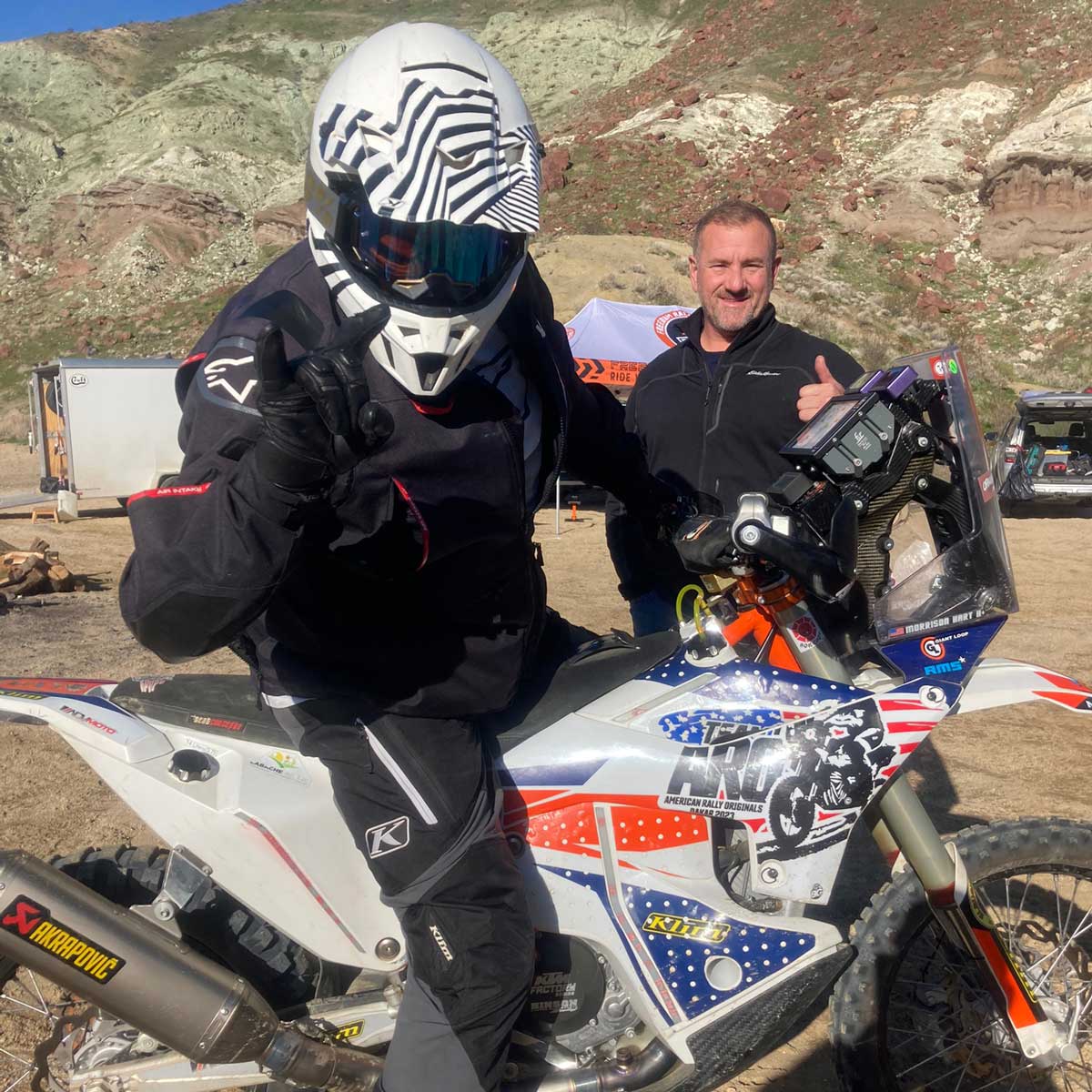 Dan Bart imparting wisdom on the first American to finish Dakar Malle Moto, Mo Hart. (Photo Credit: Willem Avenant)
• The Addictive Nature of Rally Raid
Rally raid is addictive because of the adrenaline rush and excitement it provides. High speeds, challenging terrain, and unpredictable obstacles combine to create an intense and exhilarating experience, with constant risk and a need to push boundaries to achieve victory. And while physical skill is obviously important, peak conditioning and razor-sharp reflexes will get you nowhere without the mental prowess to know how, where, and when to push harder. Competitors must showcase their strategic thinking as well as riding ability to conquer each stage successfully. The sport’s navigation aspect equalizes the playing field, allowing riders with strong navigational skills to compete with the fastest riders. The long-distance nature of the races adds to the allure; participants endure grueling conditions, with fatigue and other physical limitations always waiting to put them off-track. This all makes success even sweeter; the sense of accomplishment from completing a rally raid event or witnessing the triumph of others adds to the addictive aspect. Furthermore, the community and camaraderie within the rally raid world keep fans and riders coming back for more.
• Getting Started in Rally Raid
Entering rally raid has become significantly more accessible, thanks to technological advancements, the web, and mass manufacturing. With the rise of digital roadbooks and other electronic technology, the barriers to entry have been lowered. However, despite these improvements, rally raid is still a sport on the fringe, and that makes it hard to find helpful information when you’re starting out.
Generally, there are two primary approaches. The first is a direct and more expensive method, involving purchasing (or renting) a rally bike, participating in official rally raids, and learning through hands-on experience. In 2022, the Freedom Rally team re-launched its support program, covering all the major North American rallies, and gained international attention during the recent Sonora Rally. In the past, there were limited options for “fly and ride” to rally raid events, but now there are more opportunities.
The second approach is a gradual one, emphasizing learning, training, community involvement, and the journey itself. We’ll dive more deeply into this.
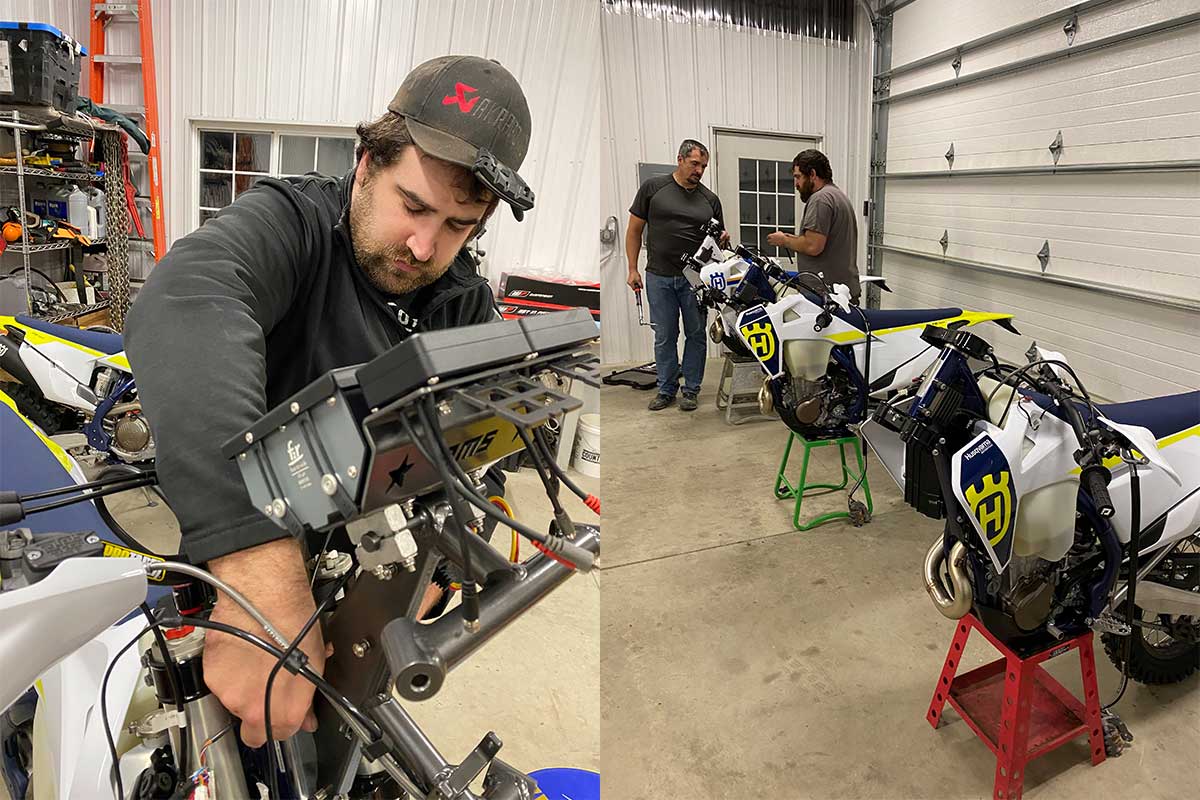 Matt Ransom and Luc Valentin getting rally bikes ready for action. (Photo Credit: Luc Valentin)
• Access to World-Class Rally Events on Our Doorstep
Access to rally raid events in North America is easier than you might think. The continent has some of the best rally riding in the world. Currently, there are at least four prominent rallies in North America. The Sonora Rally, which is a Dakar qualifier and recently became an FIM event, the Baja 6 Days (ideal for first-time participants), and the Coast to Coast (an amazing destination race) are all located in Mexico. In the U.S., there’s the Cotah Rally, currently the only permitted and AMA-sanctioned roadbook rally event, which offers a more technical style of riding.
Beyond the realm of official events, there is notable growth in informal and underground roadbook events. The barrier to entry is lower in these events, allowing riders to try out navigation without the major financial commitment and extensive preparation required for formal rally raids. Notably, the Sonora Rally and the Baja Rally offer rally schools in February and May, which serve as excellent training events for the rallies themselves and provide a relaxed and informal atmosphere.
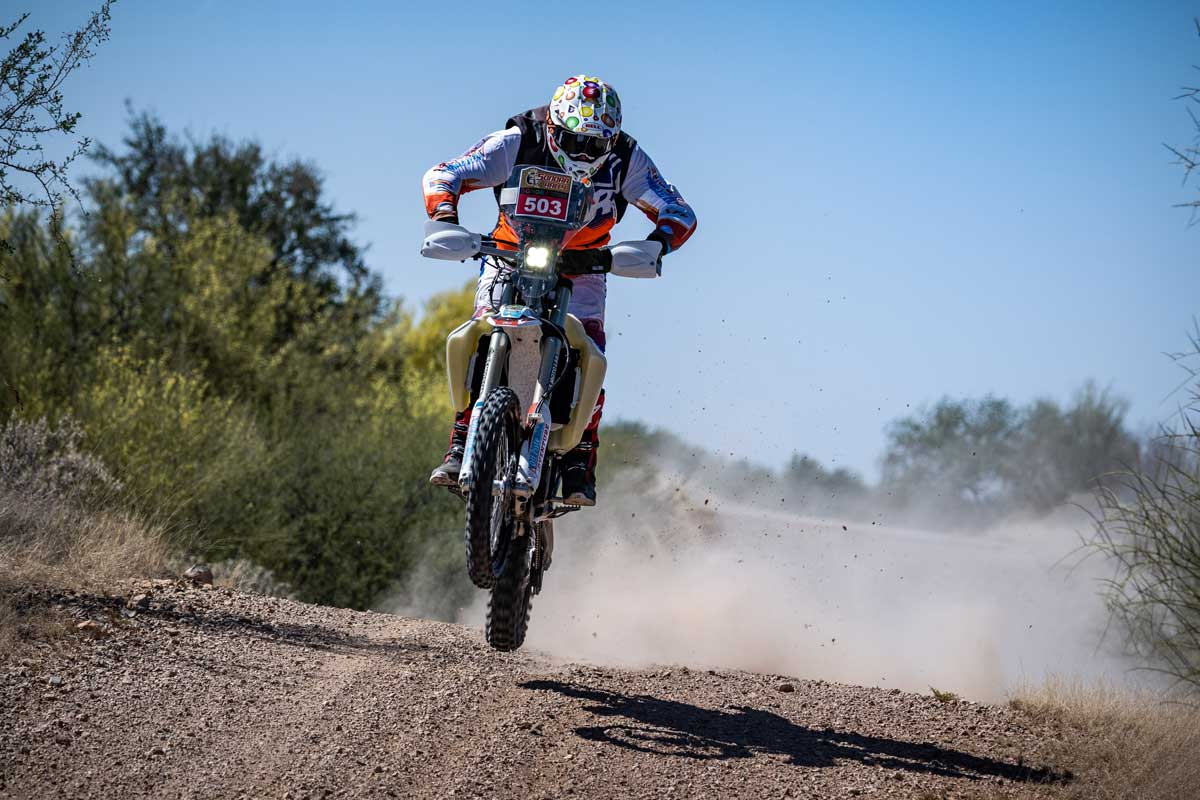 Matt Ransom ripping it up at Sonora Rally. (Photo Credit: WestX1000)
Additionally, there are informal events that are not official races but serve as community gatherings where friends come together to ride roadbooks and navigate. These events provide a low-pressure environment for learning navigation skills. Some events are well-known and open to anyone, while others are invite-only and remain more secretive like the one (that shall not be named) usually held in Wyoming towards the end of June.
Community-driven initiatives have led to the emergence of more events. One prominent event on the west coast is the SoCal Rally, organized by Dan Bart. The SoCal Rally has not only facilitated entry into the rally scene but also propelled riders to participate in the Dakar Rally. Several SoCal veterans—such as David Pearson, Mo Hart, Kyle McCoy, Paul Neff, and Mason Klein—have gone on to compete in the Dakar. Mo Hart became the first American to ever finish the Dakar in the Malle Moto category in 2023 after riding his first roadbook at the SoCal event. Mason Klein, affectionately dubbed “The Kid,” has been making waves at the last two Dakars, unsettling the top factory riders by breathing down their necks.
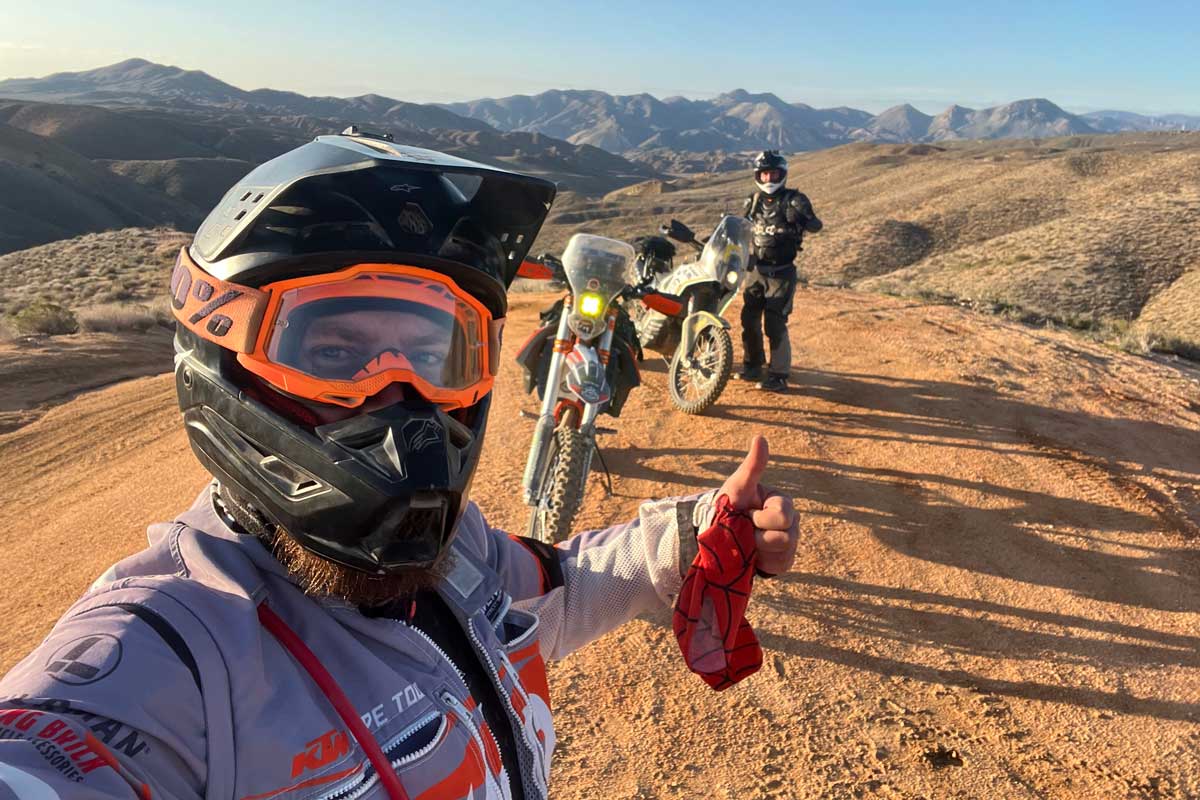 Early morning exploring the SoCal desert on roadbooks... Willem Avenant and Brett Epp navigating the adventure during SoCal Rally. (Photo Credit: Willem Avenant)
In the midwest, Off Piste Adventures in Kansas plays a crucial role in introducing newcomers to rally raid. They operate as a community cooperative for rally riders, helping them to get into the sport and to compete in events by sharing skills, pooling finances and funding, and making it more affordable for young riders to start out. They also strive to organize roadbook rides at least once a month.
On the east coast, Todd Zacker hosts the Mock Rallies in Virginia, which are the only roadbook events I am aware of on the east coast. These events cater to adventure riders and exclusively employ digital roadbooks, allowing participants to use their phones or tablets for navigation without any paper involvement.
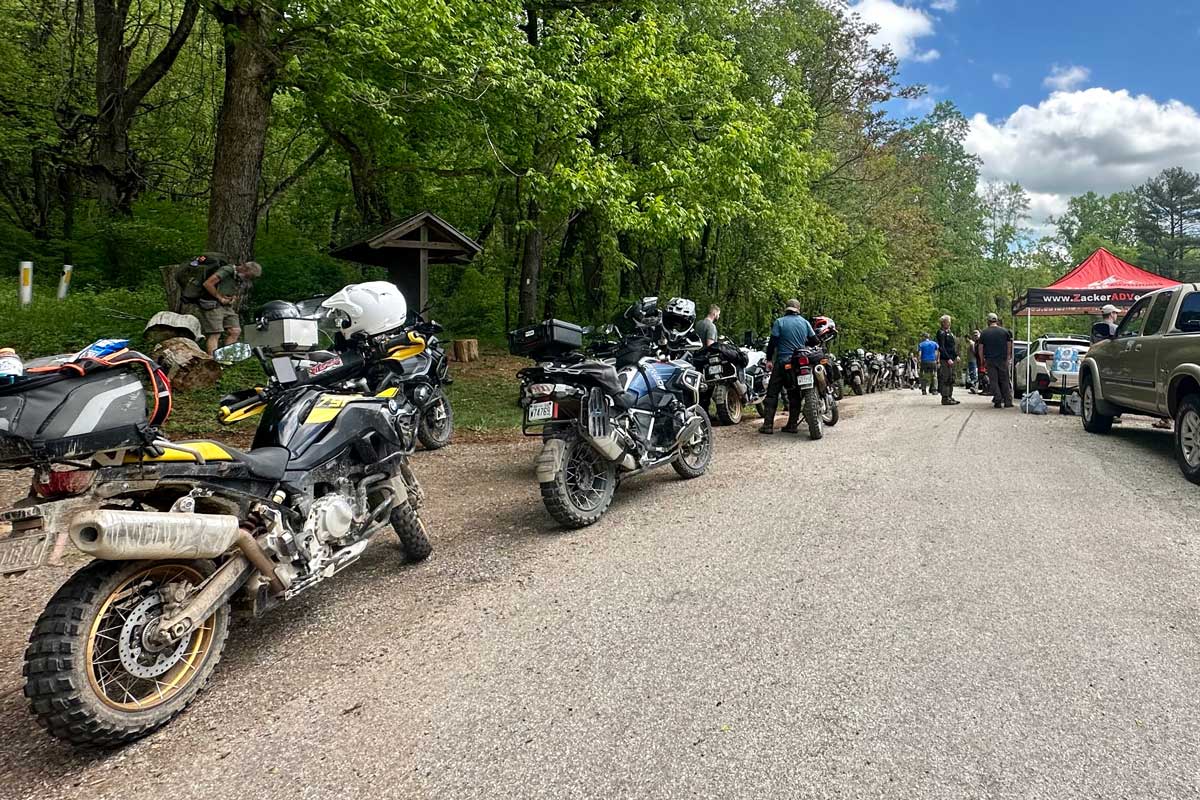 Adventure bikes lining up to experience riding roadbooks for the first time. (Photo Credit: Todd Zacker)
In Canada, there is the Rally de Parent in Quebec, organized by Patrick Trahan, and the Gold River 300 in British Columbia, organized by Jonathan Binnington.
The aforementioned events are just the ones I am familiar with; there are likely more I’ve yet to discover. For most of these events, all you need is a bike, a positive attitude, and a smartphone or tablet with GPS capabilities.
Looking ahead to 2024, we see rally raid continuing to build momentum in North America. Kent Choma plans to revive the Nevada Rally, which previously ran from 1993 through 1995. Also, keep an eye out for the Battle Born Rally, scheduled for early summer (exact dates to be confirmed). Skool of Moto, a well-known riding school, will be hosting a two-day Rally Skool in the spring or early summer. Additionally, Todd Zacker is considering organizing a full-scale navigation rally (separate from the Mock Rallies), while the Cotah Rally aims to expand its territory.
• Reimagining the Cost of Starting Your Rally Journey and Technology
When venturing into the world of rally on a budget, you must prioritize good quality equipment. However, there are several cost-effective ways to embark. If you’re committed to participating in a formal rally raid and investing time in training, you will need to allocate funds for necessary equipment such as roadbooks, trip meters, larger fuel tanks, and more comfortable seats. Building a “proper” rally bike can be a significant investment, but the value it brings makes it worthwhile. Fortunately, with advancements in technology, there are now affordable options to explore rally without breaking the bank.
Hardware: To navigate effectively, you typically need a trip meter, cap repeater, and roadbook reader—all of which must be securely attached to your motorcycle and properly wired and powered. Modern smartphones and tablets boast impressive processing power, combining the functionality of multiple devices into one. This means you can repurpose an old phone or tablet lying around to serve as a navigation device, allowing you to ride roadbooks without spending additional money. If your old device has limitations like poor battery life or inadequate screen visibility in daylight, there are rugged and highly visible rally tablets available at a lower cost compared to traditional setups. Most digital devices are plug-and-play, eliminating the need for complex wiring if you have a handlebar USB port.
Software: In the past, the only way to navigate using roadbooks involved printing them on paper, cutting and taping them together, and then loading them into a roadbook holder. Thanks to digital roadbooks, those days are now behind us. There are now at least five roadbook reader apps that can display your roadbook, odometer, and compass, eliminating the need for physical paper roadbooks and additional navigation equipment.
Roadbook apps fall into two categories: PDF roadbook readers and true digital roadbook apps. PDF roadbook readers simply display pre-loaded pdf files, essentially replicating the experience of using a printed roadbook. On the other hand, true digital roadbook apps act as “rally computers.” Alongside rendering and displaying the roadbook, these apps record your track, monitor your speed, display waypoints, and offer functionalities similar to dedicated rally GPS devices like the Stella, ERTF Unik or Rally Comp. As technology continues to evolve, rally enthusiasts can now embark on their rally journeys with more accessible and cost-effective options.
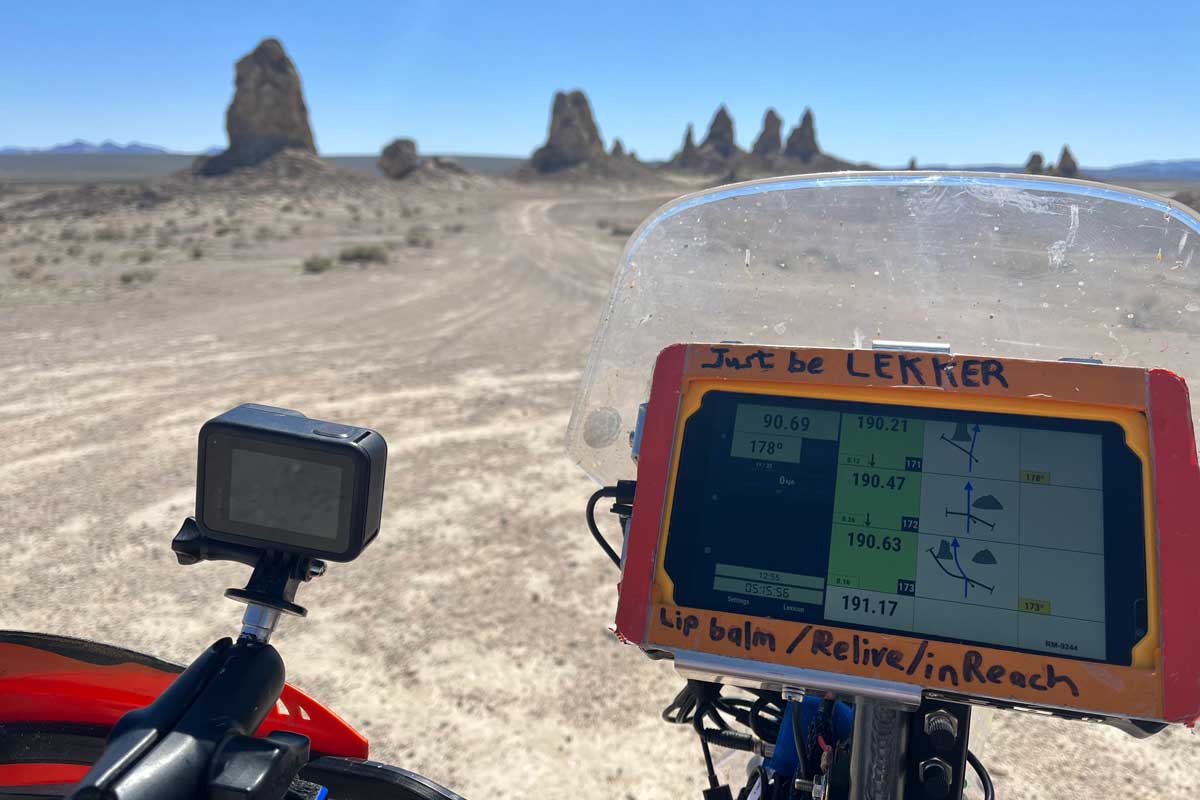 The future of rally lies in accessible technology like the digital roadbook. Trona Towers, SoCal is in the background. (Photo Credit: Willem Avenant)
• Learning and Connecting in the Community
All you really need is your dirt bike and a digital roadbook; the next step is to delve into learning about the sport.
One of the best ways to learn is to immerse yourself in the community. Make connections with rally riders, attend events (even if it’s just to observe or help out), and become an active part of the sport. There are always those eager to assist, offer guidance, and share information.
Take advantage of online resources and content. Join Facebook groups like “North American Rally Riders” to connect with like-minded enthusiasts. I have personally created a lot of content under the hashtag #unpackingrally on Facebook and Instagram, including educational videos that explain rally concepts on YouTube.
Another excellent resource is Victor Orellana and his Chasing Waypoints podcast. He is dedicated to promoting the sport and passionate about educating people about rally raid. Victor is always willing to share his extensive knowledge and insights.
Whether you’re seeking a new level of adventure beyond traditional adventure riding, fulfilling a lifelong dream of competing in a rally, or simply testing your resilience and determination, there has never been a better time to dive into the thrilling world of rally raid than right now.
 Willem Avenant is a rally rider, roadbook maker, digital roadbook developer, and organizer of roadbook training camps. He likes to share his love, passion, and philosophy on rally racing. He is debuting his first Dakar Rally in 2025. WillemAvenantracing.com, Insta@willemavenant, Facebook@wilemavenant282