 Sticky logo
 Search


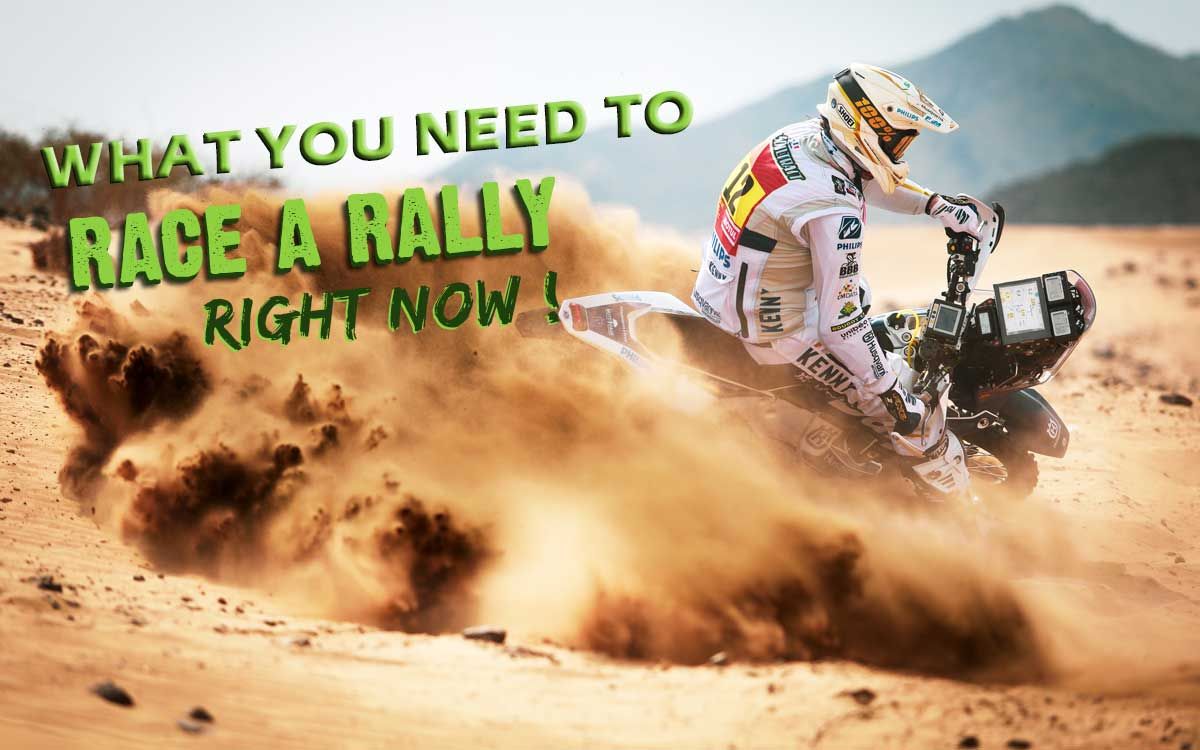
The Dakar Rally has been an untouchable dream for many—engines roaring across the countryside, race bikes soaring off the crest of a dune, adventures for days on end. But with more local rally raid events popping up in North America, the fantasy is becoming closer to a reality. Perhaps the international scene, let alone Dakar, is still well out of reach, but testing one’s limits in a timed, navigation-based competition is achievable here and now. Below is all you need to know to stop wasting time and start chasing glory.
What Exactly is Rally Raid?
A rally raid, or rally racing, is an off-road, cross-country competition centered around navigation and endurance held over multiple days. This style tests the stamina of both human and machine. Competitors in various classes of vehicles compete through a timed set of race courses called “Stages” each day. Stages are separated into two categories: the “Special,” which encompasses all the unpaved obstacles and terrain; and “Liaisons,” which are highly regulated transits to and from the Specials.
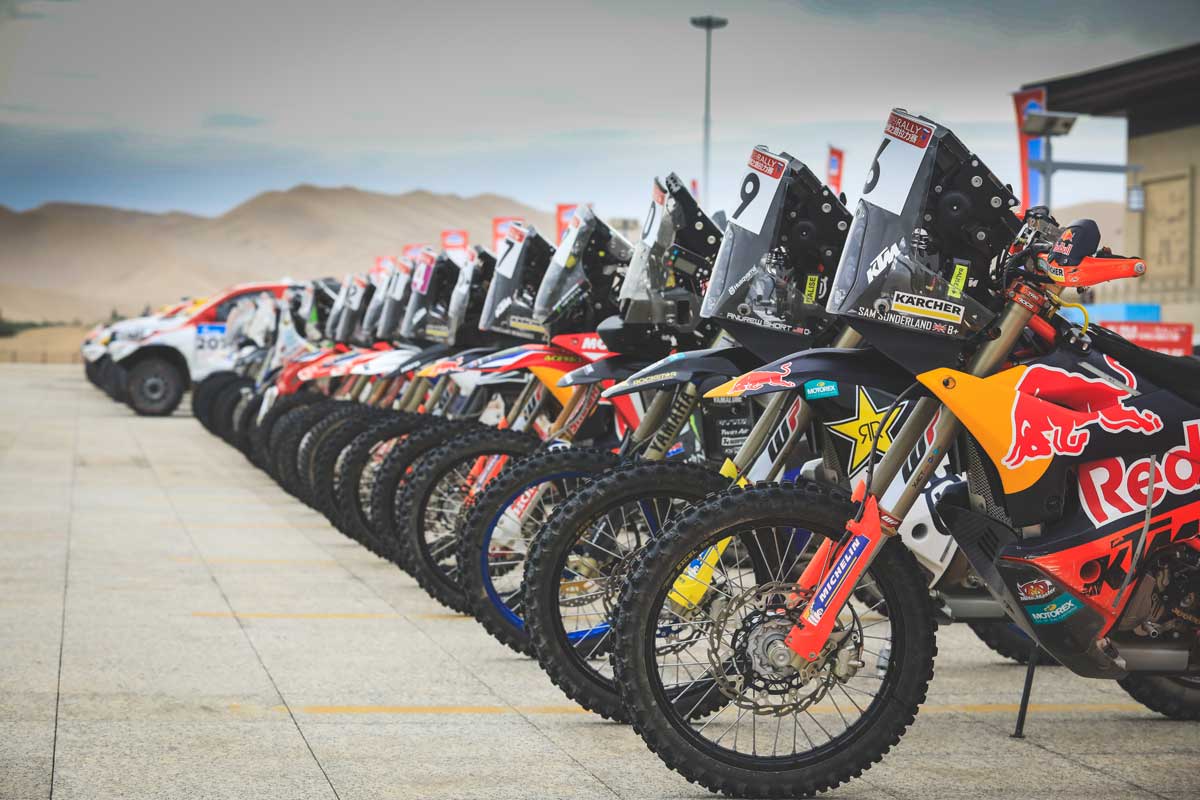
Typically, a Liaison passes through towns along public roads, so there are rules and speed zones to keep competitors and the general public safe. Each day, competitors must travel via the Liaison to and from the Special Stages in order to reach the “Bivouac”—a temporary, nomadic encampment provided by the race organization that acts as a home base for event participants. Aside from a Marathon Stage (we’ll get to that in a moment), this is where competitors generally meet up with their support crews, refresh supplies and parts for the following stage, perform repairs and servicing on their vessels, eat, sleep and regroup for the next day.
Although it’s possible, the Special does not often begin at the camp. The Marathon is an exception, however, where organizers set up a “Remote Bivouac” in the middle of nowhere, far from support crews, supplies and the already few comforts pilots might have left behind at “true” bivouac. The point is to add to the challenge of maintenance, among other things. Riders and drivers must be highly conscious of ensuring their bodies and bikes (or cars or trucks) are in the best possible condition at the end of the day. Only the competitors are allowed to work on their machines, although they can help each other, and they have a limited amount of supplies and tools. The next day, they must proceed to a new Special and Liaison with the same tires and in whatever condition things were wrapped the previous day.
What significantly sets rallying apart from every other motorsport in the world are an unmarked racecourse and a “Roadbook.” Invisible to the eye, the course has no set tracks to follow, no boundaries, no pre-running, no course markers or ribbons, no signs of any kind telling racers where to go. This is where said roadbook comes into play.
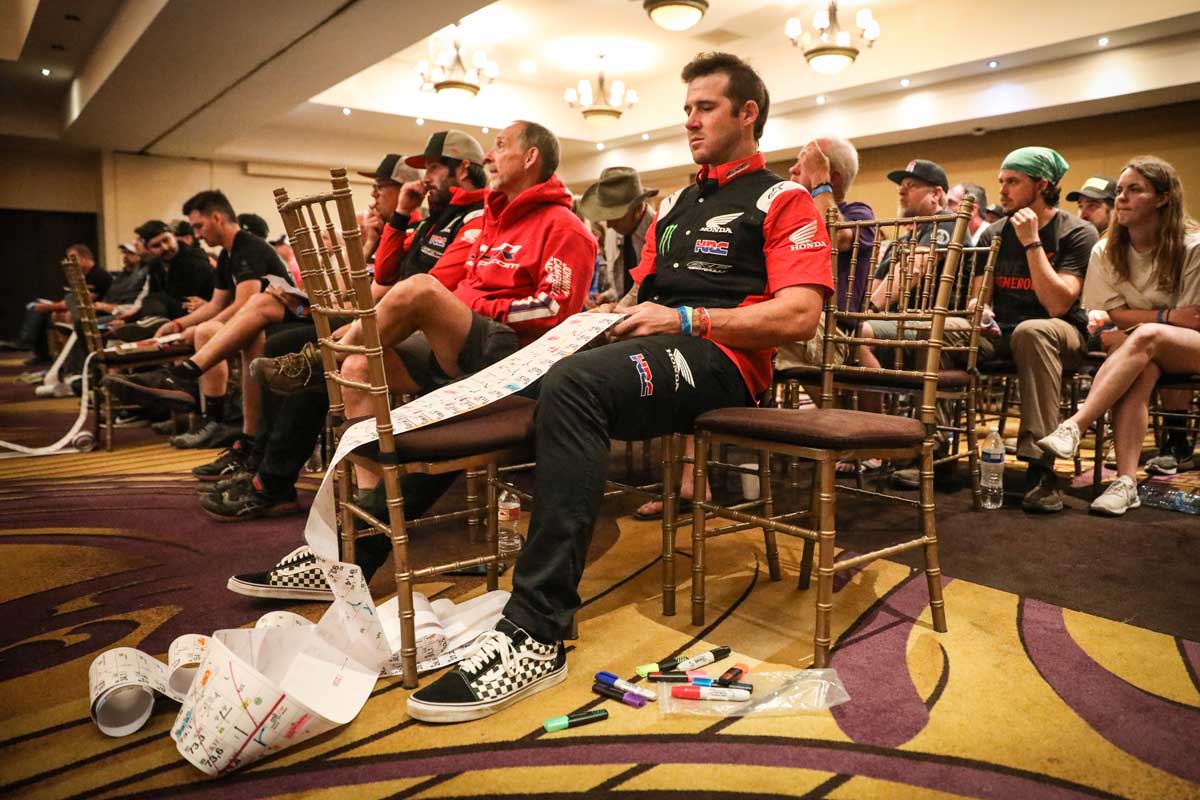 Each racer has their own method for studying the Roadbook - Some go for the "toss and roll" technique.
The Roadbook
The most crucial component to any rally is the roadbook. This scroll, or book for some vehicles, is the guide to the hidden route. A racer’s bible at a rally, it carries all the secrets of the course to guide them to the finish line. Those who read and understand it best tend to find more success. Competitors are released at the start individually in timed intervals and must decipher the directions provided on the paper chart, which will lead them through sequences of masked GPS waypoints, ultimately leading them to the finish of each stage, to include the Liaison. But there’s a catch! This is not a printout of Google Maps or MapQuest directions. The language of the roadbook is consolidated into a series of numbers and symbols called “Tulips.” And these Tulips give the competitors just enough basic information such as distances, speeds, compass headings, dangers, terrain and trail conditions, abbreviations, landmarks and clues. This unique language was first developed for the French-owned and operated Dakar Rally—the reason why most of the words and abbreviations are French. And French is currently the base language of rally around the world.
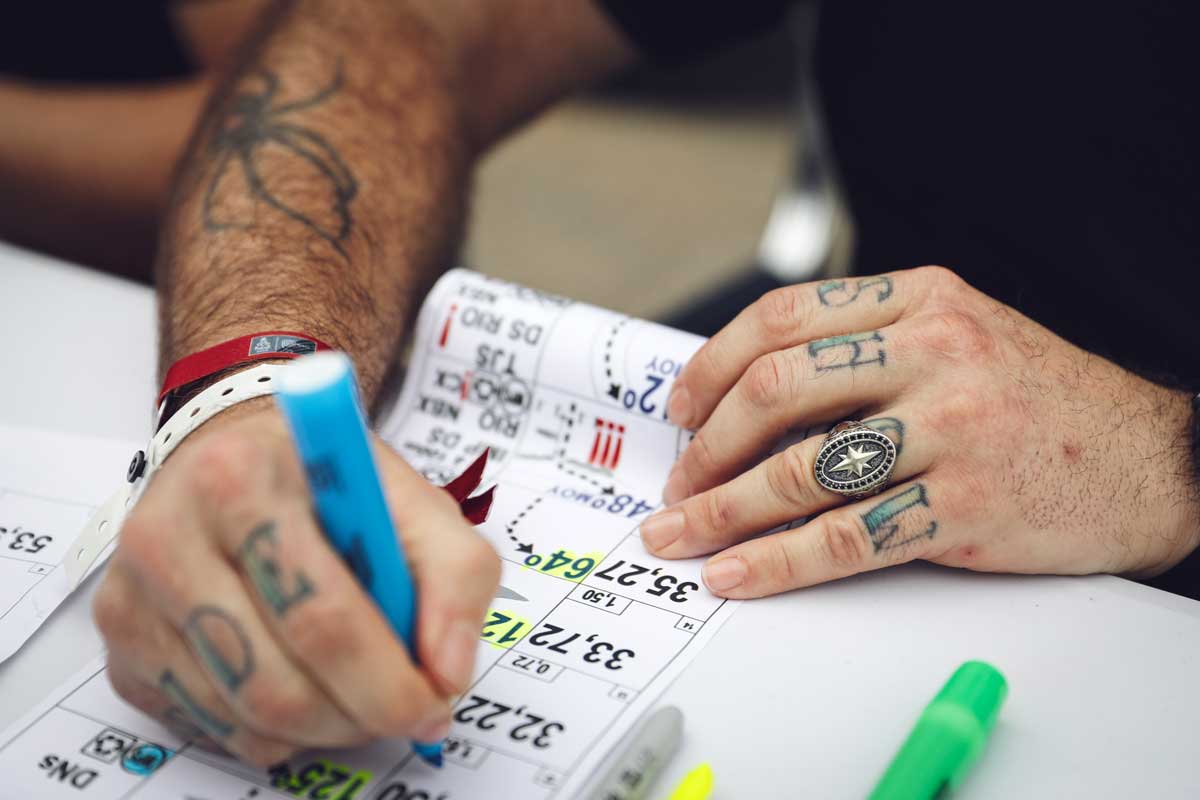 Although most Roadbooks are now handed out the morning of eash new stage, teams are still given enough time to highlight key notes on their paper scrolls.
Can I Race a Rally?
Believe it or not, you do not have to be a factory-sponsored pro to become involved with rally. The average rider can participate in this sport. Here in North America, we have two major organizations who put on multi-day, Dakar-style competitions: the Yokohama Sonora Rally and the Baja Rally—both in Mexico. Due to the long distances these types of events cover, it is extremely difficult to host one in the U.S. It would involve an enormous amount of logistics and political pull between multiple states, governing agencies and landowners. But just over the border into mainland Mexico and the Baja California peninsula, the residents and local governments welcome it with open arms—not to mention a lot of paperwork, exchange of money and vows to follow rules and regulations. The terrain is exciting and absolutely fantastic to experience but, best of all, for those jumping into the sport, both organizations offer training courses that help to create a solid foundation in reading roadbooks and preparing for the many trials ahead. If nothing else, classes like these offer a great taste of what to expect before jumping into the main event.
What’s Needed to Race
Aside from the obvious race vessel and protective gear, parts and supplies, tools, gas and tires, the two most basic pieces of equipment a rider needs to start a navigation rally are the roadbook holder and a trip computer.
Roadbook Holder
This comes in many forms depending on manufacturer, but essentially a roadbook holder keeps the paper scroll or booklet in place, providing the ability to scroll the pages up and down either manually, electronically (via a handlebar-mounted switch or touch pad), or both. Mounting and terms would be different for an electronic roadbook, but as this is still in the R&D phase, only elite teams at prestigious races are required to use the electronic version.
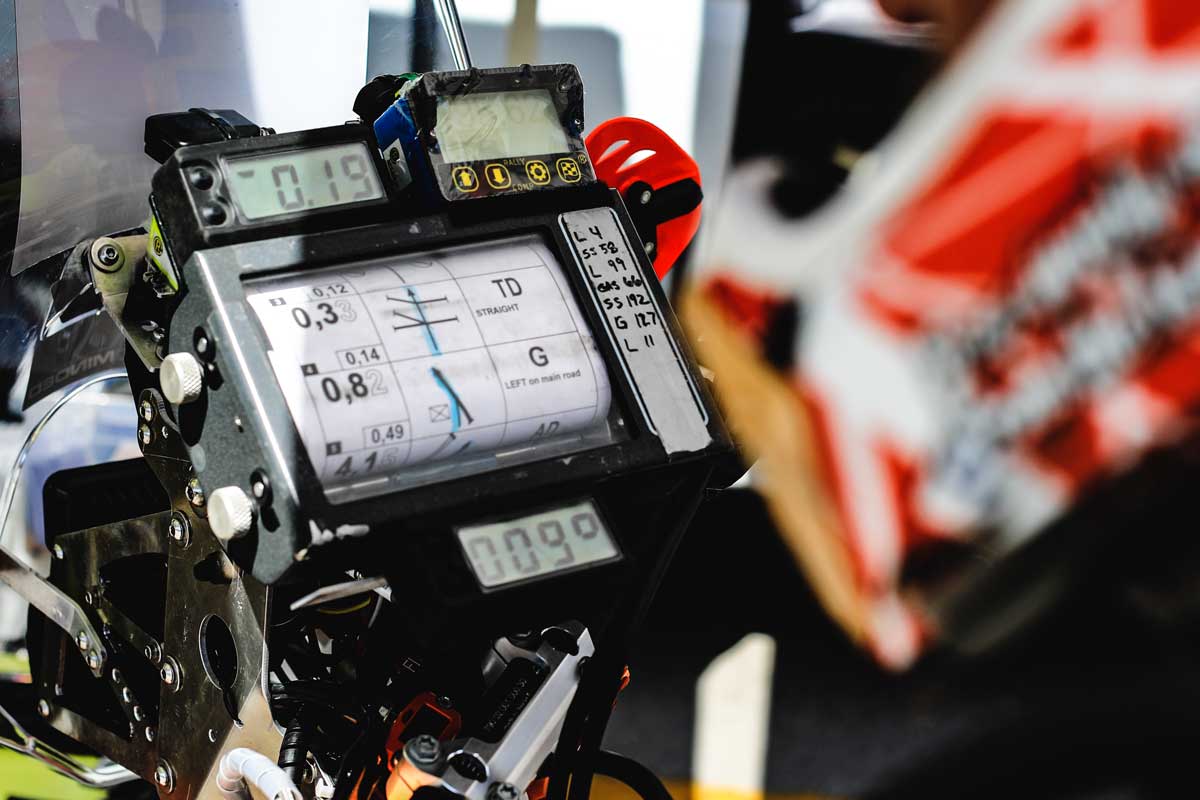 On course, one of a rider's most essential tools is their Roadbook. The ambiguous treasure map is designed to uncover hidden waypoints along the route.
Trip Computer
Trip computers come with options to be connected to a wheel sensor or fixed with a GPS antenna. Sometimes directions to reach a waypoint in a roadbook are as simple as compass heading and distance. There may be speed zones where you cannot exceed the roadbook’s posted speed limit, or you will be penalized with a time penalty. Having an adjustable odometer allows you to recalibrate your distances to the roadbook directions. It is typically good practice to adjust your odometer every time you hit a major waypoint or obvious landmark in the Tulip to make sure you are staying on course with the roadbook. Much of this equipment is customizable to suit the racer’s needs. A racer can choose to have multiple trip computers if they prefer to display their information without having to switch screens, or just want redundancy. Various rallies will require different safety equipment. These guidelines are outlined in their respective rulebooks and are checked at a technical inspection before the race begins.
The trip computer provides an adjustable odometer and other information such as speed and CAP heading (digital compass). Being able to see and adjust these values is key while navigating the Special Stages and Liaisons.
The Rally Computer
Rally Comp defines their product as, “A multi-function race management and metering device and software infrastructure for competitive motorsports and rally-raid events.”
This device—a satellite communications and guidance computer—is typically provided by the race organization and they use it to load waypoints each day, track progress, track speed and movement, as well as send and receive messages and alerts. When an athlete comes into range of their waypoints, numbers marking a distance and an arrow will appear, being locked onto the spot they need to target. A distinct beep signals a waypoint has been cleared, after which they then follow the roadbook to the next waypoint, and so on until finishing the stage.
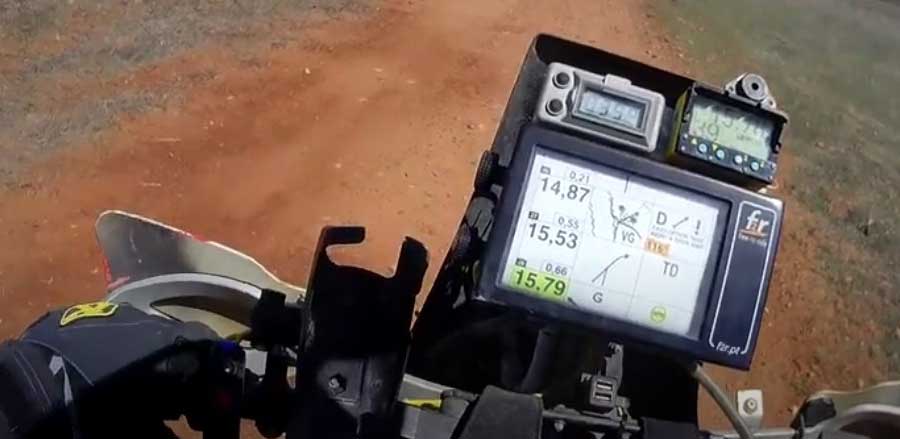 Image source: www.rallycomp.com
The Full Package Deal
If purchasing a rally kit is too much commitment, or a racer would be going to great lengths to reach an event, there’s always the rental option. All over the globe, for many a competition, are full-service establishments offering everything from bikes and UTVs to parts, mechanics, transport, lodging and logistics. In North America, Rally PanAm, Monkey Business and Baja Dad Race Prep are the go-to rally support groups.
Wait, There’s (a Bit) More…
Beyond the race-specific equipment, there are several items that need to be considered before you can pull up to the bivouac, let alone the starting line, including the following:
Petty Cash: This, unfortunately, is extremely variable. It depends a lot on where and what race you’re attending (what they offer, the distances you’ll be traveling apart from the organization, the likelihood of having to fend for yourself in an emergency or breakdown situation, etc.). It could be a few hundred, or (again, unfortunately) it could be a few thousand. This is a touchy subject to gauge properly, so do your research and use your best judgment. More can be a safer call, but there are always exceptions.
Food/Snacks: Compact and easy-to-use nourishment like Gu Chews, Energy Gels, Shot Blocks, salt tabs, granola bars, Clif Bars, fruit snacks, and trail mix are easy to carry on your bike or person. Any items that runners, hikers, and bikers would use to maintain their nutrients, carbs, and electrolytes will work well during a race.
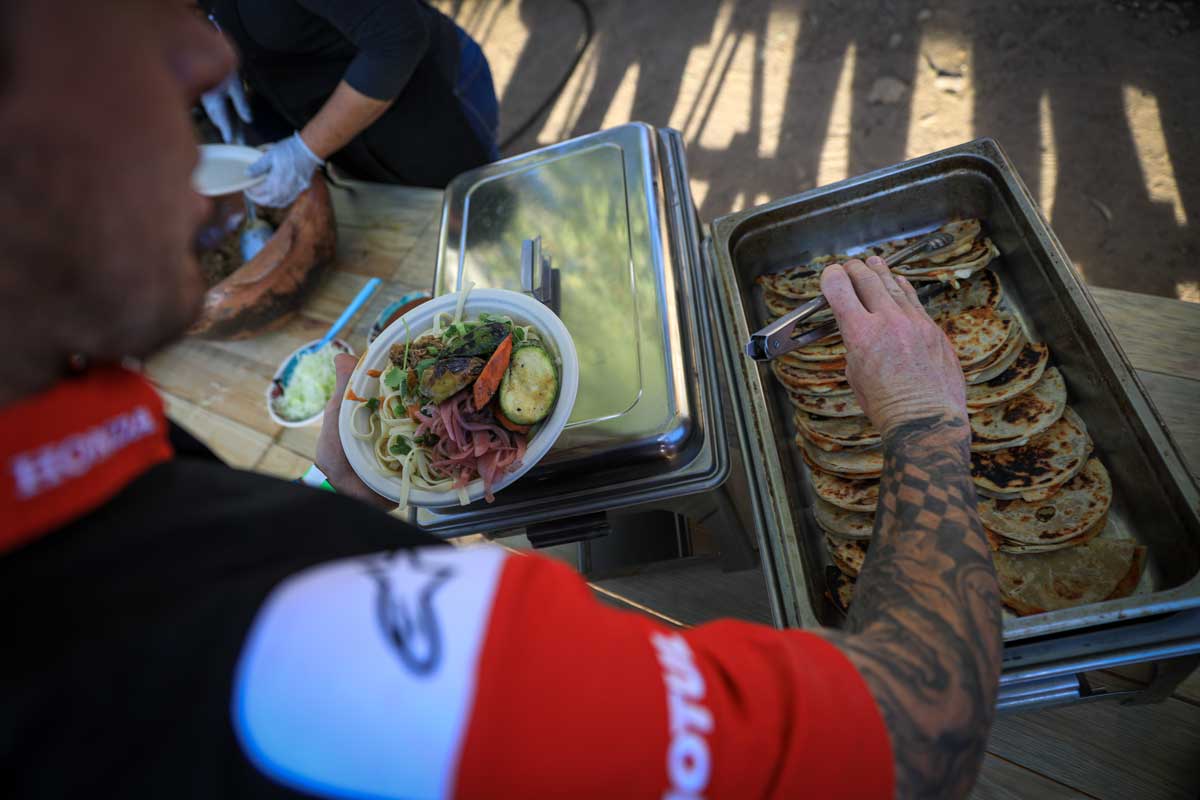 Nourishment is a must, but that doesn't mean it can't be delicious...(did someone say taco?)
Spare Parts (Types of Parts): Let’s just dump this category in a list: levers (brake, clutch, shifter, rear brake lever), air filters, oil filters, fuel filters, oil/lubes/grease, brake fluid, fuel/octane booster, Steel Stick or JB Weld, clutch plates, O-rings for rally tower drive components, electrical tape, steel wire, Duct/Gorilla tape, zip-ties, nuts and bolts (the Track Pack brand), throttle and clutch cables, spark plug, wheel bearings and seals, dielectric grease, axle, wheel spacers, chain and a couple master links, Motion Pro master link tool, and spokes.
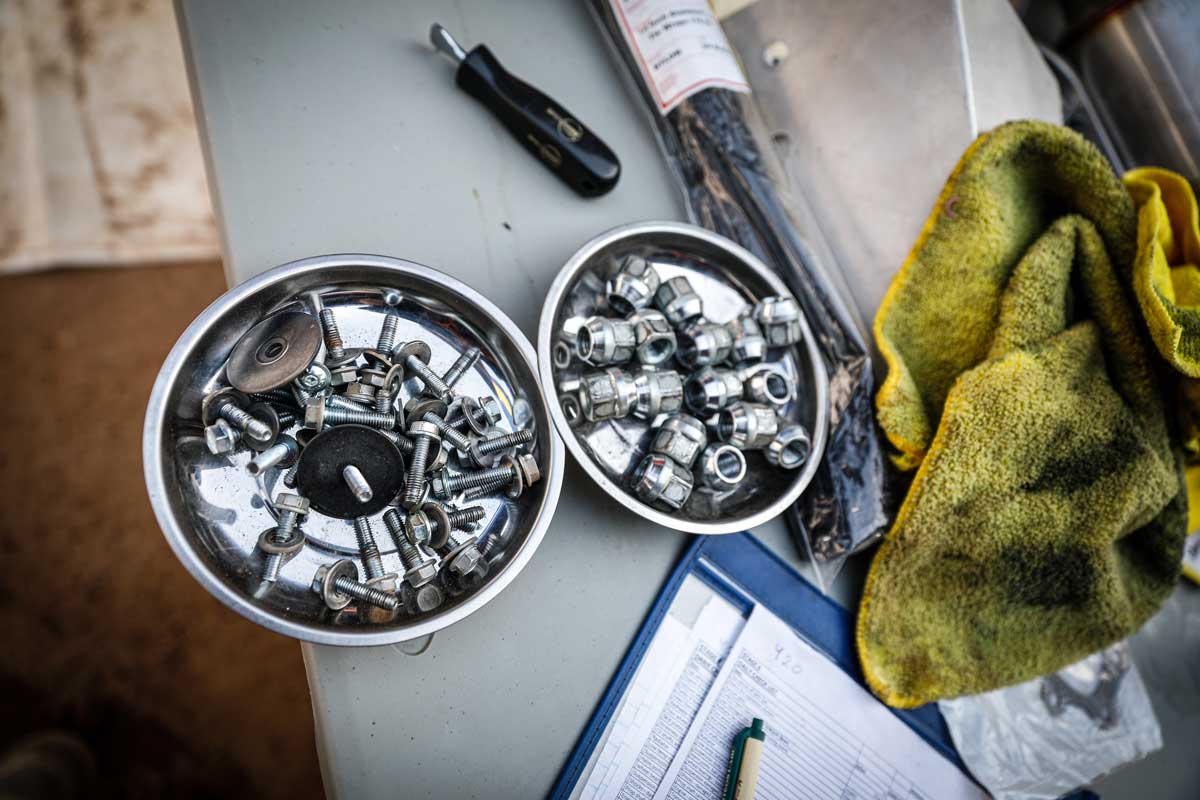 Nuts and bolts is a good start for the spare parts list.
Tires: Depending on the rally (and your budget), you might be able to get by with a minimum of one or two sets of tires and wheels. If you’re on a budget racing something like Baja Rally or Sonora Rally, you could use one set for the whole event and have a spare set just in case there is a catastrophe. Having at least one full set of tires on hand and ready to go on an extra set of wheels is highly recommended, if more aren’t possible. You can break/bend a rim quite easily. Or burn through mousses. Keep an extra set of mousses and lube as well, for such instances. Mousses are great because you don’t have to worry about tubes, tire pressure and pinch flats. Plus, mousses could potentially last you the entire race.
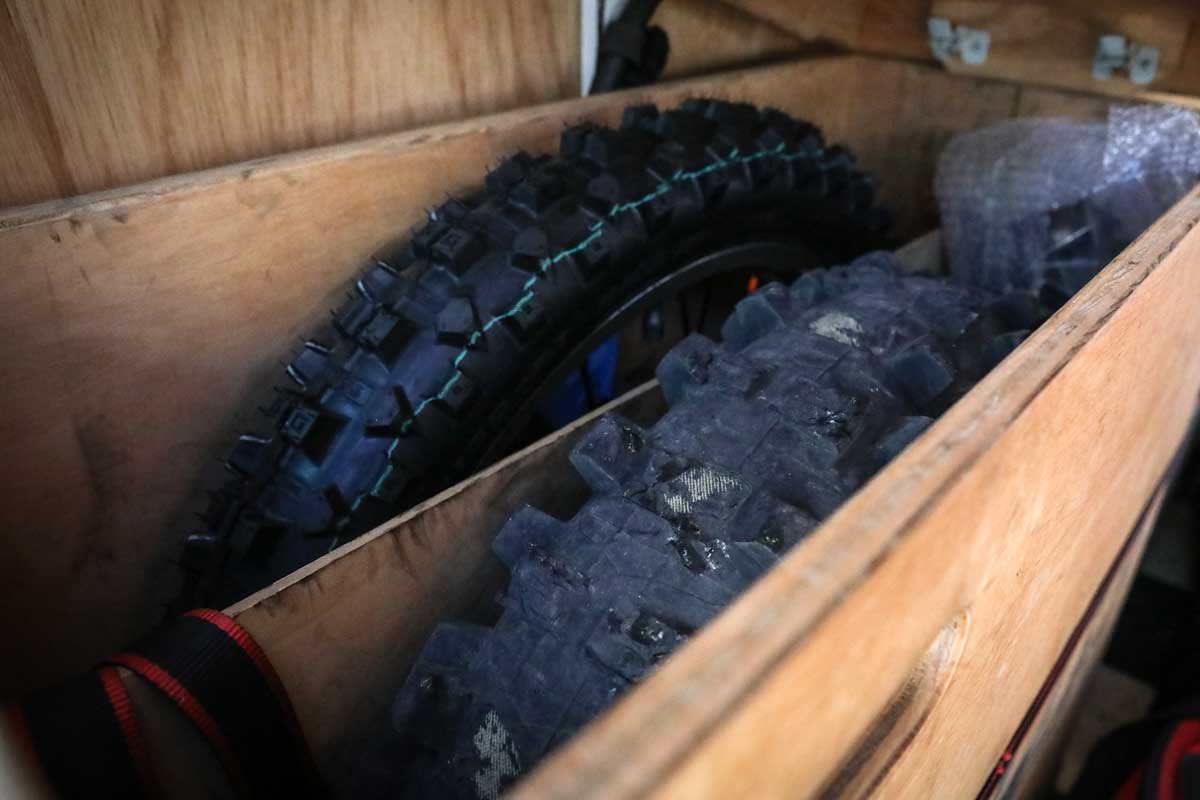 The difference between a brand-new tire and a well-worn piece of rubber can be merely a couple of stages.
Tools (the Bare Minimum): Spend the time to figure out the minimum amount and types of tools your specific bike needs. Be realistic enough to know what you are capable of fixing in an emergency field repair scenario, so as not to bring gadgets useless for your skill level. This varies from brand to brand and person to person. Try every screw, bolt, nut, hex, Torx your bike needs. It could be worth investing in titanium tools to save weight. Do drills at home, stripping your bike down to the frame into its whole components, and then putting it back together. Learn how to trace the electrical system to different sources. It’s unlikely you’ll be rebuilding an engine in the desert at the local North America events, like Sonora Rally and Baja Rally, so only take what is absolutely necessary to make adjustments and do basic maintenance. Anything greater than that, if you are working on your bike yourself, could spell the end of your race.
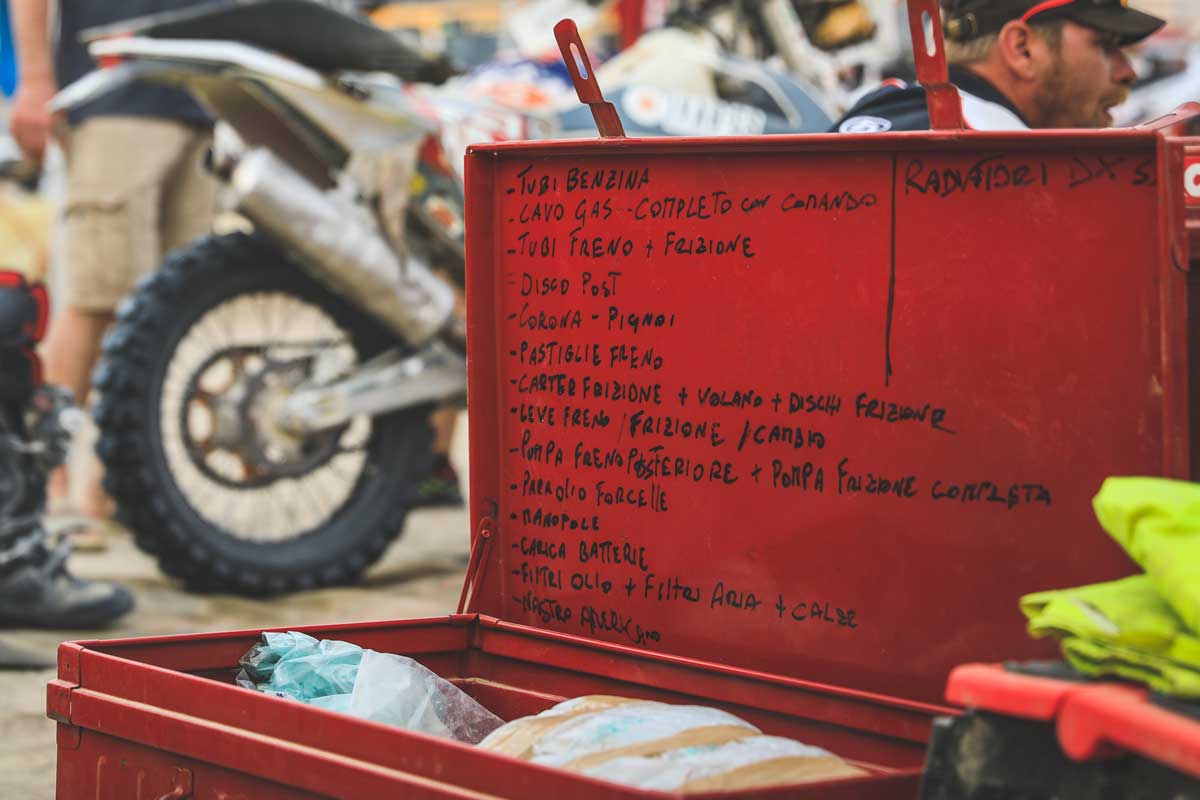 A Malle Moto box has more uses than merely containment. The lid is often a handy place for reminders, motivation and checklist as well!
Insurance (Medical, Vehicle Liability): With rally raid, you will be traveling on public roads during the liaisons, so the appropriate coverage for the host country’s liability requirements is an absolute must. There is the potential of having an accident with local traffic, so being insured means everyone involved will receive the medical care needed—let alone if there’s property involved. This is a potentially serious matter because as a foreigner in a host country, it’s extremely easy to be taken advantage of by local authorities. You will have no power to do anything about it if you aren’t covered. For personal medical, be sure your coverage extends to said host country or countries you will travel in.
GPS Tracking Device, Plus Coverage: The more popular brands and models are the Garmin INREACH and SPOT Satellite Messenger with GEOS as a leading emergency monitoring and response service. This is often required for a rally; however, it’s recommended nonetheless, as it can be essential in an emergency situation.
Clothing and Accessories: Pack base layers and hiking/backpacking-type wear. You want to be light, but also have the appropriate insulating layers when it’s cold, and moisture wicking layers when it’s hot. Rallies are multiple days on end, over large variations of terrain and elevations. Outdoorsman attire is great, as it’s designed to be versatile and lightweight.
Riding Boots: It’s imperative to wear a top-of-the-line, MX level-of-protection riding boot—acquiring them with enough time (a few months minimum) to break in prior to the race, or you’ll be hurting early into your competition.
Riding Gear: Versatile layers and light weight are the key descriptors. Keeping the chest, shoulders and back armor as uncluttered in the least cumbersome way possible will help with movement while offering protection. Breathable, lightweight knee and neck braces can be a lifesaver. And rebuildable goggles with extra lenses (day/low light lenses) with straps make seeing clearly easy and efficient. In general, choosing rugged off-road gear that can take a beating and is not be susceptible to tears and rips is important.
Helmets: It’s advisable to buy a NEW helmet for the rally. The race organization has strict tech Inspection guidelines on the condition and age of helmets. If the inspectors see scratches or signs of wear, it could prevent you from starting the race. Also, be sure to check the helmet’s manufacture date, even if the helmet is “new” to you. Even if it’s technically brand new it still could be more than five years old because it had been sitting at a warehouse long before it was sold. This is a potential red flag for the organization, which has the right to disqualify anyone without the proper safety equipment.
Miscellaneous Items You Might Find Necessary: Monkey Butt, GOLD BOND, Chamois Cream (anything anti-chafe), antifungal cream, baby powder, MoleSkin, NewSkin Liquid Bandage, Wound Repair, or antibacterial ointment
Sources for Rally equipment:
RNS—RallyeNavigationSolutions.com
Rally Comp—RallyComp.Weebly.com
MotoMinded—MotoMinded.com
ICO Racing—IcoRacing.com
Lyndon Poskitt Racing—LyndonPoskittRacing.com
Aurora Rally—Aurora-Rally.com
Rebel X Sports—RebelXSports.com
Nomad ADV—Nomad-ADV.com
Rally and More—RallyAndMore.com
Omega Fiberglass—OmegaFibre.net
 Joshua Jones is an instructor and guide for the BMW Offroad Academy at RawHyde Adventures. After having worked a career as a defense contractor in counter narcotics, then shifting paths to working in the entertainment industry and audio production, he eventually realized his passion for motorcycles, the desert, and the off-road riding community. Joshua continually strives to improve himself by pushing his boundaries in off-road motorcycle racing, as well as being an advocate to open more motorcyclists to the world of ADV riding.